The Laundry Disaster
Part of the Weaponized Incompetence: A Field Guide series (Part 1)
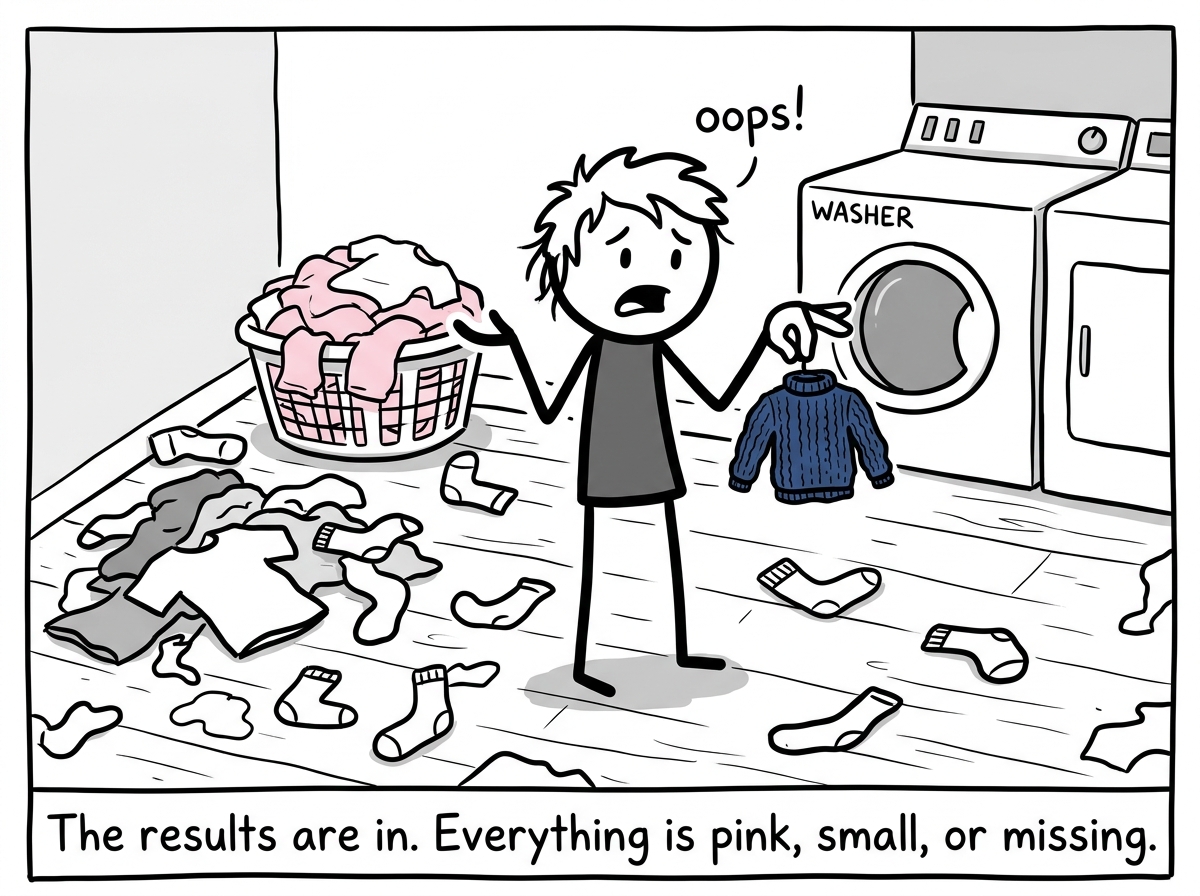
A person does the laundry so spectacularly wrong -- shrinking clothes, mixing colors, losing socks -- that their partner gives up and takes over, which was the plan all along.
Explanation
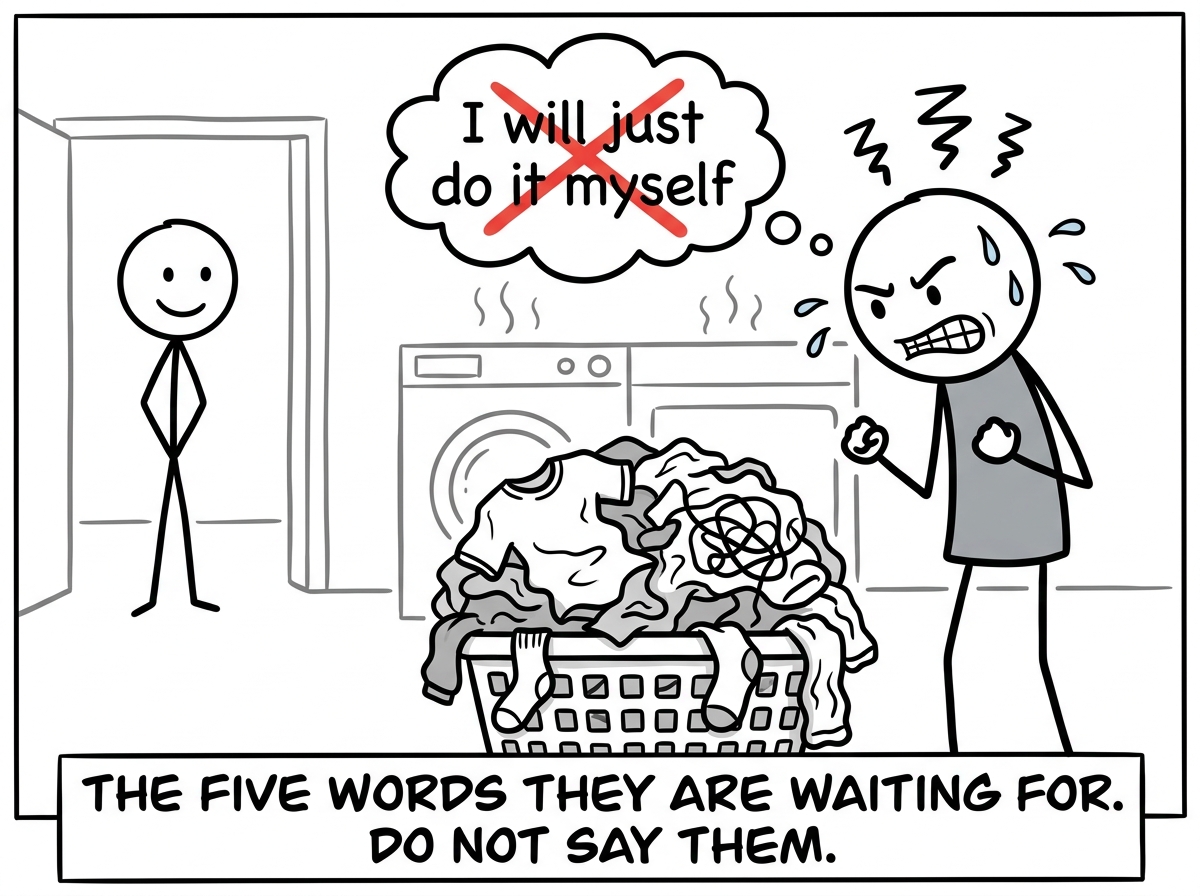
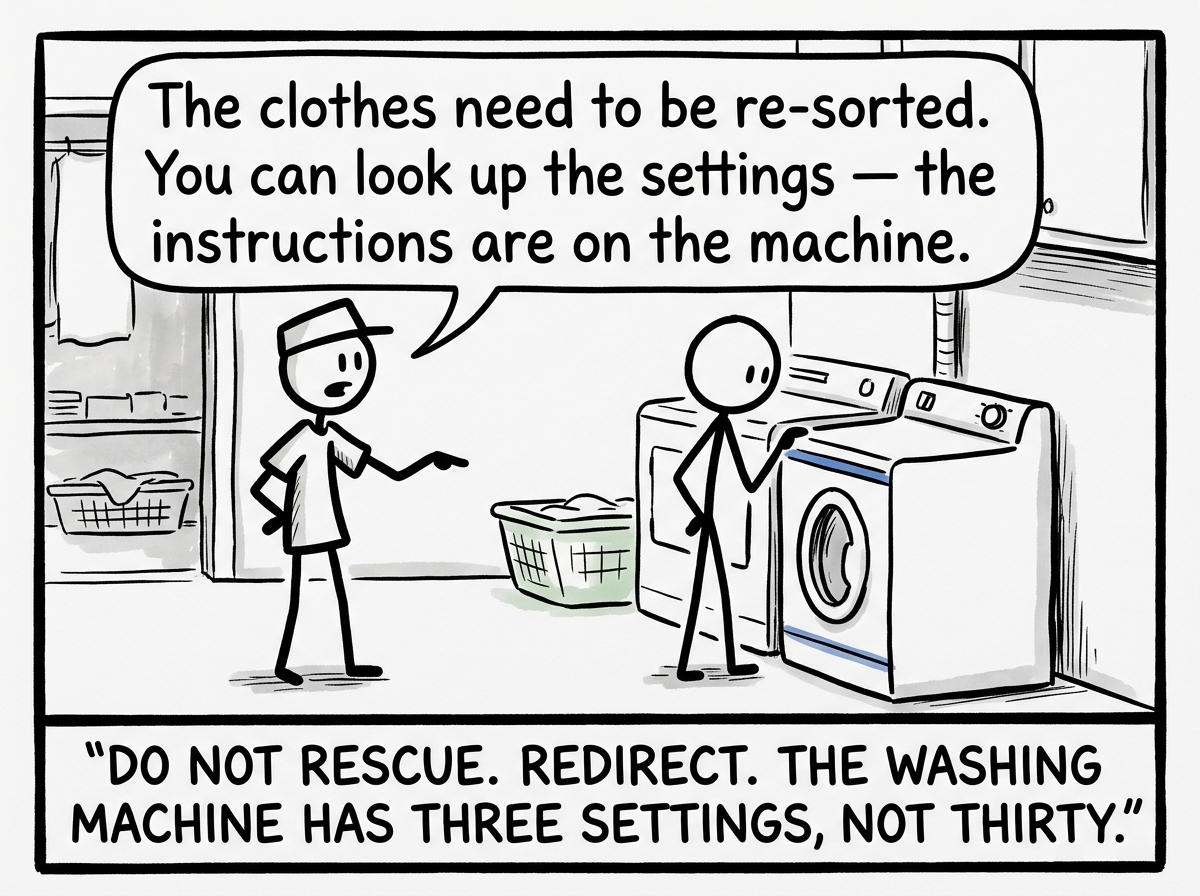
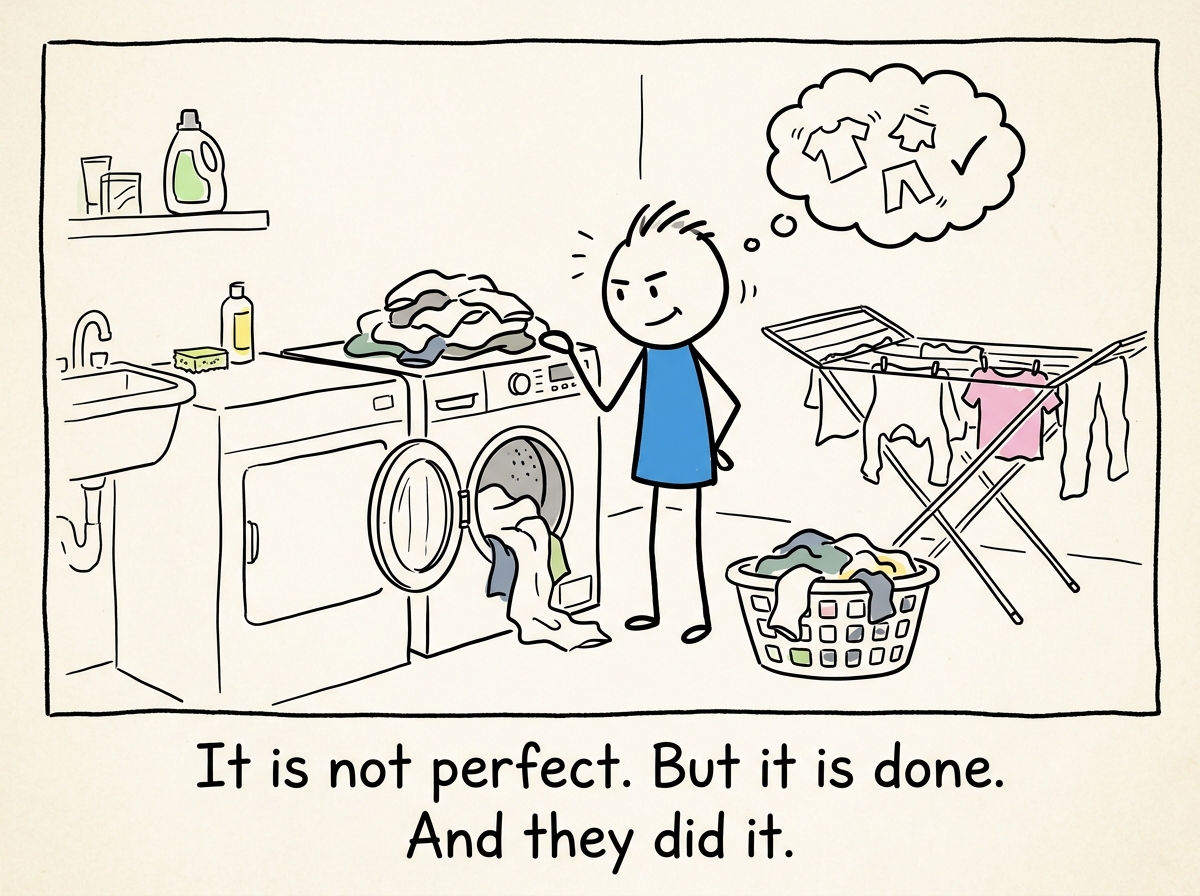
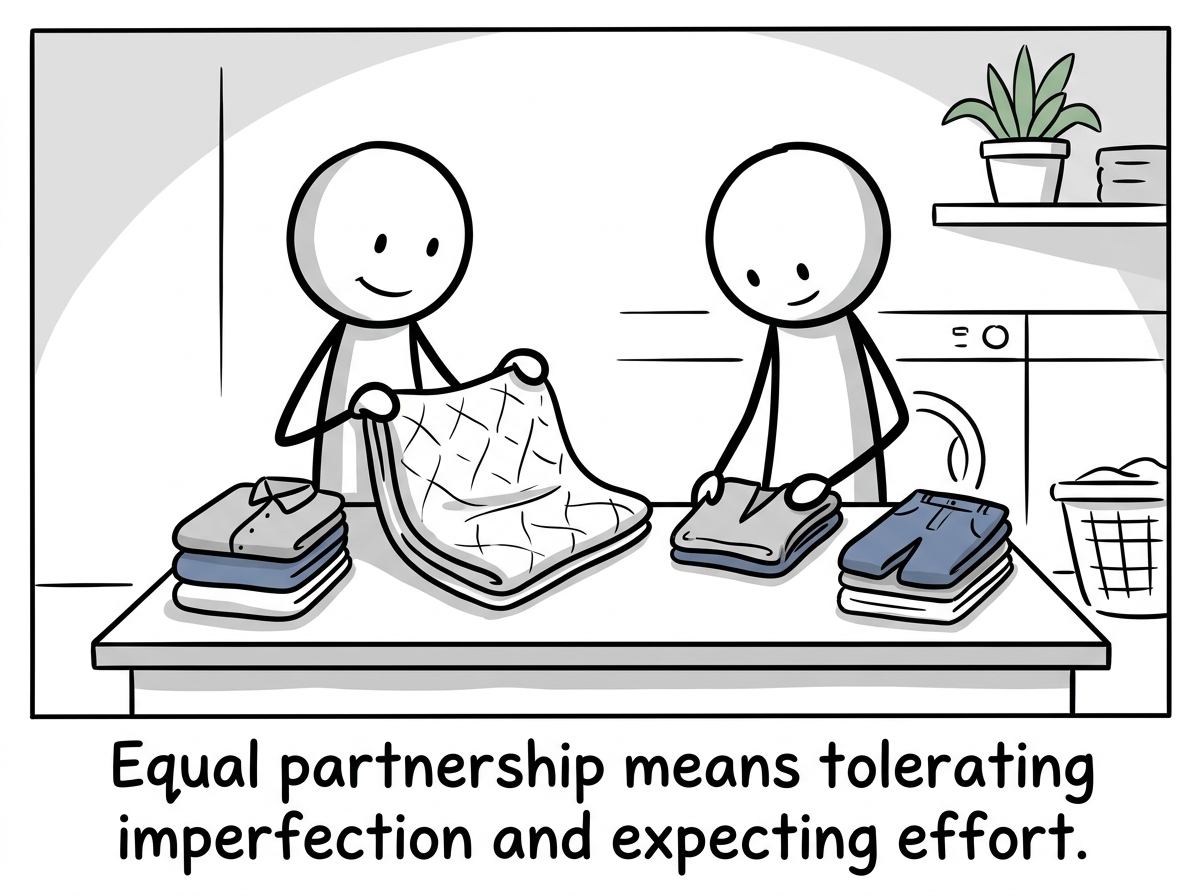
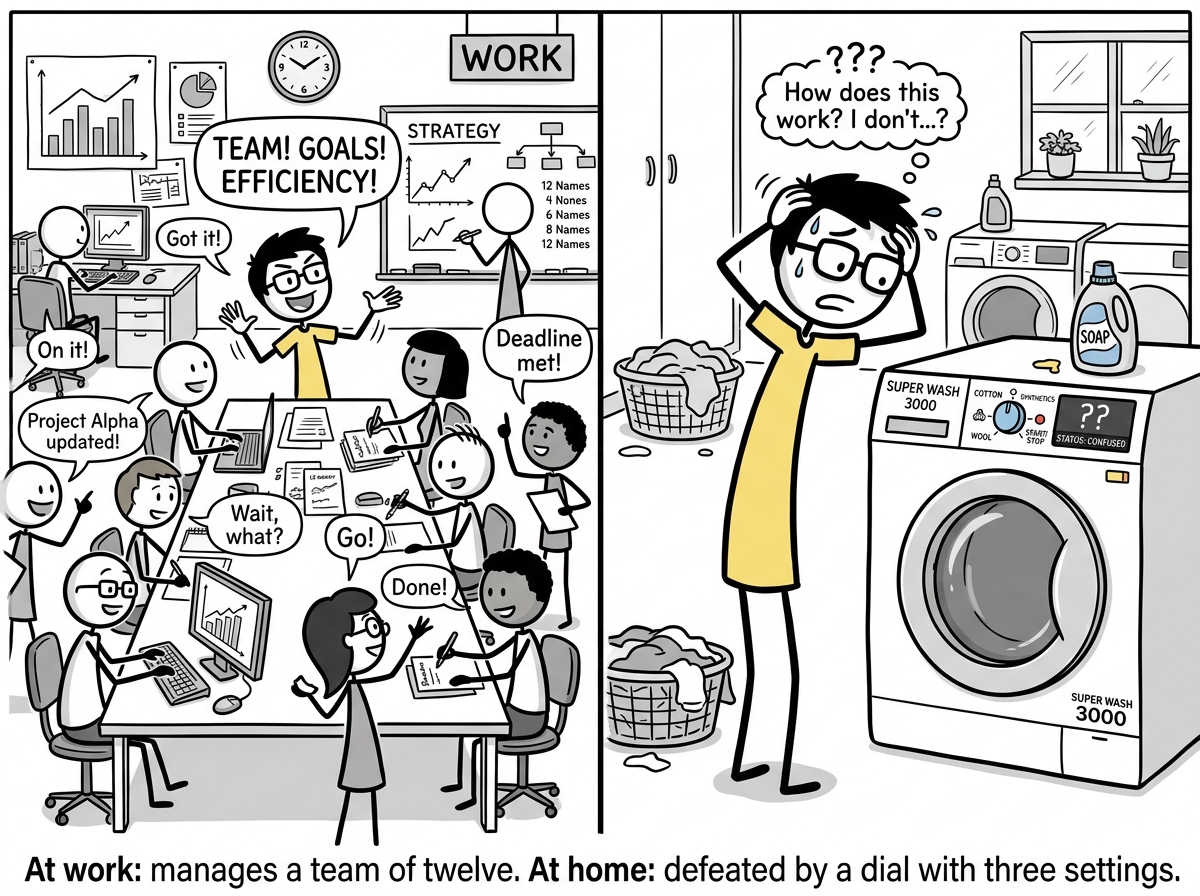
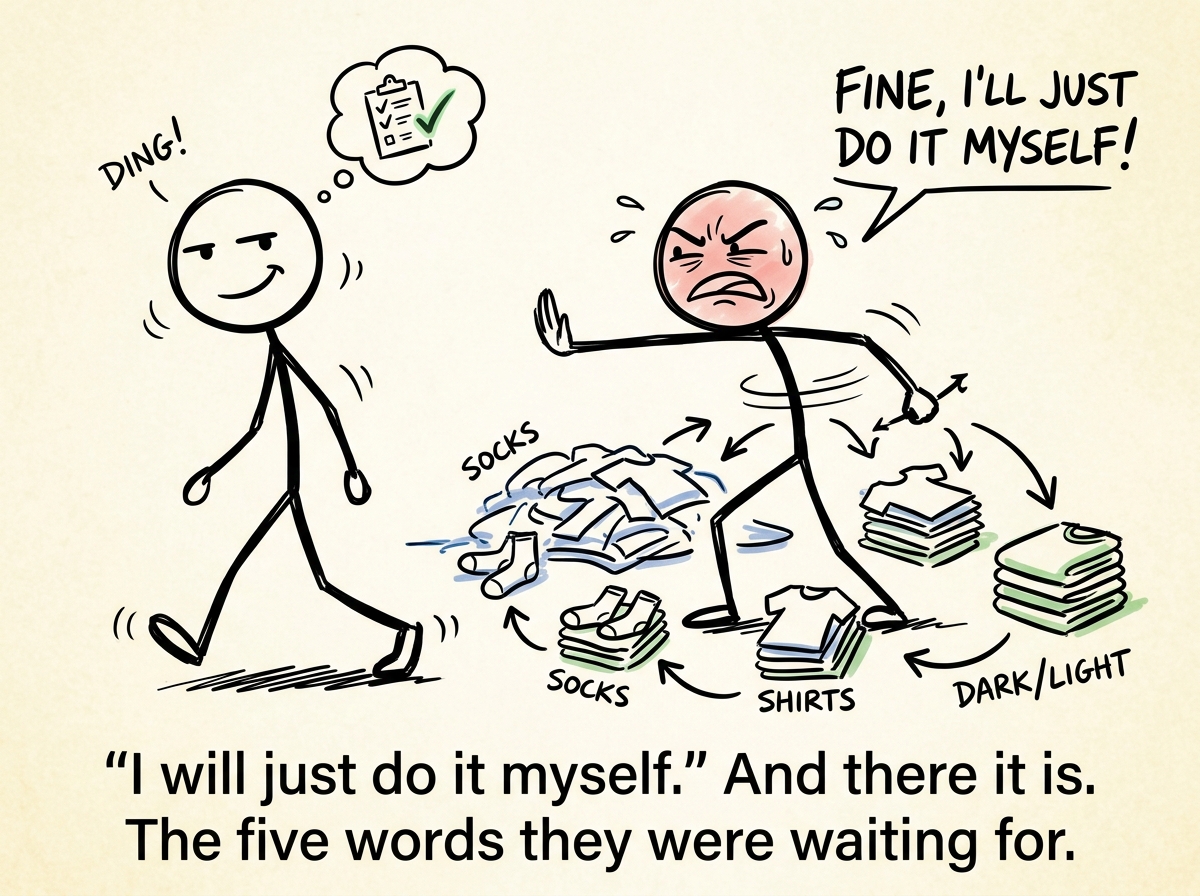
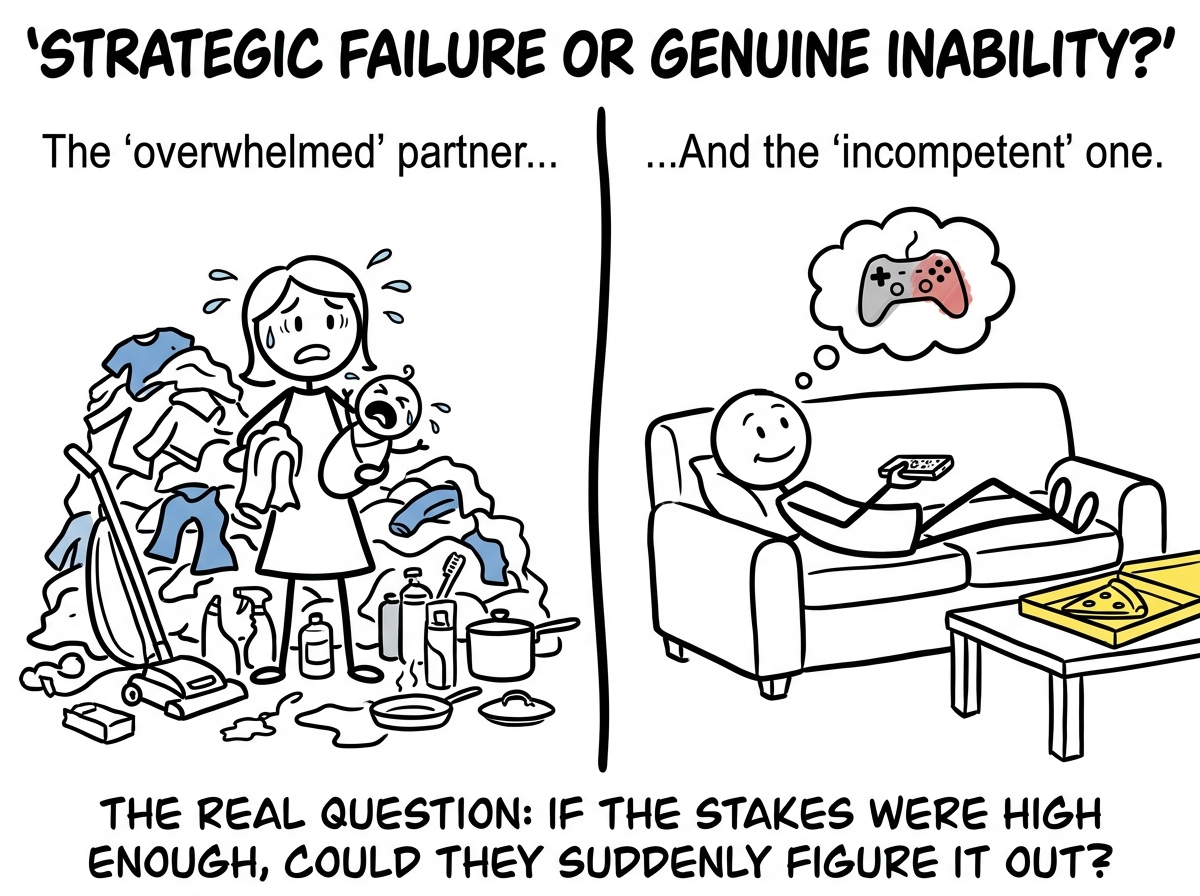
Your partner finally asked you to do the laundry. Simple enough. But somehow a red sock ends up in the whites, the dryer runs on high heat and shrinks a favorite sweater, and the 'folding' looks like someone dropped the clean clothes from a second-story window. Your partner sighs, reloads the machine, refolds everything, and mutters that they will just do it themselves from now on. Mission accomplished. This is weaponized incompetence -- performing a task so poorly that the other person stops delegating it to you, effectively offloading the labor by proving you cannot be trusted with it. The psychology behind weaponized incompetence is straightforward: if the cost of asking someone to do a task (correcting, supervising, redoing) exceeds the cost of just doing it yourself, you stop asking. The person deploying this strategy may not even be fully conscious of it -- it can operate as a deeply ingrained habit learned from watching parents or from early relationship dynamics where one person was 'the competent one.' But conscious or not, the effect is the same: an unequal distribution of labor that is maintained by one person's strategic underperformance. The antidote is refusing to rescue. This is hard because it means tolerating imperfection -- the laundry might be folded differently than you would fold it, and that has to be okay. But for the person doing the weaponizing, the work is even harder: it means admitting that the incompetence is a choice, not a trait. You can manage a spreadsheet at work but you cannot figure out a washing machine? The gap between your professional competence and your domestic helplessness is the gap where honesty needs to live.
Key Takeaway
If you can troubleshoot a software bug at work but cannot figure out a washing machine at home, the issue is not competence -- it is willingness.