The Boundary That Became Your Fault
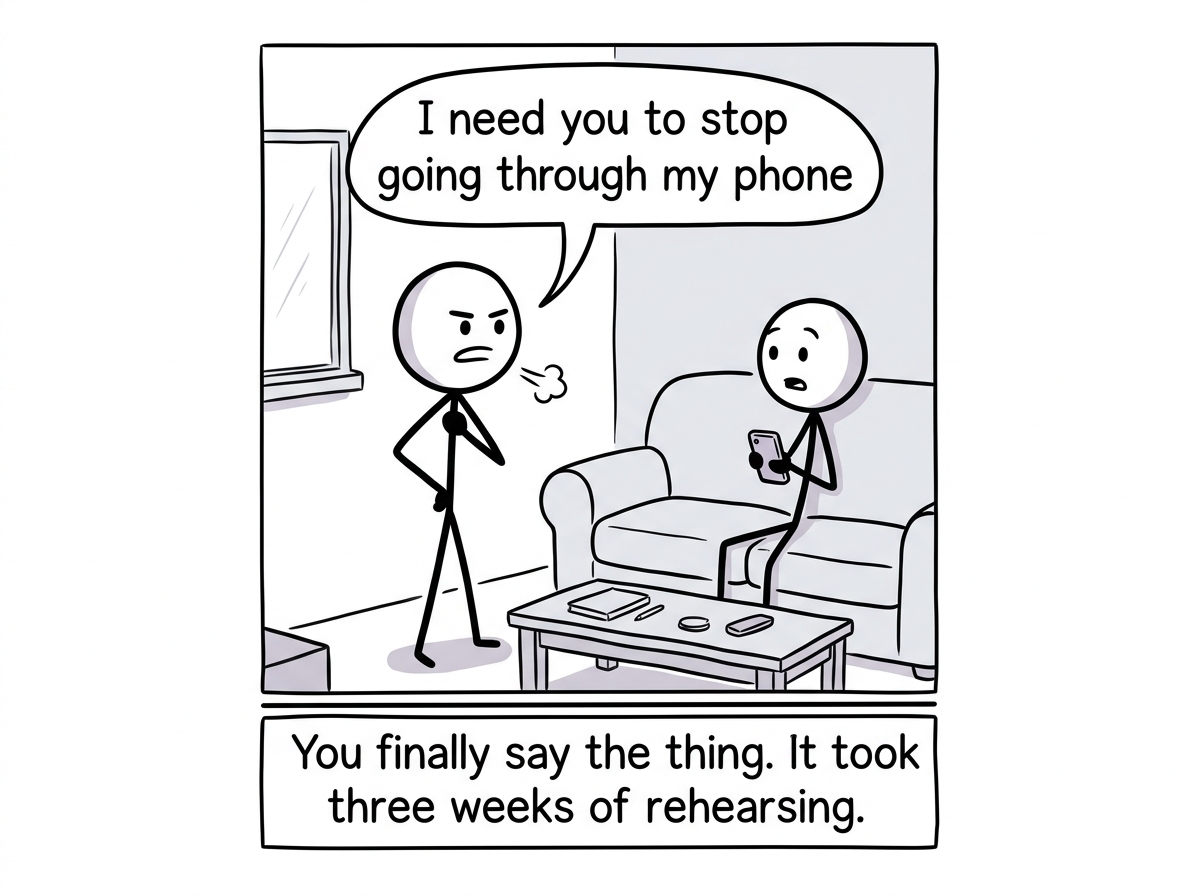
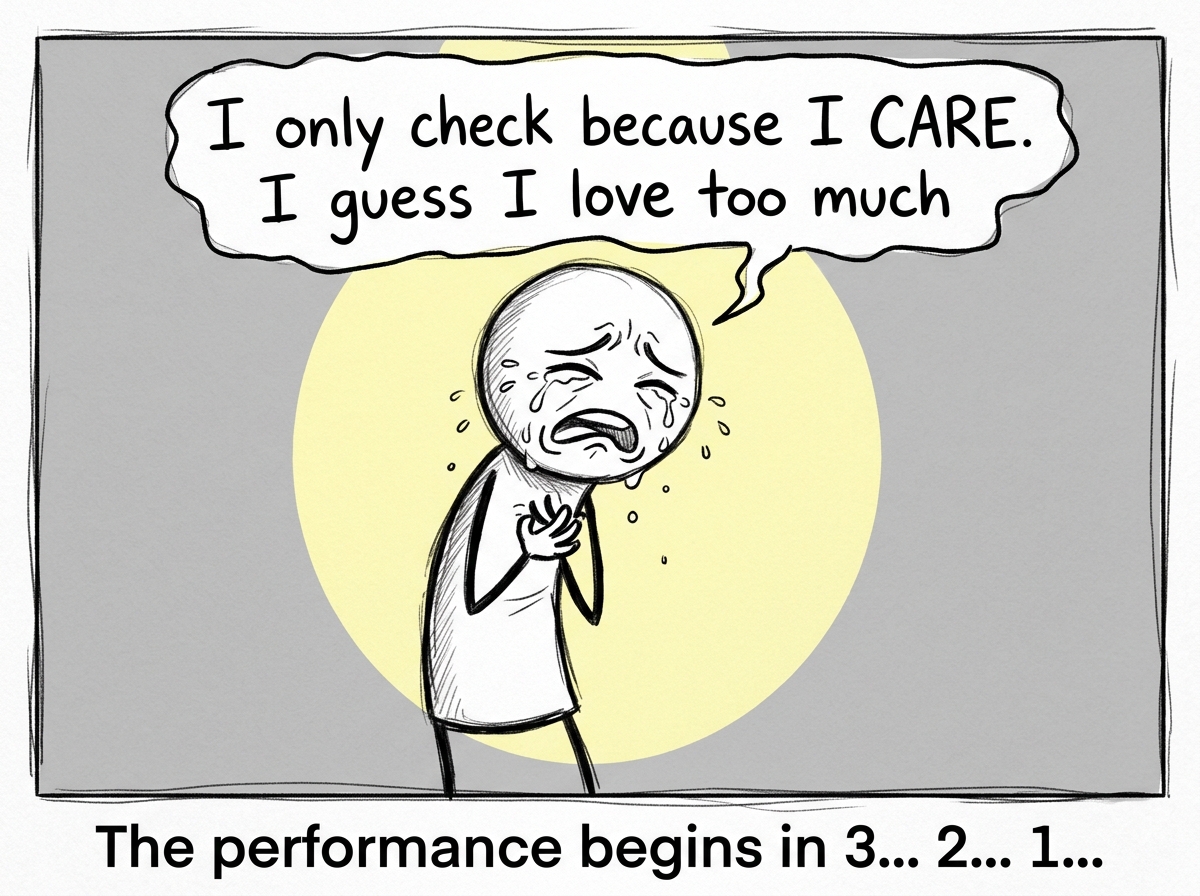
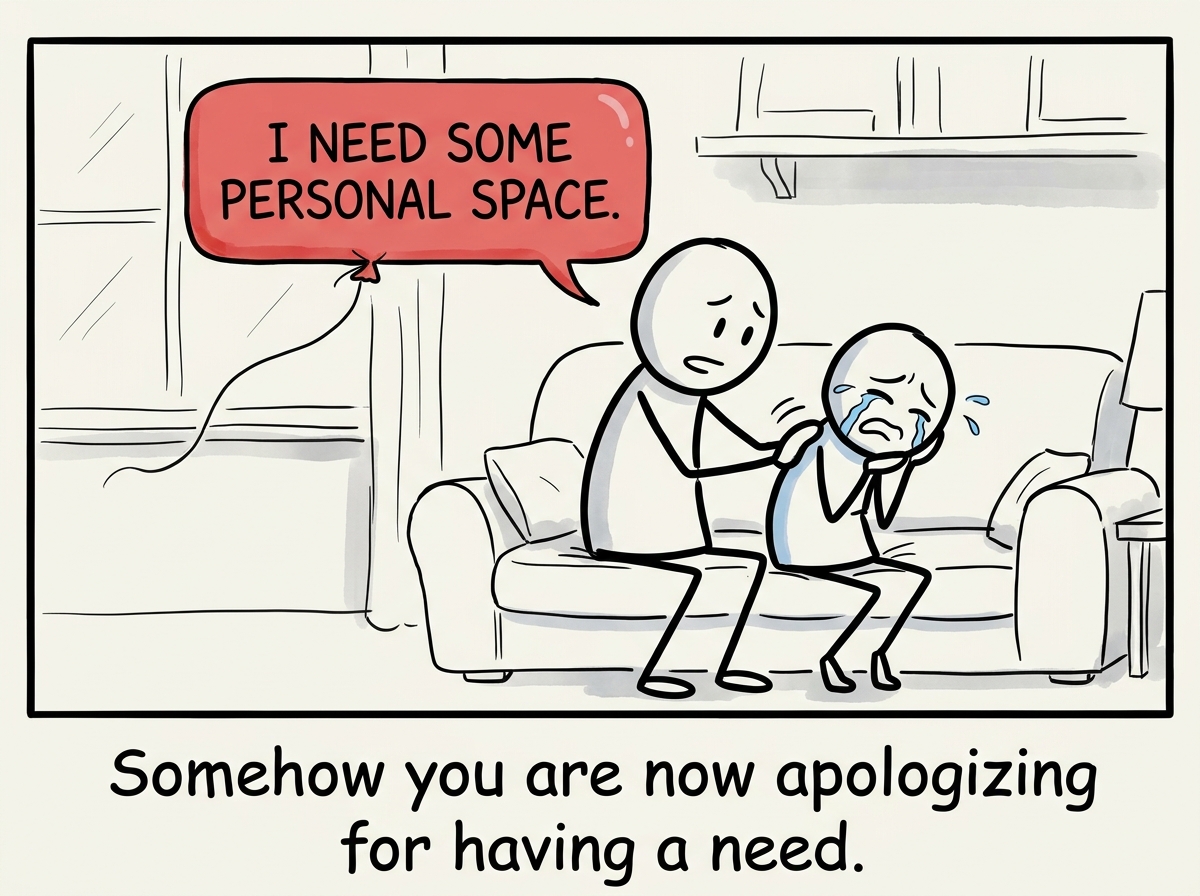
Someone sets a healthy boundary and their partner responds by crying about how hurt they are, flipping the situation so the boundary-setter ends up apologizing.
Explanation
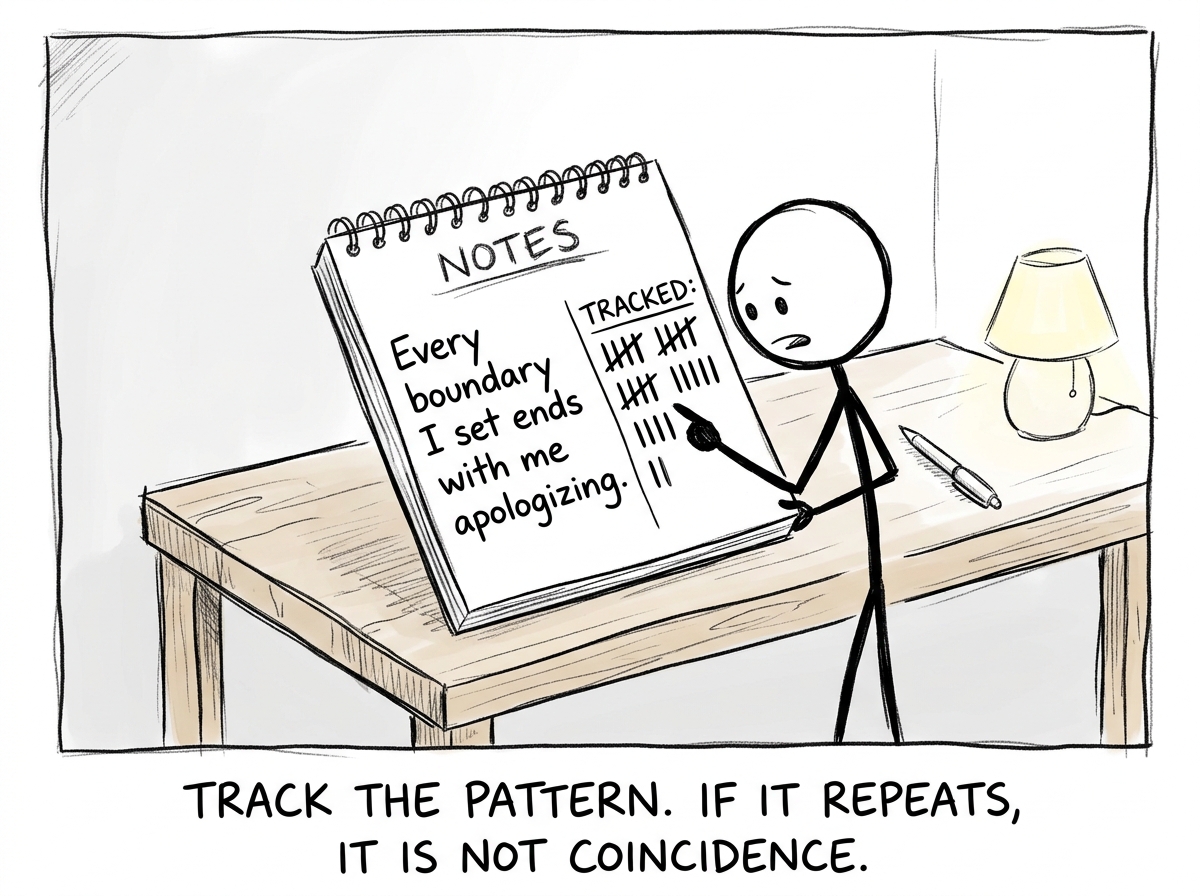
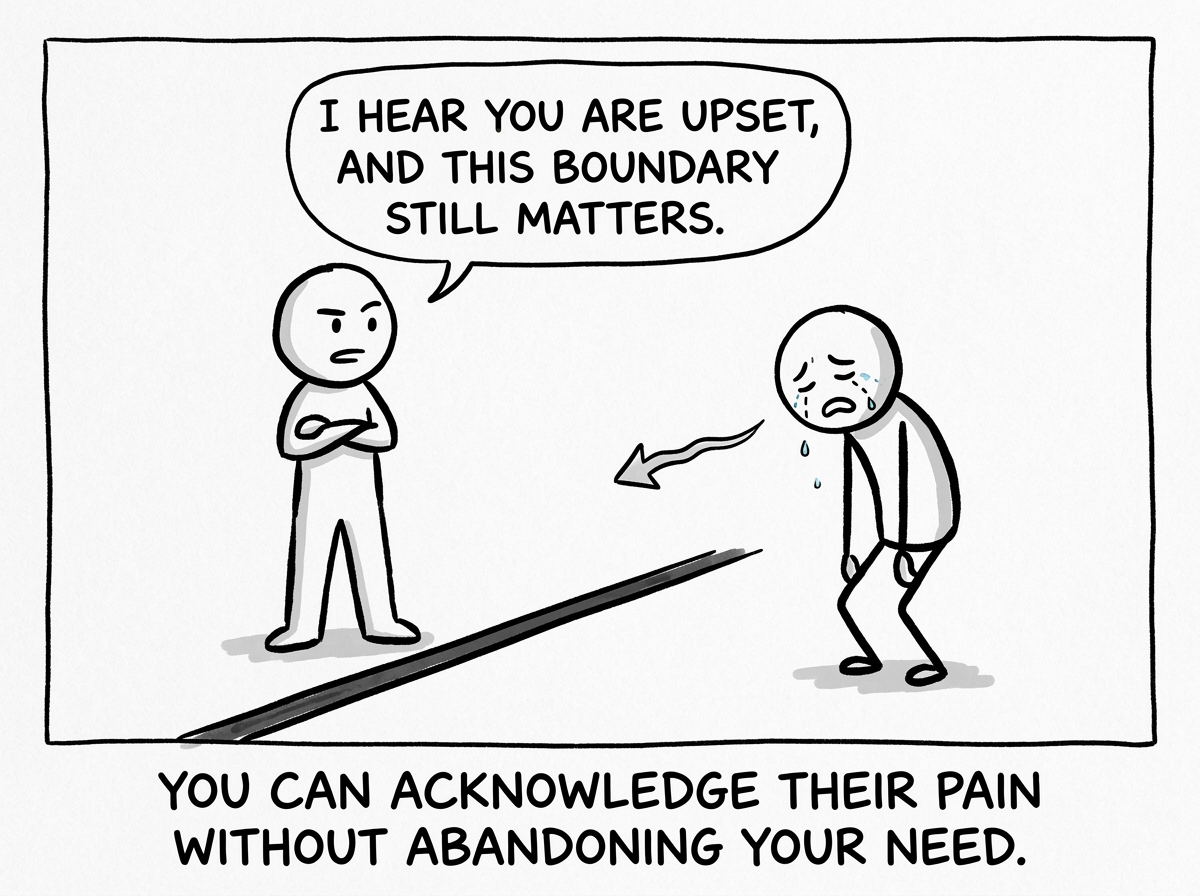
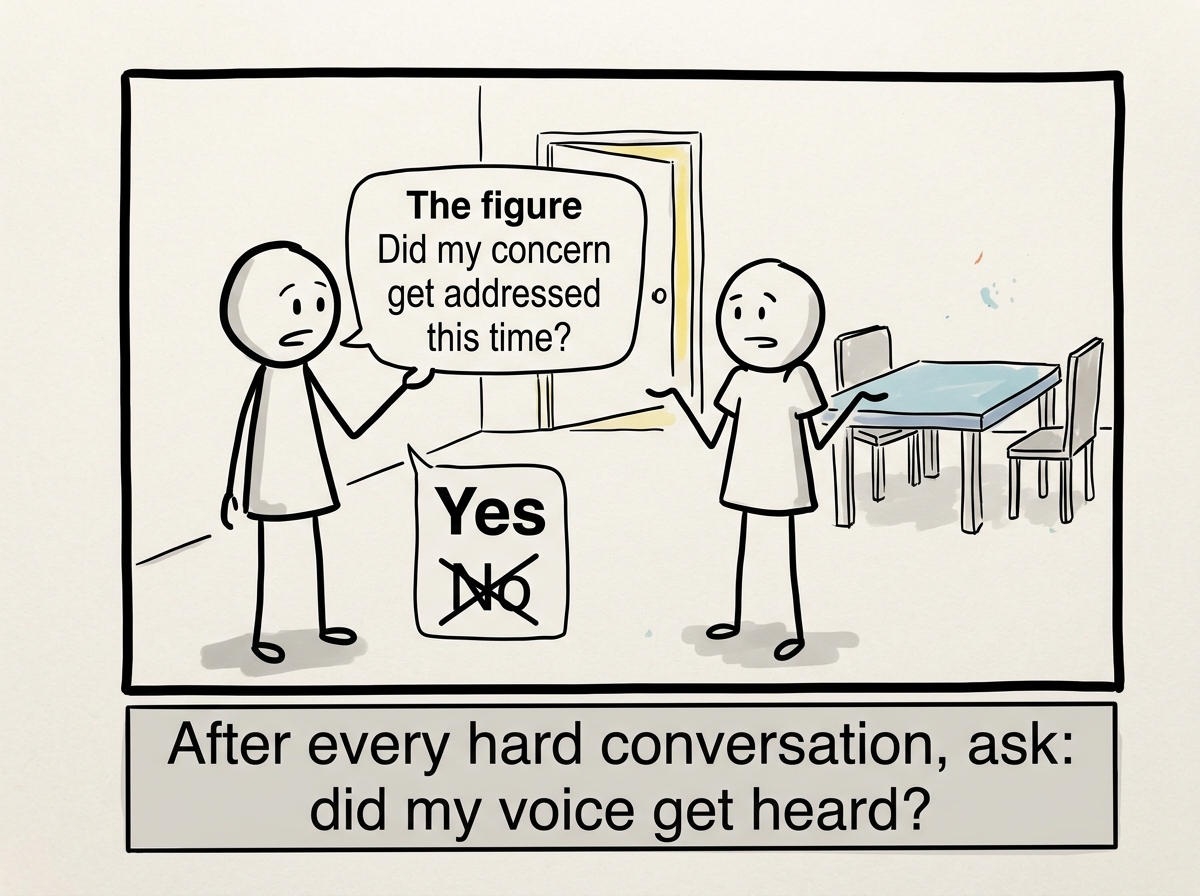
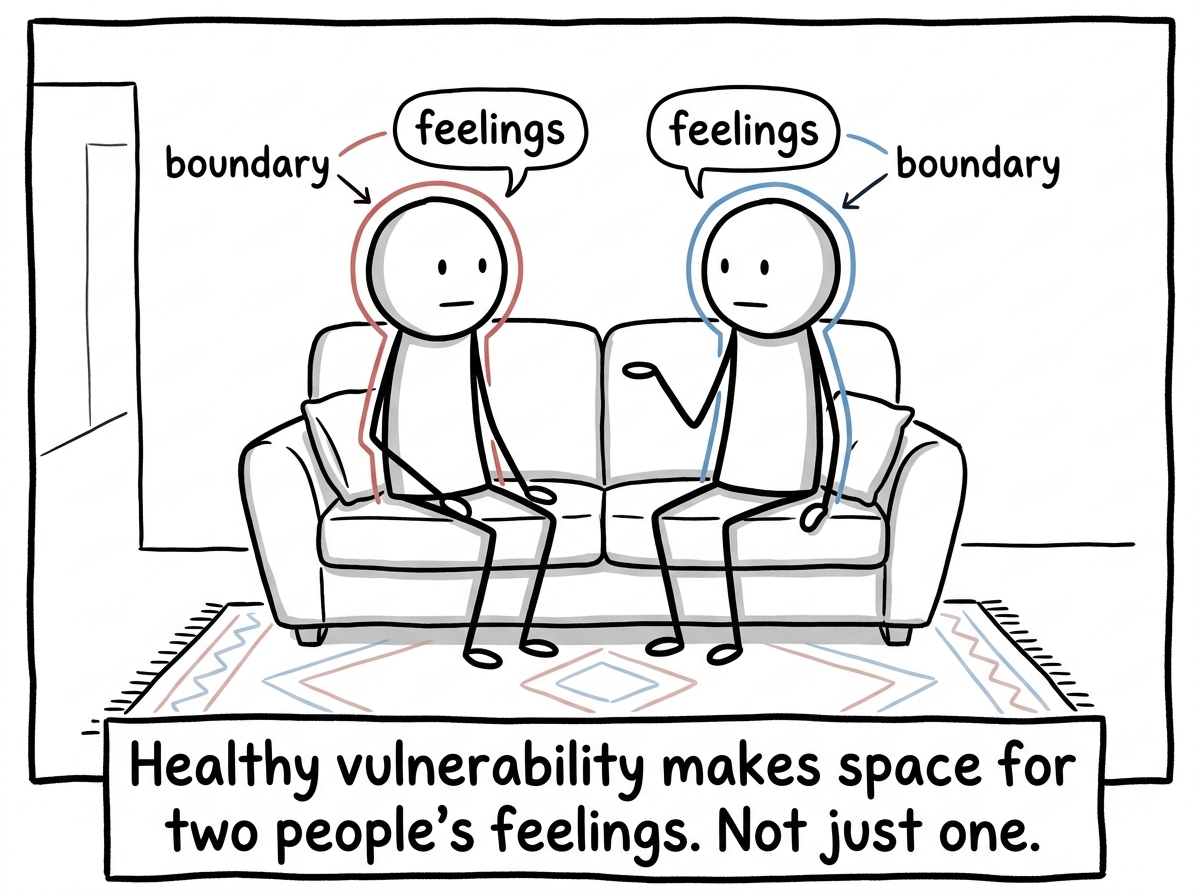
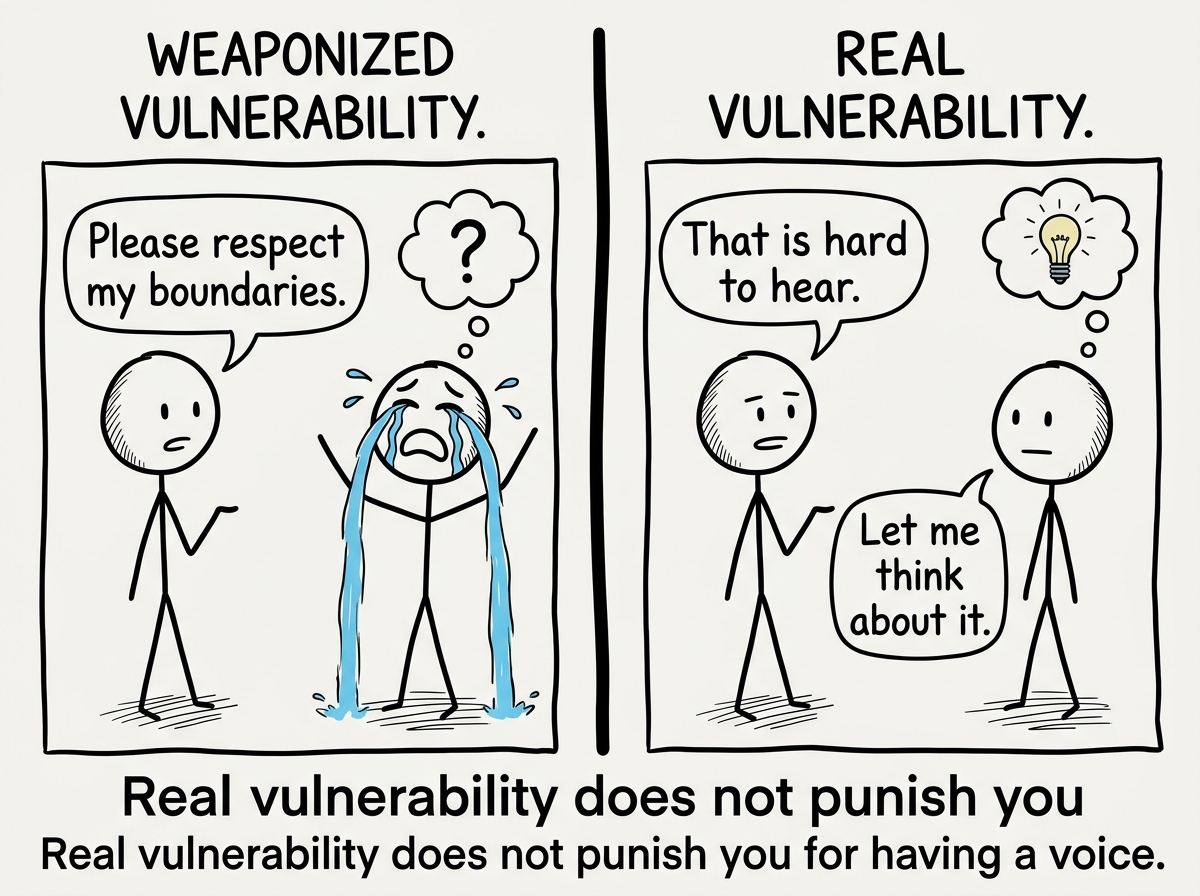
You finally say it. 'I need you to stop going through my phone.' It took you weeks to work up the courage. Your partner's face crumbles. Tears. 'I can't believe you don't trust me to trust you. I only checked because I care so much. I guess I'm just too invested in this relationship.' Twenty minutes later, you are apologizing for setting the boundary and comforting them. The phone conversation never happened. This is weaponized vulnerability at its most effective. The person takes your legitimate boundary and reframes it as an attack on their emotional safety. They deploy tears, self-deprecation, and therapeutic-sounding language to flip the script until you are the one who feels guilty. It works because it exploits the very empathy that makes you a good partner. You have been taught that when someone is hurting, you should comfort them. But in this dynamic, their hurt is strategic -- it consistently appears whenever you try to advocate for yourself and consistently disappears once you back down. The test for weaponized vulnerability is pattern and outcome. Does this person's emotional openness invite mutual understanding, or does it always end with you abandoning your needs? Does their vulnerability create space for your feelings too, or does it consume all the oxygen? Genuine vulnerability says 'that is hard to hear, and I need to sit with it.' Weaponized vulnerability says 'I cannot believe you would hurt me like this' every time you try to have a voice.
Key Takeaway
If every boundary you set ends with you apologizing, the tears are not vulnerability -- they are a tool.