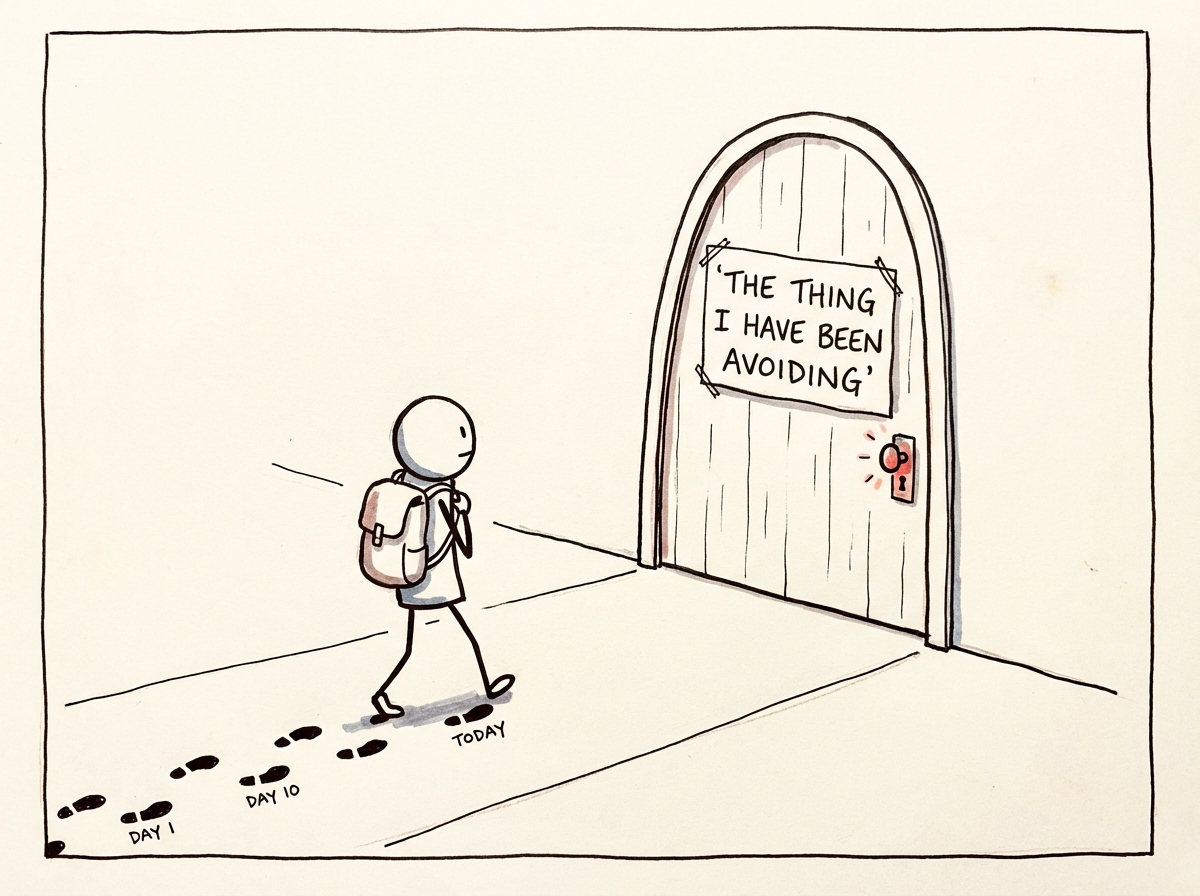
How to Break Your Avoidance Patterns
Learn to recognize when you are avoiding, understand why the avoidance feels necessary, and gradually build the capacity to face what you have been dodging.
Before You Begin
Avoidance is one of the most effective short-term strategies the human mind has ever developed. Feel anxious about a conversation? Do not have it. Dreading a decision? Put it off. Overwhelmed by an emotion? Numb it, distract from it, or pretend it is not there. The problem is that avoidance works beautifully for about fifteen minutes -- and then it makes everything worse. The thing you avoided does not go away. It grows. It compounds. The conversation you should have had last week is now a crisis. The decision you postponed has fewer options. The emotion you stuffed down is leaking out sideways as irritability, insomnia, or a vague sense that something is wrong. This guide is not about becoming fearless. It is about learning that you can handle discomfort -- and that the life on the other side of avoidance is bigger, more honest, and more yours.
-
Recognize Your Avoidance Patterns
Avoidance is sneaky. It rarely announces itself as avoidance. It disguises itself as being busy, needing more information, not being ready yet, or just not feeling like it today. Your first job is to strip away the disguises and see the pattern clearly.
- Make a list of things you have been putting off -- the email, the phone call, the project, the conversation, the doctor's appointment. Be honest. If it has been on your mental to-do list for more than two weeks, it is probably avoidance.
- Notice your go-to avoidance behaviors. Some people scroll their phones. Others clean the house, pick fights, overwork, or suddenly develop an urgent interest in reorganizing their closet. What do you reach for when you do not want to feel something?
- Pay attention to the moment of the pivot. There is a split-second decision point where you feel the pull toward something difficult and then veer away from it. You might not catch it right away, but start looking for it.
- Ask yourself: If I am being really honest, what am I avoiding right now? The answer that makes your stomach tighten is probably the right one.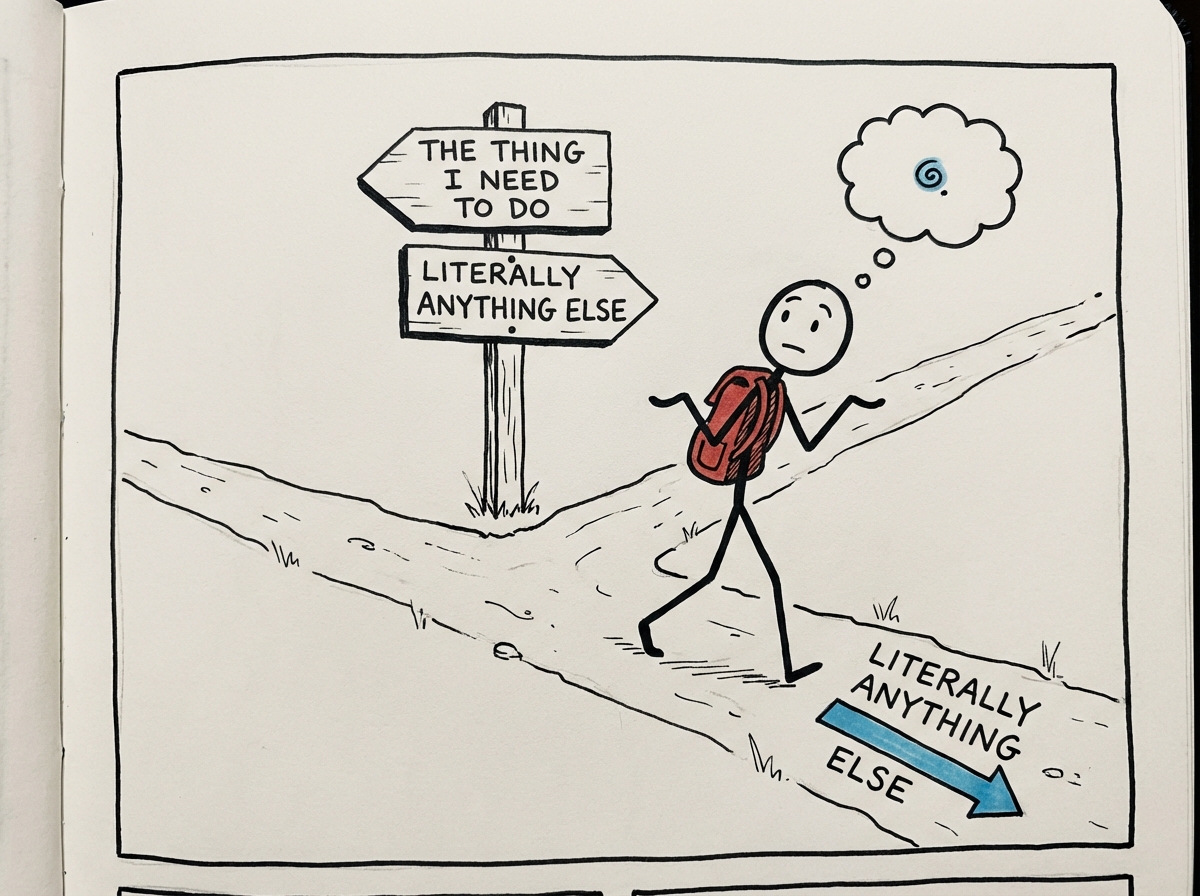
-
Understand the Relief-Avoidance Cycle
Avoidance persists because it is immediately rewarding. The moment you decide not to deal with something, your anxiety drops. Your body relaxes. You feel relief. But that relief is a trap -- it teaches your brain that the avoided thing truly was dangerous, which makes it even harder to face next time.
- Think of it as a loop: you encounter something uncomfortable, you avoid it, you feel relief, the discomfort grows, you encounter it again but now it is bigger, you avoid it again, you feel relief again. Each cycle tightens the loop and shrinks your life a little more.
- Notice that the relief never lasts. Within hours or days, the dread comes back -- often worse than before, now with added guilt and self-criticism for having avoided it.
- Understanding this cycle is not about beating yourself up for falling into it. It is about seeing the mechanism clearly so you can make a different choice at the decision point. You are not weak for avoiding. You are doing what your nervous system learned to do. And now you are going to teach it something new.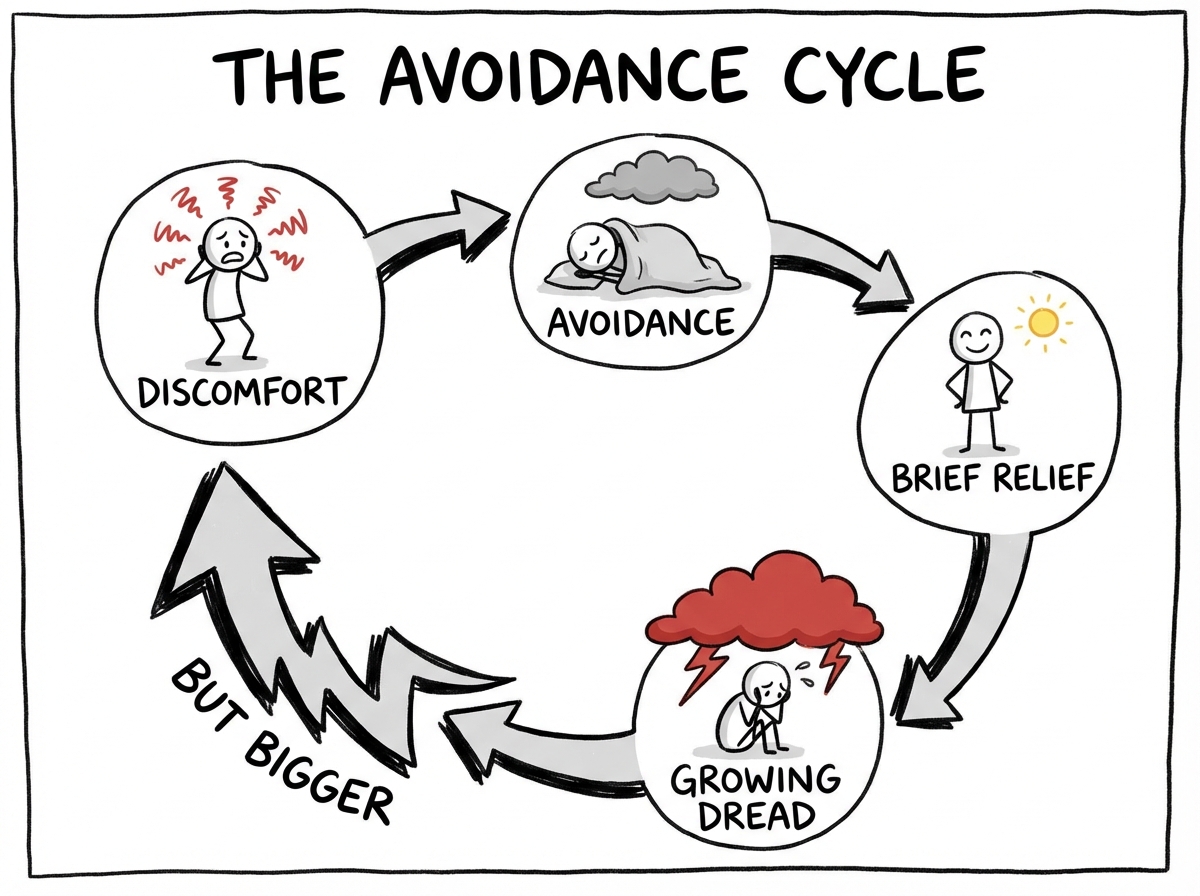
-
Start With the Smallest Avoided Thing
You do not break avoidance by tackling the biggest, scariest thing on your list. You break it by proving to your nervous system that approaching discomfort is survivable. Pick the smallest, most manageable thing you have been putting off and do it.
- Look at your avoidance list from step one. Find the item that makes you feel mildly uncomfortable but not panicked. That is your starting point. It might be replying to an email, making a routine appointment, or opening an envelope you have been ignoring.
- Set a timer for five minutes and commit to working on it for just that long. You do not have to finish it. You just have to start. Starting is the part your brain has been blocking.
- After you do it, pay attention to how you feel. Most people report a wave of relief that is completely different from avoidance-relief. This is the relief of completion, and it is what your brain needs to start associating approach with reward.
- Do one small avoided thing per day for a week. You are building a new habit -- the habit of moving toward discomfort rather than away from it.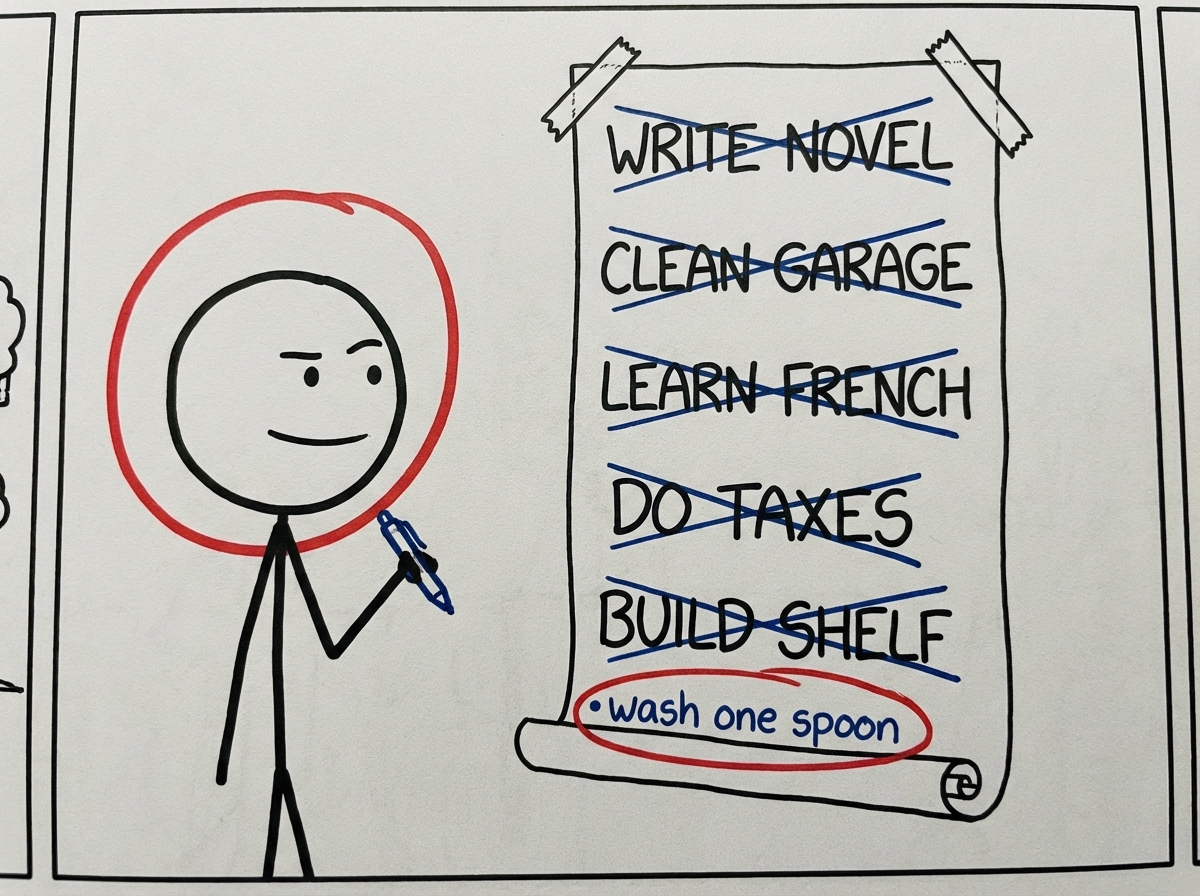
-
Build Distress Tolerance
The engine of avoidance is the belief that you cannot handle the discomfort. Every time you avoid, you are telling yourself: that feeling is too much for me. Building distress tolerance means learning -- in your body, not just your head -- that uncomfortable feelings are survivable and temporary.
- The next time you feel the urge to avoid, pause and stay with the discomfort for just sixty seconds. Set a timer if you need to. Notice the physical sensations: the tightness, the restlessness, the urge to flee. Name them. Breathe through them.
- Remind yourself that anxiety is not dangerous. It is uncomfortable, but it cannot actually hurt you. Your body is doing exactly what it was designed to do in the face of perceived threat. The problem is that it is perceiving threat where there is only discomfort.
- Track your distress tolerance wins. Each time you feel the pull to avoid and stay with the feeling instead -- even for a minute -- that counts. Write it down. You are collecting evidence that you are more capable than your avoidance has led you to believe.
- Gradually extend the window. Sixty seconds becomes two minutes. Two minutes becomes five. You are not trying to eliminate the discomfort. You are expanding your capacity to be with it.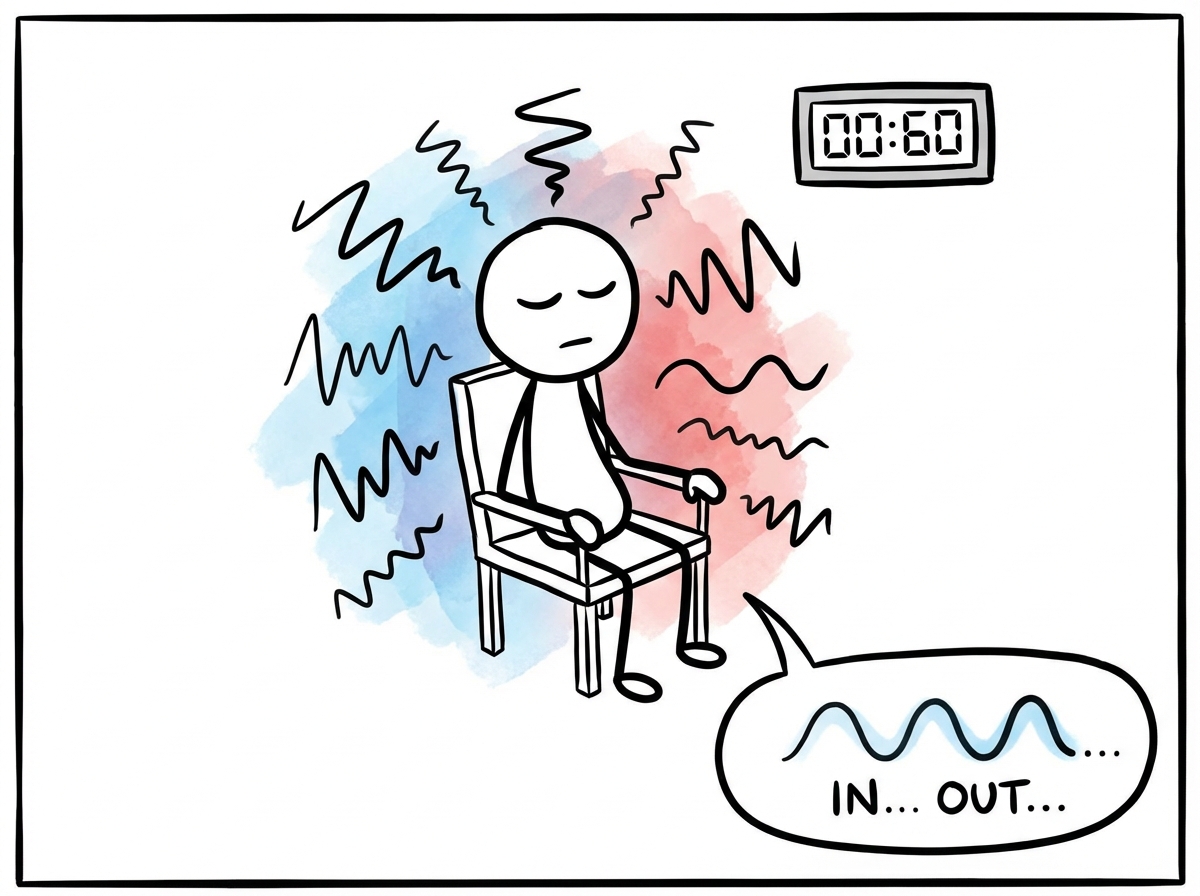
-
Face One Avoided Conversation
For most people who struggle with avoidance, the hardest category is conversations. The thing you need to say to your partner, your friend, your boss, your family member -- the thing that has been sitting in your chest for weeks or months. This step is about having one of those conversations.
- Choose a conversation that is important but not catastrophic. Something where the stakes are real but the relationship can handle honesty. This is practice, not a final exam.
- Write down what you need to say before you say it. Not a script, but the core message. What is the thing you actually need the other person to hear? Get clear on that before you open your mouth.
- Set a time to have the conversation. Do not wait for the perfect moment -- there will never be one. Avoidance loves to dress up as waiting for the right time. Pick a day, tell the person you want to talk, and follow through.
- After the conversation, notice what actually happened versus what you feared would happen. In most cases, the conversation you avoided was far less terrible than the story your mind had been telling you about it. This is the corrective experience your brain needs.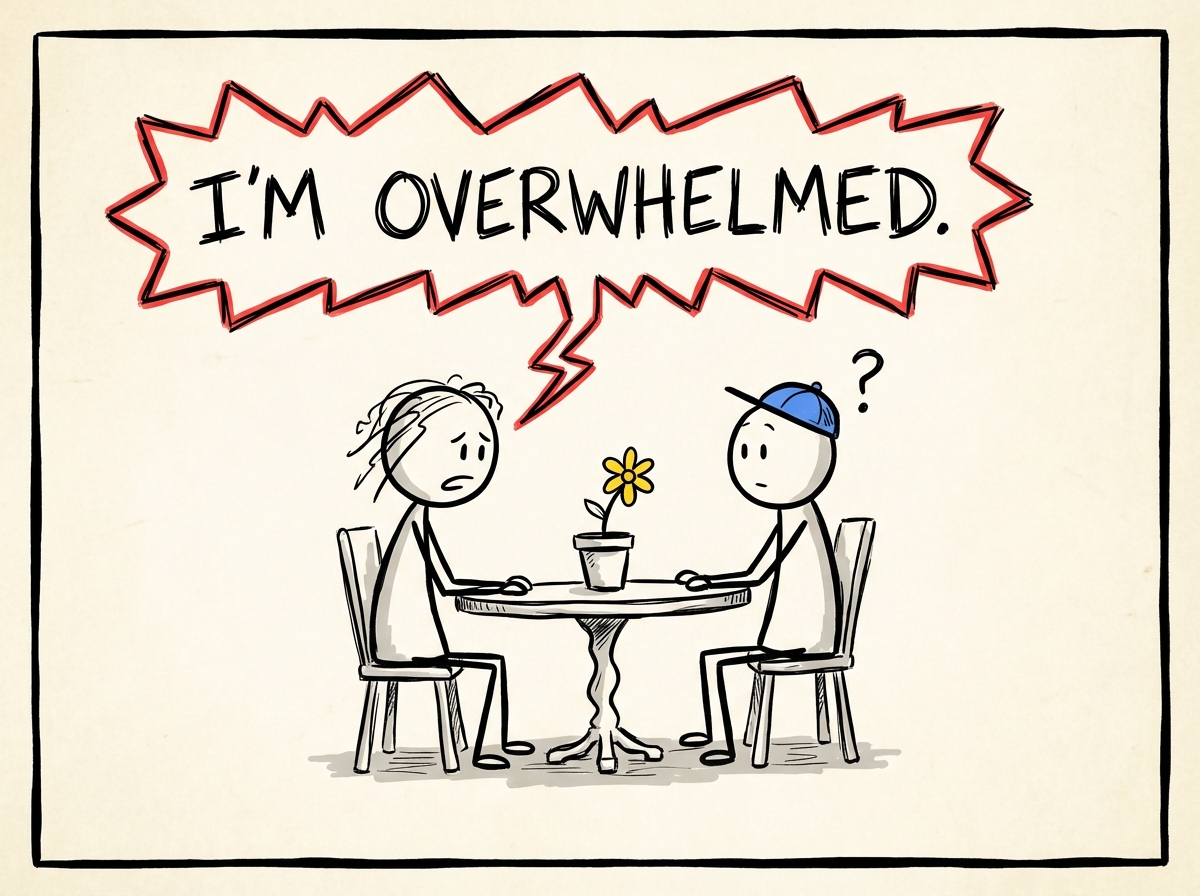
-
Create an Approach Habit
Breaking avoidance is not a one-time victory. It is a daily practice of noticing the pull to dodge and choosing to move toward instead. The goal is to make approaching discomfort your default, the same way avoidance used to be.
- Build a daily check-in: every morning, ask yourself 'What am I most tempted to avoid today?' Then make that thing your priority. Do it first, before the avoidance has time to build its case.
- Create accountability structures. Tell someone what you are going to do, set a deadline, or schedule the thing so it is harder to back out. Avoidance thrives in privacy and vagueness.
- When you catch yourself mid-avoidance, do not beat yourself up. Just redirect. Say to yourself: 'I notice I am avoiding this. I am going to take one small step toward it right now.' Compassion and firmness together.
- Celebrate the approach, not just the outcome. Even if the conversation goes badly or the task is harder than expected, you showed up. You faced it. That is the thing that changes your relationship with discomfort over time.