6 steps
How to Break Your Avoidance Patterns
Learn to recognize when you are avoiding, understand why the avoidance feels necessary, and gradually build the capacity to face what you have been dodging.

The short-term relief and long-term damage of dodging feelings, conversations, or decisions.
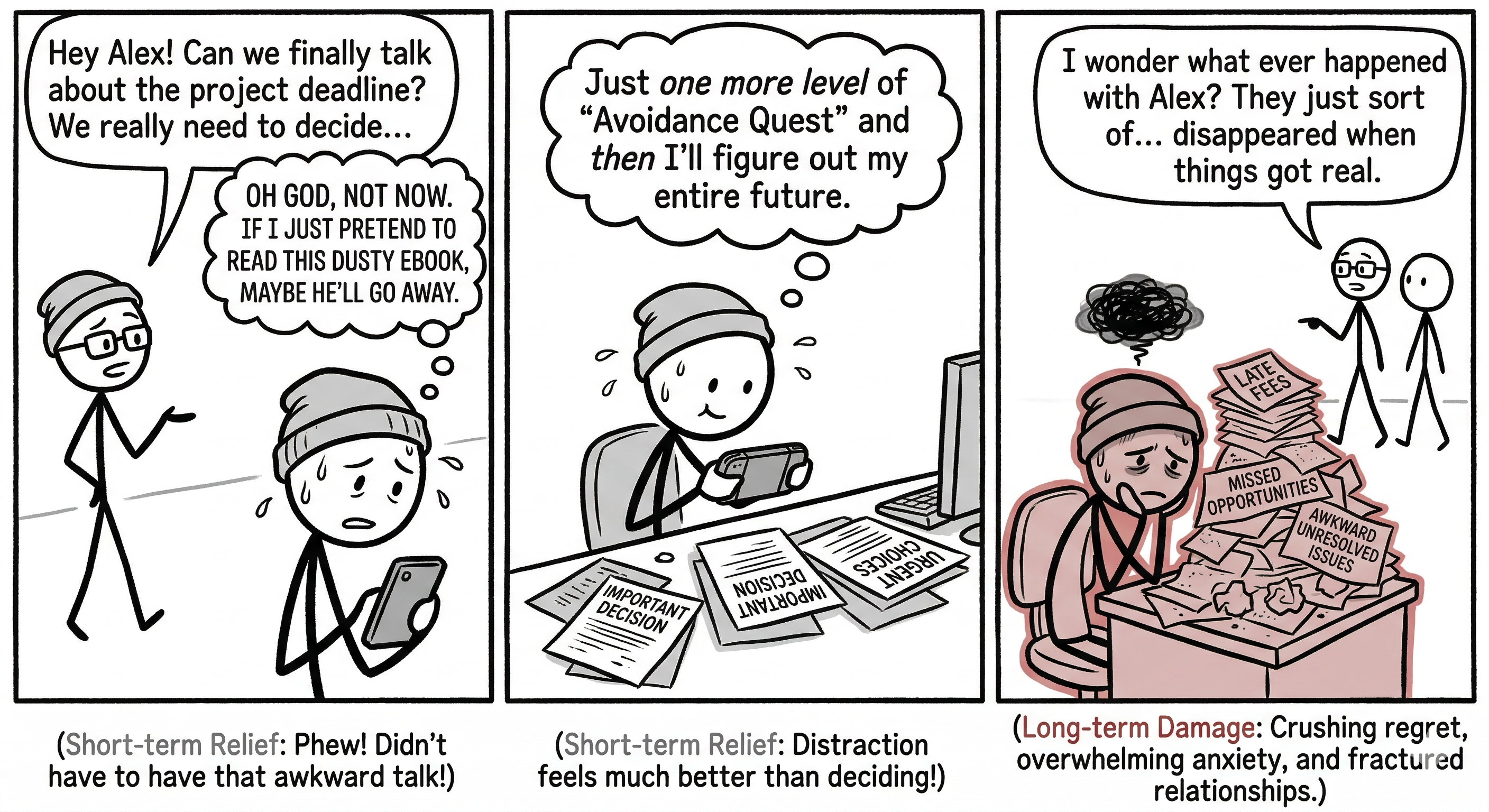
Avoidance is one of the most common coping strategies humans use -- and one of the most costly over time. It is the act of escaping or sidestepping uncomfortable feelings, difficult conversations, painful memories, or challenging decisions. In the short term, avoidance works: you feel immediate relief when you cancel the hard conversation, scroll instead of dealing with your anxiety, or distract yourself from grief. But the relief is temporary, and the thing you are avoiding usually grows larger in your absence. Avoidance shows up in many forms: emotional avoidance (numbing out, intellectualizing, staying busy), experiential avoidance (refusing to feel or acknowledge distress), social avoidance (withdrawing from people when things get hard), and behavioral avoidance (procrastinating, not making decisions, staying in your comfort zone). In CBT and ACT frameworks, avoidance is understood as a central mechanism that maintains anxiety and depression. The more you avoid what scares you, the more your brain learns that the threat is real. Breaking avoidance cycles means learning to tolerate discomfort long enough to discover that you can handle more than you think.
The way through avoidance is not forcing yourself to face everything at once -- it is learning to tolerate small doses of discomfort and discovering you can survive them.