The Silent Dinner
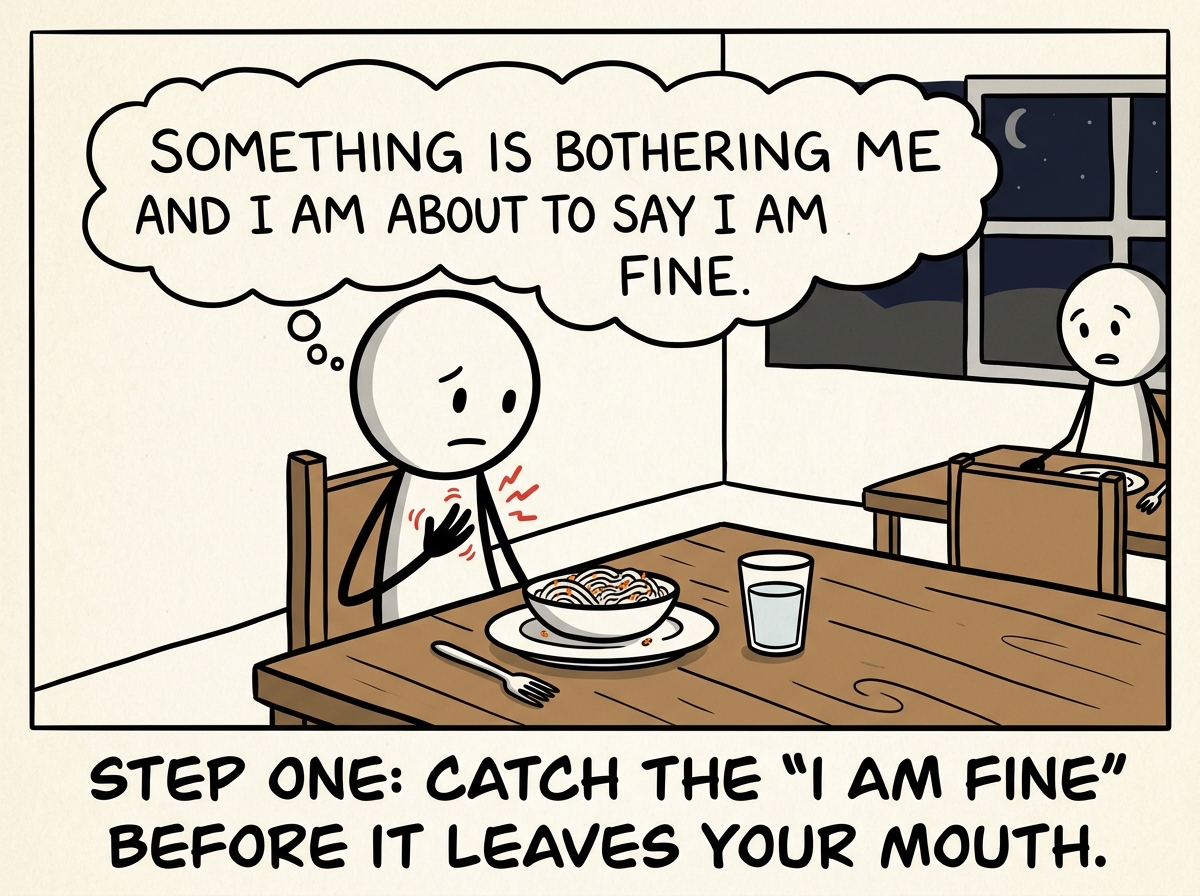
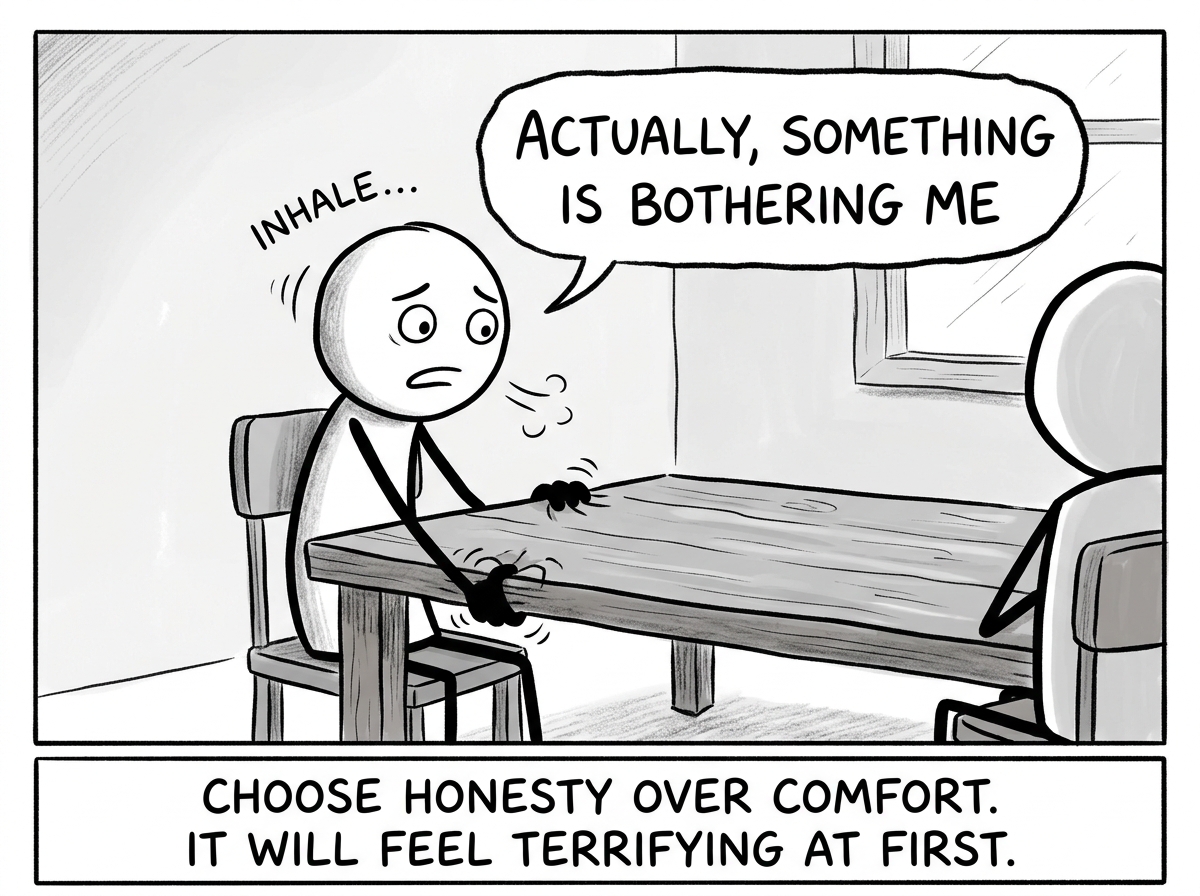
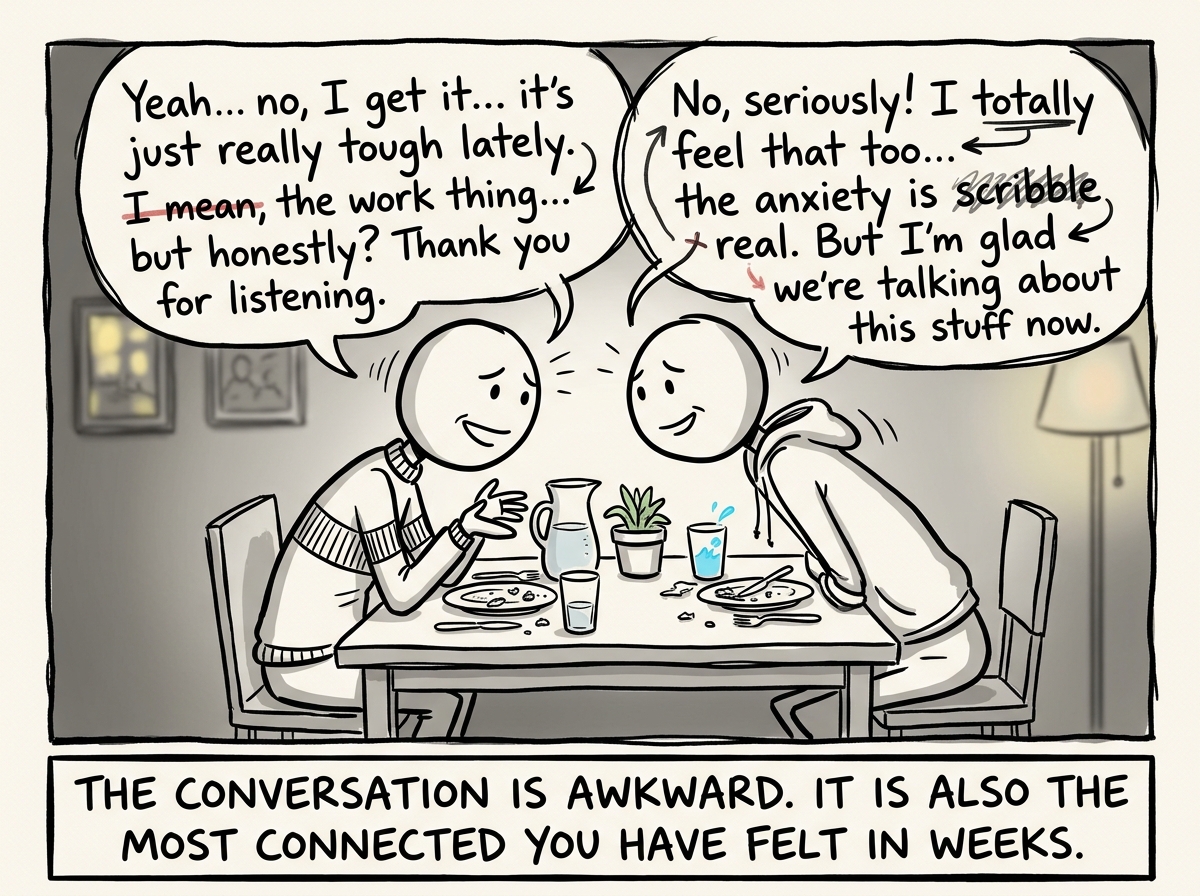
A couple sits through an increasingly tense dinner where one person is clearly upset but keeps saying 'I am fine,' while the unspoken tension fills the room.

When fear of tension keeps you silent, passive, or emotionally unavailable.
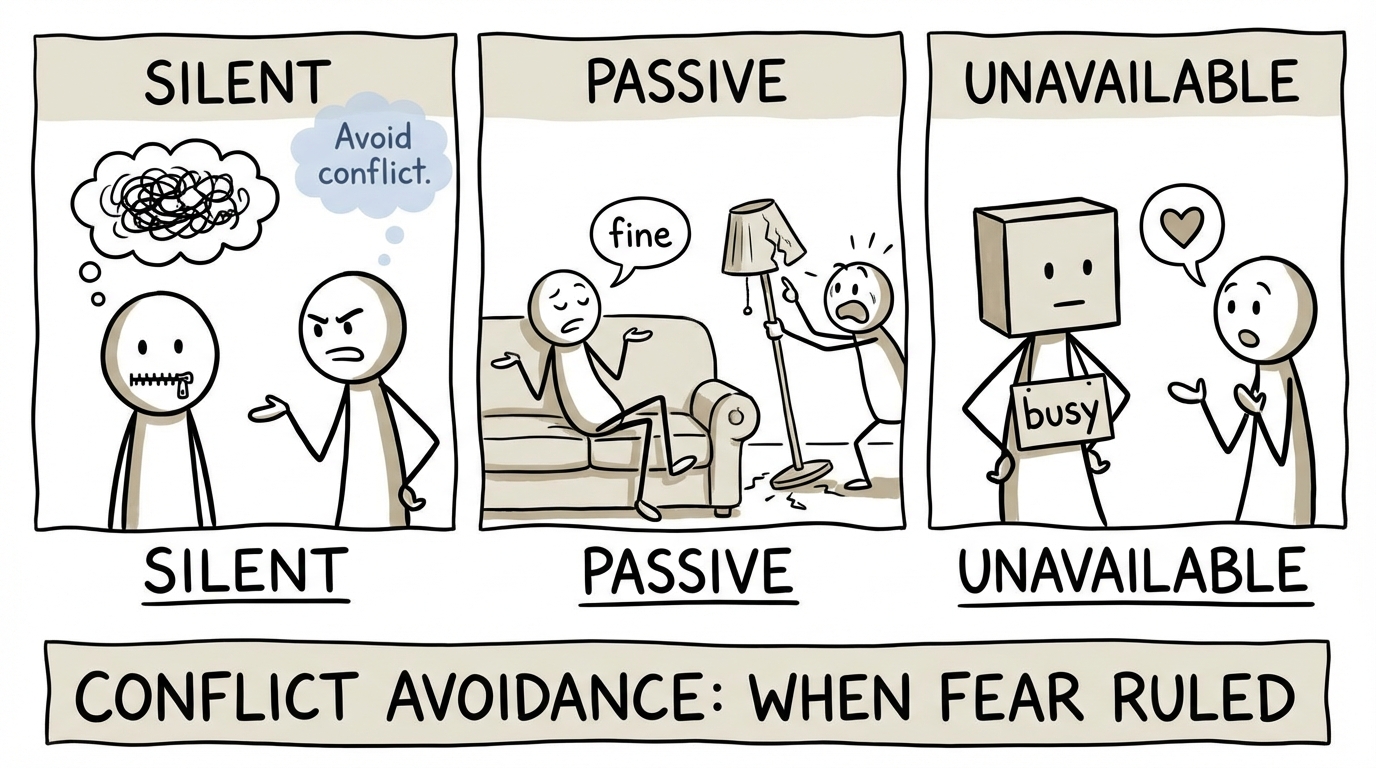
Conflict avoidance is the pattern of going to great lengths to prevent, sidestep, or shut down disagreements -- even when the issue genuinely needs to be addressed. It can look like changing the subject when tension arises, agreeing with someone just to end a discussion, suppressing your opinion to keep the peace, or physically withdrawing when conflict feels imminent. On the surface, conflict avoidance can seem like maturity or easygoingness, but underneath it is usually driven by fear: fear of anger (yours or theirs), fear of rejection, fear of being seen as difficult, or past experiences where conflict led to emotional or physical danger. The cost of chronic conflict avoidance is significant. Unaddressed issues do not disappear -- they accumulate as resentment, distance, and emotional disconnection. Partners of conflict avoiders often feel shut out, unheard, or like they are walking on eggshells. Learning to engage in healthy conflict means building the capacity to tolerate discomfort, express your needs clearly, and stay present even when conversations get hard.
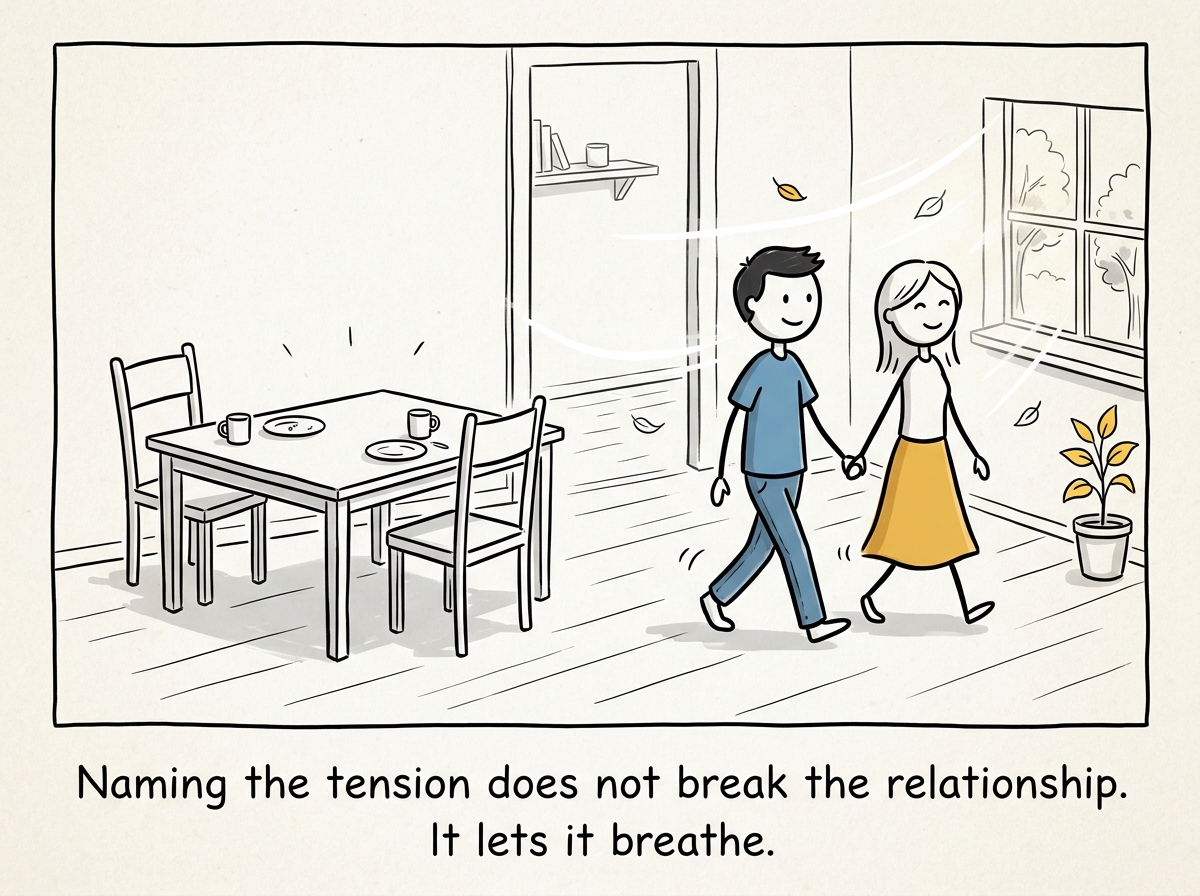
Healthy relationships are not conflict-free -- they are conflict-capable, where both people feel safe enough to say what is real.