How to Rebuild Confidence After Failure
Learn to process failure without letting it define you, and rebuild genuine belief in yourself through honest, incremental action.
Before You Begin
Failure does something specific to your internal wiring. It does not just hurt -- it rewrites the story you tell about yourself. One day you are someone who can handle things, and the next you are someone who cannot be trusted to get it right. The confidence you had before the failure can feel like it belonged to a different person, someone naive enough to believe things would work out. Rebuilding after that is not about positive thinking or motivational speeches. It is about grief, honesty, and very small acts of courage. The confidence that comes back will not be the same as what you lost -- it will be sturdier, because it will include the knowledge that you can fall and get back up. This guide walks you through that process, starting with the part most people skip.
-
Grieve the Loss Before Rebuilding
Failure is a loss, and losses need to be grieved. You lost a version of yourself, a plan, a future you were counting on. Skipping the grief does not make you resilient -- it makes you brittle. The feelings you refuse to process do not disappear. They go underground and show up as paralysis, cynicism, or an inability to try again.
- Give yourself a defined period to feel terrible about what happened. Not forever, but not zero days either. A week, two weeks -- whatever the scale of the failure warrants.
- Name specifically what you lost. It is rarely just the thing itself. It is often the identity attached to it: 'I lost the job' might really mean 'I lost my sense of being competent.' Name the deeper loss.
- Let yourself be angry, sad, embarrassed, or all three. These are not signs of weakness. They are signs that what happened mattered to you, and things that matter deserve to be mourned.
- Resist the urge to skip ahead to the lesson. The lesson will be there when you are ready. Right now your only job is to feel the weight of what happened without running from it.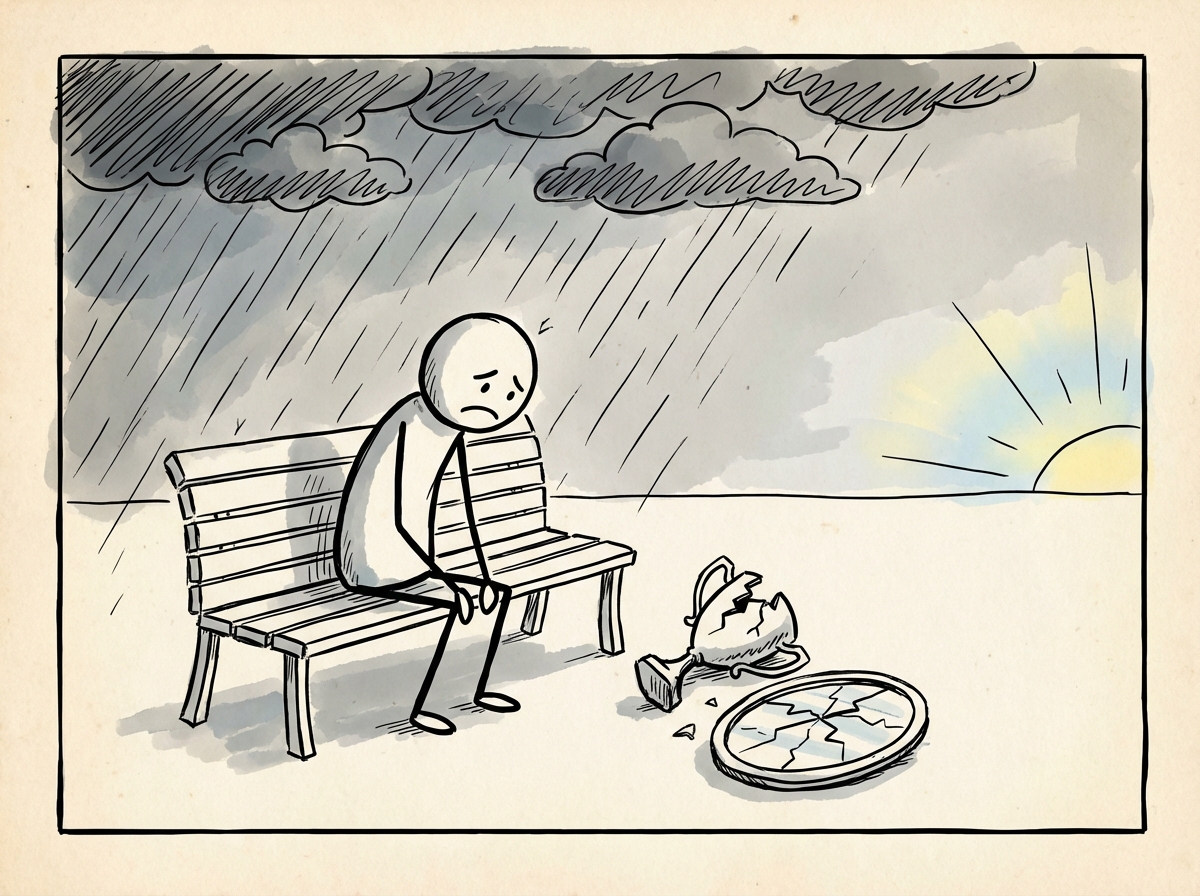
-
Separate the Failure From Your Identity
The most dangerous thing about failure is the way it collapses the distance between what happened and who you are. 'I failed' becomes 'I am a failure.' That shift from verb to noun is where the real damage happens. Your job in this step is to pry those two things apart.
- Write down the factual account of what happened, stripped of interpretation. Not 'I ruined everything' but 'I started a business, it did not generate enough revenue, and I had to close it after eight months.'
- Notice the difference between describing an event and describing a person. Events have context, timing, and contributing factors. Identity statements are absolute and permanent.
- Ask yourself: Would you call someone else a failure for the same thing? If your best friend told you this story, would you define them by it? Apply the same standard to yourself.
- Repeat this as many times as you need: 'Something I tried did not work. That is information about the attempt, not information about my worth.'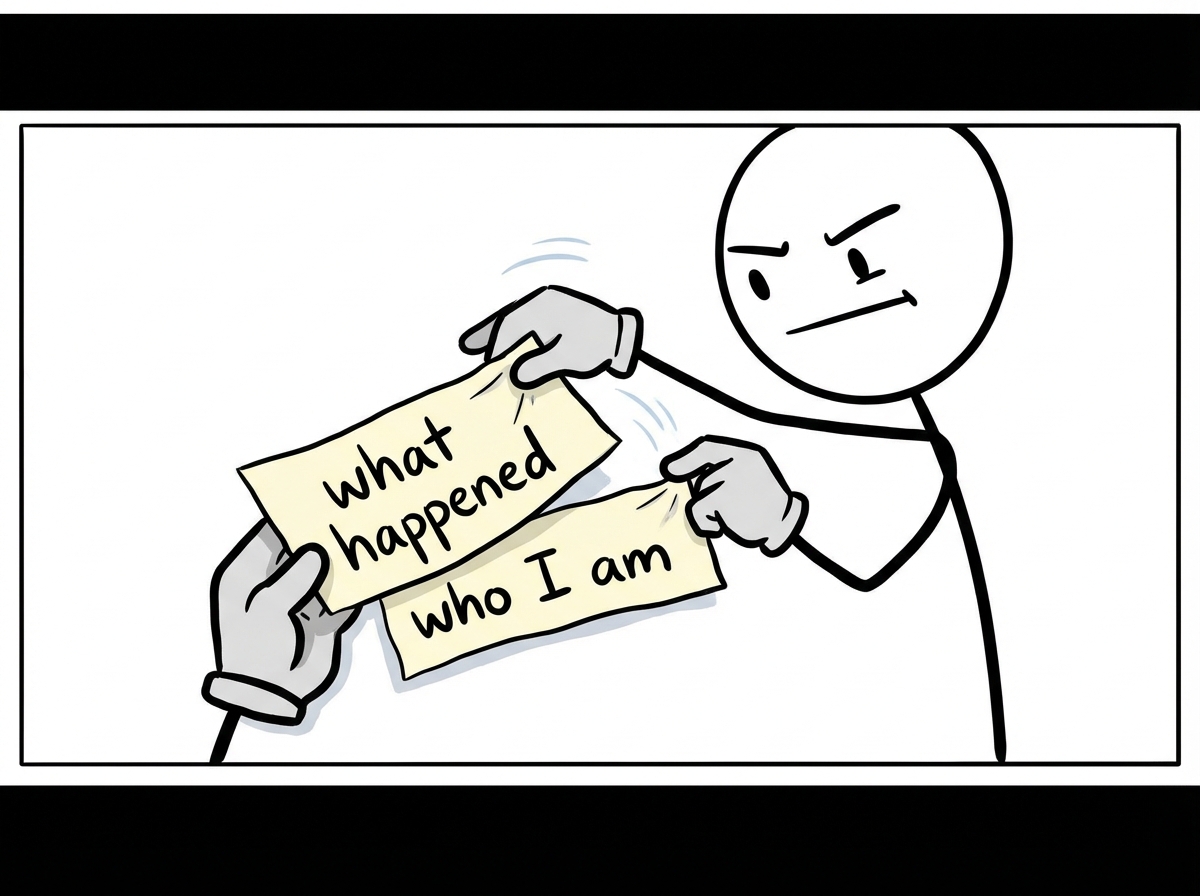
-
Extract the Lesson Without the Self-Punishment
There is usually a real lesson inside a failure. The problem is that most people extract it with a side of self-cruelty. 'I should have known better' is not a lesson. 'I trusted someone without verifying their track record' is a lesson. The difference is that one punishes you and the other teaches you.
- Write down what you would do differently if you could go back. Be specific and behavioral, not emotional. Not 'I would not be so stupid' but 'I would ask for a second opinion before committing that much money.'
- Check your language for disguised punishment. If your lesson includes the words 'should have,' 'was stupid,' or 'never again,' you are punishing, not learning. Rewrite it.
- Accept that some failures do not have clean lessons. Sometimes you did everything right and it still did not work. The lesson there is that outcomes are not fully within your control, and that is information worth having.
- Hold the lesson loosely. It is a guideline for next time, not a life sentence. You can learn from failure without organizing your entire future around avoiding it.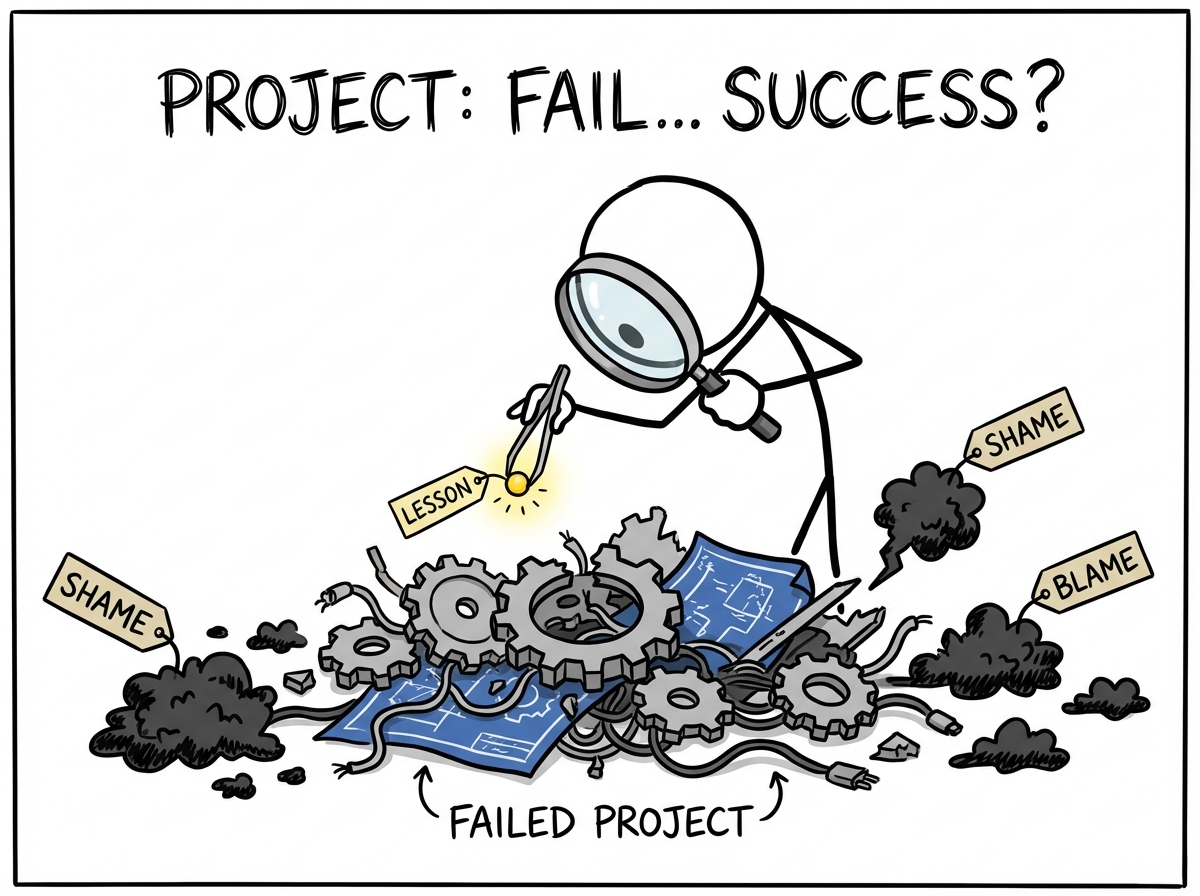
-
Take One Small Action Before You Feel Ready
Confidence does not come back through thinking. It comes back through doing. But after failure, your entire system is set up to prevent you from doing anything, because doing things is what got you hurt. This step asks you to override that protective instinct -- just slightly, just once.
- Choose one small action related to the area where you failed. If you failed at a business, send one email about a new idea. If you failed at a relationship, have one honest conversation with a friend. The action should be small enough that even failing at it would not be devastating.
- Do not wait until you feel confident to act. Act, and let the confidence follow. This is not fake-it-till-you-make-it. This is the psychological reality that action generates confidence more reliably than confidence generates action.
- Expect the fear. Your body will remember what happened last time and try to stop you. That is not a reason to wait. That is a reason to start small enough that you can move forward despite the fear.
- After you take the action, regardless of the outcome, acknowledge that you did something. You moved. After everything that happened, you moved. That is not nothing.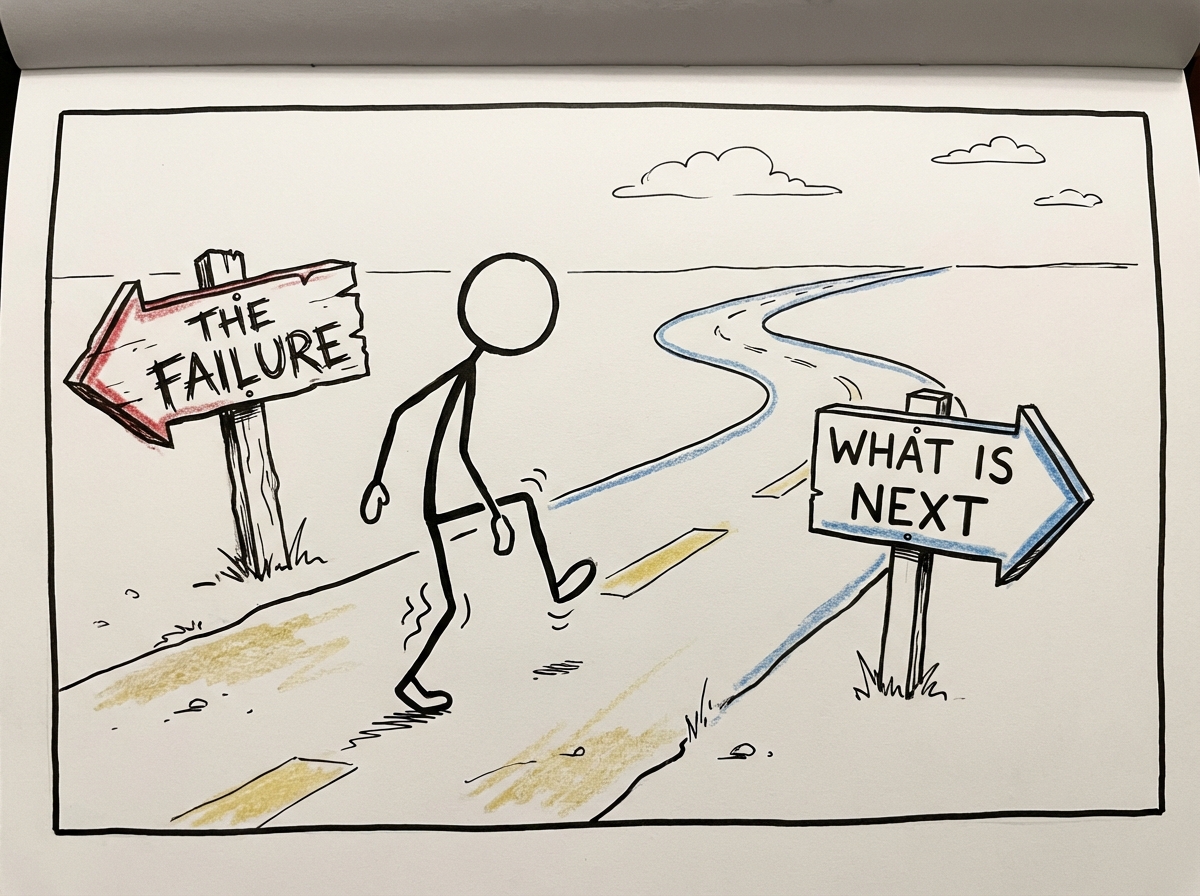
-
Update Your Self-Concept to Include Failure
The version of you that existed before the failure had a self-concept that did not include this kind of loss. That version was incomplete, not better. A self-concept that cannot hold failure is fragile. Your job now is to build one that can.
- Stop trying to get back to who you were before. That person did not have the information you have now. You are not going backward -- you are building something more honest.
- Practice saying, out loud or in writing: 'I am someone who tried something, failed, and is still here.' Notice how that sentence includes both the failure and the survival. Neither one cancels out the other.
- Look for role models who talk openly about their failures. Not the polished 'I failed and then became a billionaire' stories, but the honest ones where the failure genuinely cost something and they had to rebuild slowly.
- Accept that your new confidence will feel different from the old kind. The old confidence might have been light and effortless. The new kind will be heavier, more deliberate, and significantly harder to break.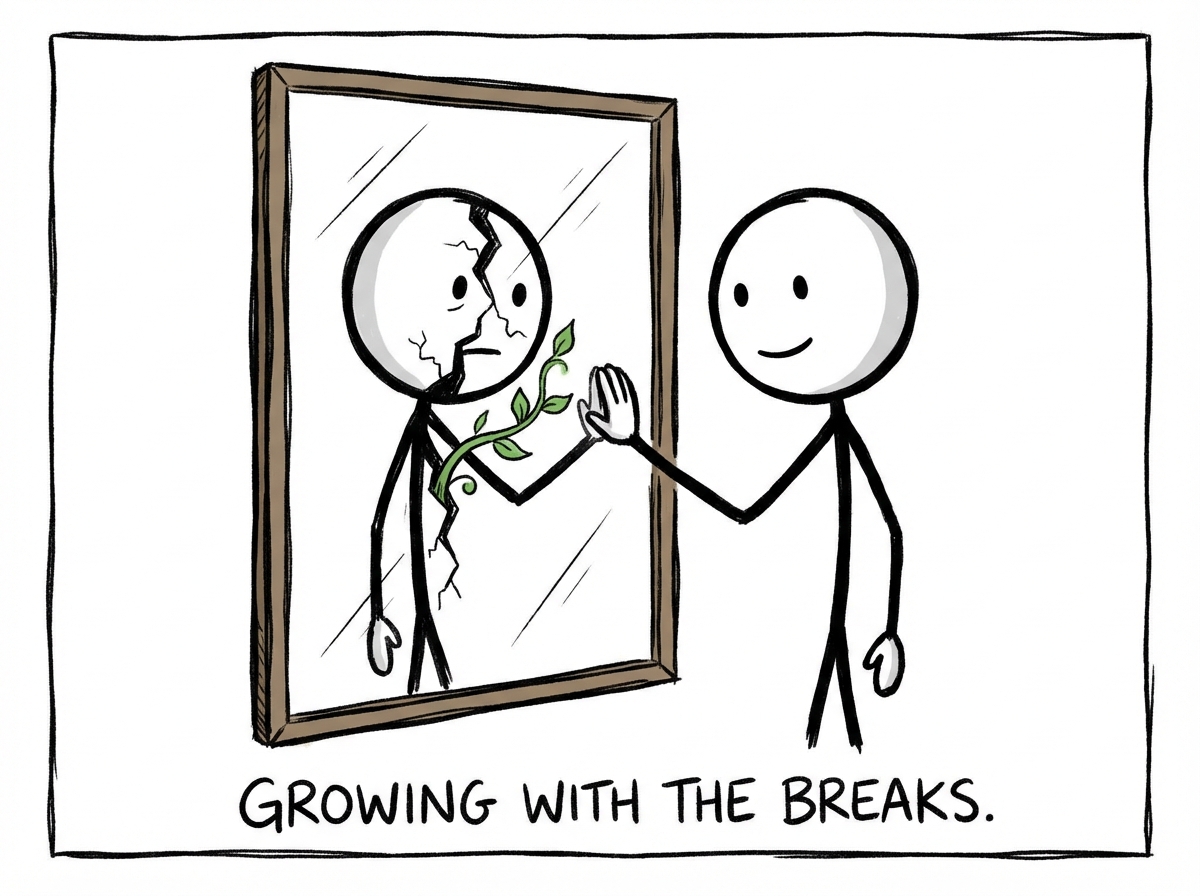
-
Let the New Evidence Rewrite the Story
Every small action you take after failure is a line of new evidence. Over time, that evidence accumulates into a new narrative -- not one where the failure did not happen, but one where it is no longer the most recent or most defining chapter.
- Keep going with the small actions from step four. Stack them. Let each one add a sentence to the new story: 'I failed, and then I sent an email. I failed, and then I had a conversation. I failed, and then I tried a different approach.'
- Periodically read the full story from the beginning. Not just the failure chapter, but everything that came before and everything that has come after. Zoom out enough to see the arc.
- Notice when the failure starts to feel like a chapter rather than the whole book. This shift does not happen on a specific day. It happens gradually, and you might not notice it until someone asks you about it and you realize it no longer carries the same charge.
- Give yourself permission to be proud of the rebuild. Not because the failure was secretly good for you, but because you kept going when every part of you wanted to stop. That is not a silver lining. That is just who you turned out to be.