6 steps
How to Rebuild Confidence After Failure
Learn to process failure without letting it define you, and rebuild genuine belief in yourself through honest, incremental action.

How to rebuild your belief in yourself after life has knocked it out of you.
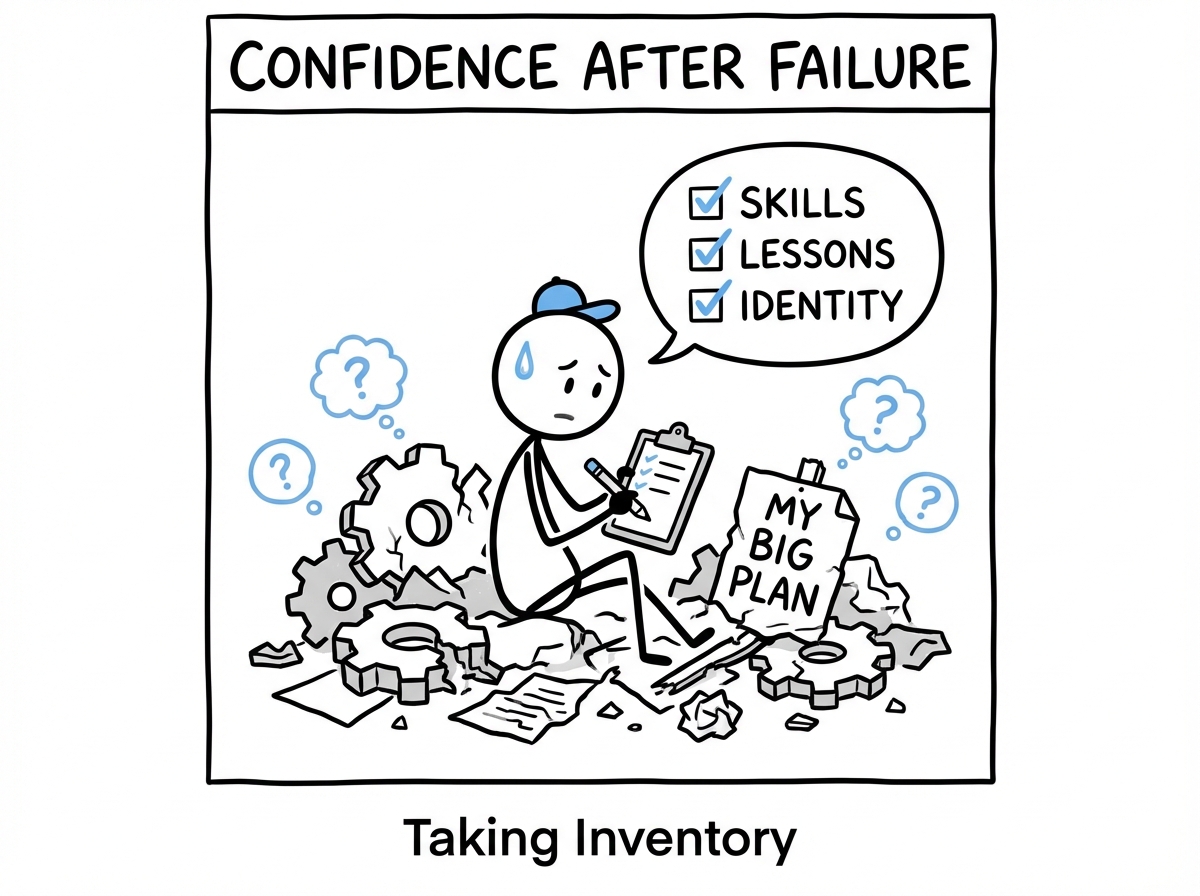
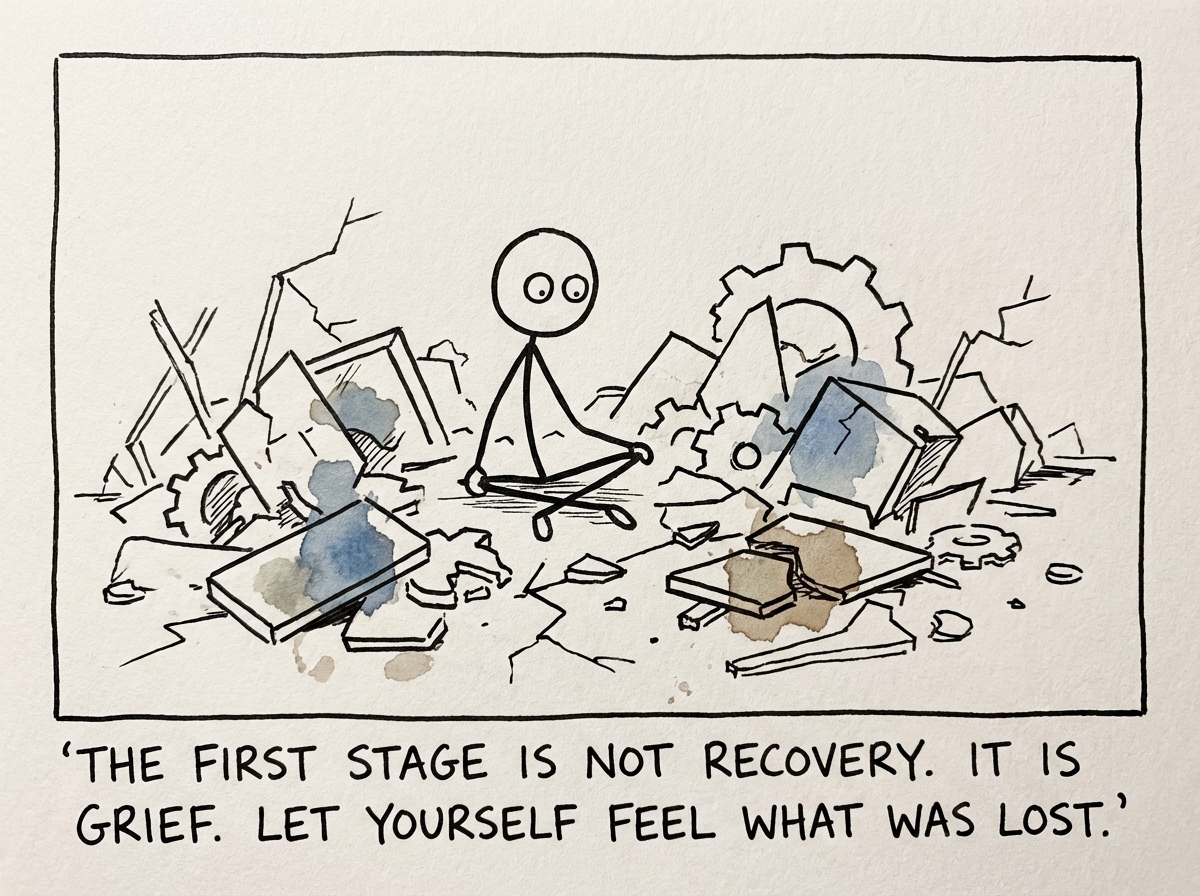
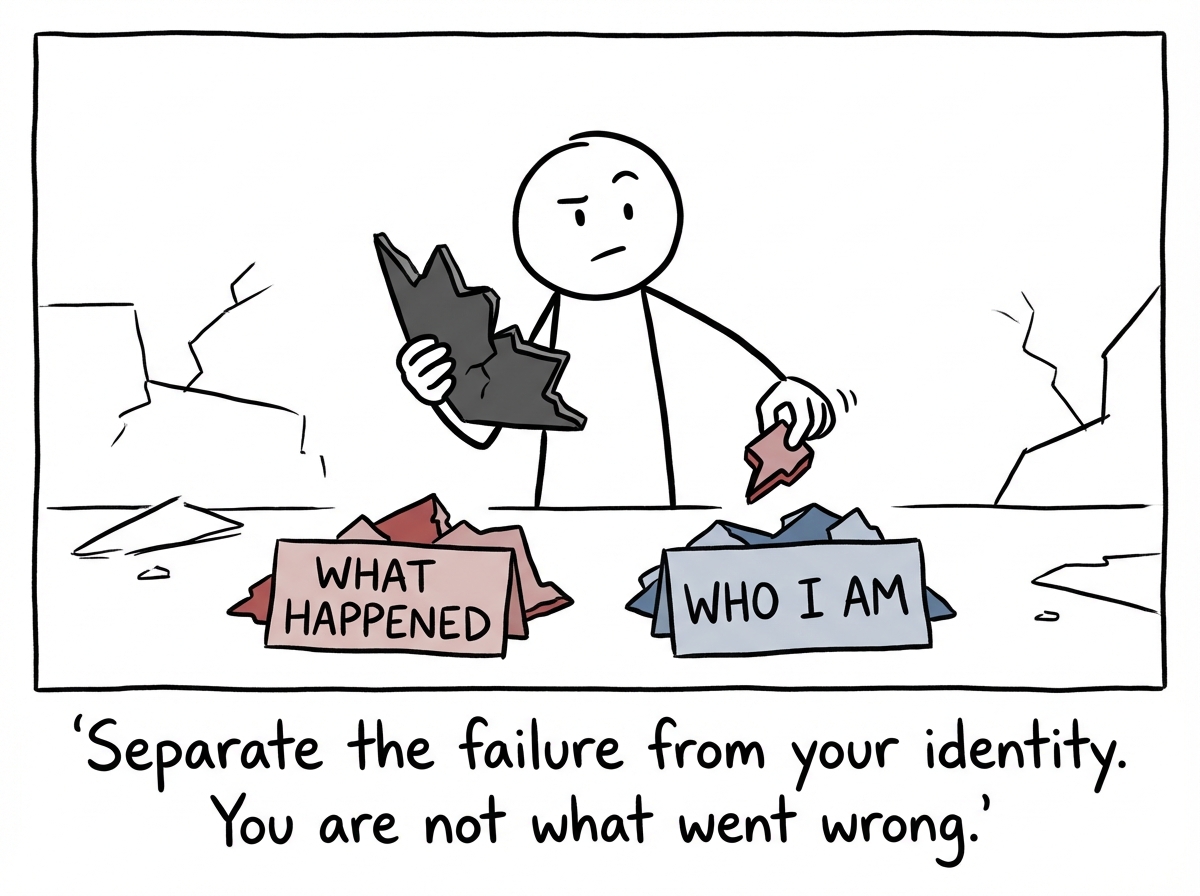
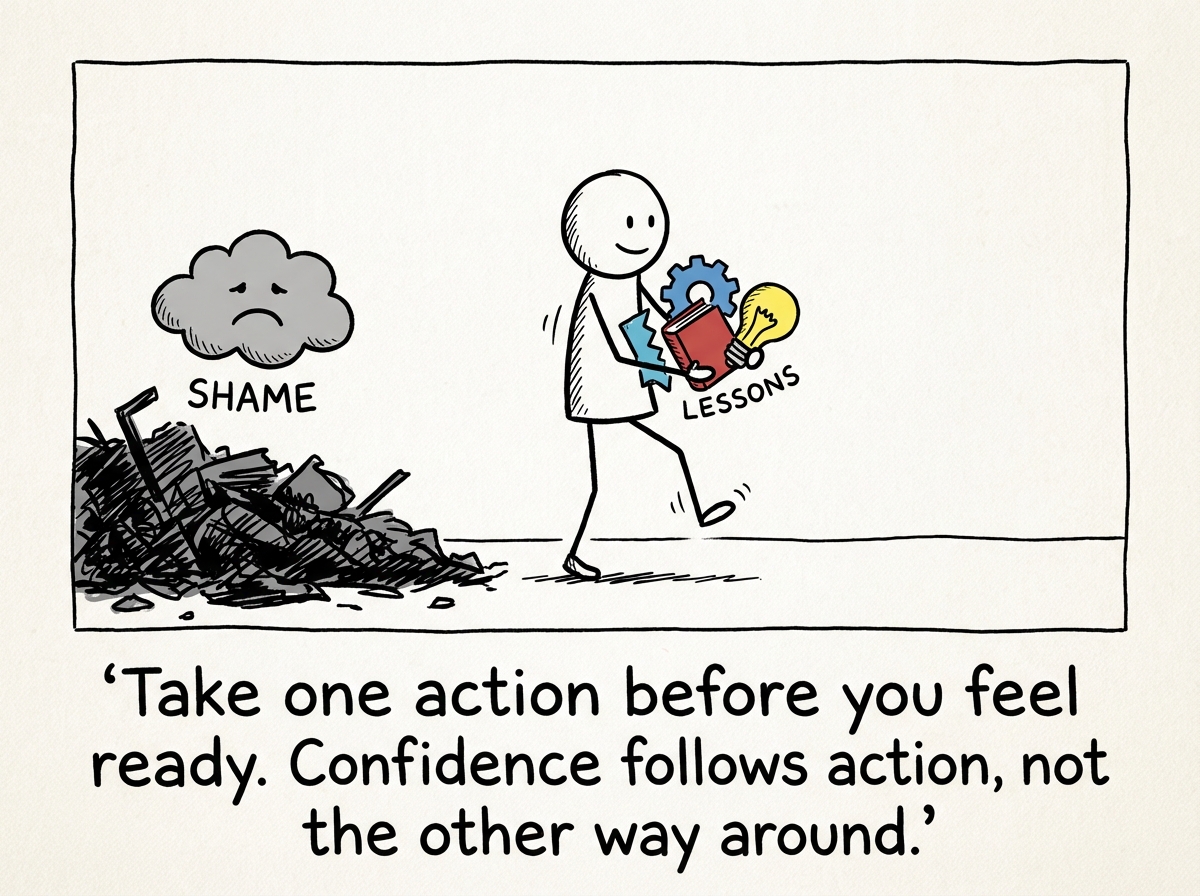
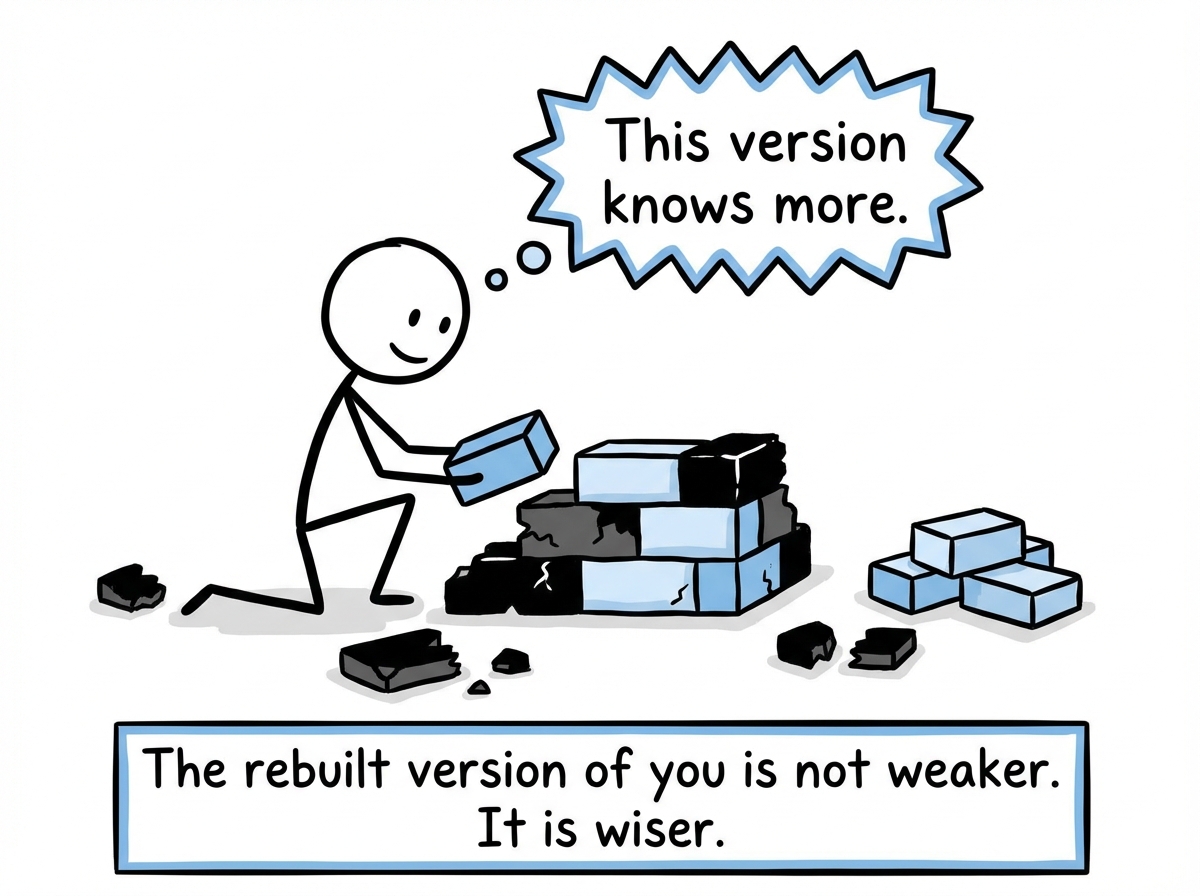
Failure does not just cost you the thing you lost. It costs you the version of yourself who believed you could have it. That is the part nobody talks about. After a major failure -- a business that collapsed, a relationship that ended, a career that stalled -- the practical damage heals faster than the psychological damage. You can find a new job. You cannot easily rebuild the belief that you are the kind of person who succeeds. Confidence after failure is not about bouncing back to who you were. That person did not have the information you have now. It is about building something more durable: a self-concept that includes failure as data, not as identity. The psychology of post-failure recovery shows that people who rebuild confidence fastest are not those who minimize what happened or force positivity. They are people who grieve the loss, extract the lesson, separate the event from their identity, and take one small action toward the next thing before they feel ready. The hardest part is that failure often confirms your worst fears about yourself. If you already suspected you were not good enough, failure feels like proof. But confirmation bias is not truth. You did not fail because of who you are. You failed because of what you tried, when you tried it, and what you did not yet know.
Confidence after failure is not about pretending it did not happen. It is about building a self-concept sturdy enough to include it.