6 steps
How to Build Self-Efficacy
Learn to trust your own capability by gathering real evidence that you can handle what life puts in front of you.

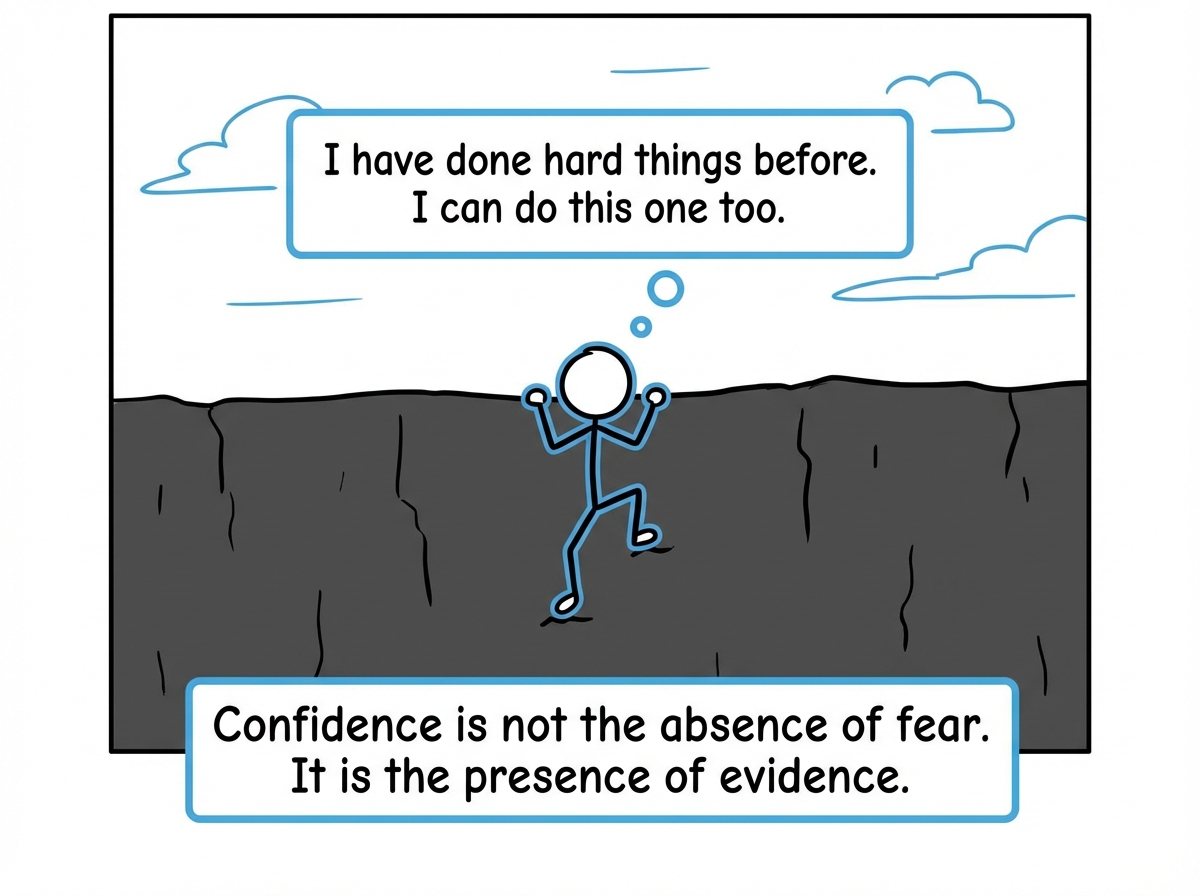
The belief that you can handle what is in front of you -- not because you are fearless, but because you have evidence you can figure it out.
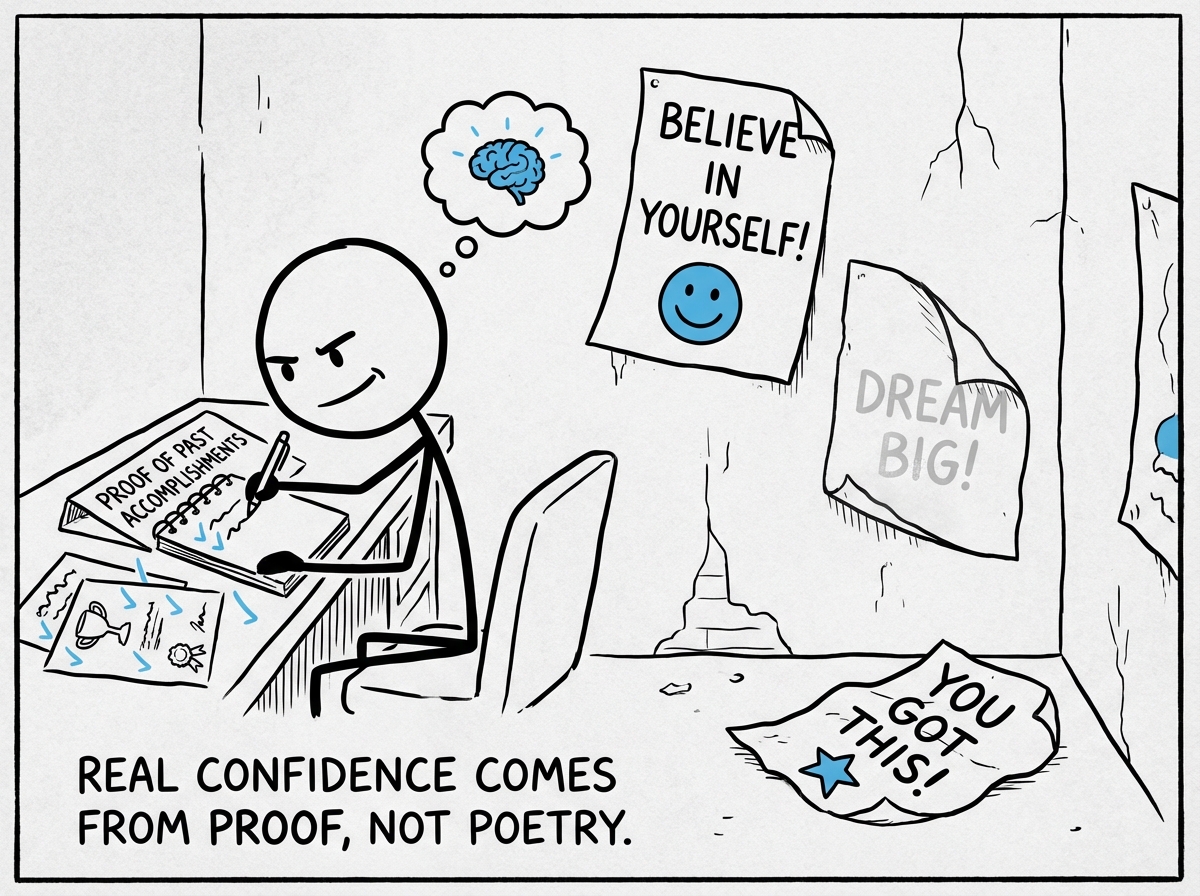
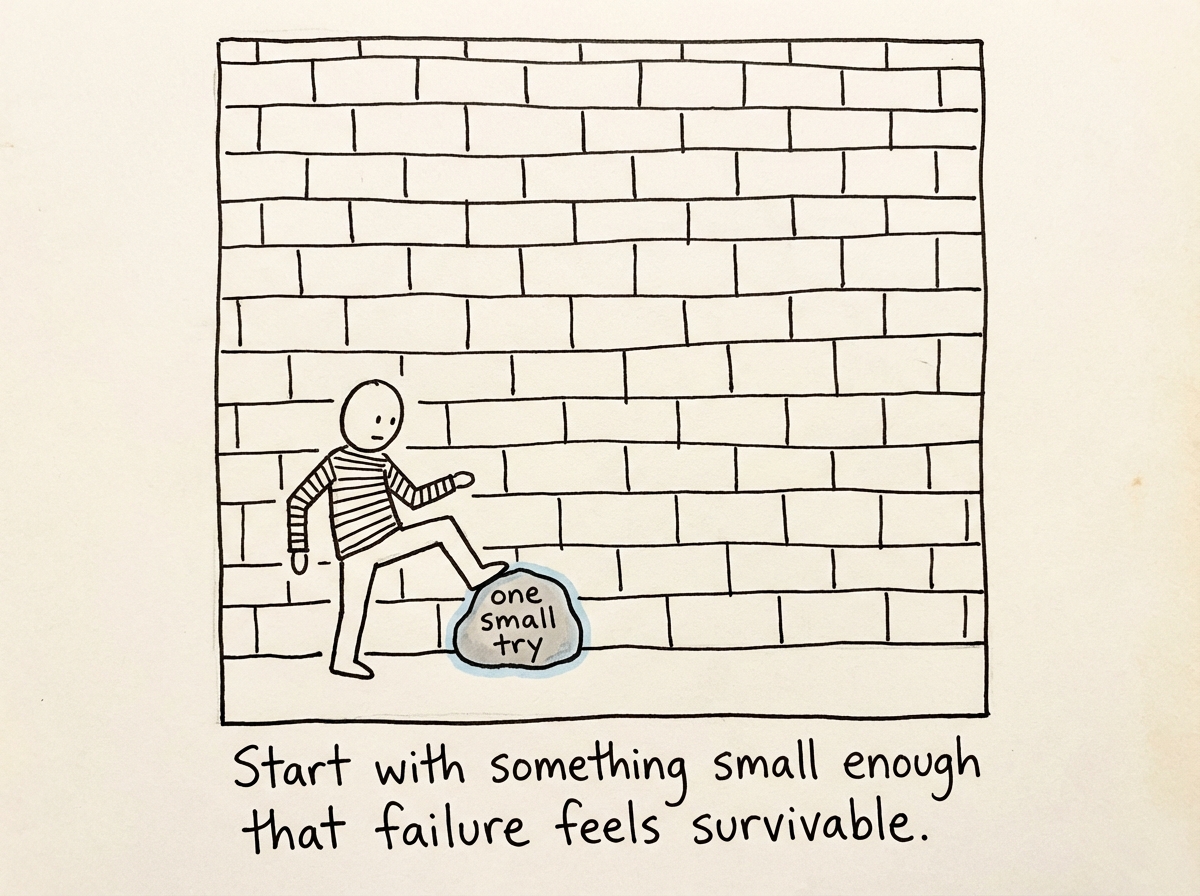
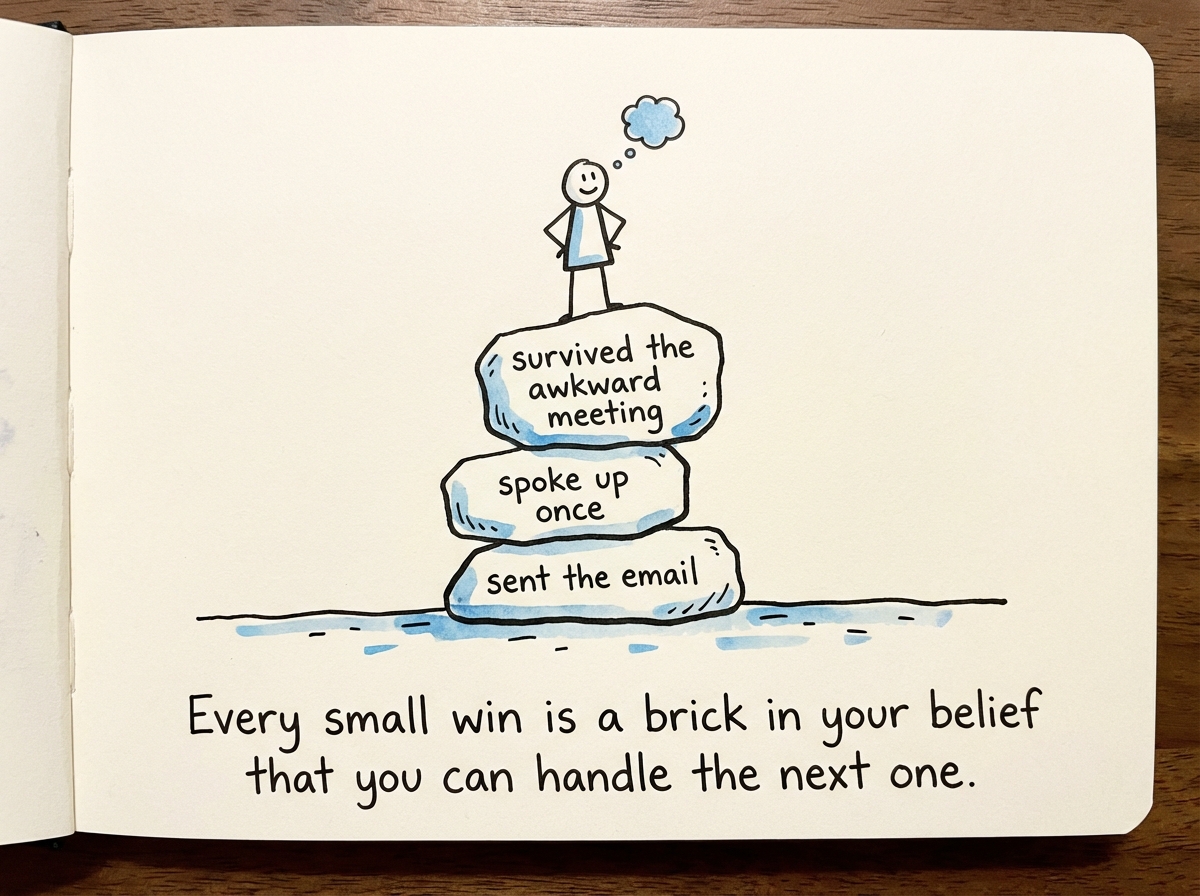
Self-efficacy is not the same as self-confidence. Self-confidence is a general feeling about yourself. Self-efficacy is specific: it is the belief that you can accomplish a particular task or navigate a particular challenge. Psychologist Albert Bandura introduced this concept in the 1970s and found it to be one of the strongest predictors of whether people actually follow through on goals, persist through difficulty, and recover from setbacks. Self-efficacy does not come from affirmations or motivational speeches. It is built through four sources: mastery experiences (you did the thing and survived), vicarious experiences (you watched someone like you do it), verbal persuasion (someone you trust said you could), and physiological states (your body felt calm enough to try). The most powerful source is mastery. Every time you attempt something difficult and come out the other side -- even imperfectly -- your brain updates its model of what you are capable of. Low self-efficacy keeps people stuck not because they lack ability, but because they do not believe they have it. They avoid challenges, give up quickly, and interpret failure as confirmation of inadequacy rather than as information. The fix is not thinking bigger. It is starting smaller -- small enough that success is likely -- and letting the evidence accumulate.
Self-efficacy is not built by believing in yourself harder. It is built by collecting small evidence that you can handle hard things.