How to Build Self-Efficacy
Learn to trust your own capability by gathering real evidence that you can handle what life puts in front of you.
Before You Begin
Self-efficacy is not the same as confidence. Confidence is a feeling. Self-efficacy is a belief -- a quiet, evidence-based conviction that you can handle what is in front of you because you have handled things before. People with high self-efficacy do not necessarily feel brave. They just act anyway, because they have a track record that tells them they are more capable than their fear suggests. If your self-efficacy is low, it is usually not because you are incapable. It is because you have been discounting your evidence. Maybe you were raised in an environment that minimized your accomplishments, or you went through a stretch of life where nothing seemed to work. Either way, the fix is the same: you need to rebuild the evidence base, one honest data point at a time. This guide will walk you through that process.
-
Audit Your Current Evidence of Capability
Before you try to build anything new, take stock of what is already there. Most people with low self-efficacy are sitting on a pile of evidence they have never organized. Your brain has been filtering it out because it does not match your self-concept.
- Grab a piece of paper and write down every hard thing you have survived or accomplished. Include things you take for granted -- graduating, getting through a breakup, learning to drive, holding down a job, raising a kid, recovering from an illness.
- Do not edit the list for impressiveness. Self-efficacy does not care about what looks good on a resume. It cares about what required effort, persistence, or courage from you specifically.
- Notice your brain's instinct to dismiss each item: 'That does not count,' 'Anyone could do that,' 'I got lucky.' That dismissal is the problem, not the evidence.
- Ask someone who knows you well what they think you are good at. Their answer will almost certainly surprise you. Write it down even if you do not believe it yet.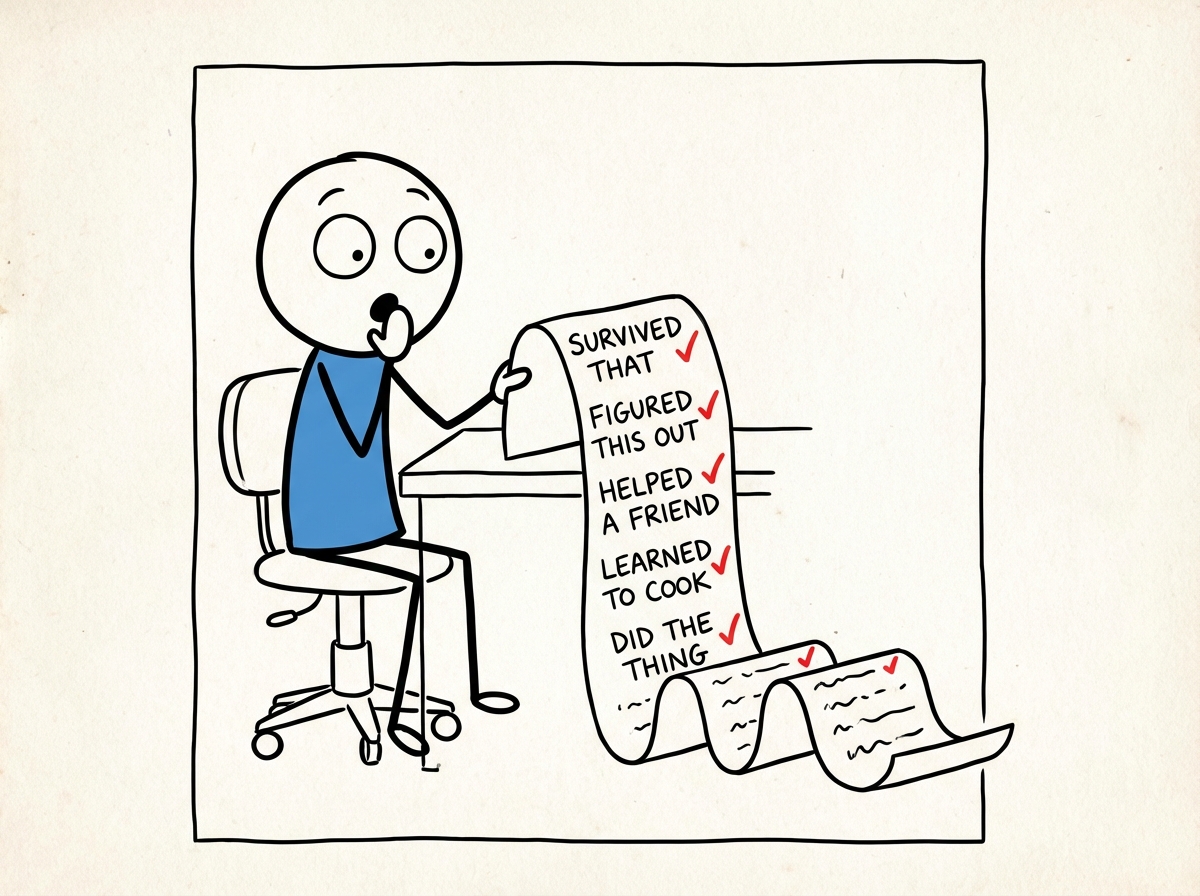
-
Start With Something Small Enough to Succeed
Self-efficacy grows through mastery experiences -- moments where you set out to do something and you actually do it. The most common mistake is starting too big. If you aim for something you are likely to fail at, you reinforce the belief that you cannot handle things. Start embarrassingly small.
- Choose one task this week that is slightly outside your comfort zone but well within your ability. Something like making a phone call you have been avoiding, organizing one drawer, sending one email, or having one conversation.
- The key is completion, not ambition. A finished small task builds more self-efficacy than an abandoned big one.
- Before you start, say out loud what you are about to do and why: 'I am going to call the dentist because I can handle a two-minute phone call.' This turns an ordinary task into a deliberate data point.
- After you finish, pause and register that you did it. Do not immediately move on to the next thing. Let the evidence land.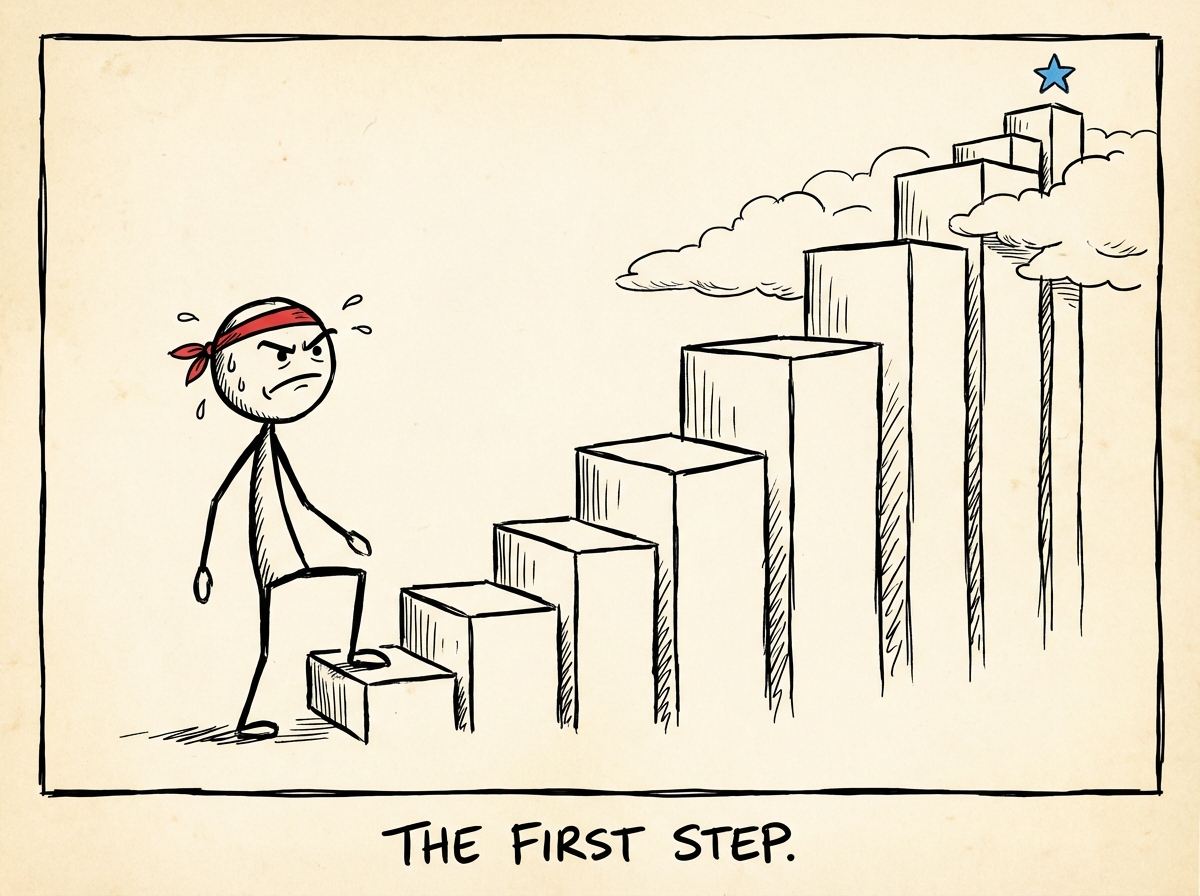
-
Stack Wins Deliberately
One success is a fluke. Two is a coincidence. Three is a pattern. Your brain needs patterns before it will update a belief. So your job is to create a streak of completed tasks that your brain cannot ignore.
- After your first small win, choose another task at roughly the same difficulty. Then another. You are building a chain of evidence. Do not increase the difficulty until the current level feels routine.
- Keep a simple log -- a note on your phone, a checklist, a tally on a sticky note. Something you can look at and see accumulating proof. The physical record matters because your memory will try to erase the wins.
- Increase the challenge gradually. The sweet spot is tasks that make you slightly nervous but that you can realistically complete. If you fail, you went too big too fast. Drop back down and rebuild the streak.
- Celebrate completion, not perfection. Self-efficacy is built on the belief that you can do hard things, not that you can do them flawlessly.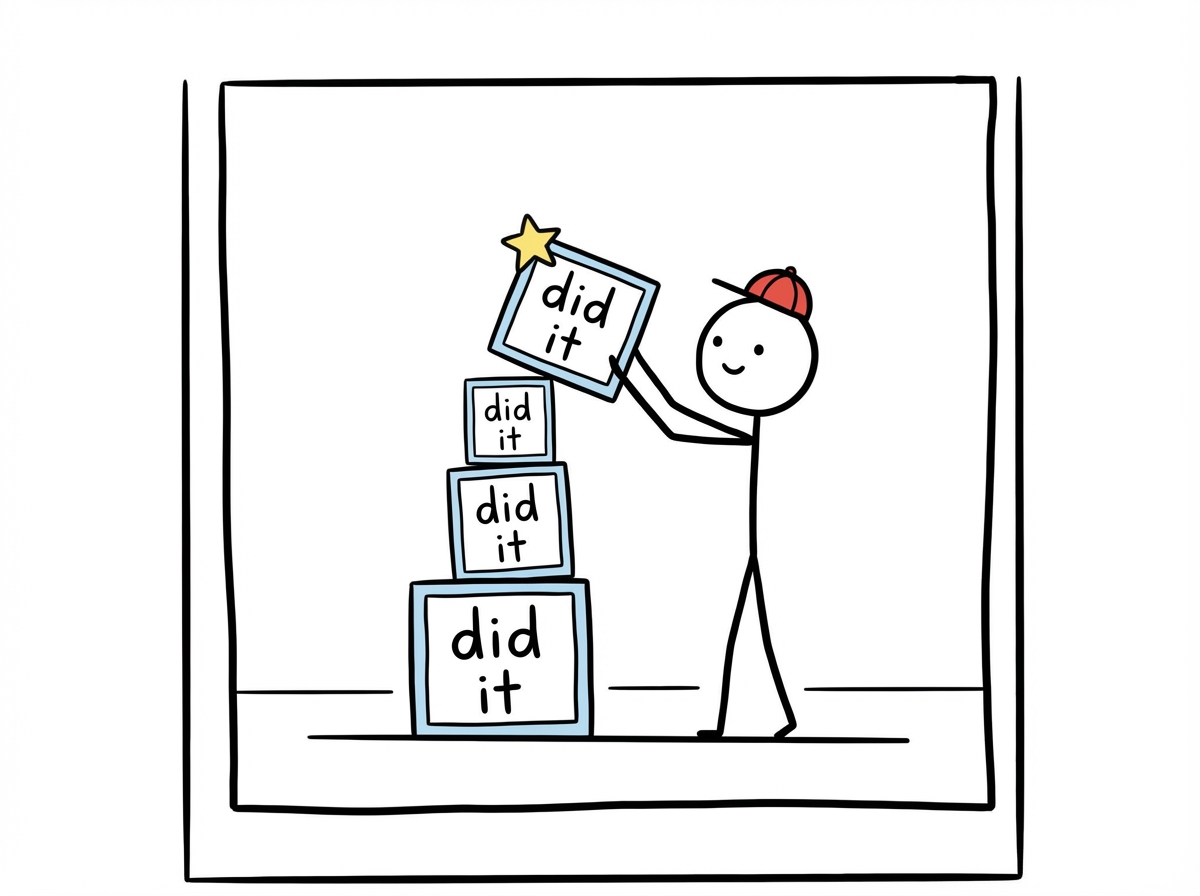
-
Borrow Confidence From Someone You Trust
Psychologists call this vicarious experience -- watching someone similar to you succeed and thinking, 'If they can do it, maybe I can too.' When your own evidence feels thin, you can borrow from someone else's. This is not fake. It is how humans have learned since we were children watching older kids navigate the world.
- Identify one person in your life who has done something you want to do and who is not dramatically more talented or privileged than you. The closer they are to your starting point, the more powerful the effect.
- Talk to them about how they did it. Ask specifically about the messy middle -- the doubt, the mistakes, the moments they almost quit. Their struggle is more useful to you than their highlight reel.
- If you do not have someone in your life, find a memoir, interview, or honest account from someone who built the skill you want from a similar starting place. Avoid success stories that skip the difficulty.
- Let their experience loosen your certainty that you cannot do this. You do not need to be fully convinced. You just need enough doubt about your doubt to take the next step.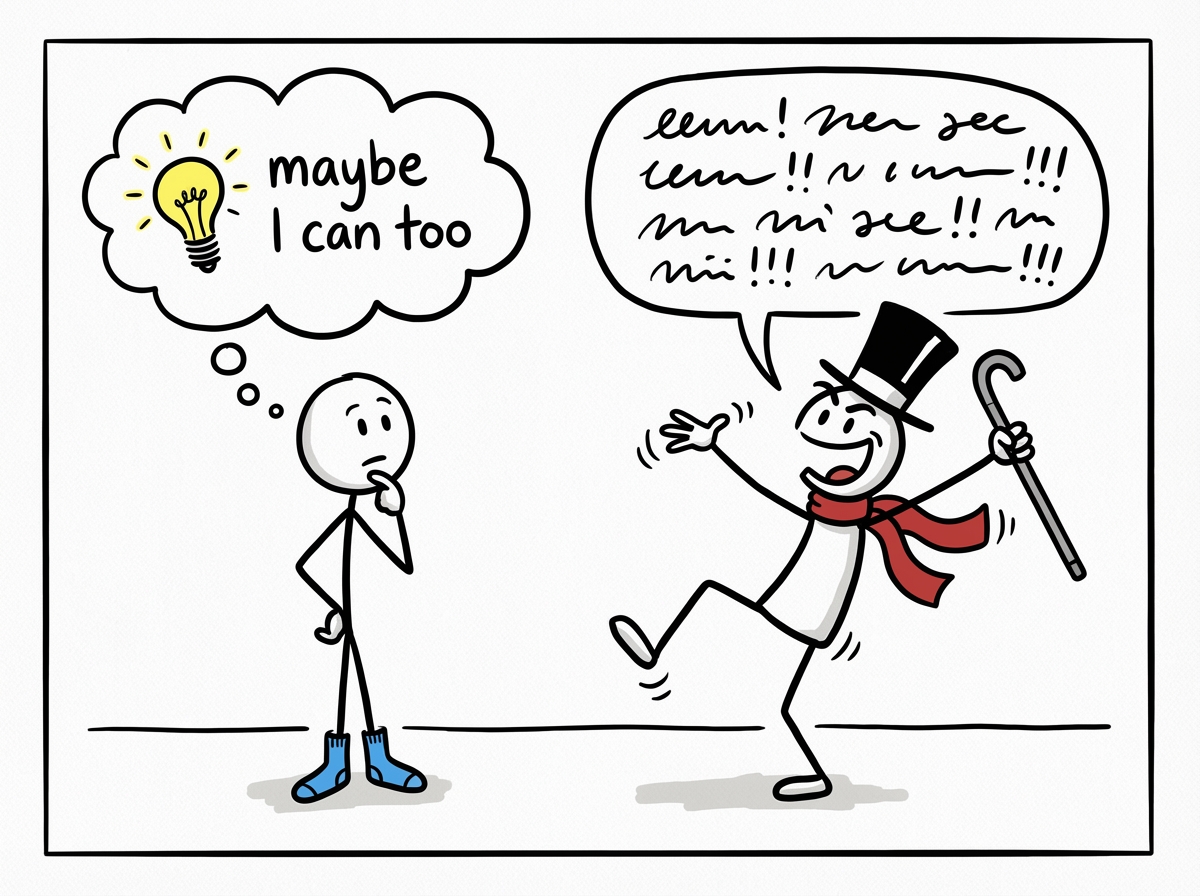
-
Reframe Past Successes You Dismissed
Low self-efficacy does not just prevent future success. It rewrites your history. You probably have real accomplishments that you have explained away as luck, timing, help from others, or the task being easy. Those explanations protected you from the pressure of believing in yourself, but they also robbed you of your own evidence.
- Go back to your audit list from step one. For each item, ask: How did I explain this at the time? Did I give myself credit, or did I attribute it to something outside myself?
- Practice restating each accomplishment without the discount: Instead of 'I only got the job because no one else applied,' try 'I prepared, I showed up, and I was good enough to get hired.'
- Notice the discomfort of claiming your own competence. If it feels arrogant or unsafe to say 'I did that because I am capable,' that tells you something important about what you were taught about taking credit.
- You are not inflating anything. You are correcting a distortion. The goal is accuracy, not self-congratulation.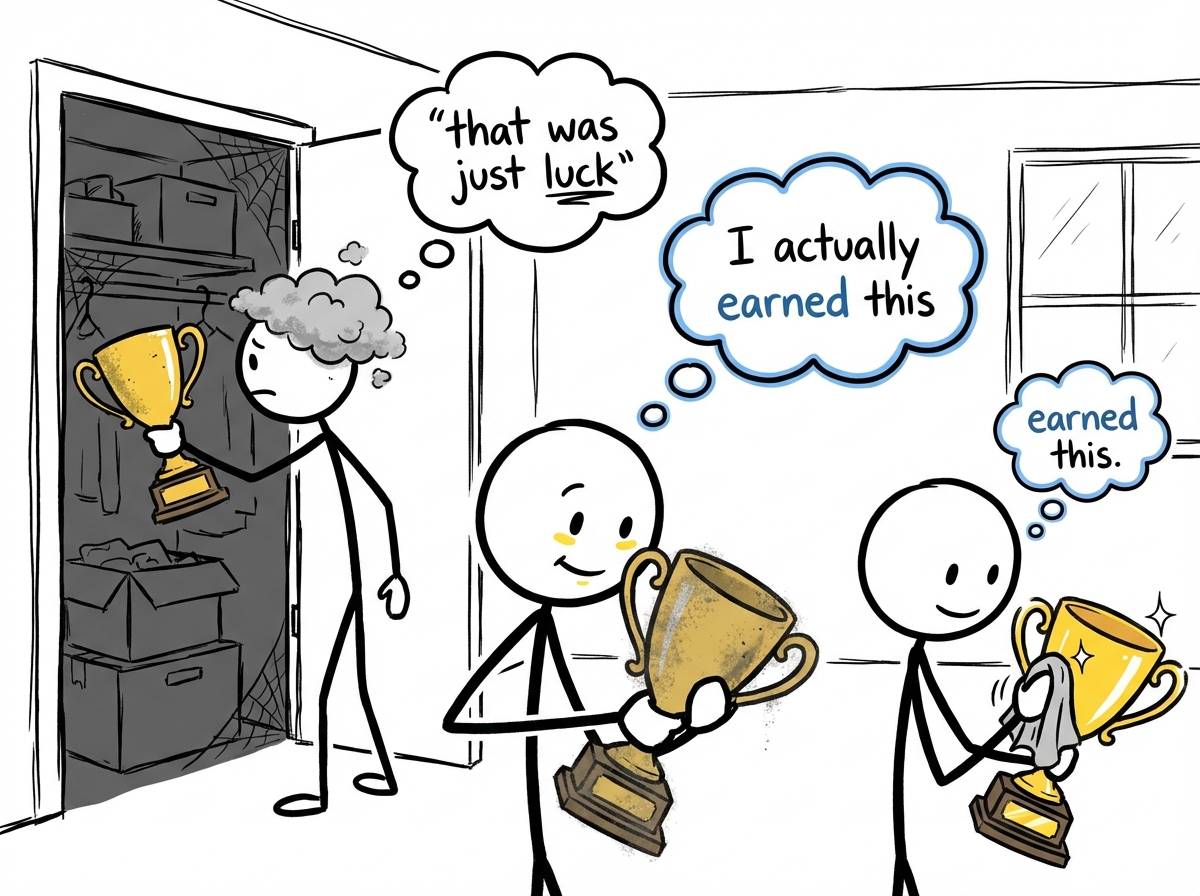
-
Build a Personal Capability Resume
A capability resume is a living document of evidence that you can handle things. Unlike a job resume, it is not for anyone else. It is for you, for the moments when your self-doubt is louder than your track record.
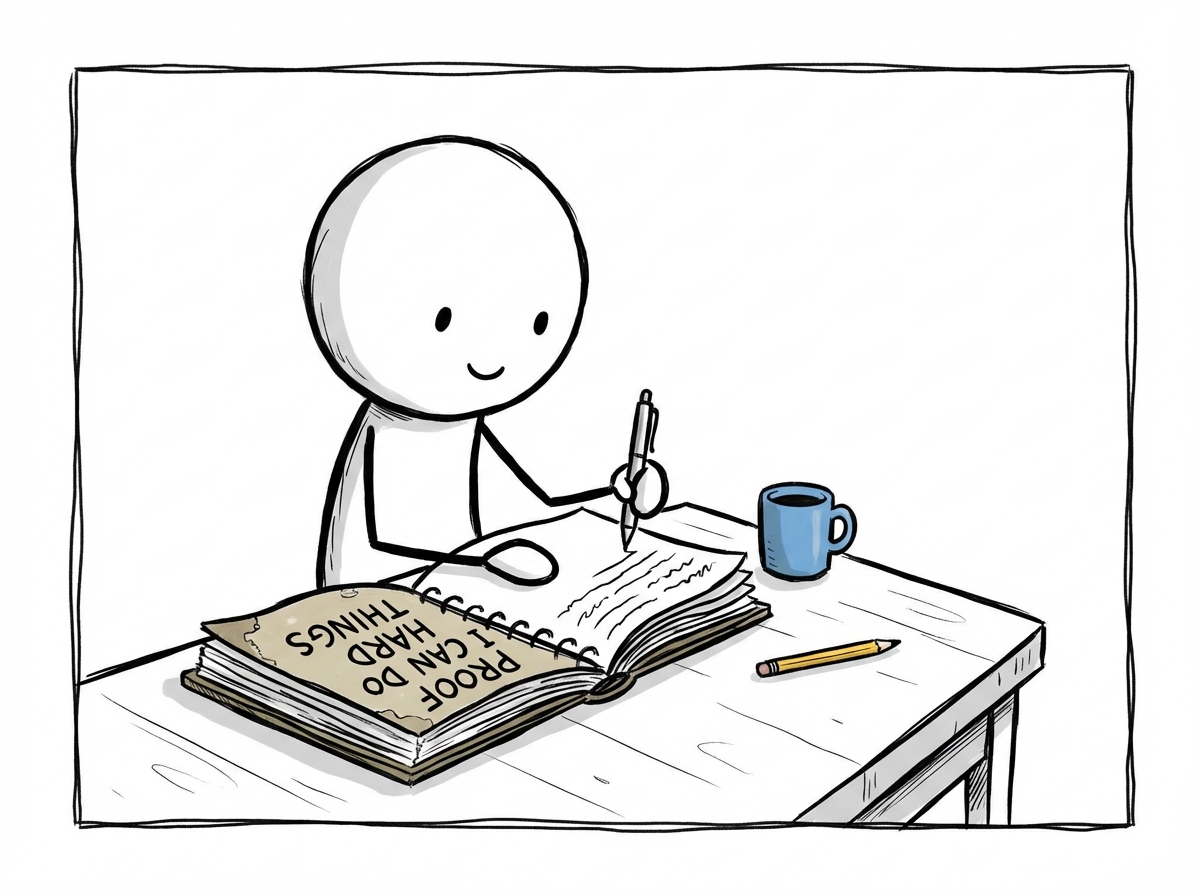
- Create a document -- digital or physical -- and title it something that resonates: 'Things I Have Handled,' 'Proof I Can Do Hard Things,' 'Evidence File.' Keep it somewhere you can access quickly.
- Add everything from this guide: your audit list, your stacked wins, your reframed successes, the lessons you borrowed from others. Date each entry so you can see the timeline building.
- Update it regularly. Every time you complete something challenging, make a difficult decision, or push through fear, add it. The act of recording is itself a statement of belief.
- When self-doubt hits -- and it will -- open the document before you make any decisions. Let the evidence speak before your fear does. Self-efficacy is not about never doubting yourself. It is about having somewhere to go when the doubt arrives.