Guide to Developing Emotional Maturity
Learn to feel your feelings fully without letting them run the show, so you can respond to life's difficulty with honesty and steadiness.
Before You Begin
Emotional maturity is not about being calm all the time. It is about being honest all the time, even when honesty is uncomfortable. It means feeling anger without throwing it at someone, sitting with sadness without drowning in it, and tolerating someone else's pain without rushing to fix it so you can feel better. Most of us were never taught how to do this. We were taught to suppress, perform, or explode. This guide gives you a different path: one where your emotions are information, not instructions, and where you can hold complexity without falling apart.
-
Notice when you are reacting vs responding
There is a critical difference between reacting and responding. A reaction is automatic. It comes from your nervous system, your old wounds, your survival programming. A response is chosen. It comes from the part of you that can see the full picture.
Reactions feel urgent. They sound like 'I need to fix this right now' or 'I need to defend myself immediately' or 'I need to shut down before I get hurt.' Responses feel slower. They sound like 'This is hard, and I can handle it.'
Your homework: for one week, just notice. After every emotionally charged interaction, ask yourself, 'Did I react or respond?' Do not judge yourself. Just observe. Awareness is the first and most important skill. You cannot change a pattern you cannot see.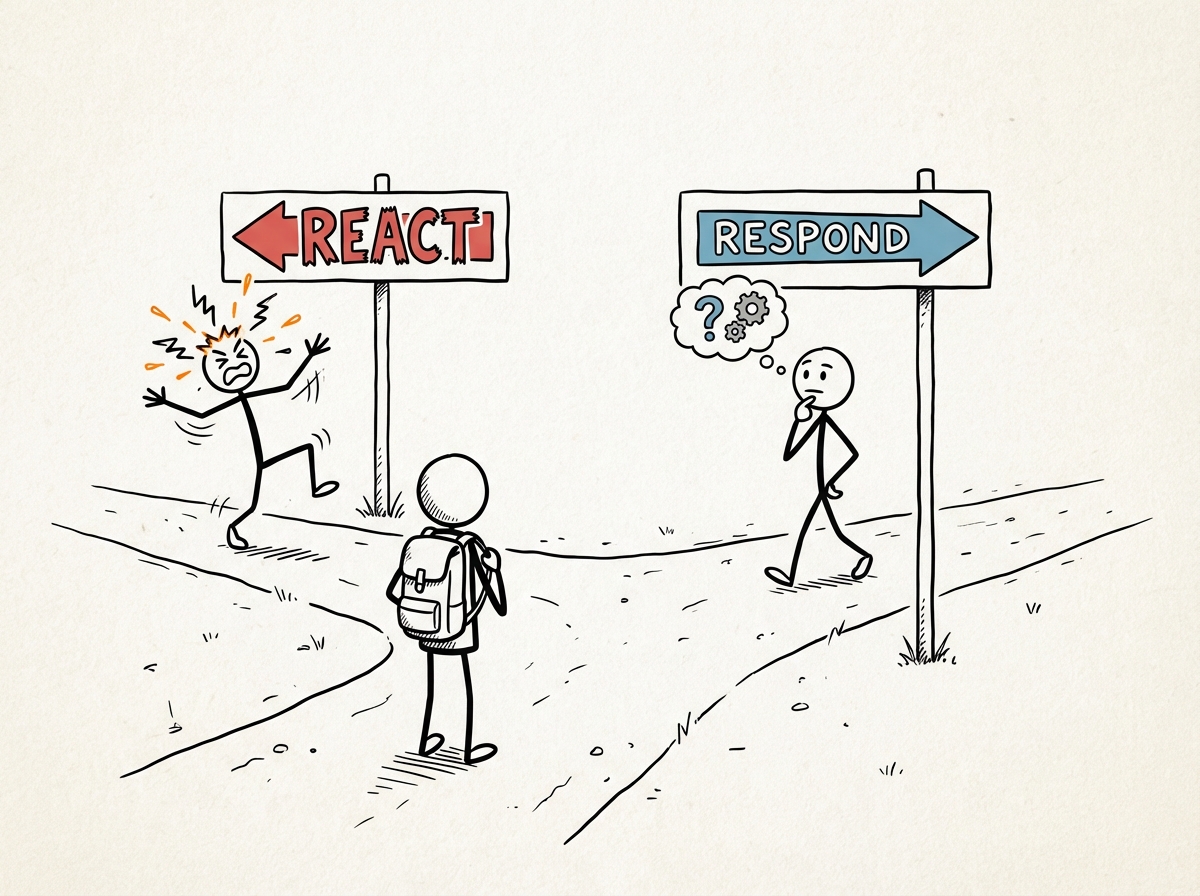
-
Practice the pause between trigger and action
Between something happening and you doing something about it, there is a gap. For most people, that gap is approximately zero seconds. Emotional maturity lives in that gap.
- When you feel the surge of emotion, name it silently. 'I am feeling defensive right now.' Naming it creates a micro-pause.
- Take one slow breath before you speak. Not as a performance. As a genuine reset.
- Ask yourself: what do I actually want to happen here? Not what does my anger want, or my fear want, but what does the wisest version of me want?
- If you cannot find the pause, remove yourself temporarily. 'I need ten minutes' is one of the most emotionally mature sentences in any language.
The pause is not avoidance. It is the difference between a fire that burns the house down and a fire that stays in the fireplace.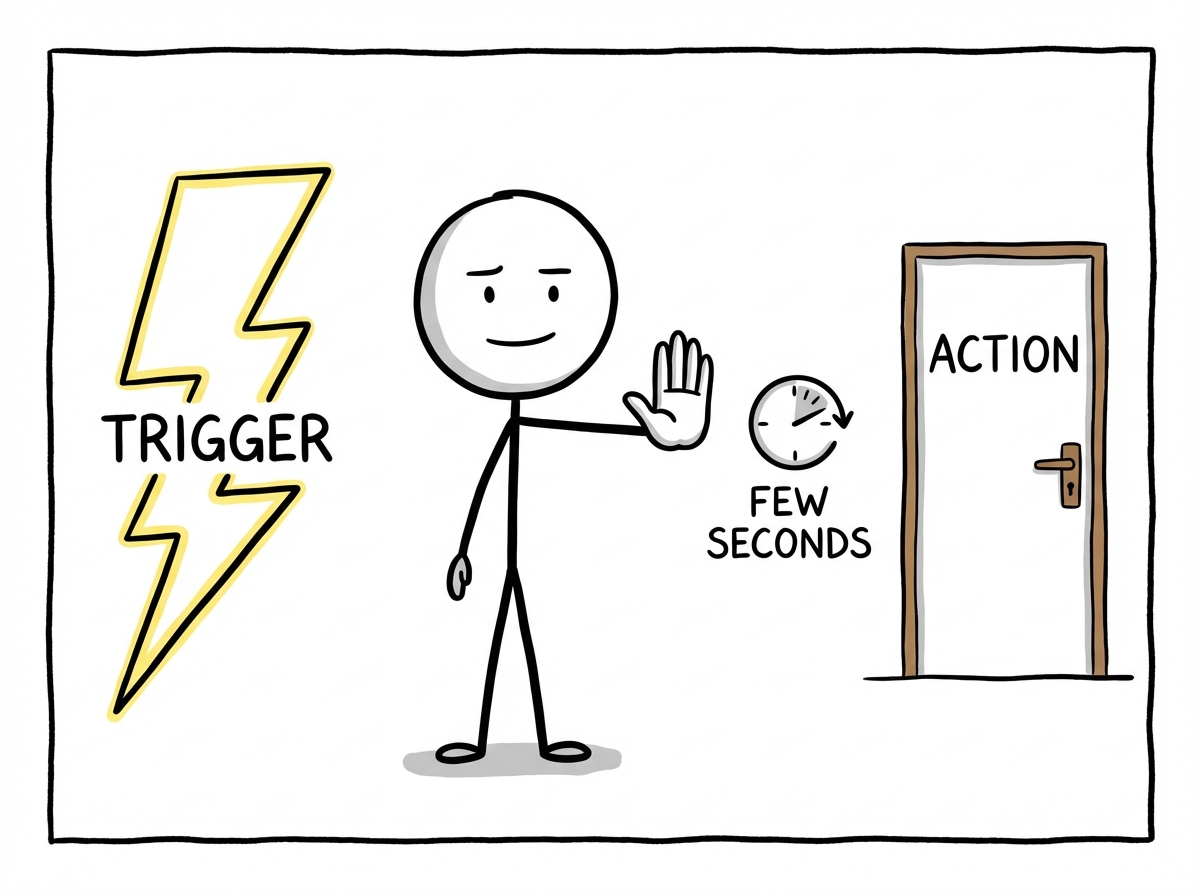
-
Take responsibility without deflecting
Emotionally immature people have a reflex: when confronted with their impact, they immediately redirect. 'I only did that because you did this first.' 'Well, you are not perfect either.' 'That is not what I meant, so you should not be upset.' Every one of these sentences is a shield against accountability.
Emotional maturity sounds different. It sounds like: 'I hear you. I did that. I understand why it hurt you. I am sorry.' No qualifiers. No redirect. No defense.
This does not mean you accept blame for things that are not yours. It means that when something is yours, you hold it without flinching. The ability to say 'I was wrong' without crumbling is one of the strongest things a person can do. It requires a sense of self sturdy enough to absorb criticism without shattering.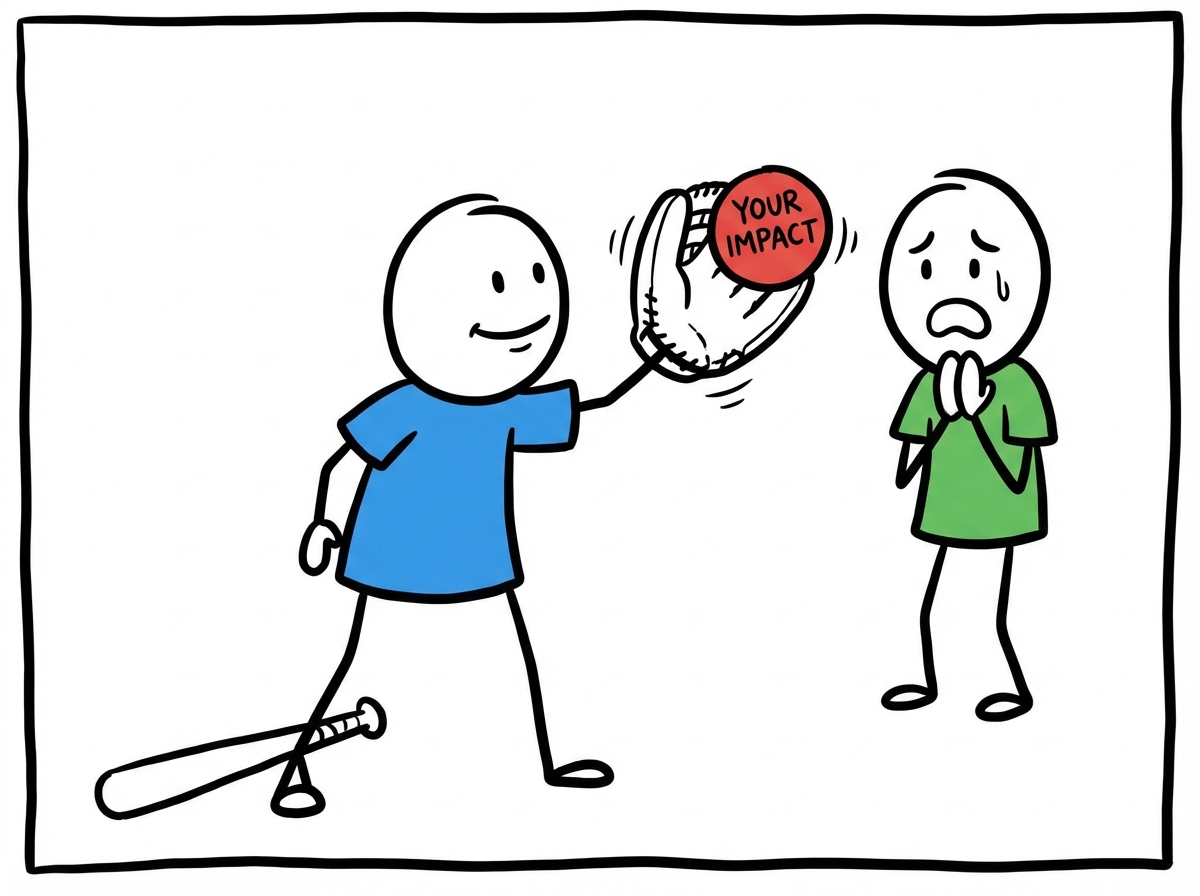
-
Tolerate someone else's discomfort without fixing it
When someone you care about is upset, your first impulse is probably to make it stop. You offer solutions. You minimize. You say 'It will be fine.' You do this not because it helps them, but because their pain makes you uncomfortable and you want that discomfort to end.
Emotionally mature people can sit with someone in their pain without needing to fix, rescue, or reframe it. This is harder than it sounds.
- When someone is upset, try saying 'That sounds really hard' instead of 'Have you tried ___?'
- Resist the urge to relate it back to yourself. Their moment is not about you.
- Let silence exist. Not every feeling needs a response. Sometimes presence is the response.
- Check your motive: am I helping them feel better, or am I helping myself feel less uncomfortable?
Learning to tolerate discomfort, yours and theirs, is the foundation of real intimacy.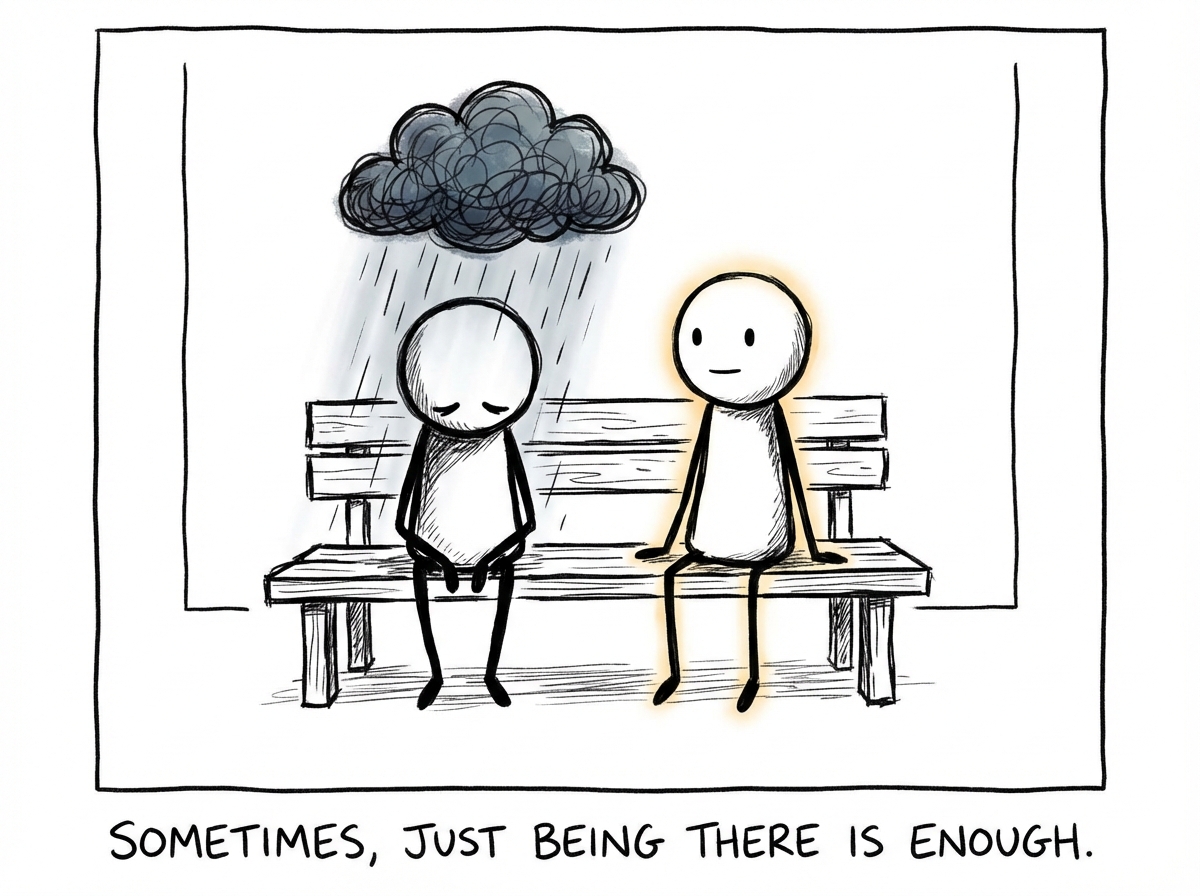
-
Apologize without 'but'
The word 'but' in an apology is an eraser. 'I am sorry I raised my voice, but you were not listening.' That is not an apology. That is a negotiation. The 'but' communicates: I am sorry you are upset, however I had a good reason, so really this is your fault.
A real apology has three parts and zero buts.
- What you did: 'I raised my voice at you during dinner.'
- The impact: 'That was aggressive and it made you feel unsafe.'
- What you will do differently: 'I am going to walk away and cool down next time instead of escalating.'
That is it. No explanation of why you were stressed. No reminder of what they did first. No 'but.' If you need to discuss your own experience of the conflict, do it separately, after the apology has landed. Mixing the two poisons both.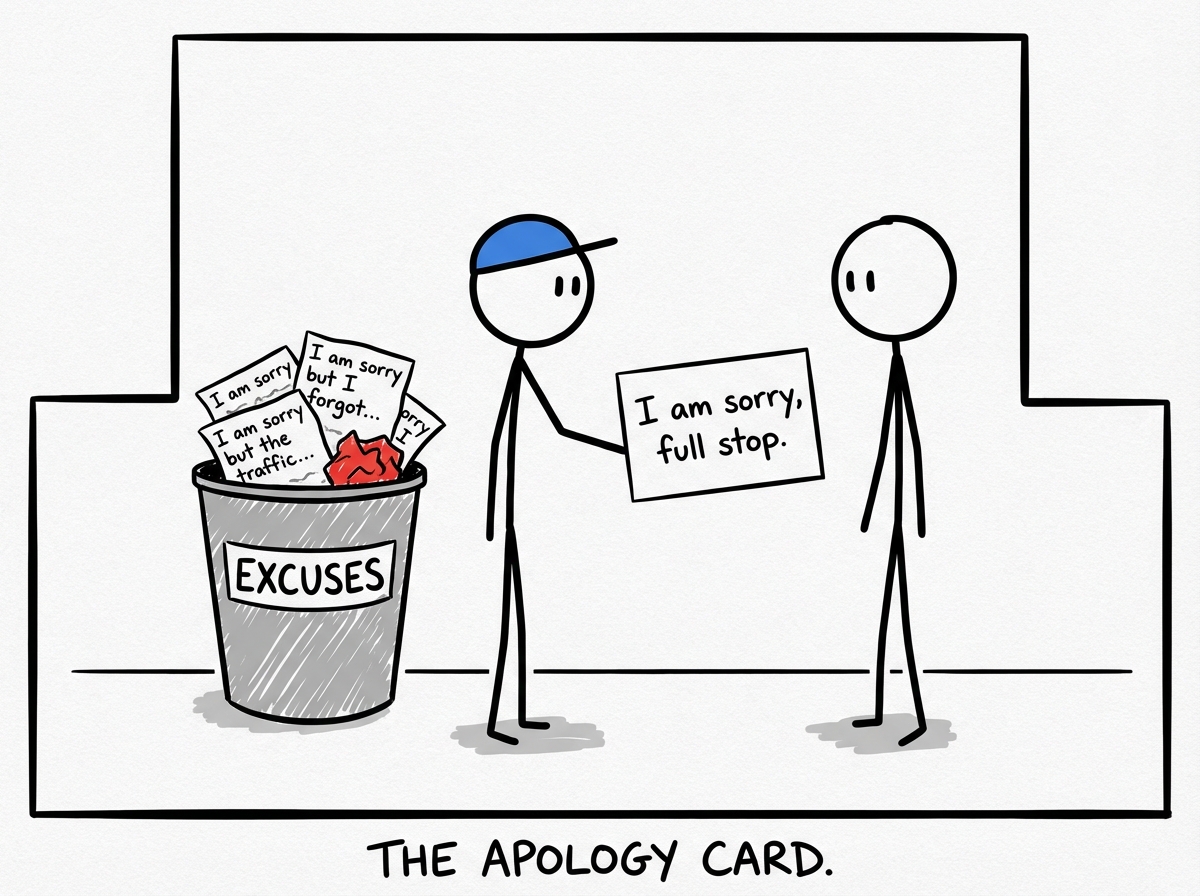
-
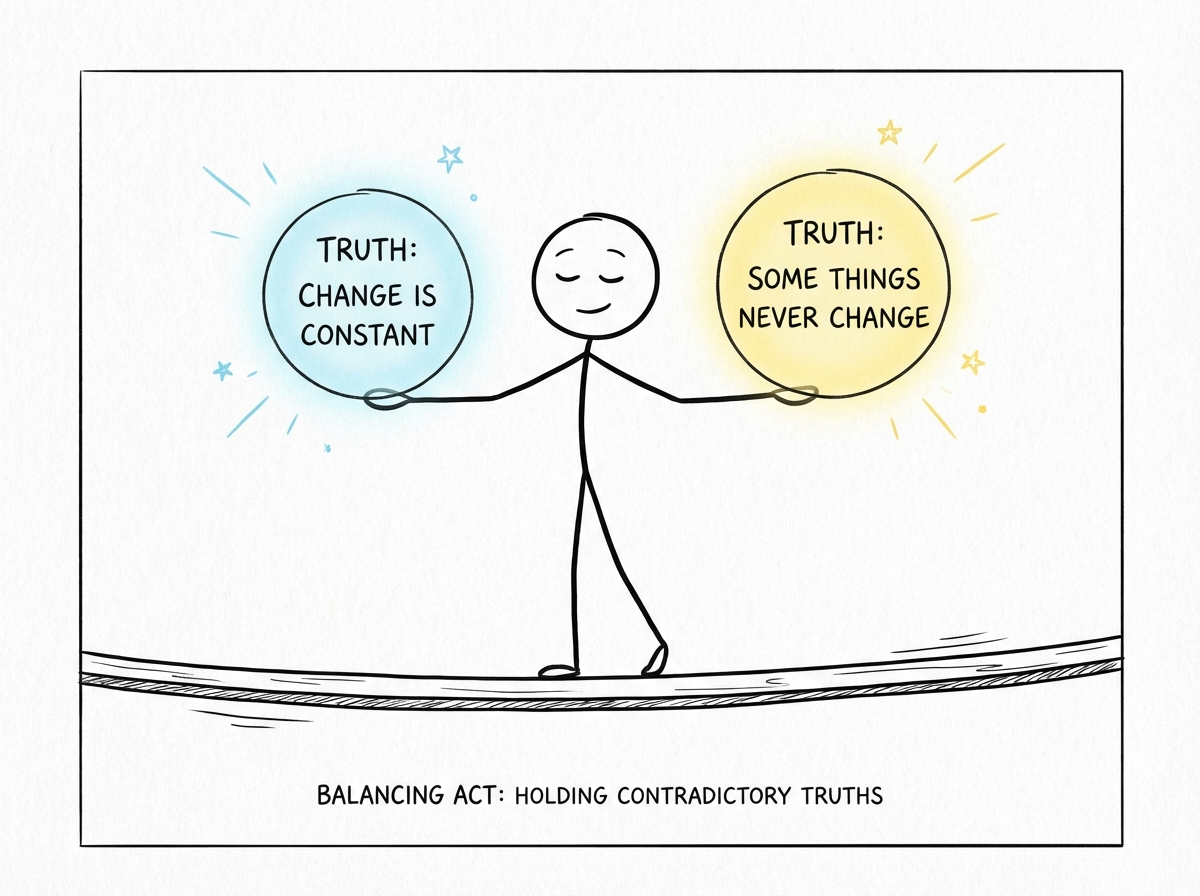
Hold two truths at the same time
Emotional immaturity demands simplicity. Someone is either good or bad. A situation is either fair or unfair. You are either right or wrong. But real life is almost never that clean.
Emotional maturity is the ability to hold contradictions without collapsing into one side.
- I love this person and they hurt me.
- I am doing my best and my best was not good enough this time.
- This situation is unfair and I still have to deal with it.
- I can be angry at someone and still treat them with respect.
- My parents did the best they could and it was not enough.
Practice saying 'and' where you used to say 'but.' 'I am grateful for this relationship and I need it to change.' Both things are true. You do not have to pick one. In fact, picking one is usually how people get stuck. Growth lives in the tension between two truths, not in the false comfort of choosing sides.