6 steps
Guide to Developing Emotional Maturity
Learn to feel your feelings fully without letting them run the show, so you can respond to life's difficulty with honesty and steadiness.

The ability to feel your feelings without being controlled by them, take responsibility, and handle discomfort.
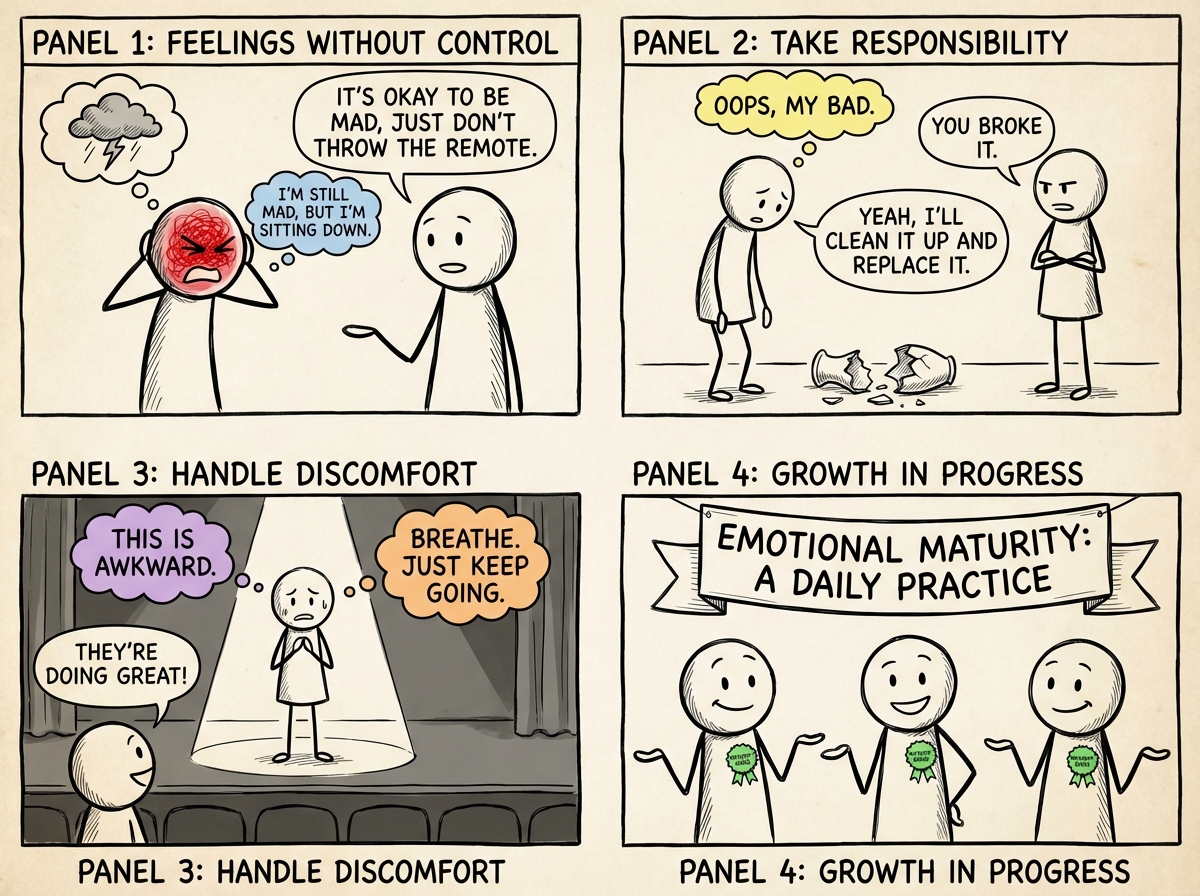
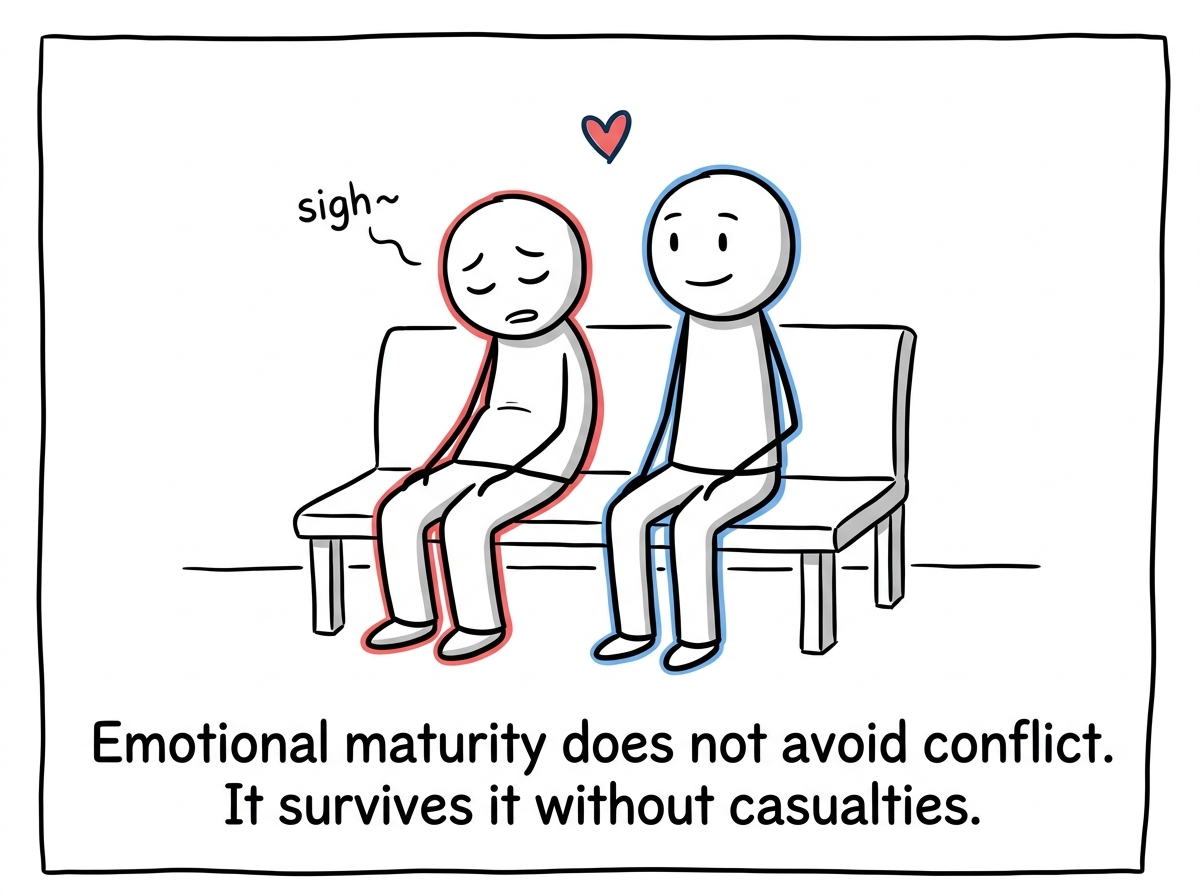
Emotional maturity is not about suppressing emotions or always staying calm. It is the ability to experience the full range of human feelings -- anger, sadness, fear, joy -- without being hijacked by them. Emotionally mature people can sit with discomfort instead of immediately reacting. They can take responsibility for their behavior even when they feel justified. They can hold space for someone else's perspective even when it conflicts with their own. Emotional maturity develops unevenly. You might be highly mature in your professional life but completely reactive in romantic relationships. You might handle your own emotions well but fall apart when someone else is upset. Most of us were never explicitly taught emotional skills -- we absorbed whatever our caregivers modeled, for better or worse. The markers of emotional maturity include the ability to apologize without deflecting, to set boundaries without cruelty, to tolerate ambiguity, to delay gratification, and to distinguish between what you feel and what is true. None of this comes naturally. It is a practice, and the people who seem naturally good at it have usually done a lot of invisible work to get there. Understanding emotional maturity is not about judging yourself or others -- it is about identifying the specific skills you can develop.
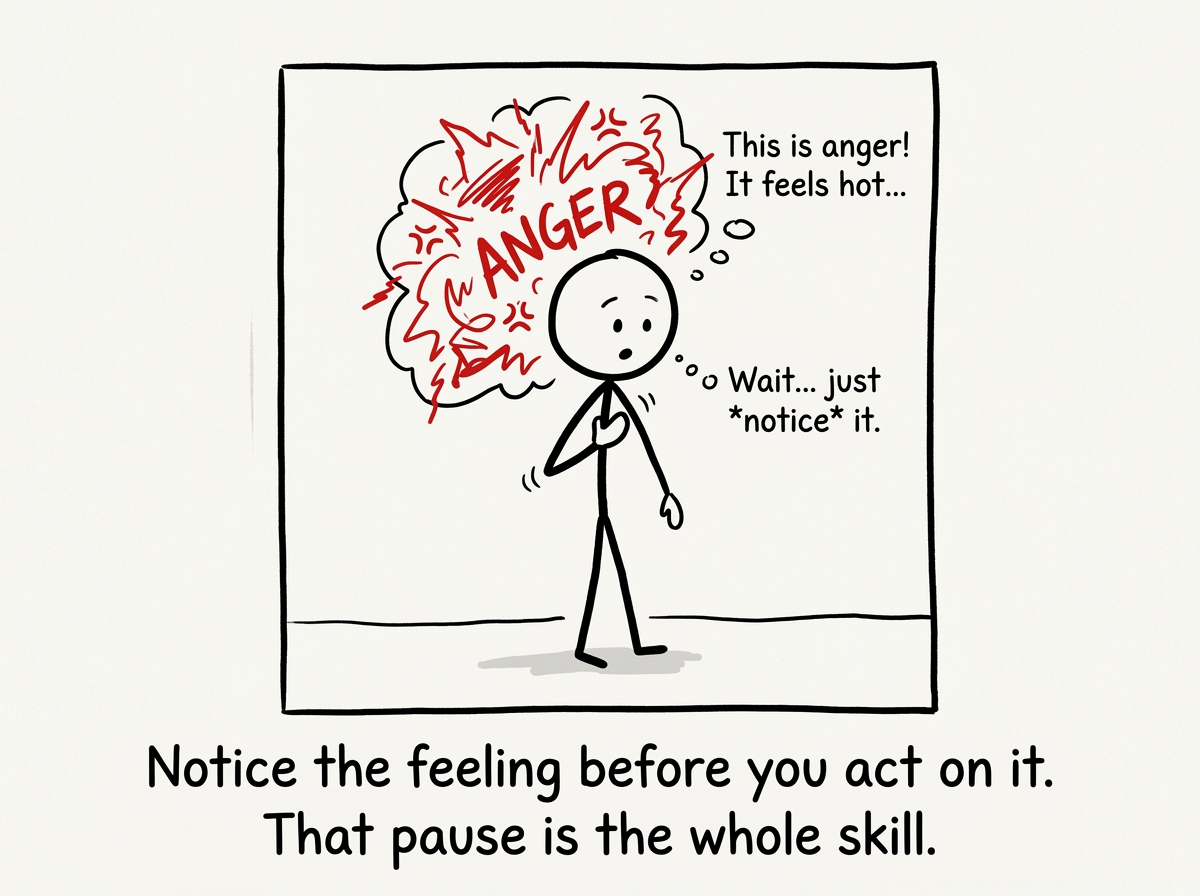
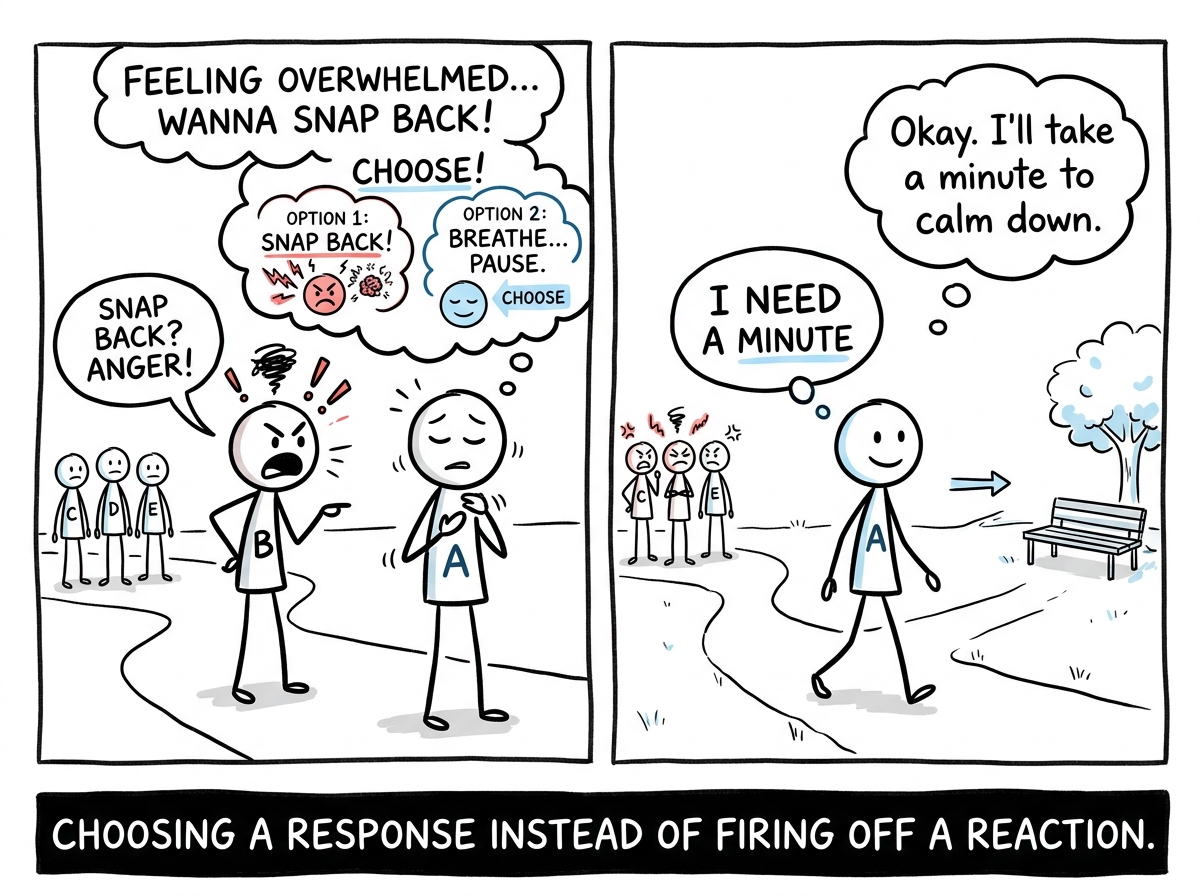
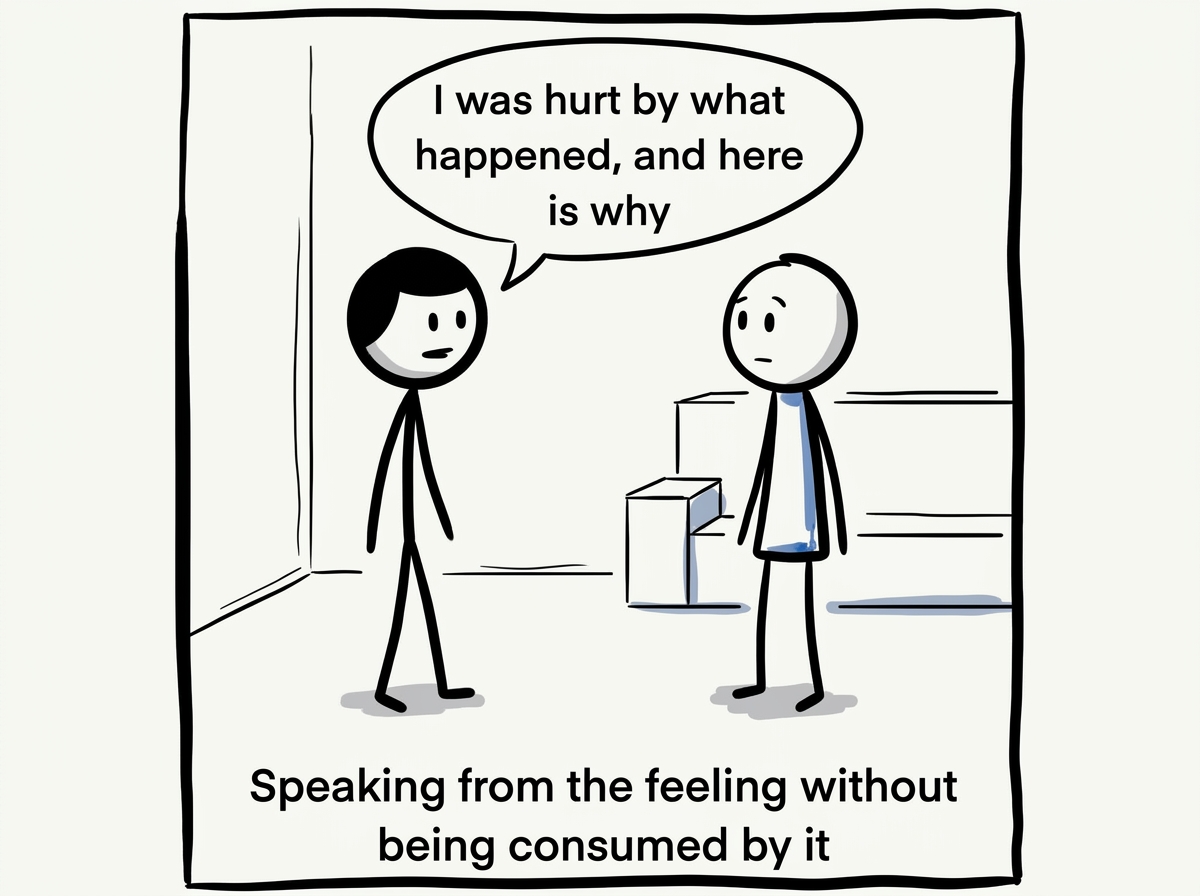
Emotional maturity is not about controlling your feelings -- it is about feeling them fully without letting them control your behavior.
Someone gives a series of non-apology apologies that deflect blame, minimize harm, and center their own feelings instead of taking responsibility.
Someone cannot tolerate five minutes of emotional discomfort and cycles through fixing, dismissing, and distracting instead of just sitting with the feeling.