How to Fake It Wisely (And Build the Real Thing Underneath)
Learn when performed confidence serves you as a temporary bridge and when it becomes a trap that prevents you from building genuine competence.
Before You Begin
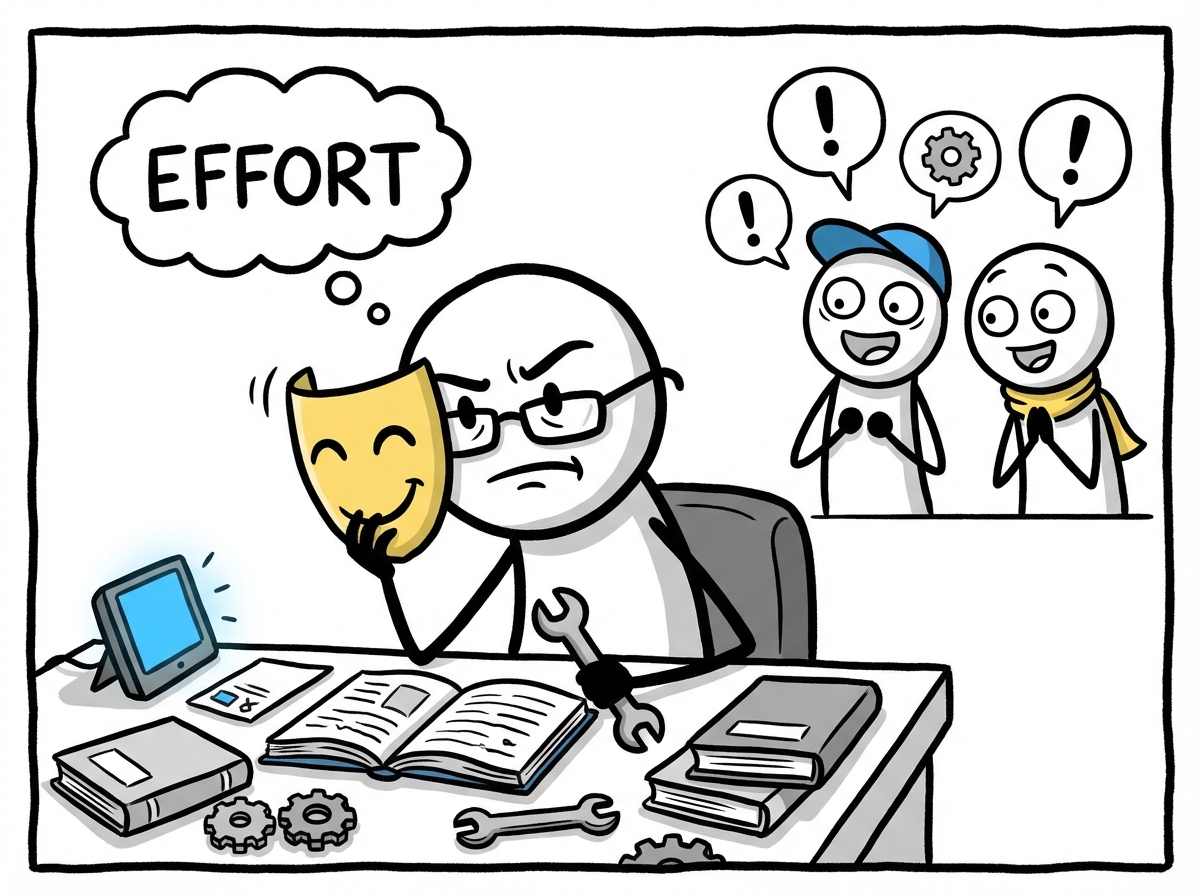
Fake it till you make it is some of the most common advice in the world, and it is exactly half right. There are moments when acting more confident than you feel is a legitimate strategy -- a job interview, a first day, a presentation where your knees are shaking. In those moments, performed confidence buys you time. People give you the benefit of the doubt, and you get a chance to prove yourself. The problem is when faking it becomes the whole strategy. When the performance never gives way to real development. When you get so good at looking competent that you never bother to become competent. That is when fake-it-till-you-make-it stops being a bridge and starts being a mask -- and masks are exhausting to maintain. This guide will help you use performed confidence as the tool it is supposed to be: a temporary scaffold while you build the real thing underneath.
-
Act Brave, Not Fake
There is an important distinction between performing bravery and performing a lie. Acting braver than you feel is healthy -- it is how every human being has ever walked into a new situation. Acting like you have skills, credentials, or experience you do not have is deception. The line between them determines whether faking it will help you or eventually destroy your credibility.
- Ask yourself: Am I projecting calm and competence while I figure things out, or am I actively misrepresenting what I know and what I can do? The first is courage. The second is fraud.
- Brave behavior looks like: speaking up in a meeting even though your voice shakes, taking on a stretch assignment and being honest about your learning curve, introducing yourself with confidence while acknowledging you are new.
- Fake behavior looks like: claiming expertise you do not have, hiding mistakes instead of learning from them, performing certainty when you have no idea what you are doing and people are relying on you.
- Give yourself full permission to be nervous and visible at the same time. You do not need to pretend you are not scared. You need to act despite being scared. That is not faking. That is bravery.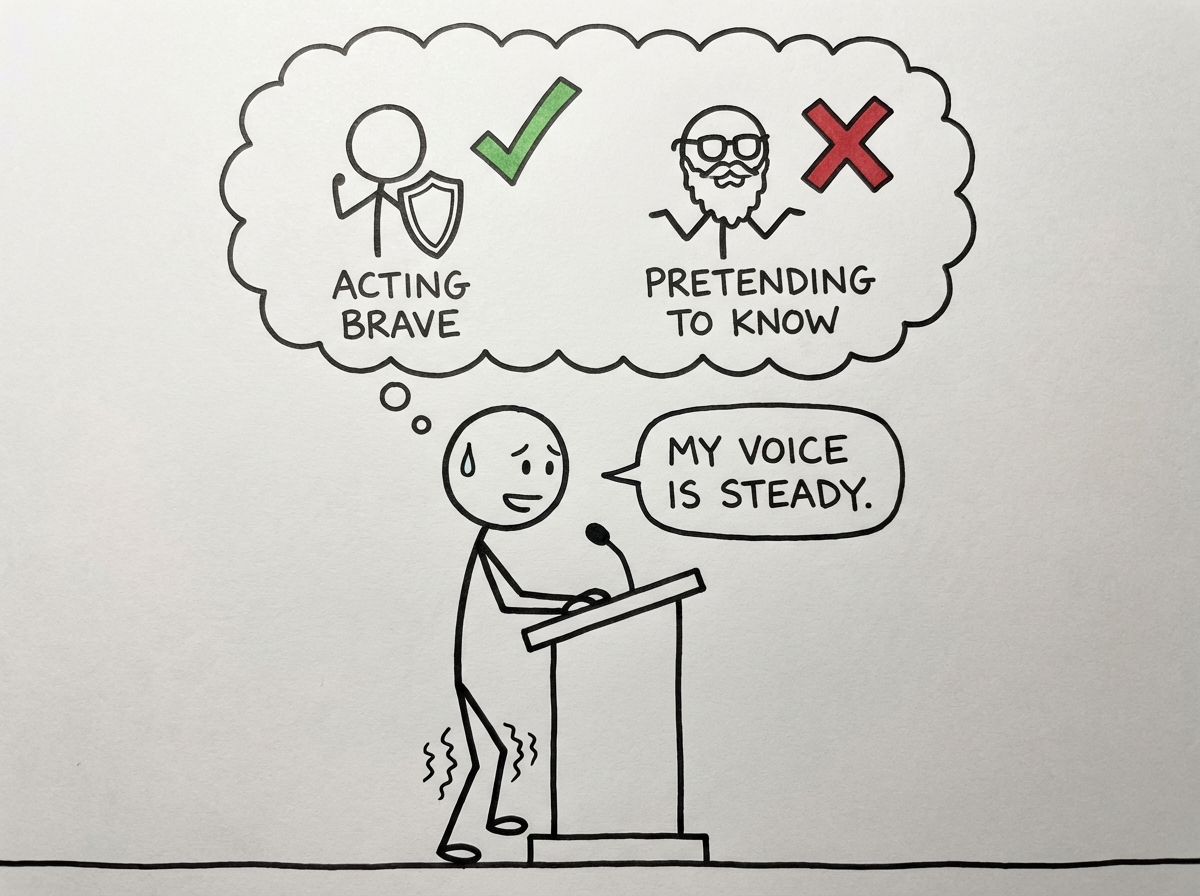
-
Identify Where You Are Performing Without Building
Most people who rely on faking it have at least one area of their life where the performance has been running for so long that they have forgotten it started as temporary. They are still projecting confidence in a role, a skill, or a relationship without doing the underlying work to actually develop.
- Make an honest list of areas where you are performing competence you have not actually built. Where do you feel like a fraud? Where would you be exposed if someone looked closely? These are not shameful. They are just areas where the scaffold needs some actual structure behind it.
- For each area, ask: How long has the performance been running? If it has been months or years, the fake-it strategy has failed. It was supposed to be temporary. It is now a coping mechanism.
- Notice what you are avoiding by continuing to perform instead of learn. Usually it is the vulnerability of being a beginner, the discomfort of admitting what you do not know, or the fear that starting from scratch means you are behind.
- Be honest about the cost of maintaining the performance. It is probably exhausting. You are probably anxious. You might be avoiding situations where you would be tested. That anxiety is the tax you pay for unfounded confidence.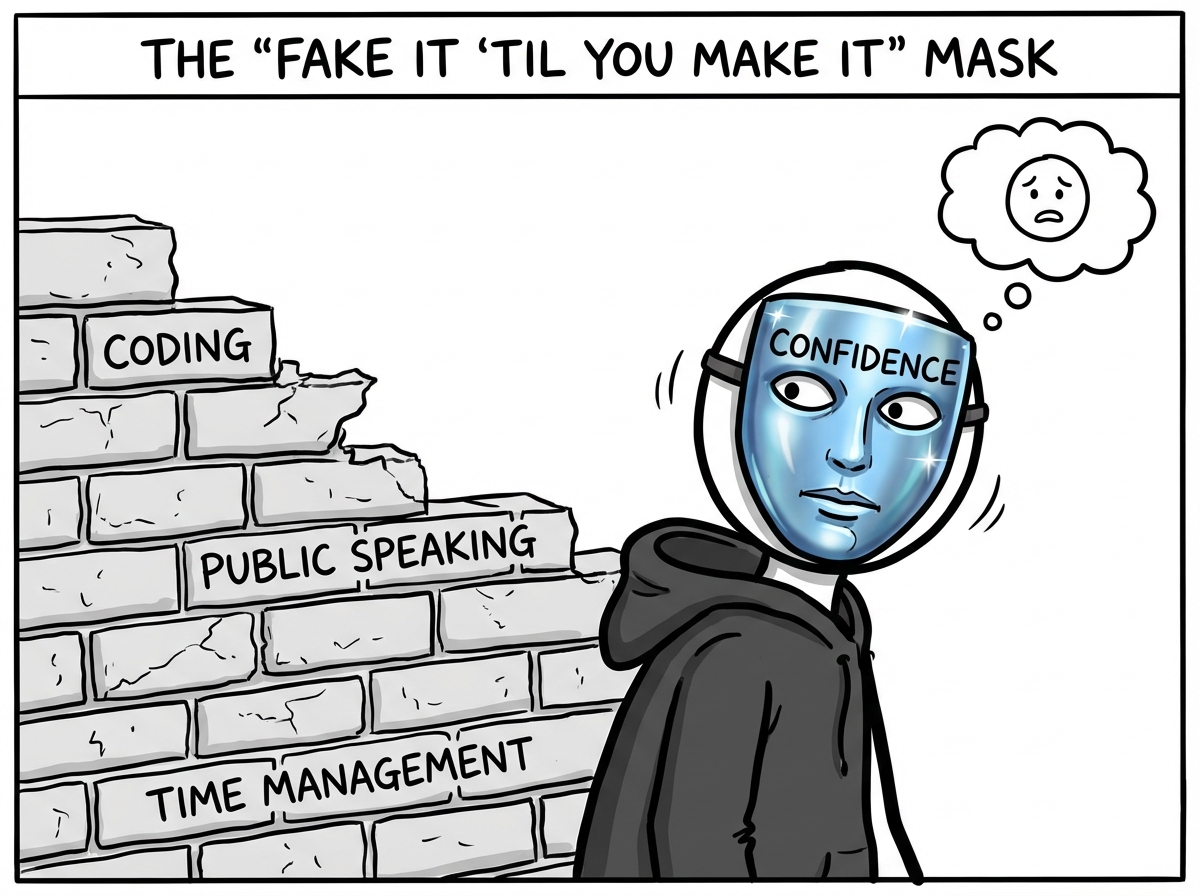
-
Use the Performance to Buy Time for Learning
When performed confidence is used correctly, it is a stalling tactic -- a way to hold space while you scramble to fill it with real knowledge. The key is that the scrambling actually has to happen. The performance is not the plan. The performance buys you time to execute the plan.
- The next time you walk into a situation where you are projecting more confidence than you feel, have a specific learning plan attached to the performance. What will you study, practice, or ask about this week to close the gap between what you are projecting and what you actually know?
- Set a deadline. Give yourself a defined period -- two weeks, a month, a quarter -- to turn the performance into reality. Without a deadline, the faking just becomes your permanent operating mode.
- Use every advantage the performance gives you. If people treat you like you belong, use that access to learn. Ask questions. Watch how others do it. Request feedback. Soak up everything the role exposes you to.
- Check in with yourself regularly: Am I closer to actually being this person than I was when I started, or am I just getting better at pretending? If the answer is just pretending, something needs to change.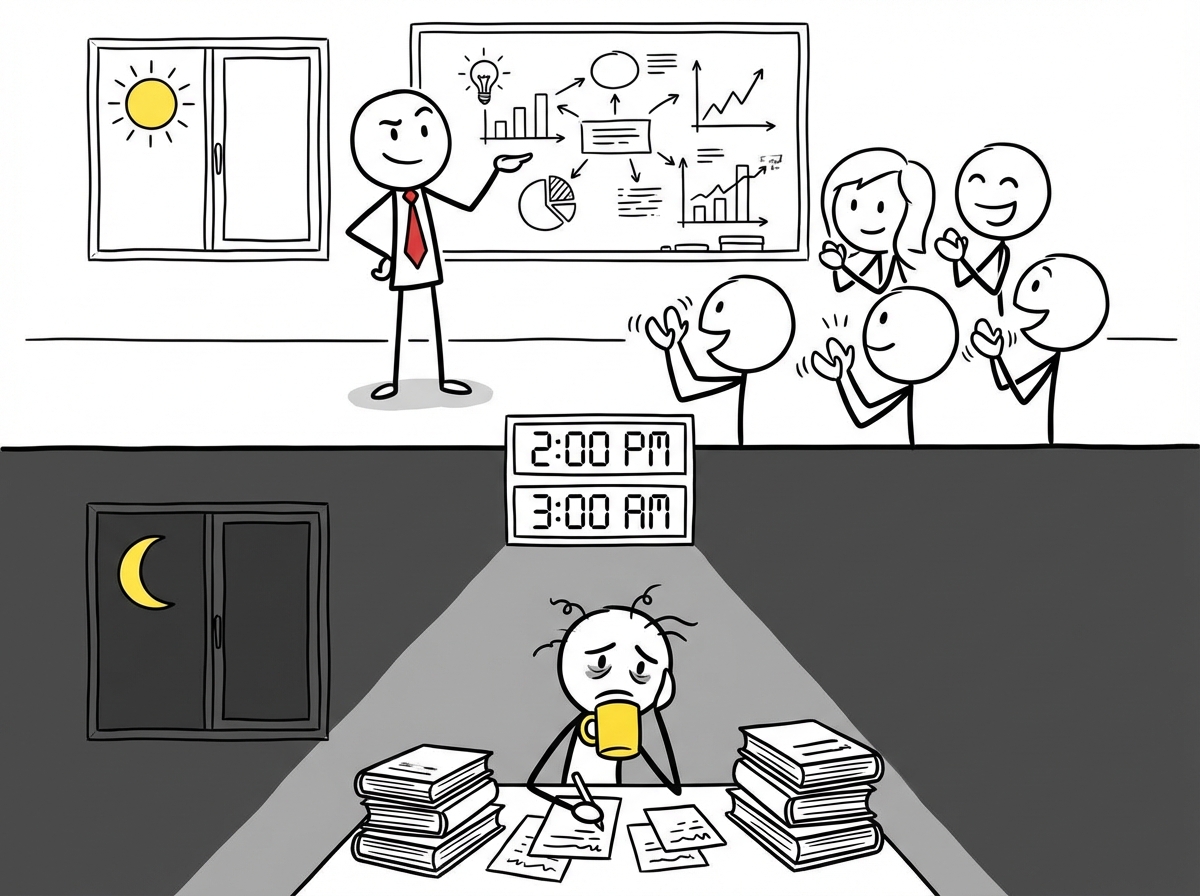
-
Build Real Competence Alongside the Confidence
This is where the real work happens. Confidence without competence is a balloon -- impressive-looking but empty and easily popped. Competence without confidence is a buried treasure -- valuable but invisible. You need both, and they need to grow together.
- Identify the specific skills underlying your performance. If you are faking confidence as a manager, the real skills might be: giving feedback, running meetings, making decisions under pressure, having difficult conversations. Break the performance down into learnable components.
- Start building one skill at a time. Take a course, find a mentor, practice deliberately, read the actual material. Treat your development like a second job. Because right now, your first job is the performance, and your second job is making the performance unnecessary.
- Track your progress honestly. Are you actually getting better, or are you just reading about getting better? Competence is built through doing, failing, adjusting, and doing again. It is not built through collecting information.
- Let your growing competence gradually replace the performance. As you get better at the real thing, you will need to fake less. The gap will close. One day you will realize you are not performing anymore -- you are just doing your job.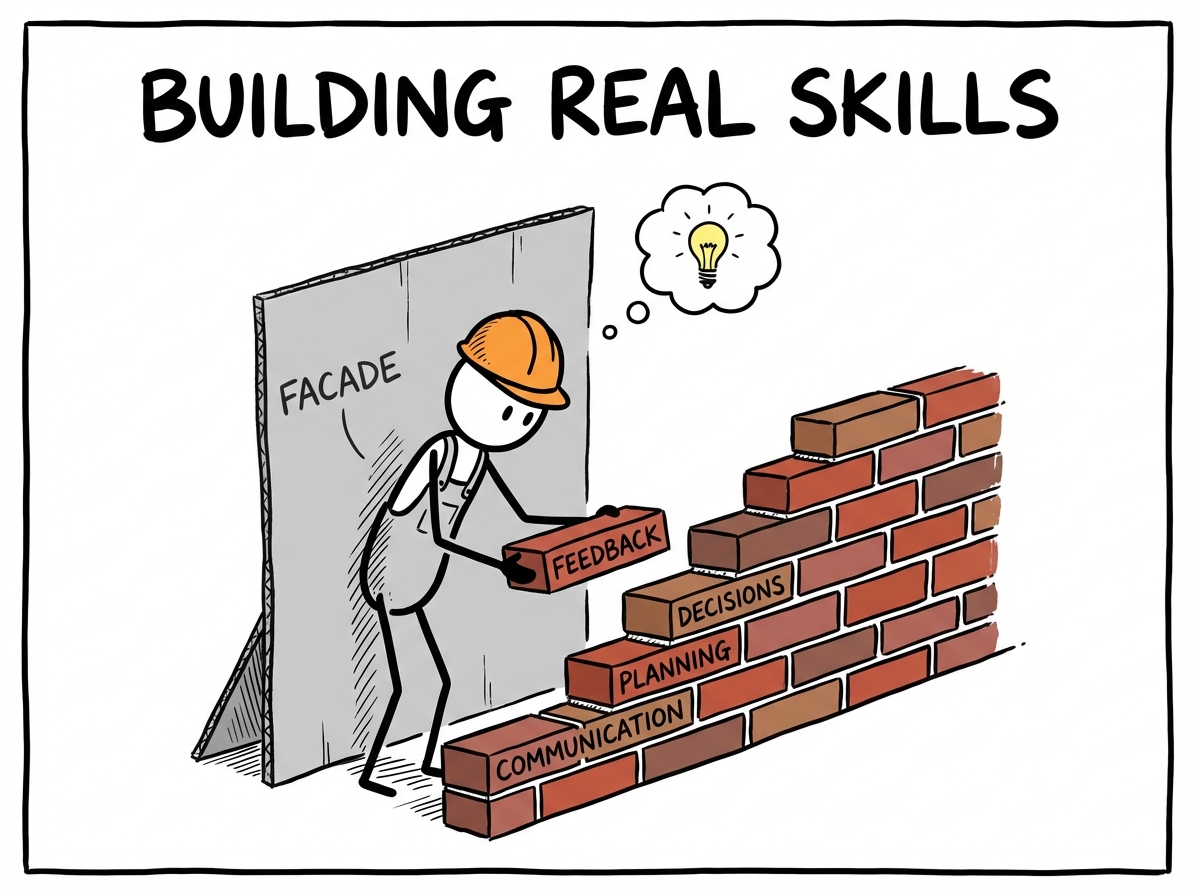
-
Notice When Faking Becomes Hiding
There is a tipping point where faking it stops being a bridge and starts being a way to avoid being known. You become so identified with the performance that letting people see the real, messy, still-learning version of you feels impossible. The mask is no longer helping you grow -- it is preventing growth by making vulnerability too risky.
- Check for these warning signs: You avoid situations where you might be exposed. You become defensive when questioned. You downplay your learning because admitting you are learning means admitting you did not always know. You feel lonely despite being surrounded by people who think they know you.
- Ask yourself: Who in my life knows the gap between what I project and where I actually am? If the answer is no one, the faking has become isolation.
- The remedy is controlled honesty. You do not need to announce your insecurities to the world. But you need at least one or two people who know the truth. A mentor, a therapist, a trusted friend. Someone who can see behind the performance and still respect you.
- Recognize that vulnerability is not the opposite of competence. The most capable people you know are probably open about what they are still learning. That openness is what makes them trustworthy.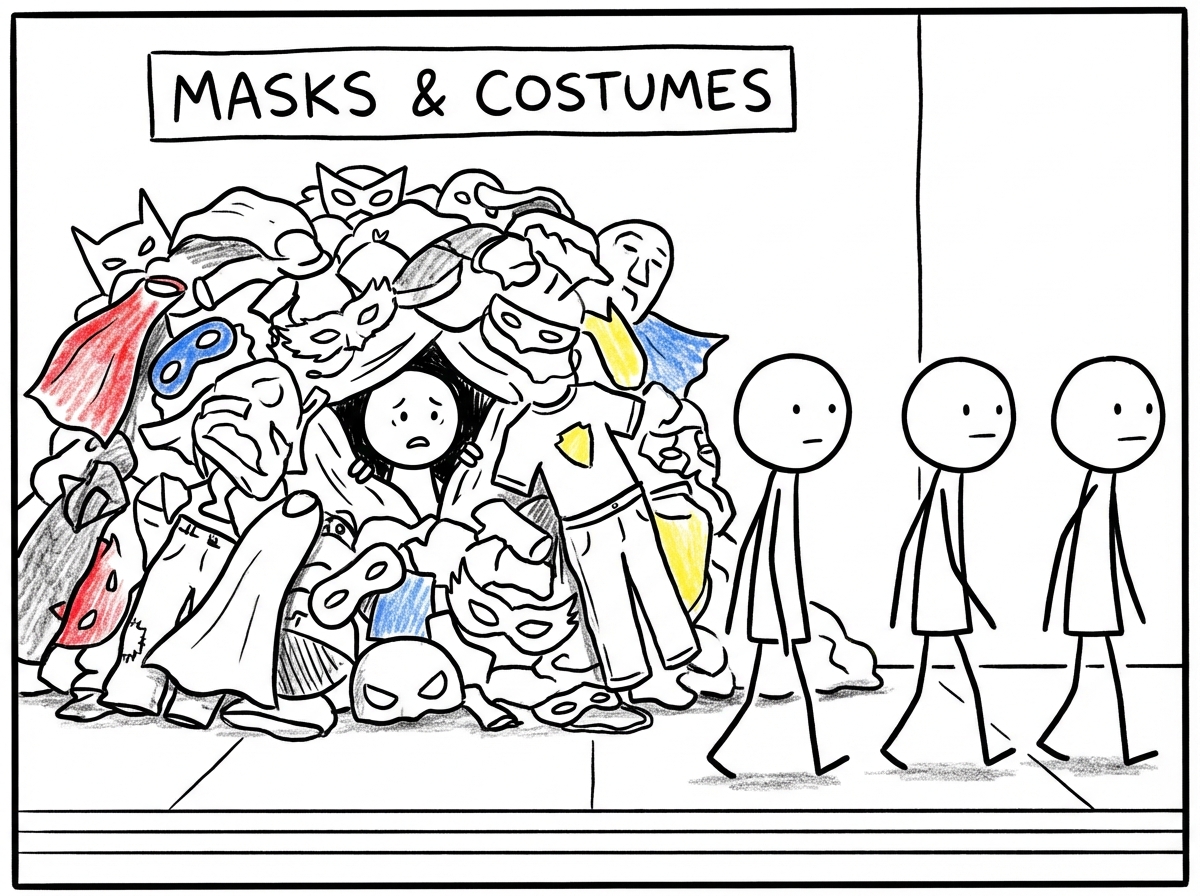
-
Let People See the Real Work Behind the Polish
The final step is the most counterintuitive: let the process be visible. Show people that you are working, learning, and growing. Not as a confession of fraud, but as a demonstration of something more impressive than effortless competence -- deliberate development.
- Start sharing your process, not just your results. In conversations, in meetings, in relationships. Say things like 'I have been working on this skill' or 'I did not know how to do this six months ago, so I studied it.' Watch how people respond. It is almost always with more respect, not less.
- Notice how it feels to be known for your effort rather than your performance. It might feel vulnerable at first. But over time, it is profoundly relieving. You no longer have to maintain the illusion of effortless expertise. You can just be someone who works hard and keeps getting better.
- Accept that some people preferred the polished version. Not everyone will admire the honest version of you as much as the performed version. That is useful information about those relationships.
- Let your identity shift from 'someone who has it all figured out' to 'someone who figures things out.' The first identity is fragile and requires constant maintenance. The second is durable and gets stronger every time you learn something new.