6 steps
How to Fake It Wisely (And Build the Real Thing Underneath)
Learn when performed confidence serves you as a temporary bridge and when it becomes a trap that prevents you from building genuine competence.

The psychology of performed confidence -- when it works, when it backfires, and where the line is.
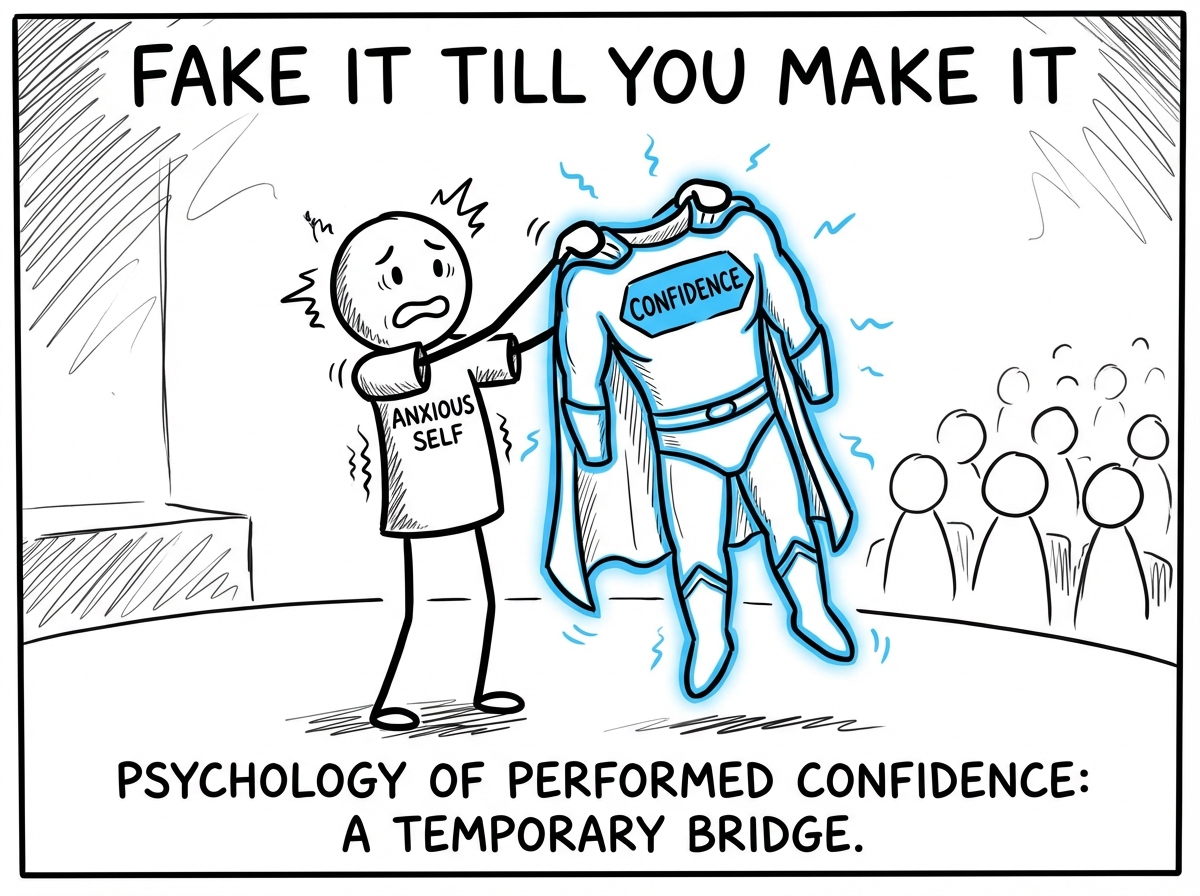
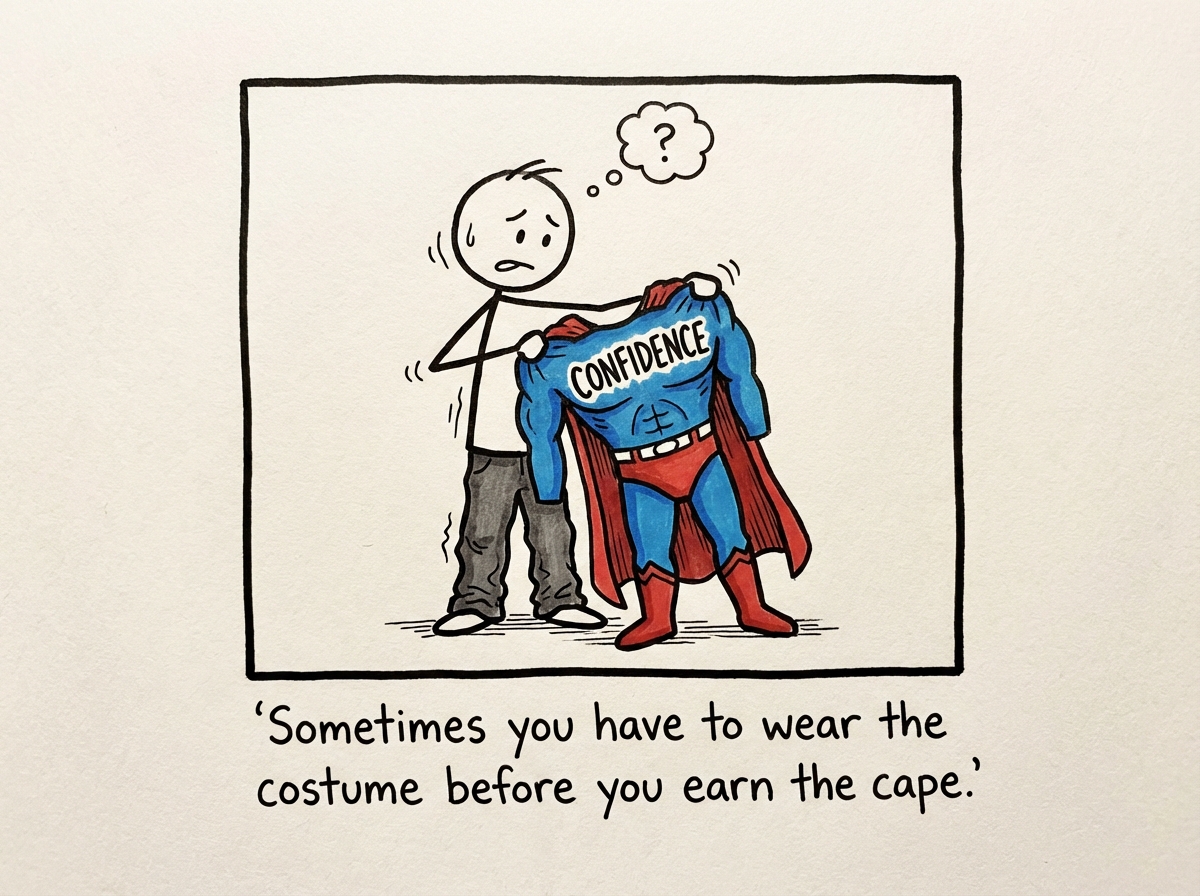
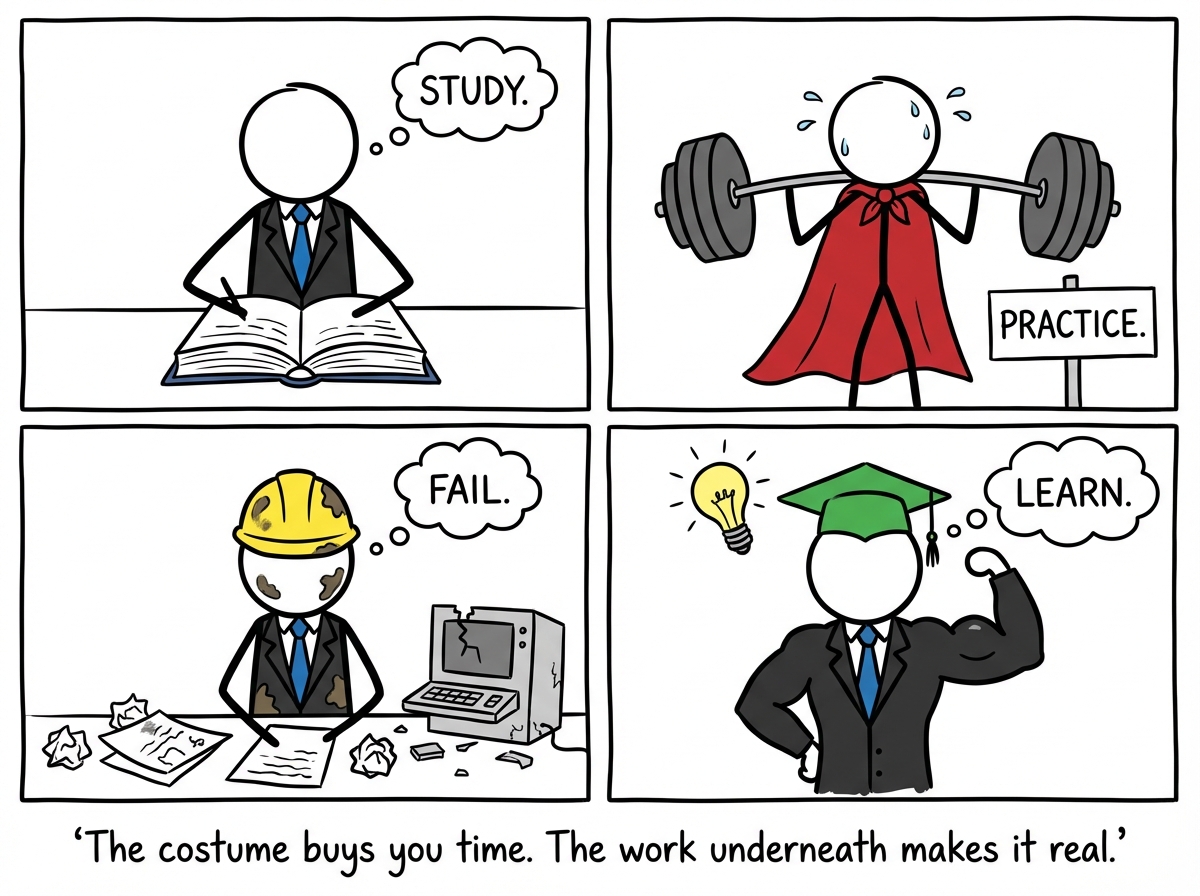
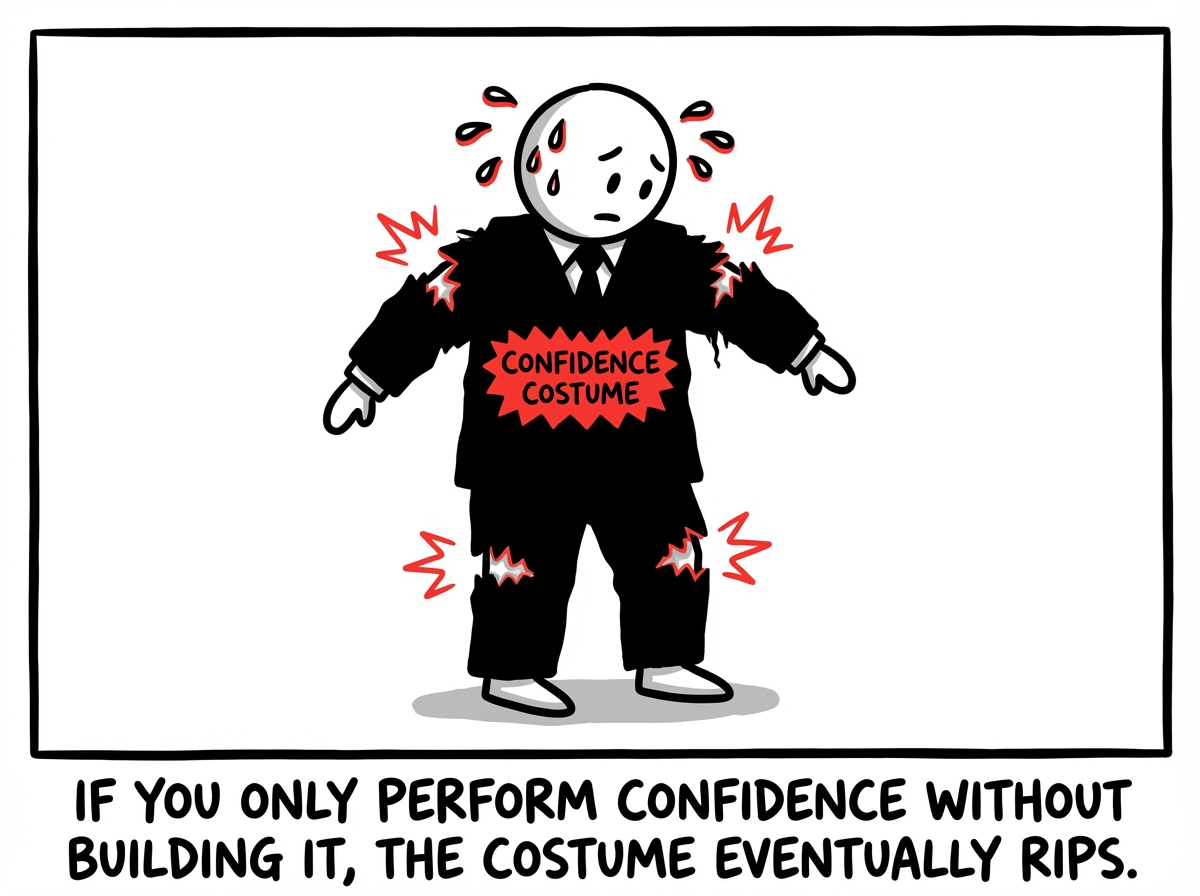
Fake it till you make it is one of the most popular pieces of confidence advice in the world. And like most popular advice, it is about half right. The half that works: behavioral activation. Research shows that when you act confident -- standing tall, making eye contact, speaking with certainty -- your brain starts to believe the performance. Amy Cuddy's work on power posing, though debated, points to a real phenomenon: behavior can lead emotion, not just follow it. Acting as if you belong can help your nervous system regulate enough to actually show up. The half that backfires: when performance replaces authenticity entirely. If you fake it for too long without building real competence underneath, you create a hollow structure. You become terrified of being found out -- not because of imposter syndrome, but because you actually are an imposter. You skipped the part where you learn, fail, and grow. The psychology is nuanced. Faking it works when it is a bridge -- a temporary scaffold while you build the real thing. It fails when it becomes the permanent structure. The key question is not 'am I confident enough?' It is 'am I doing the work underneath the confidence?' The healthiest version of this advice is not fake it till you make it. It is act brave until your brain catches up. There is a difference between pretending you are something you are not and choosing to behave courageously while you are still scared.
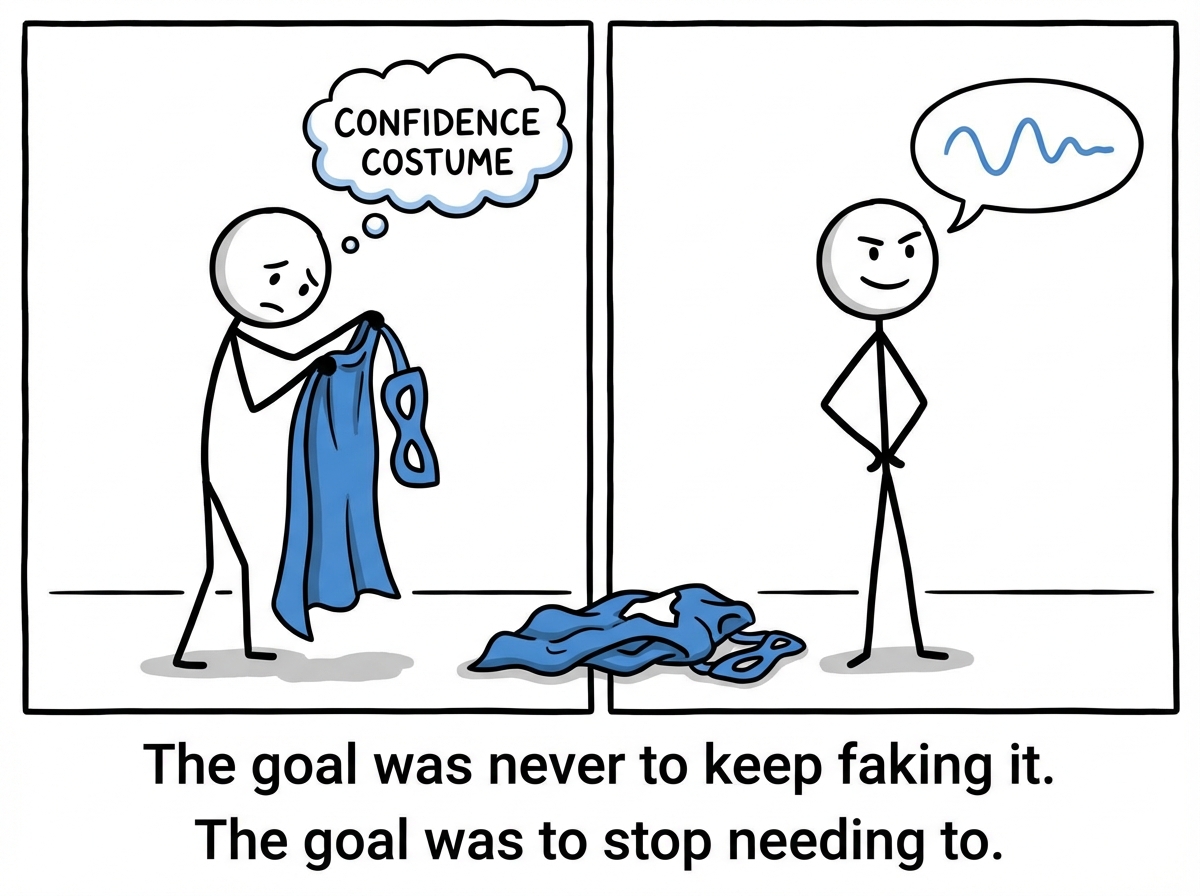
Faking it works as a bridge but fails as a destination. The goal is not permanent performance -- it is acting brave long enough for your brain to catch up.