The Fraud Police
A person at their desk getting an award while imagining the Fraud Police breaking down the door to arrest them.

The persistent belief that you are a fraud and it is only a matter of time before everyone finds out.
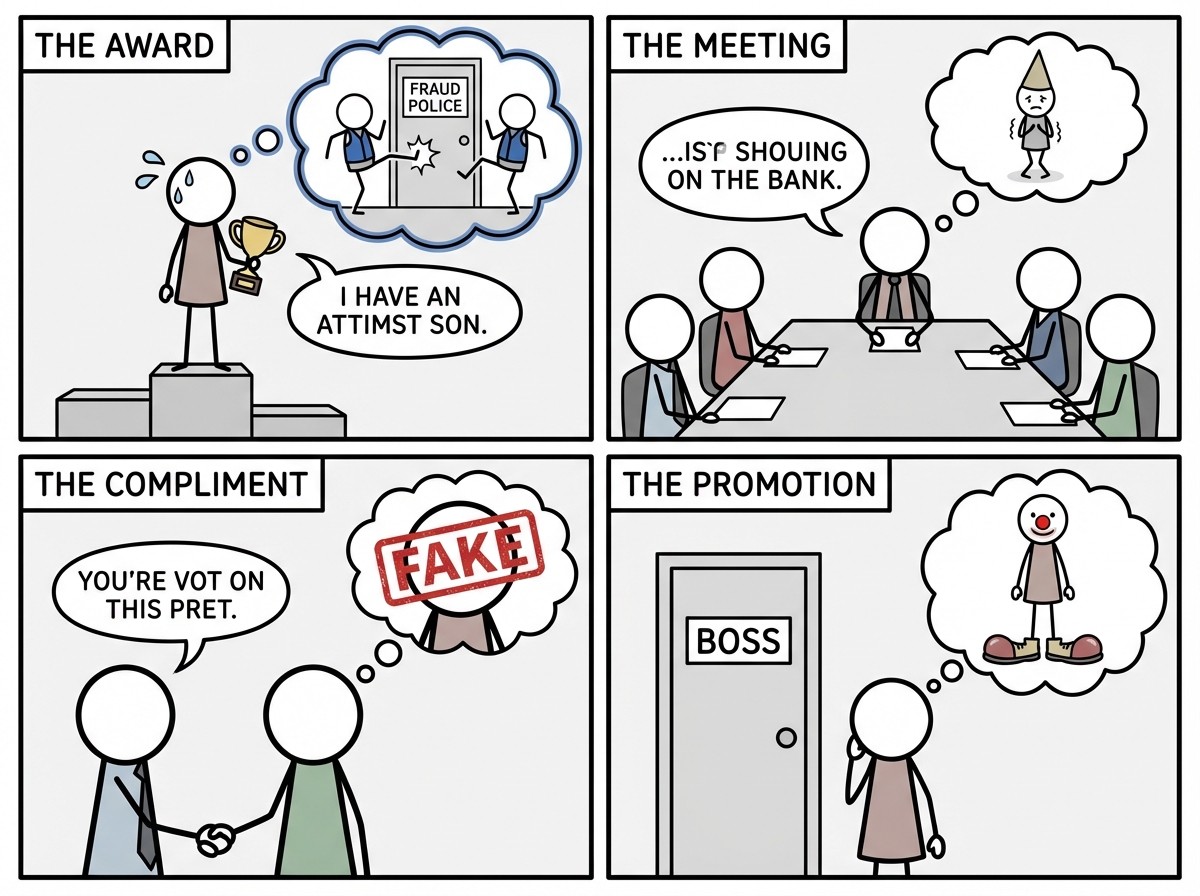
You have the receipts -- the degree, the promotion, the praise -- and yet none of it sticks. Somewhere underneath the evidence lives a quiet conviction that you do not actually deserve any of it, and that one day the curtain will fall and everyone will see what you have always suspected: you are faking it. Imposter syndrome is not really about competence. It is about shame. It is the belief that your real self -- the one behind the performance -- is not enough. That is why no amount of external validation fixes it. You can collect achievements like trophies and still feel like a burglar in your own life. The connection to perfectionism is direct: if you believe your worth depends on flawless output, then every imperfect moment becomes evidence for the prosecution. First described by psychologists Clance and Imes in 1978, imposter syndrome affects an estimated seventy percent of people at some point. It does not target the incompetent. It targets the people who care enough to wonder whether they are good enough -- which, ironically, is one of the clearest signs that they are.
Imposter syndrome is not a competence problem -- it is a shame problem wearing an achievement costume.
A person at their desk getting an award while imagining the Fraud Police breaking down the door to arrest them.
A person has a valuable insight during a meeting but stays silent out of fear that saying something wrong will reveal they do not belong.
A person gets promoted and immediately assumes it was a mistake, spiraling into panic that everyone will now discover they have been faking it all along.