Imposter Syndrome: The Meeting You Survived by Staying Silent
Part of the The Imposter Within series (Part 1)

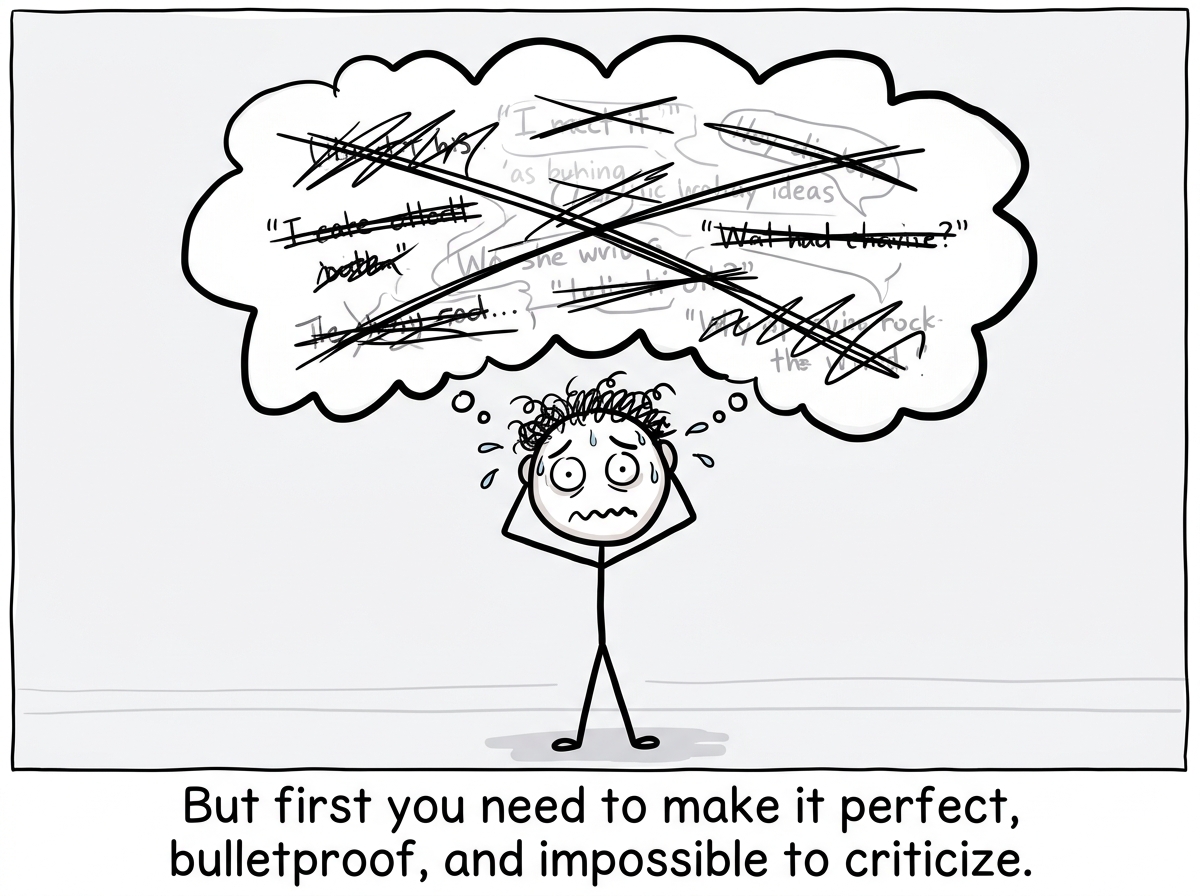
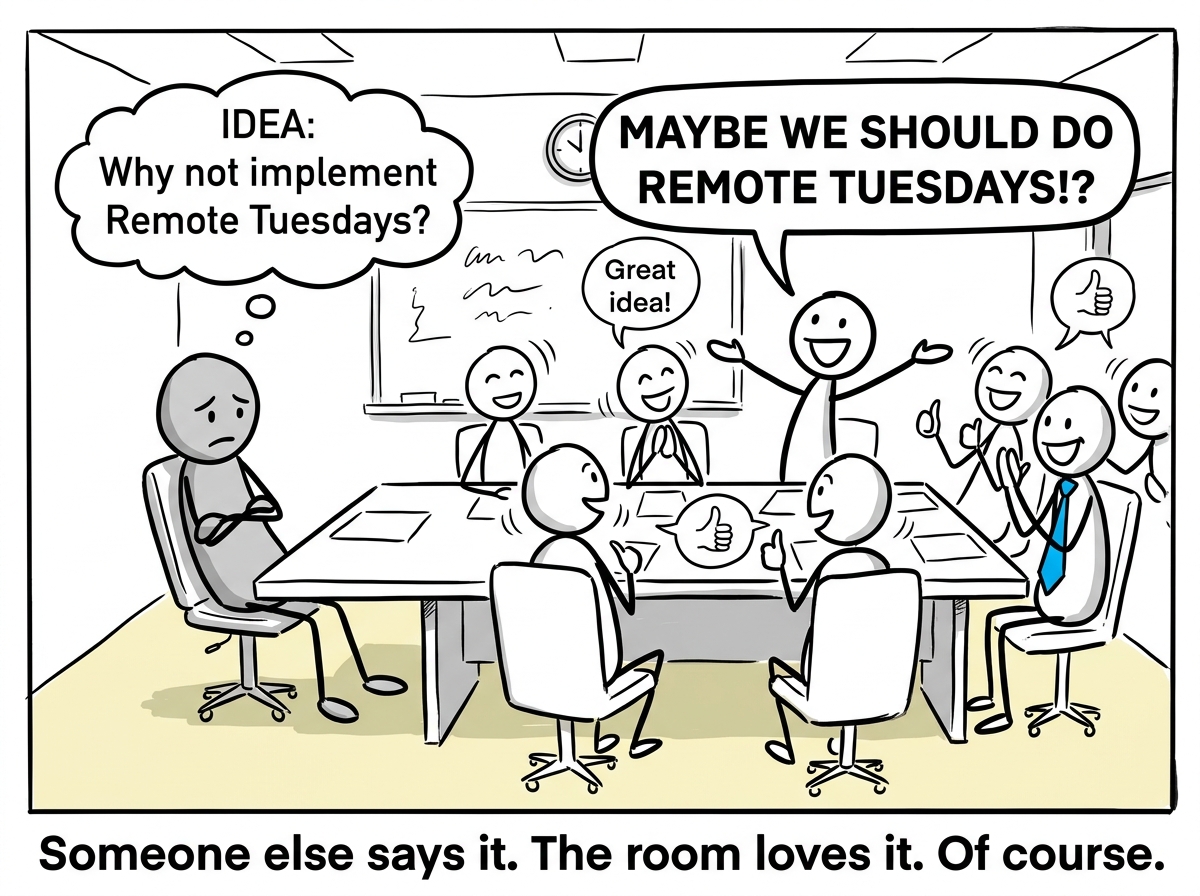
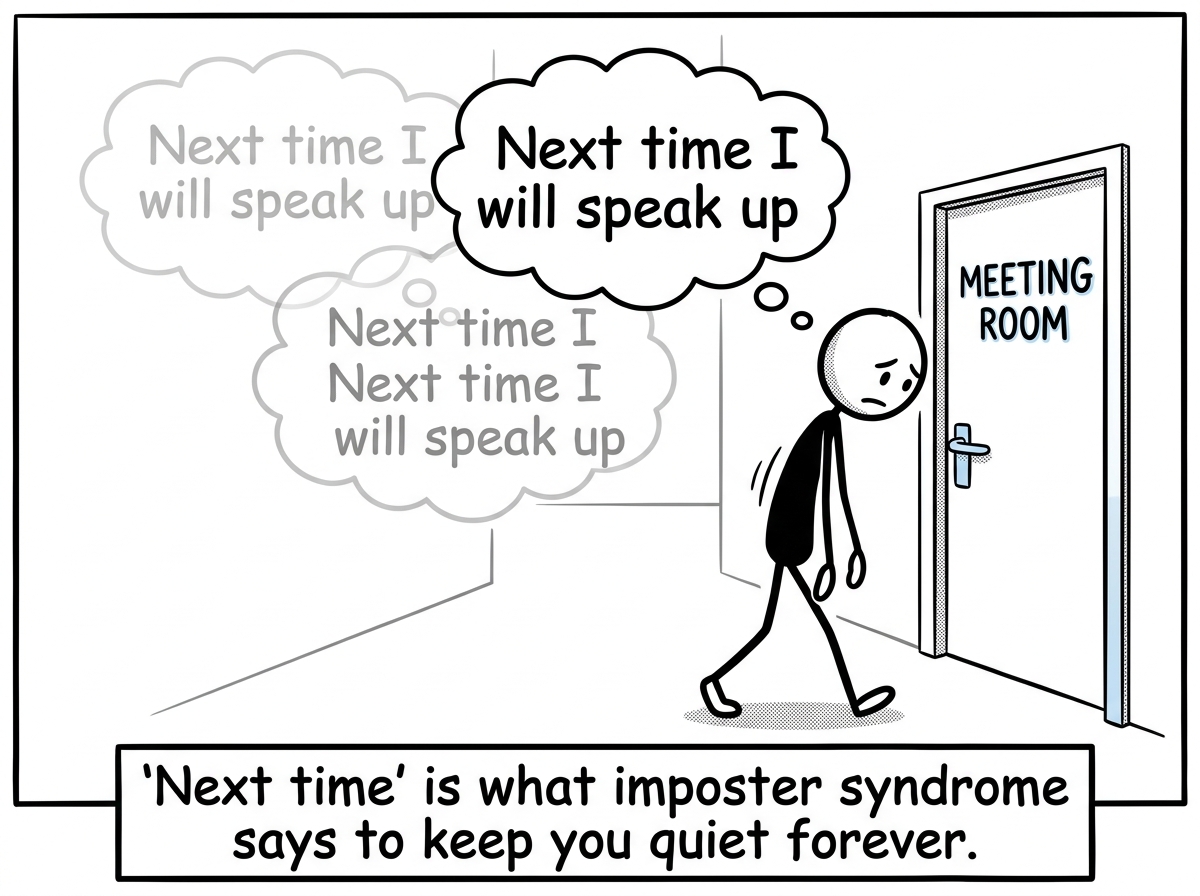
A person has a valuable insight during a meeting but stays silent out of fear that saying something wrong will reveal they do not belong.
Explanation
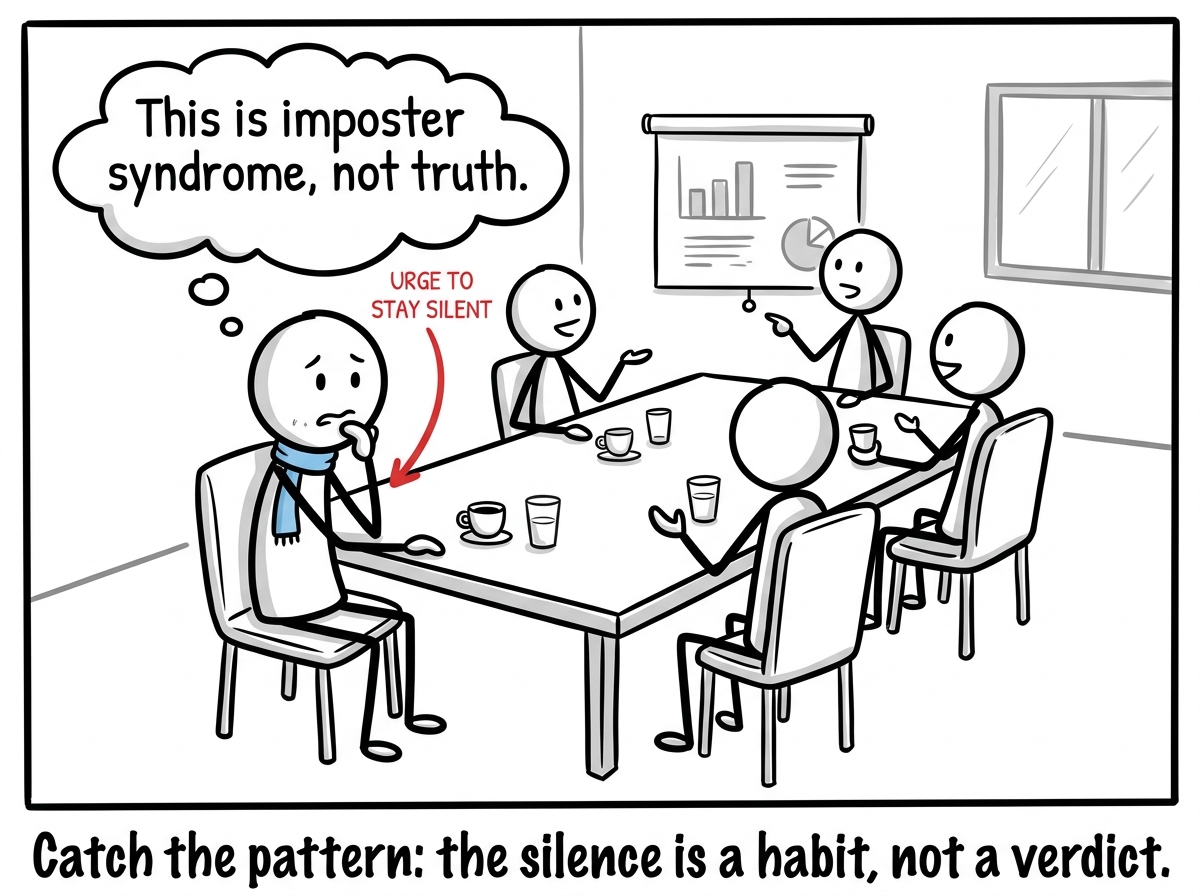
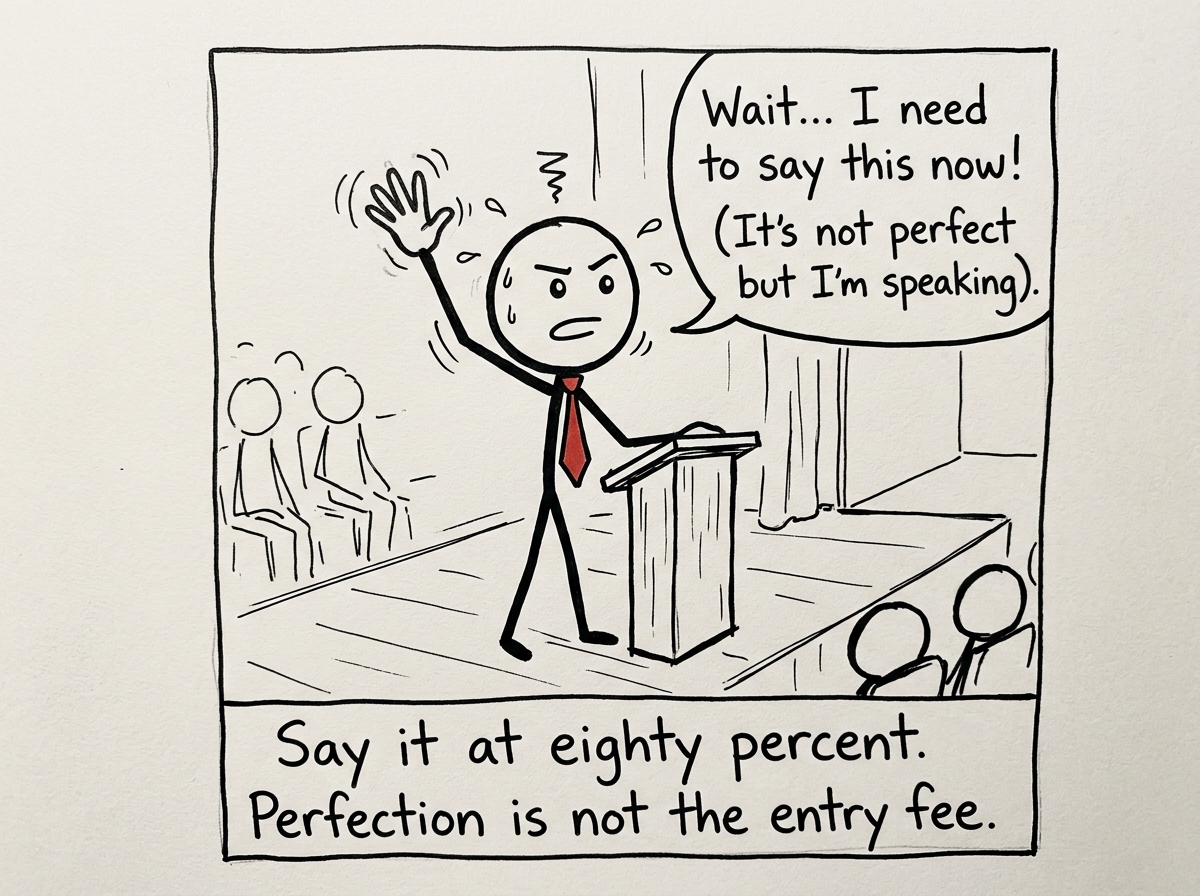
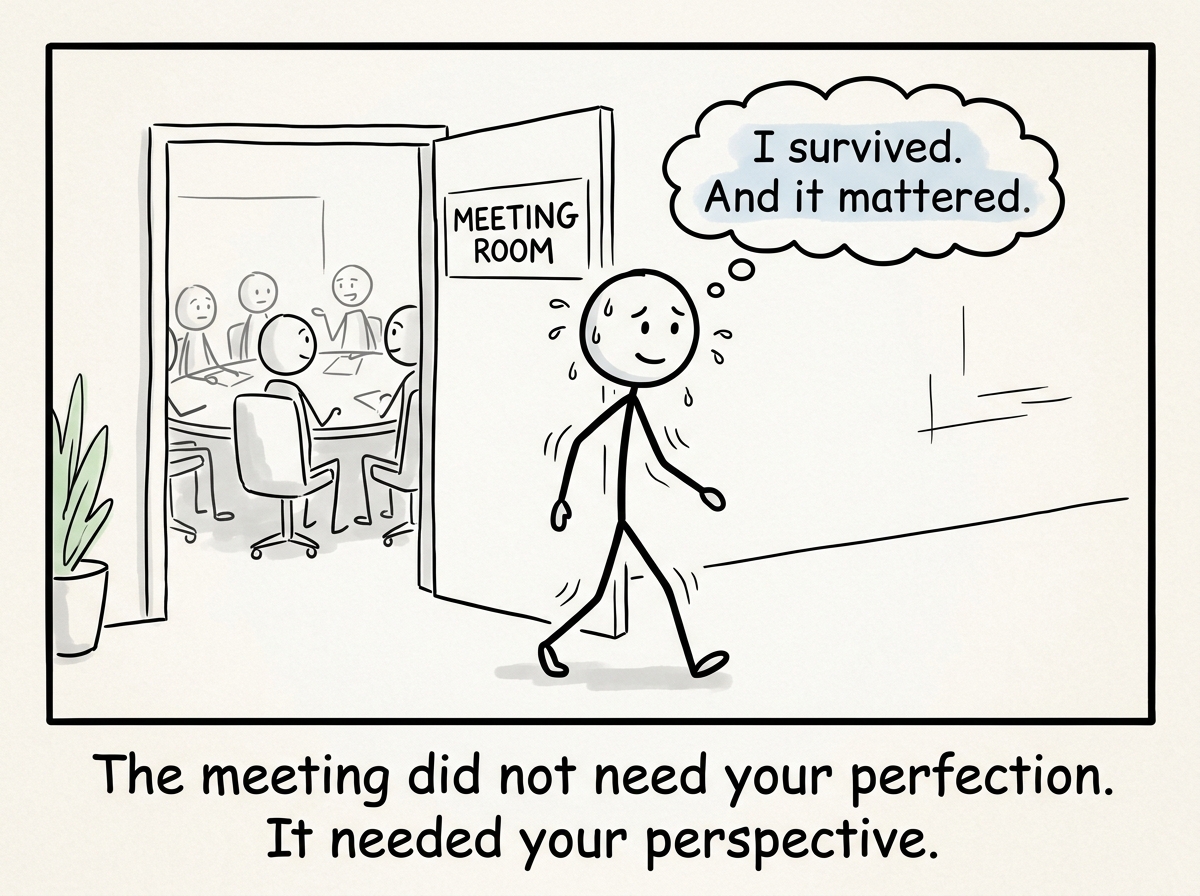
You are in a meeting. The team is discussing a problem, and you have an idea -- a good one, actually. You can see the gap in the logic. You know what the solution might be. But instead of raising your hand, you sit there rehearsing the sentence in your head, editing it, second-guessing it, and ultimately swallowing it. Ten minutes later, someone else says almost exactly what you were thinking, and the room erupts in agreement. You feel a mix of vindication and self-loathing. This is one of the quieter costs of imposter syndrome: the ideas that never get spoken. When you believe you do not truly belong, every contribution feels like a test. If you say something smart, you got lucky. If you say something wrong, it confirms what you always feared -- that you are not good enough to be here. The risk-reward calculation becomes impossibly skewed: the downside of speaking (exposure) feels catastrophic, while the downside of silence (invisibility) feels safe. But invisibility is not safety. It is slow professional erasure. The healthier alternative is to practice speaking before you feel ready. Start small -- ask a question, offer a brief observation. Notice that the world does not end. Over time, you build evidence that your voice has value, not because every idea is brilliant, but because participation is how competence becomes visible. The meeting does not need your perfection. It needs your perspective.
Key Takeaway
Imposter syndrome does not just steal your confidence -- it steals your voice, and silence is not safety.