The Confidence Costume
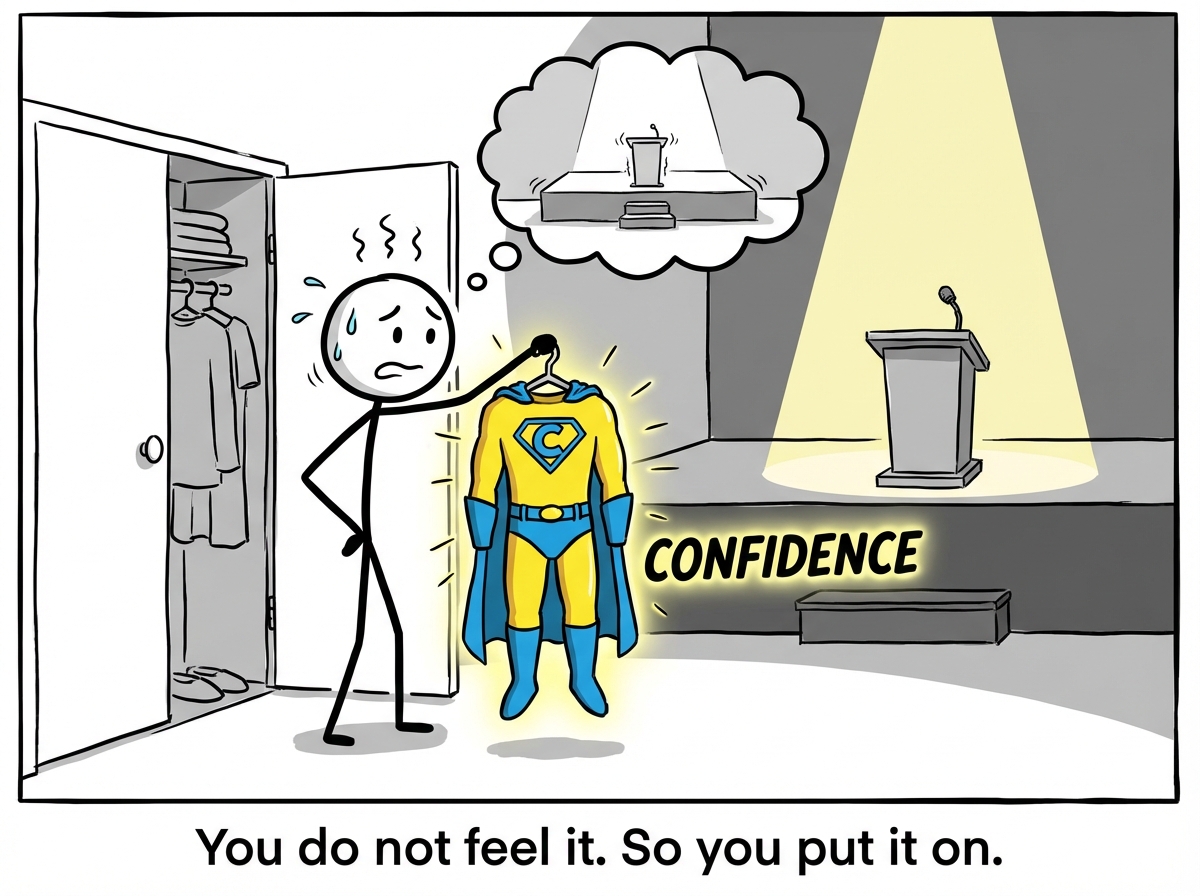
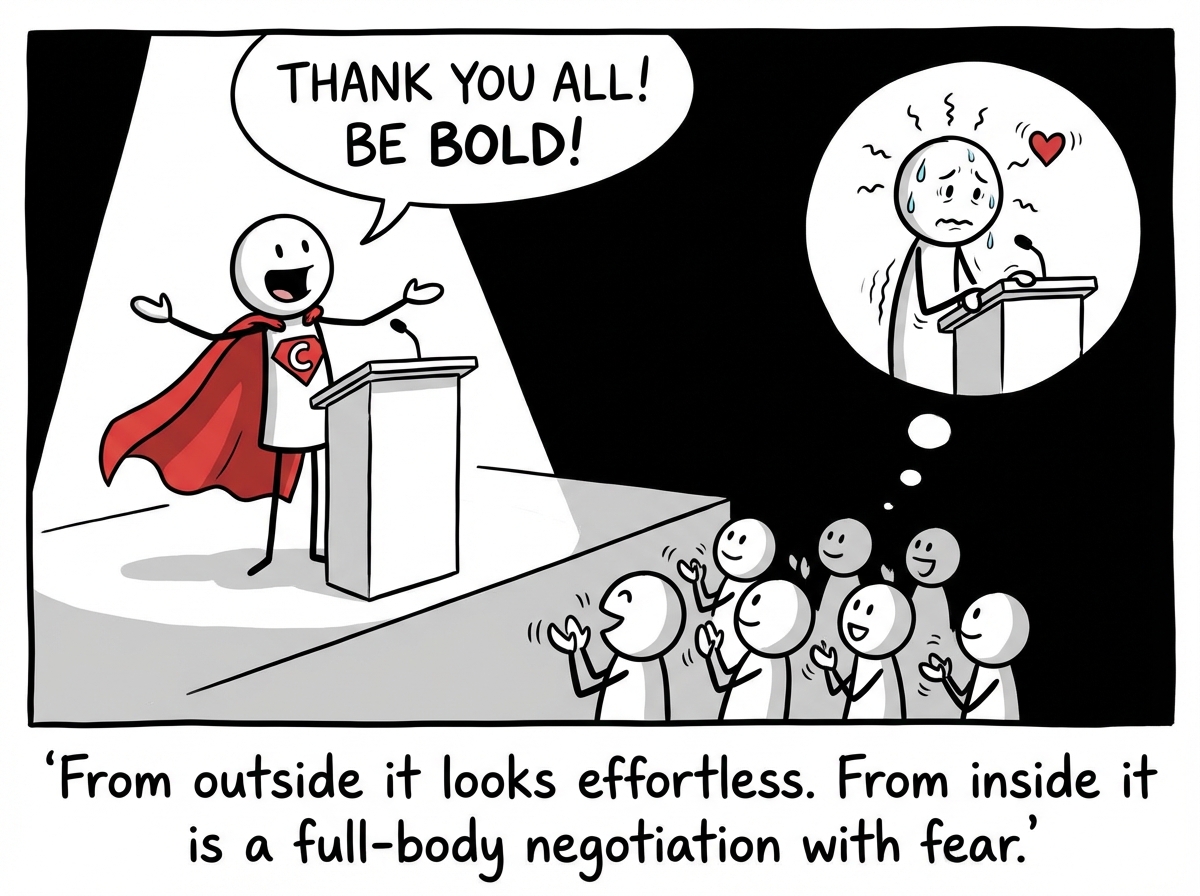
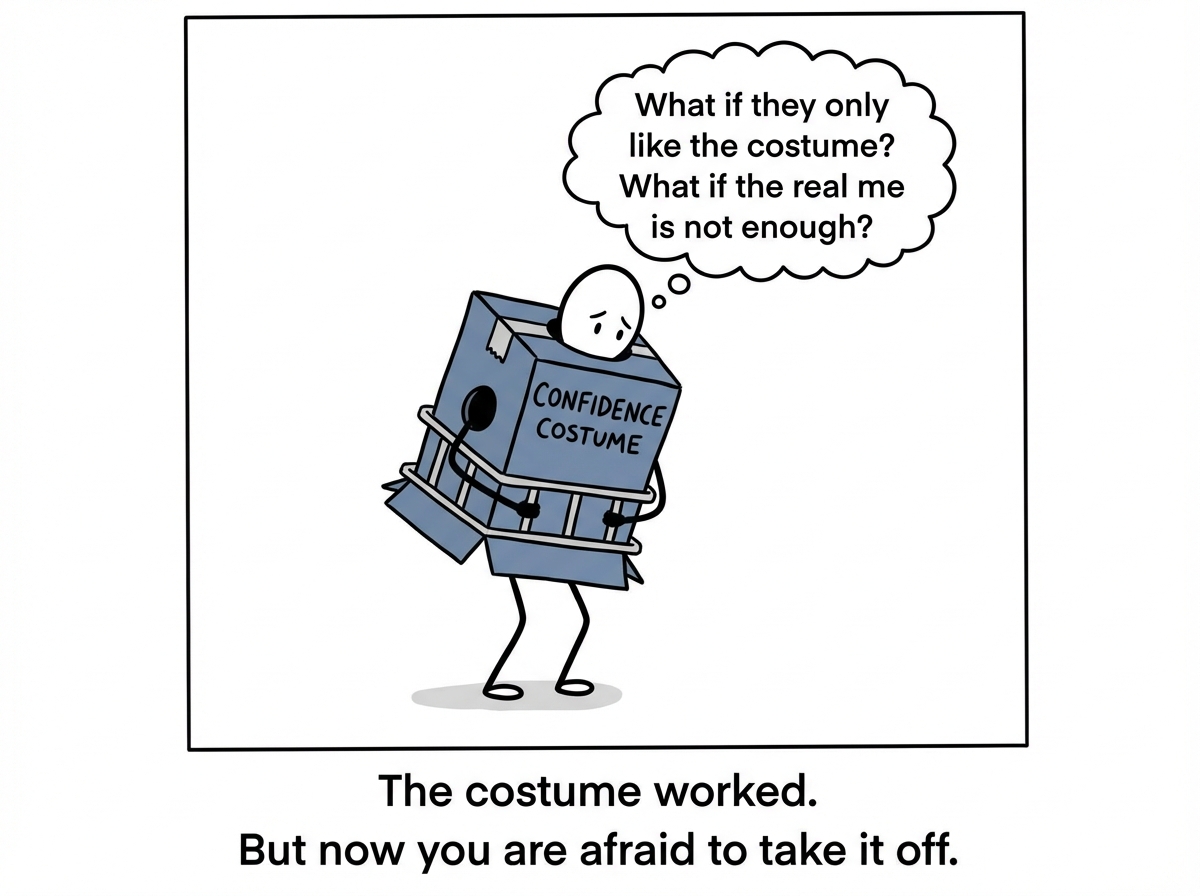
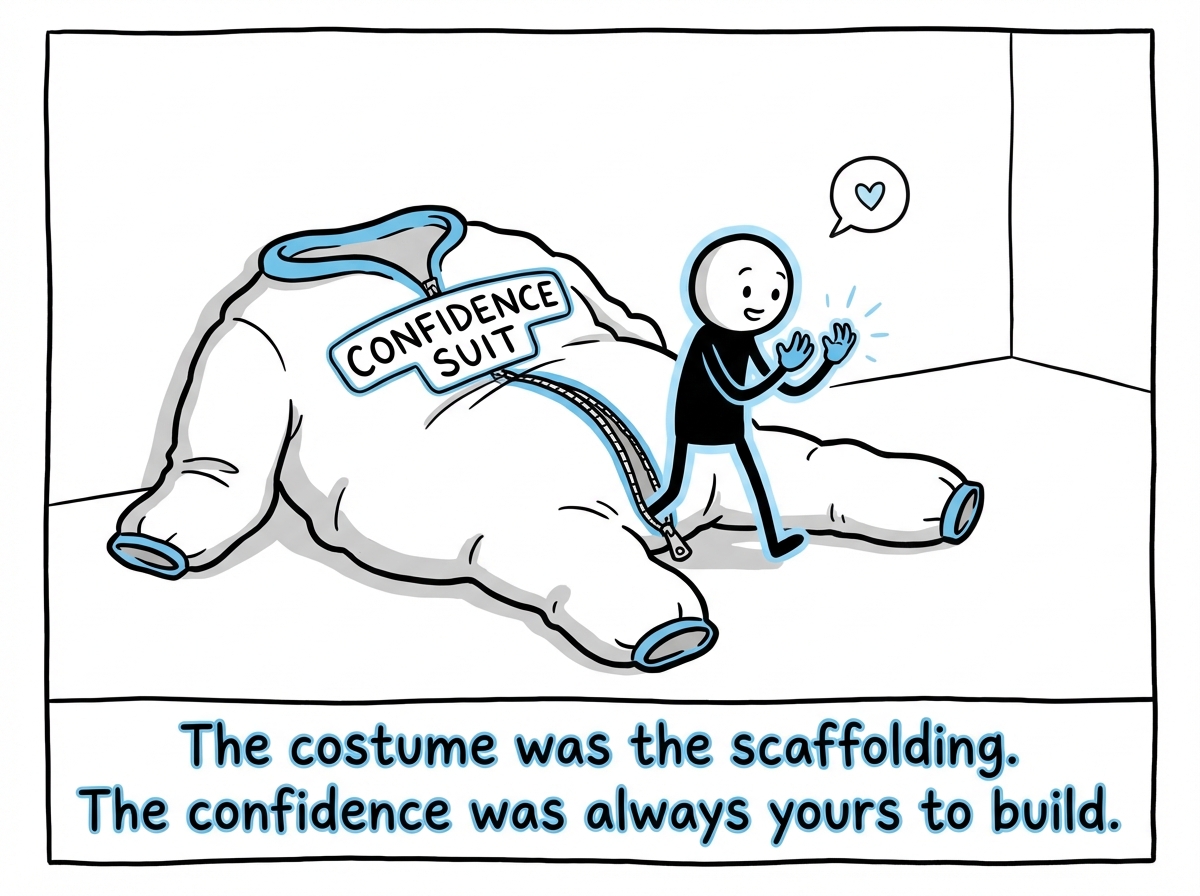
A person puts on a confidence costume to get through a terrifying situation -- and it works, until they realize they need to decide whether to keep wearing it forever or build the real thing underneath.
Explanation
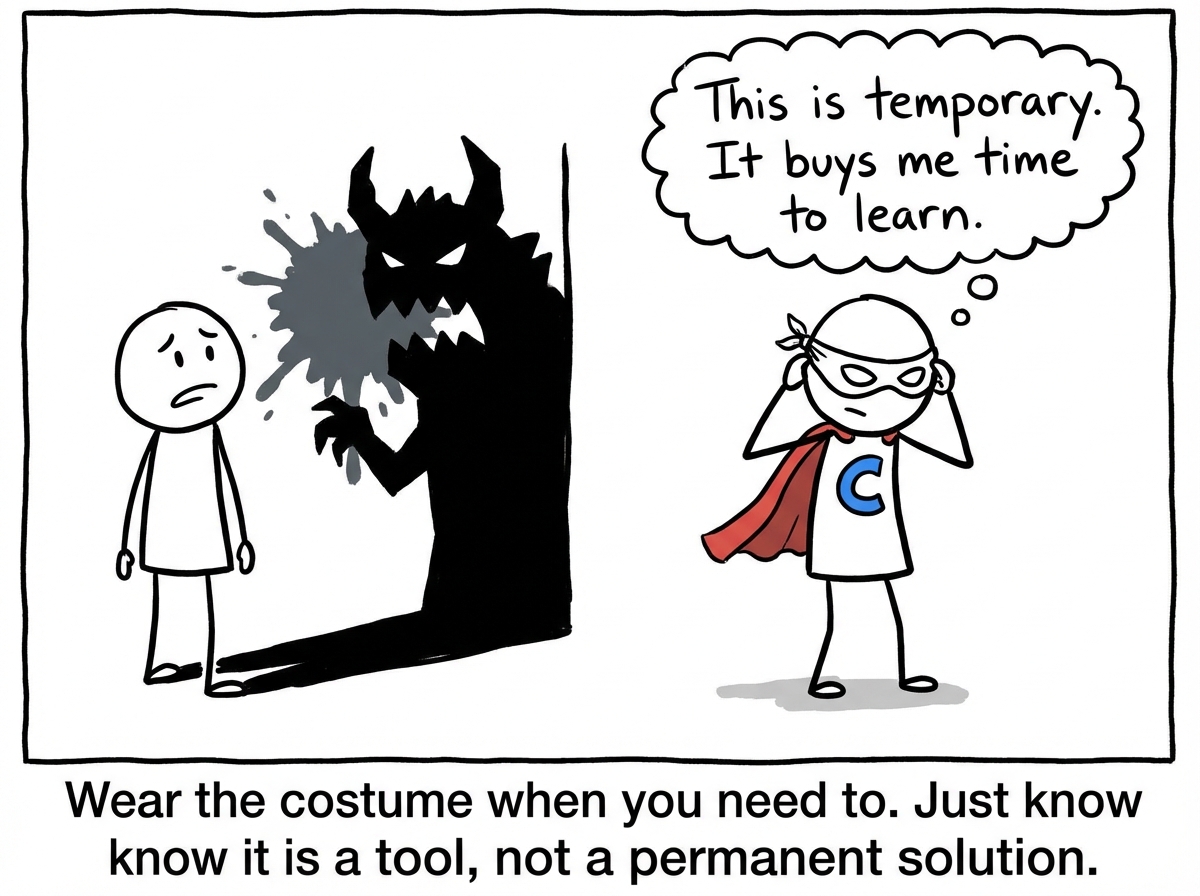
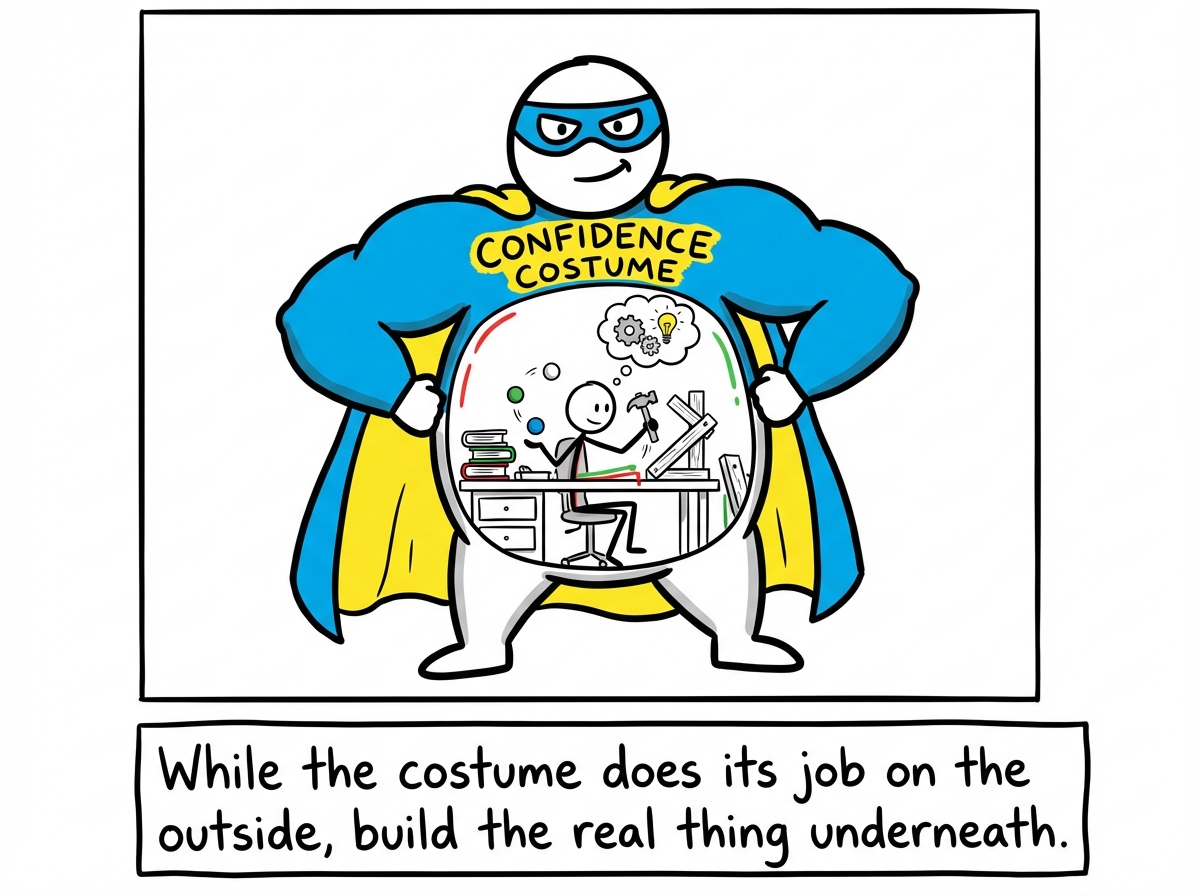
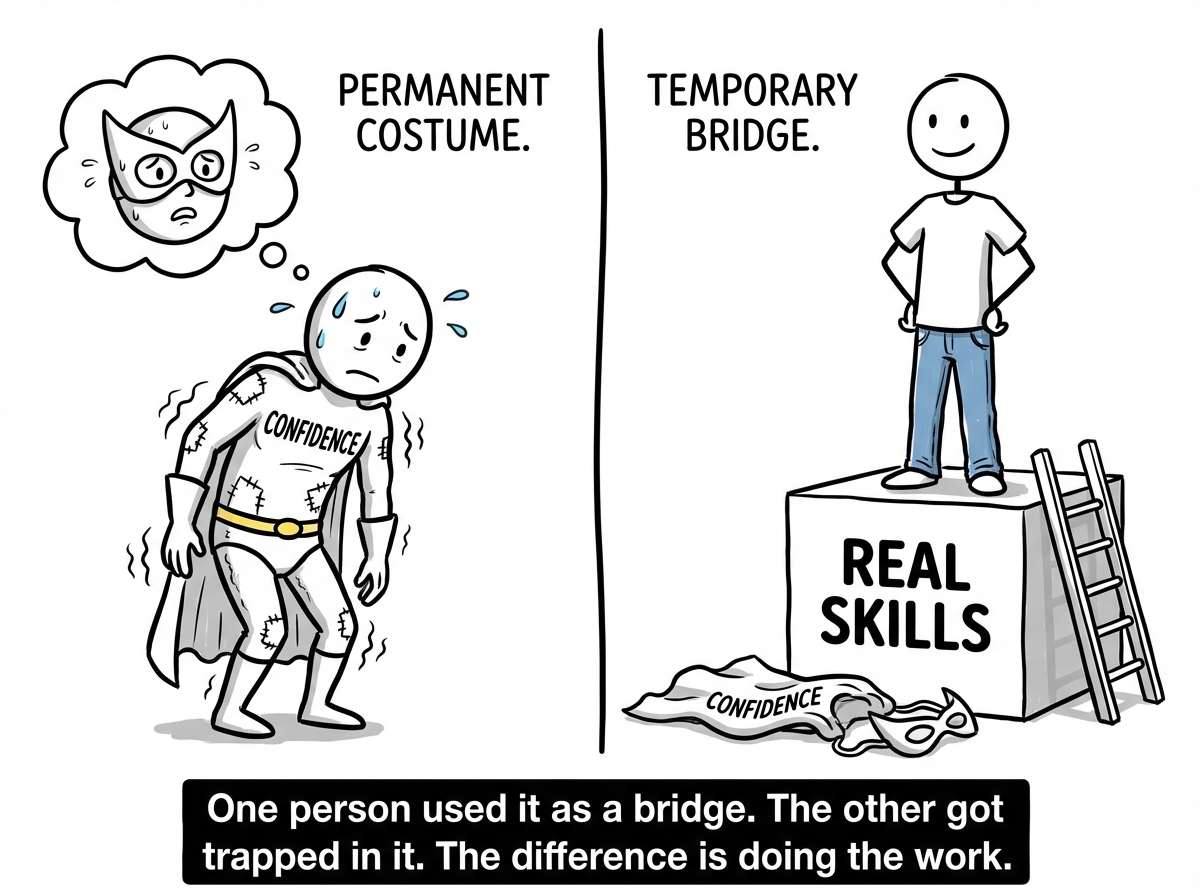
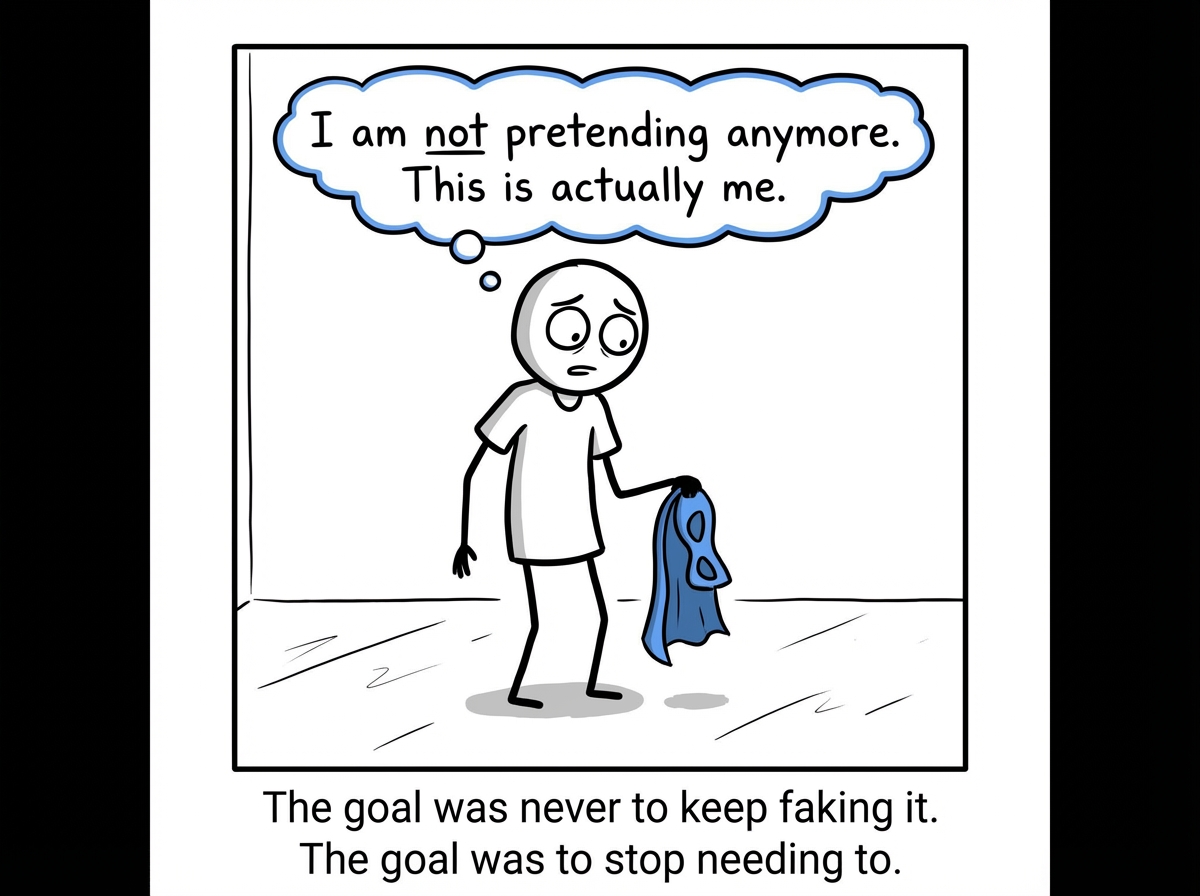
Fake it till you make it is the most common confidence advice in the world, and it works about half the time. The half that works is real: when you adopt the posture, tone, and behavior of a confident person, your brain starts to believe the performance. Behavioral psychologists call this behavioral activation -- acting your way into a feeling rather than waiting to feel your way into action. The confidence costume is the metaphor for this strategy. You put it on before the presentation, the interview, the first date, the difficult conversation. You stand taller. You speak louder. You make eye contact. And often, it is enough. People respond to the costume. Opportunities open. The fear shrinks just enough to let you function. But the costume has a shelf life. If you wear it forever without building real competence, real self-knowledge, and real resilience underneath, you create a fragile structure. You become dependent on the performance. You live in fear of the costume slipping. Every compliment goes to the costume, not to you. And the gap between who you appear to be and who you feel you are becomes the breeding ground for imposter syndrome. The healthiest use of the confidence costume is as a bridge. You wear it to get into the room. Then you do the work. You learn. You fail. You grow. And eventually, you take the costume off and discover that the confidence is in your bones, not your clothes.
Key Takeaway
The costume gets you in the door. The work underneath lets you stay.