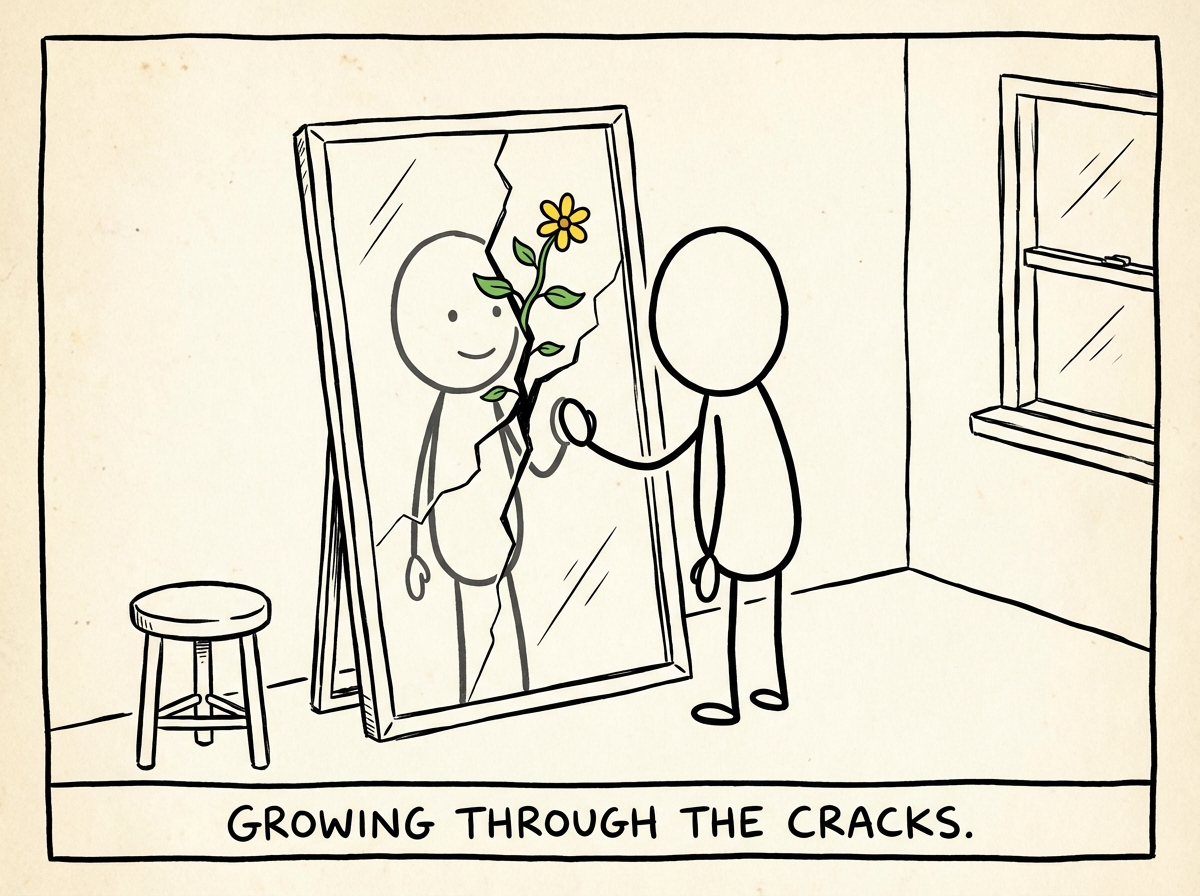
Guide to Shifting from Fixed to Growth Mindset
Retrain your brain to see ability as something you build through effort, so failure becomes useful and challenges become interesting instead of threatening.
Before You Begin
Carol Dweck's research revealed something simple and profound: people who believe their abilities are fixed avoid challenges, collapse under criticism, and see effort as proof they are not talented enough. People who believe their abilities can grow seek challenges, learn from criticism, and see effort as the path to mastery. The good news is that mindset is not a personality trait. It is a habit of thought, and habits can be changed. This guide will help you catch the fixed mindset voice that keeps you playing small and replace it with a growth mindset that lets you actually learn.
-
Catch the fixed mindset voice
Everyone has a fixed mindset voice. It is the inner narrator that speaks up whenever you face something difficult, uncertain, or new. It says things like: 'You are not smart enough for this.' 'If you were talented, this would be easy.' 'Do not try that, you will look stupid.' 'Other people can do this naturally, you cannot.'
The voice is not trying to hurt you. It is trying to protect you from the pain of failure. But in doing so, it keeps you from the growth that only comes through failure.
Your first task is simply to notice it. For one week, keep a mental or written log of every time the fixed mindset voice shows up. What triggered it? What did it say? What did you do or avoid doing because of it? Do not argue with it yet. Just see it clearly.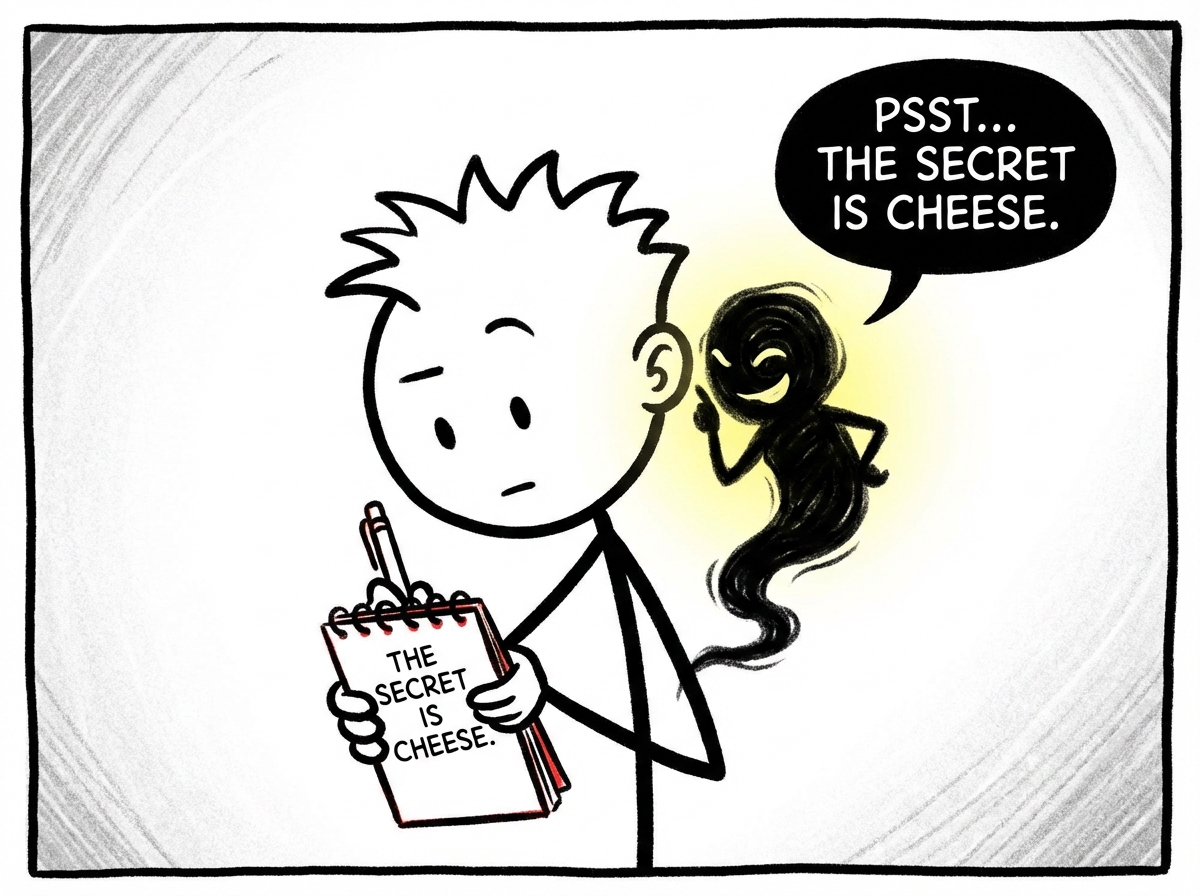
-
Reframe 'I can't' as 'I can't yet'
This is the simplest and most powerful shift in Dweck's entire framework. One word changes everything. 'I cannot do math' is a life sentence. 'I cannot do math yet' is a starting point.
- 'I am not good at public speaking' becomes 'I am not good at public speaking yet.'
- 'I do not understand this' becomes 'I do not understand this yet.'
- 'I cannot handle conflict' becomes 'I cannot handle conflict yet.'
The word 'yet' does something neurological. It moves the statement from the category of identity, which feels permanent, to the category of skill, which feels buildable. It is not a trick. It is a more accurate description of reality. Almost everything you are good at today is something you could not do at some earlier point. You just forgot the learning curve.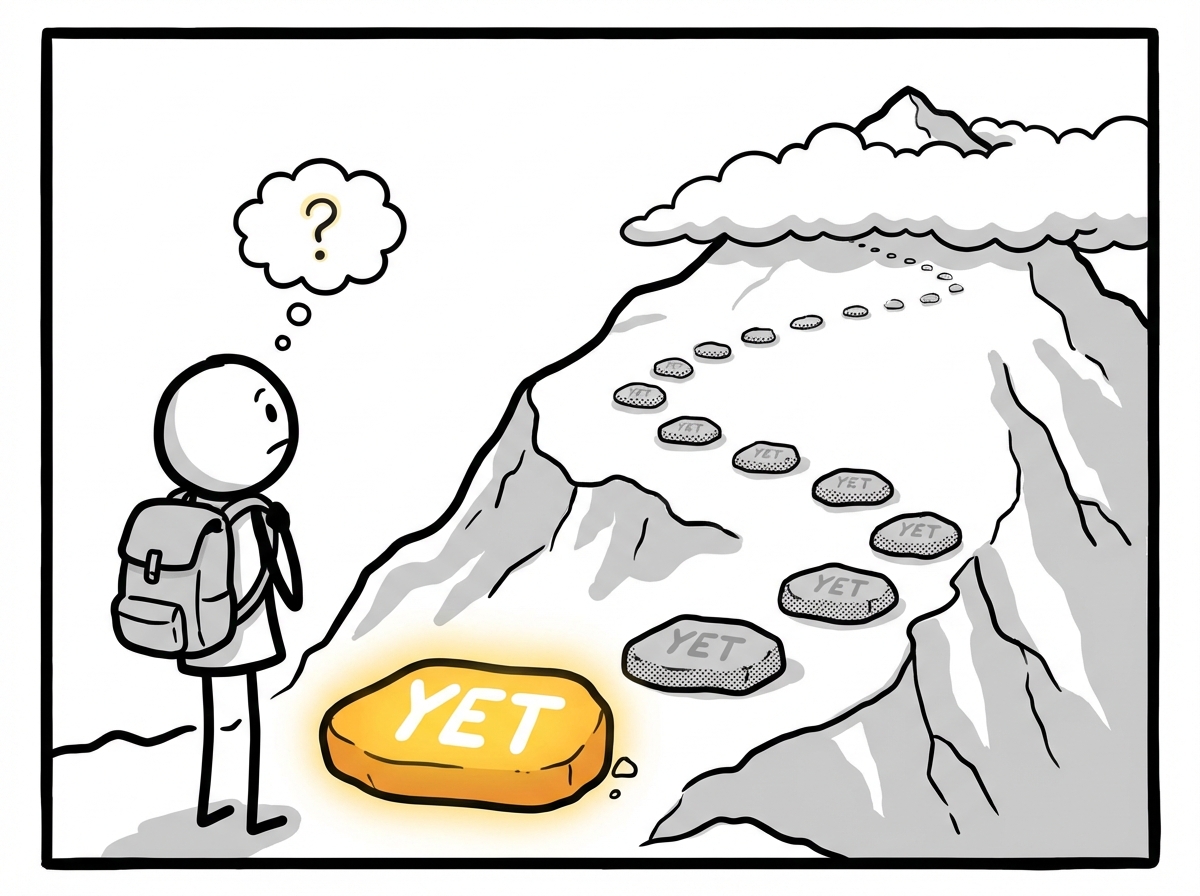
-
Choose effort over proof
Fixed mindset people unconsciously organize their lives around proving they are smart, talented, or capable. They pick tasks they know they can ace. They avoid areas where they might struggle. They would rather look competent than actually become competent.
Growth mindset flips this. Instead of asking 'Will this make me look good?' you ask 'Will this make me better?'
- Choose the harder project that will teach you something, not the easy one that will confirm what you already know.
- Volunteer for the thing you are not sure you can do, not just the thing you are certain you will nail.
- When you catch yourself rehearsing how to appear effortless, stop. Effort is not a sign of weakness. It is the mechanism of growth.
This does not mean you should always take the hardest path. It means you should notice when you are avoiding difficulty specifically to protect your self-image.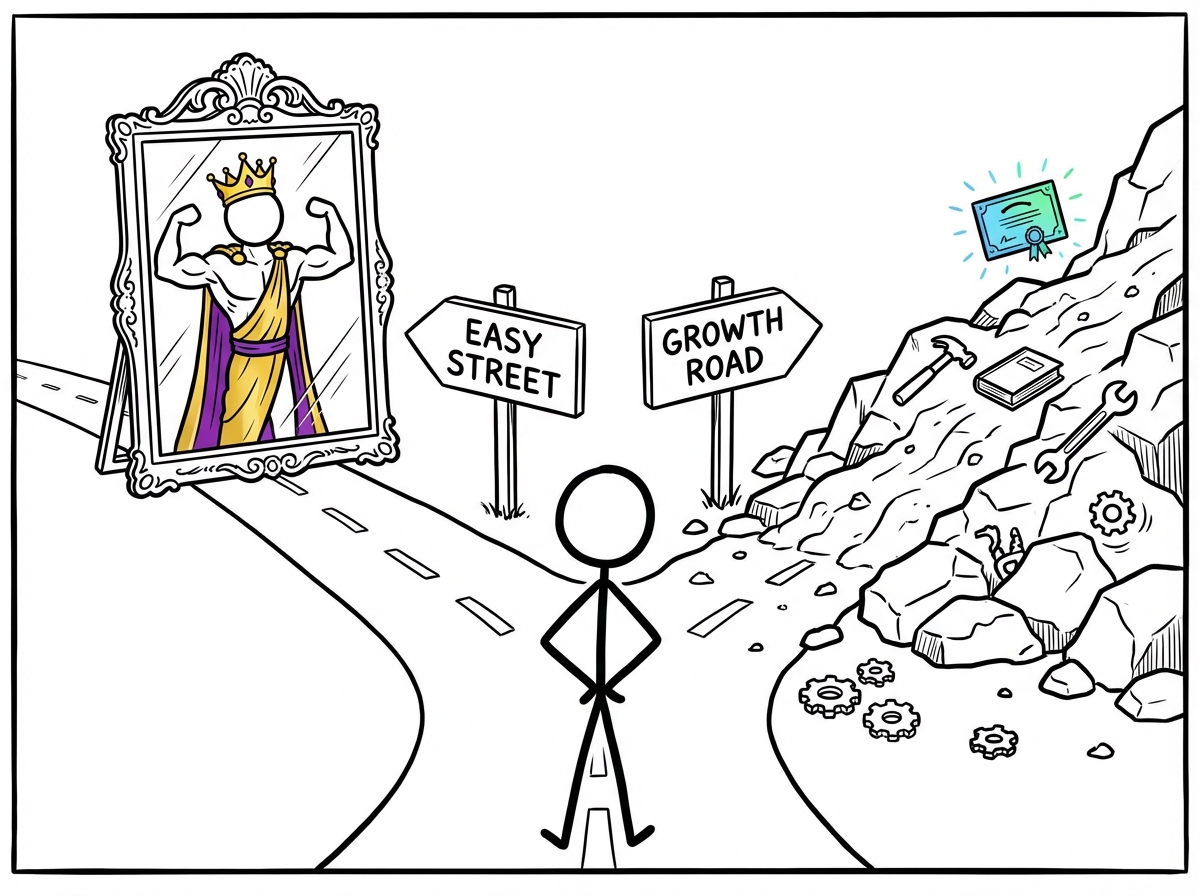
-
Treat failure as data not identity
In a fixed mindset, failure means something about who you are. You failed the test, therefore you are stupid. The relationship ended, therefore you are unlovable. The project tanked, therefore you are a fraud. Failure becomes evidence for the prosecution in the trial of your worth.
In a growth mindset, failure means something happened that you can learn from. That is it. It is data. It is feedback. It is information about what to adjust next time.
When something goes wrong, practice asking these questions instead of spiraling:
- What specifically did not work?
- What would I do differently with what I know now?
- What skill or knowledge was I missing, and how can I build it?
- Is there someone who handled a similar situation well that I can learn from?
The goal is not to feel good about failure. The goal is to make failure useful instead of devastating.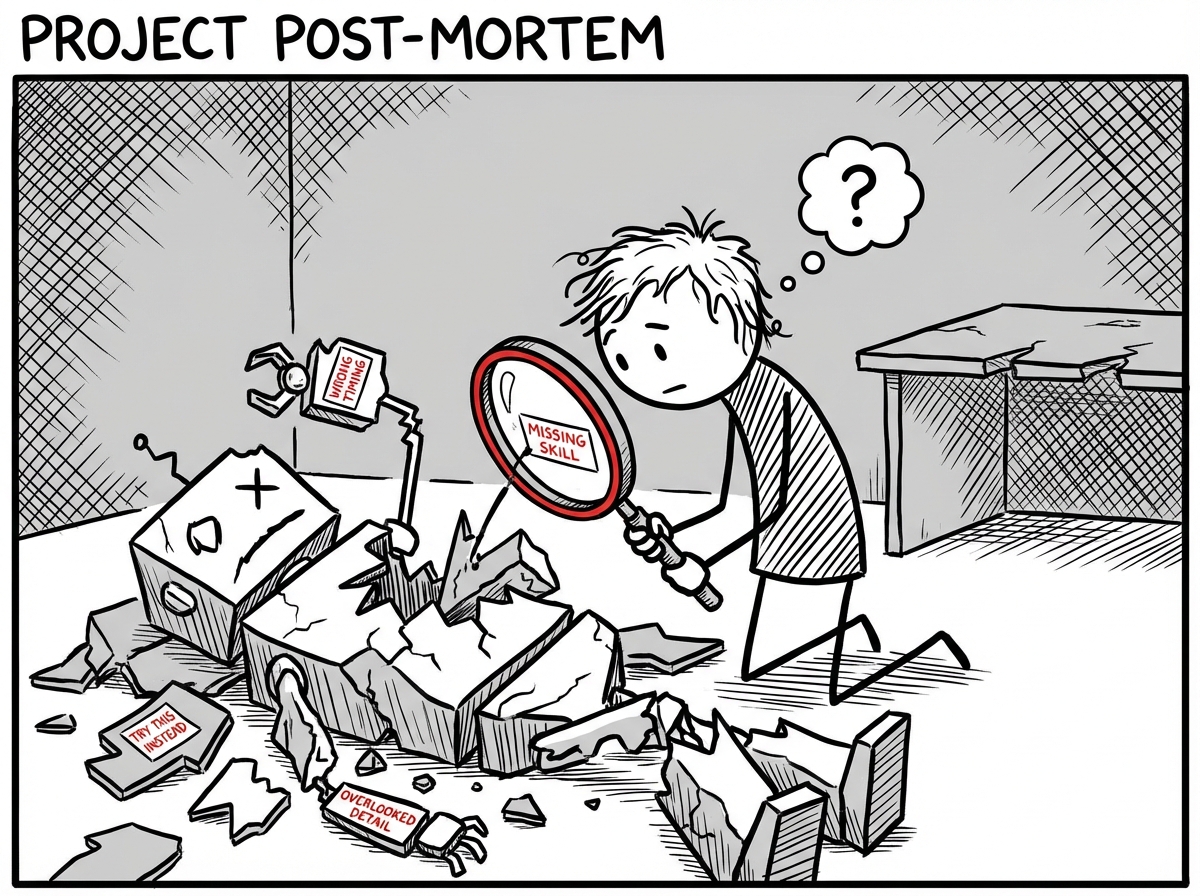
-
Find the lesson before moving on
Most people deal with setbacks in one of two ways. They either ruminate on what went wrong until it becomes a shame spiral, or they rush past it with forced positivity and never look back. Neither approach extracts the value from the experience.
Growth mindset requires a middle path. You sit with the setback long enough to understand it, and then you move forward with that understanding.
Build a simple post-failure ritual:
- Name what happened factually, without dramatic narration. 'I prepared for the wrong things and ran out of time' not 'I am a disaster.'
- Identify one specific thing you learned that you did not know before.
- Decide on one concrete action you will take differently next time.
- Then close the file. You extracted the lesson. You do not need to keep reopening it.
This takes five minutes. It is the difference between repeating the same mistake forever and actually getting better.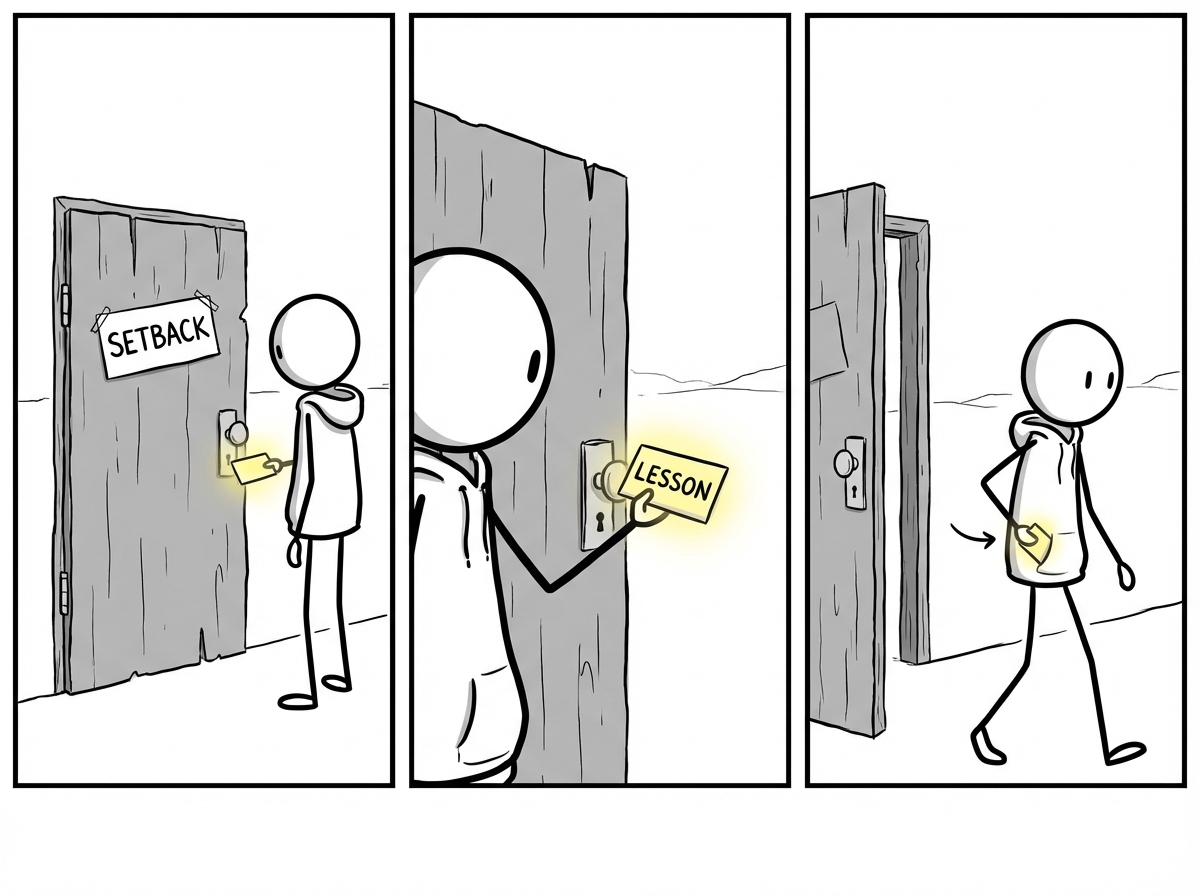
-
Praise the process not the result
How you talk to yourself and others reinforces either a fixed or growth mindset. When you say 'I am so smart,' you are praising a trait. When you say 'I worked really hard on that strategy and it paid off,' you are praising a process. The difference matters enormously.
- Instead of 'I am good at this,' try 'The practice I put in is showing.'
- Instead of 'You are so talented,' try 'I can see how much effort you put into that.'
- Instead of 'I nailed it because I am a natural,' try 'I nailed it because I prepared thoroughly.'
This is not false modesty. It is accurate attribution. When you credit your success to a fixed trait, you set yourself up to be destroyed the next time that trait does not deliver. When you credit your success to a process, you know exactly what to repeat.
Apply this to failure too. 'I failed because I am dumb' is fixed. 'I failed because my study strategy was not effective for this material' is growth. Same outcome, entirely different relationship with it.