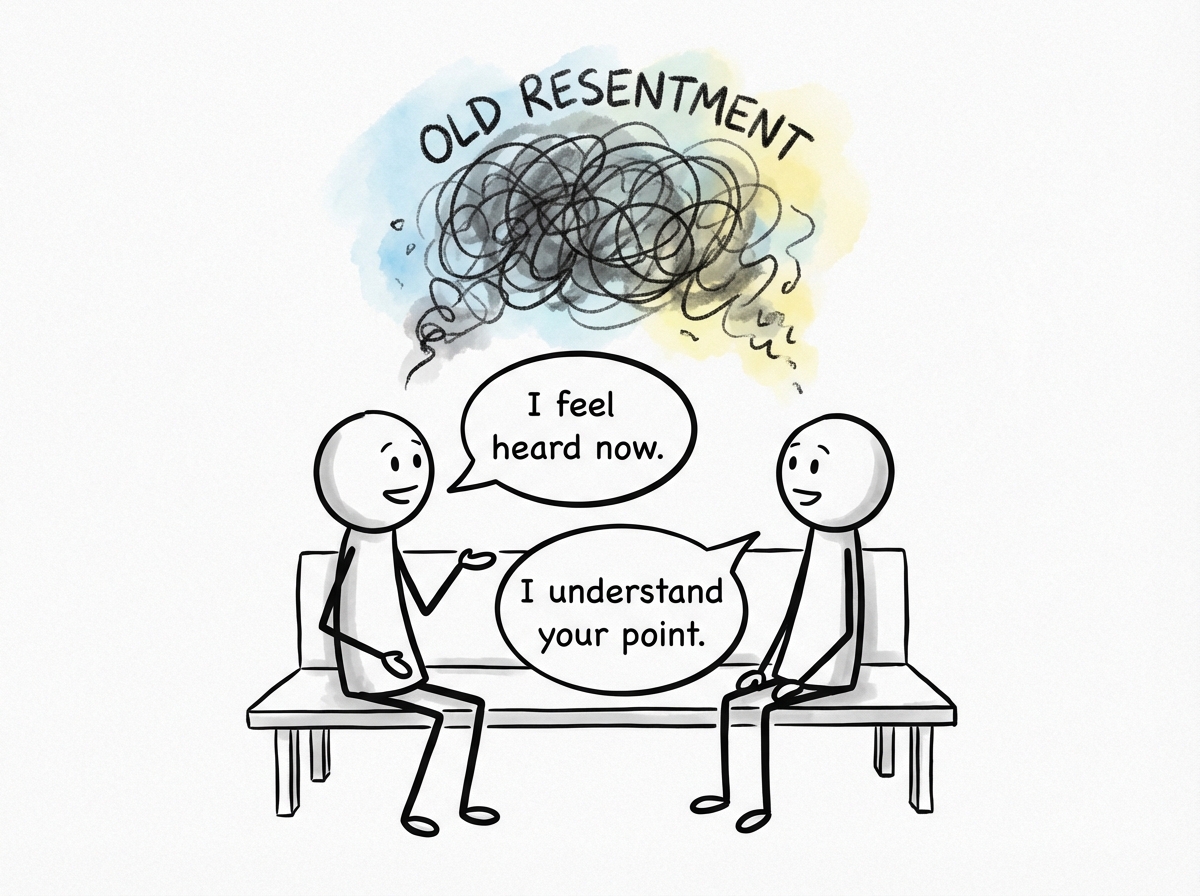
Guide to Releasing Resentment
Move from silently keeping score to openly addressing what hurts, so resentment stops poisoning your relationships from the inside.
Before You Begin
Resentment is what happens when you swallow your truth to keep the peace, and then the peace eats you alive. It builds slowly. A favor that was not returned. A need that was dismissed. A boundary you did not set because you hoped the other person would just know. Over time, these small swallowed hurts calcite into something hard and bitter. You stop trusting the person. You start keeping score. And the worst part is that the other person often has no idea anything is wrong. This guide will help you drain the resentment by finally saying what needs to be said and building what should have been there all along.
-
Name what you are actually resentful about
Resentment is sneaky. It disguises itself as irritation about dishes, or annoyance about how someone chews, or a vague sense that everything your partner does is wrong. But underneath the surface complaint, there is always a deeper wound.
Ask yourself: what is the sentence I keep repeating in my head about this person? Usually it sounds like 'They never ___' or 'I always have to ___' or 'They do not even notice that I ___.' Write it down, unfiltered. Now look at what you wrote. That is not about dishes. That is about feeling unseen, unvalued, or taken for granted.
You cannot release what you have not named. Be specific. 'I resent that I am the only one who plans our social life and nobody acknowledges it' is workable. 'I am just frustrated' is not.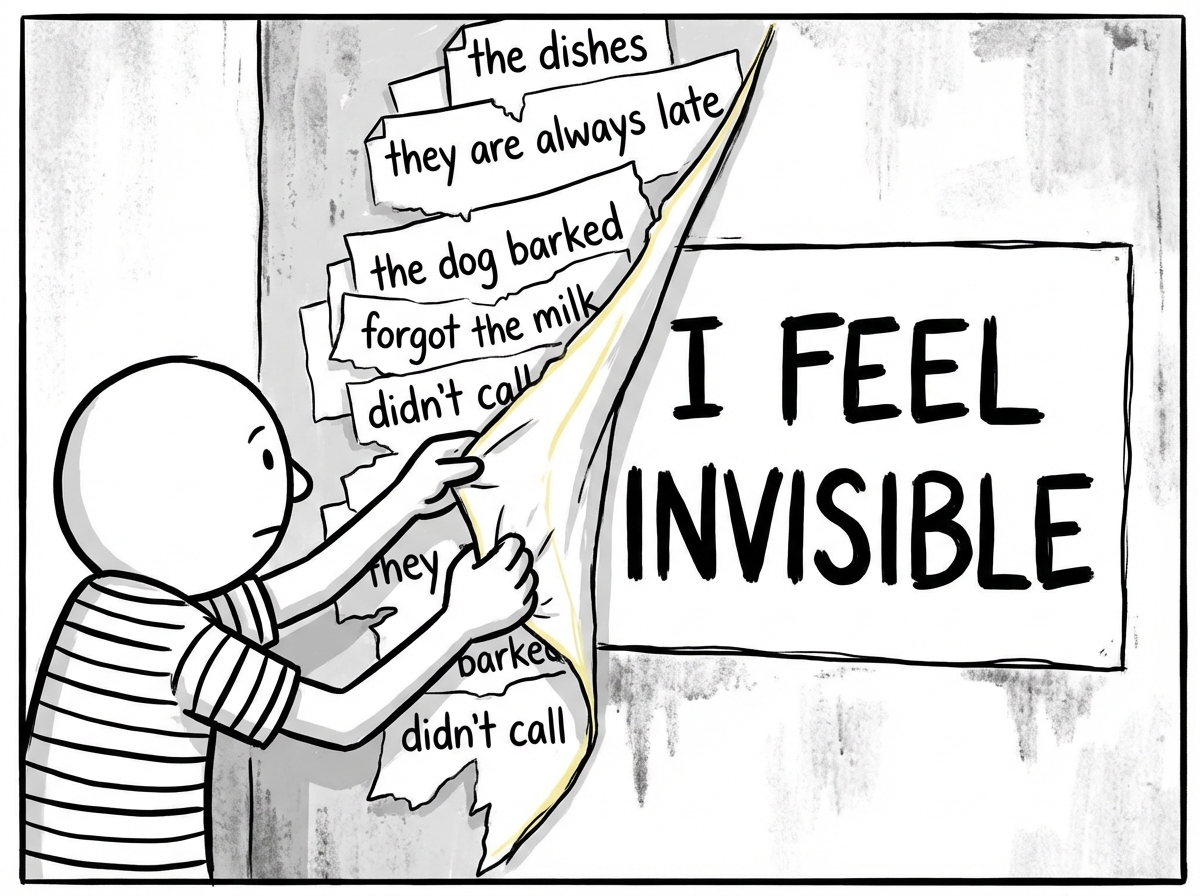
-
Own your part in the pattern
This is the step nobody wants to do. Resentment feels righteous, and owning your part feels like letting the other person off the hook. It is not. It is taking your power back.
- Did you say yes when you meant no?
- Did you hint instead of asking directly?
- Did you assume the other person should just know what you need?
- Did you keep doing the thing you resent instead of stopping?
- Did you choose silence to avoid conflict and then punish them with distance?
You are not responsible for how someone else treats you. But you are responsible for what you tolerate, what you communicate, and how long you wait before speaking up. Owning your part is not self-blame. It is recognizing where you have leverage to change the dynamic.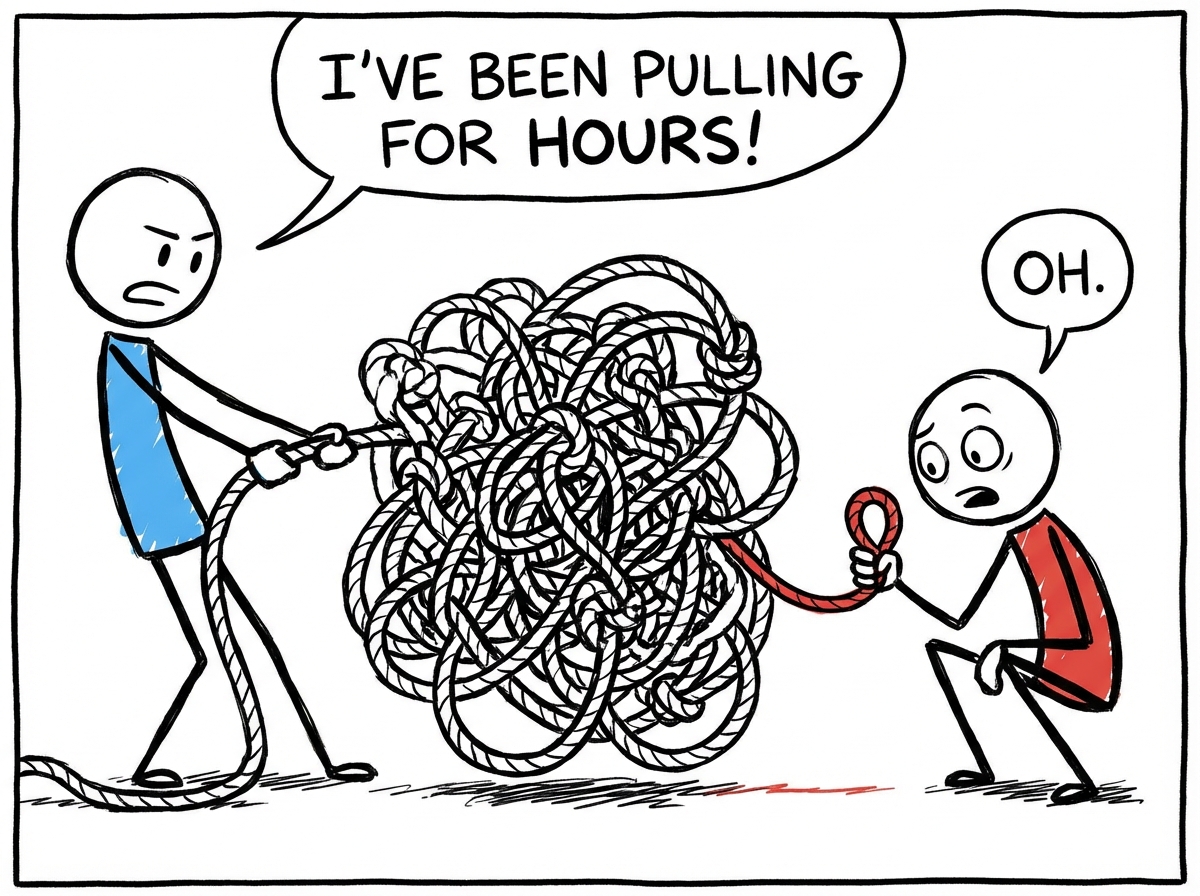
-
Say the thing you have been holding
Resentment thrives in silence. The antidote is honest, direct conversation. Not venting. Not attacking. Not a dramatic confrontation. Just the truth, said plainly.
Use this structure: 'When ___ happens, I feel ___, and what I need is ___.'
For example: 'When I handle all the logistics for our family and nobody acknowledges it, I feel invisible and taken for granted. What I need is for you to notice the work and share it with me.'
This will feel vulnerable. That is the point. Resentment is what happens when you protect yourself from vulnerability so thoroughly that no real connection can get through. Say the thing. Let it land. Give the other person a chance to respond before you decide what their response will be.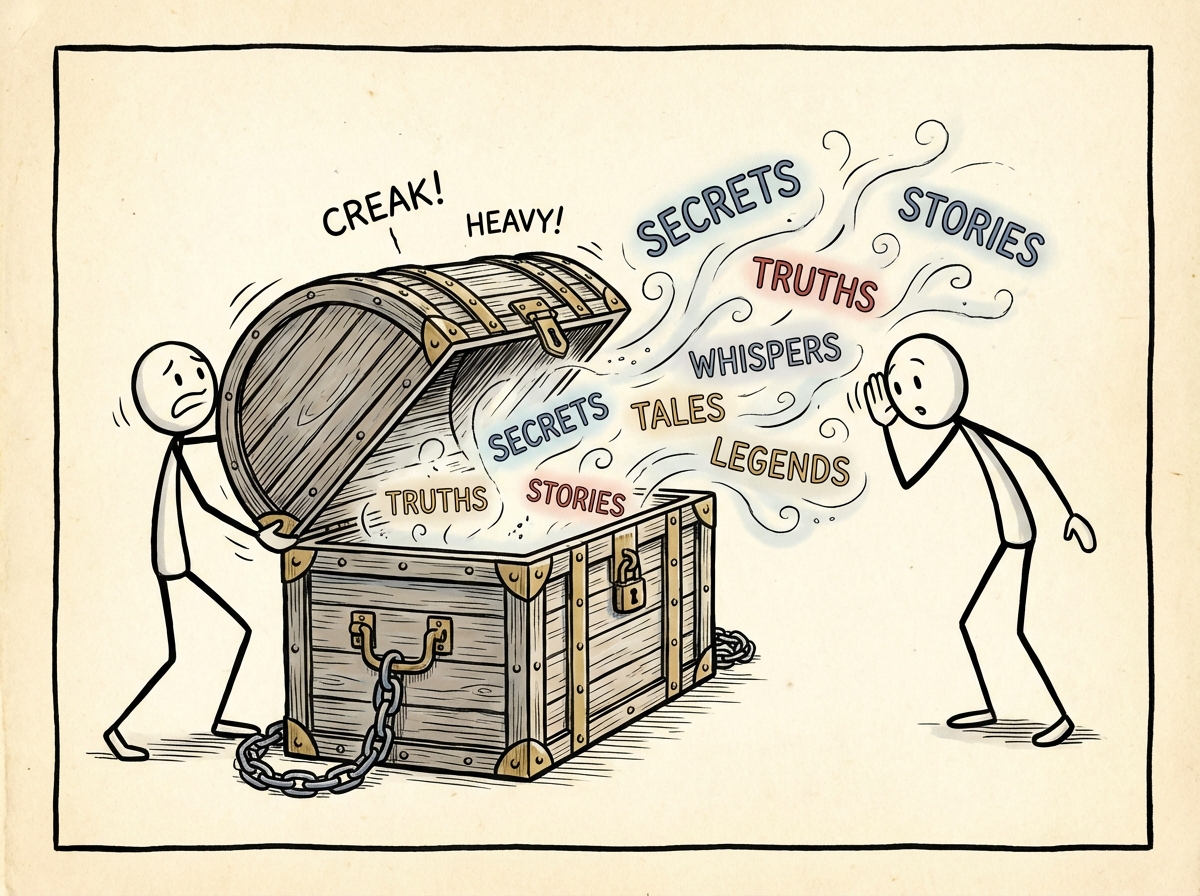
-
Set the boundary that was missing
Most resentment is a boundary problem in disguise. You are angry because someone crossed a line, but the line was never drawn. Or it was drawn in pencil and erased the moment someone pushed back.
A boundary is not a request for someone else to change. It is a statement about what you will and will not participate in.
- 'I am not available to be the sole planner anymore. If something does not get planned, it does not happen.'
- 'I will not continue conversations where I am being yelled at. I will leave the room and come back when we can talk calmly.'
- 'I need a day to myself each week. I am going to take it whether or not anyone else thinks I should.'
Boundaries only work if you enforce them. Say it, mean it, and follow through. The resentment dissolves when you stop waiting for permission to protect your own peace.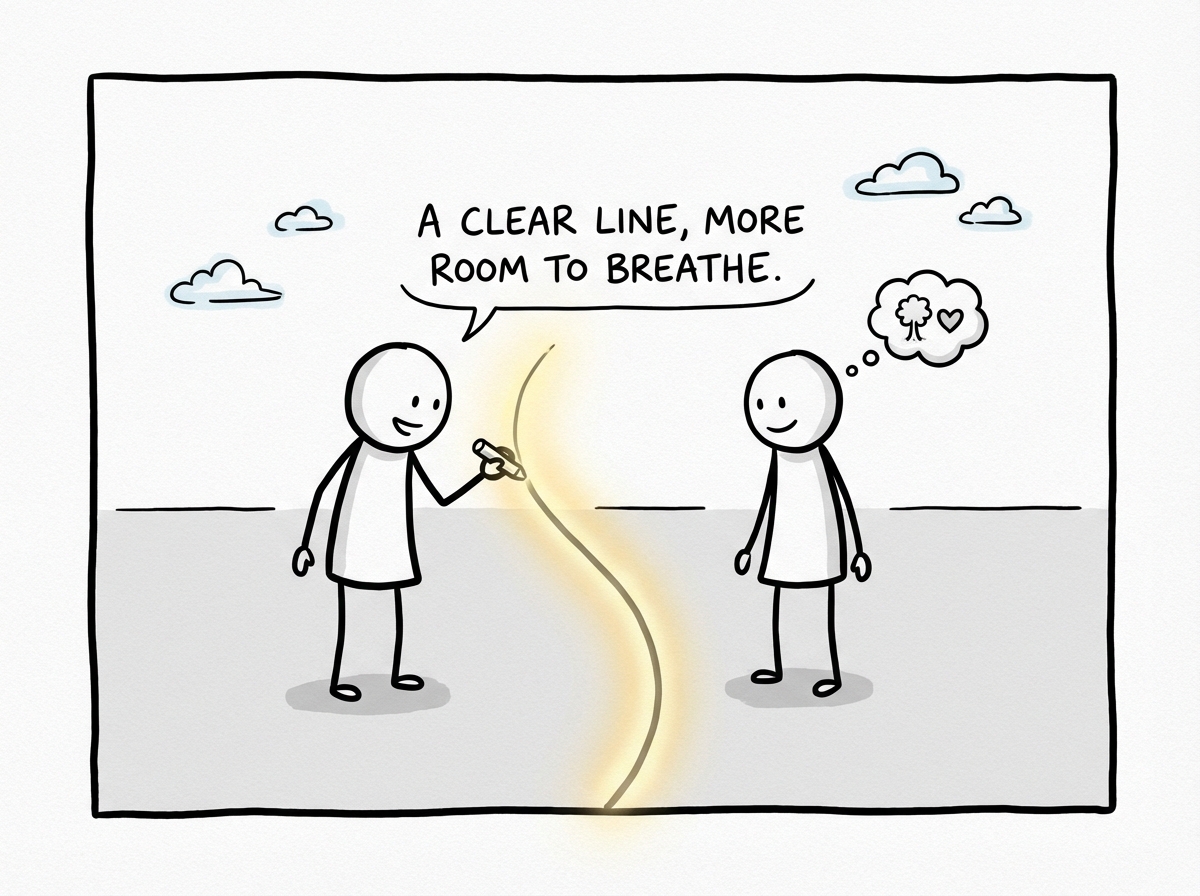
-
Let go of the mental scoreboard
Resentful people are excellent accountants. You remember every favor you did, every time you were let down, every sacrifice that went unnoticed. The scoreboard feels like protection, but it is actually a prison. As long as you are keeping score, you are not in a relationship. You are in a transaction.
Letting go of the scoreboard does not mean pretending nothing happened. It means deciding that from this point forward, you are going to engage honestly in real time instead of stockpiling grievances for a future prosecution.
Try this: notice when you catch yourself mentally adding to the tally. Instead of filing it away, address it in the moment or consciously let it go. There is no third option. Storing it is how you got here.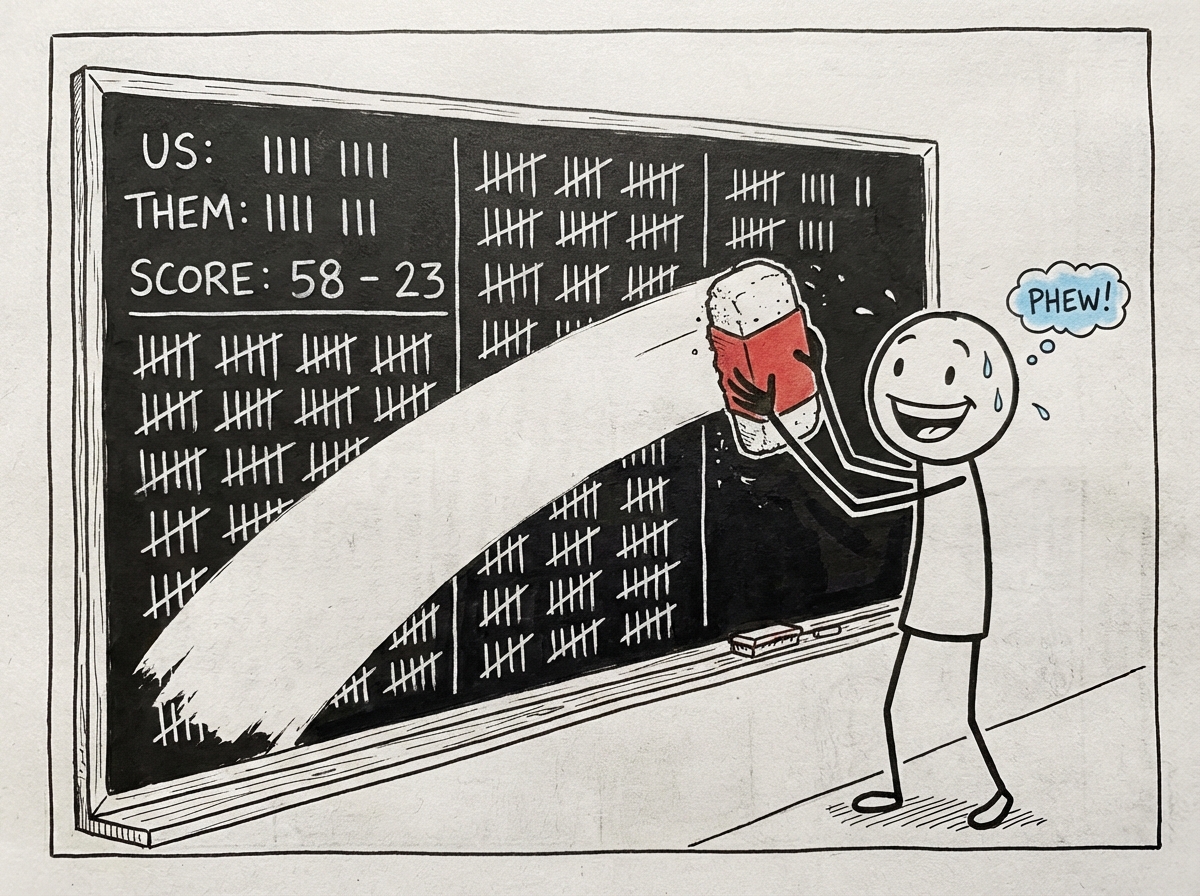
-
Practice clean communication going forward
Releasing old resentment only matters if you stop building new resentment. That means changing how you communicate from this point on. Clean communication is saying what you mean, when you mean it, without passive aggression, hints, or tests.
- Say 'I am hurt' instead of going silent.
- Say 'I need help' instead of doing it yourself and fuming.
- Say 'That does not work for me' instead of agreeing and resenting it later.
- Say 'I was wrong' when you were wrong, so the other person learns it is safe to do the same.
This will feel awkward at first. You have spent a long time communicating indirectly, and directness can feel aggressive when you are not used to it. It is not. It is respectful. You are giving the other person accurate information about where you stand, which is the one thing resentment never does.