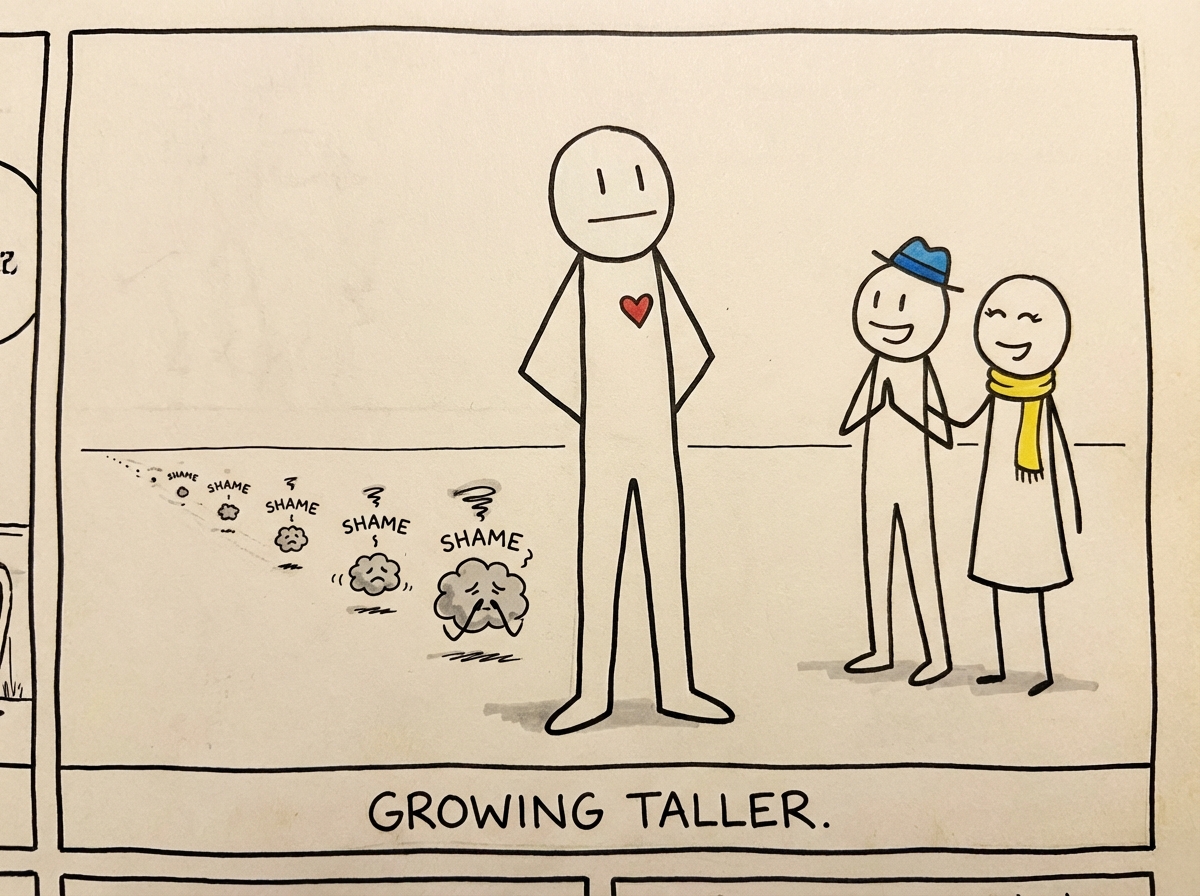
How to Work Through Shame
Learn to recognize shame when it shows up, understand how it differs from guilt, and build the resilience to move through it instead of being consumed by it.
Before You Begin
Shame is not the same as feeling bad about something you did. Guilt says 'I did something bad.' Shame says 'I am bad.' It is the painful, full-body conviction that something is fundamentally wrong with you -- not your behavior, but your being. Shame is one of the most isolating emotions humans experience because its primary message is that you are not fit for connection. It tells you to hide, to shrink, to never let anyone see the real you. And the cruelest part is that the hiding makes it worse. Shame grows in silence and secrecy. It feeds on the belief that if people knew the truth about you, they would leave. The antidote to shame is not perfection -- it is connection. It is letting yourself be seen, imperfections and all, and discovering that you are still worthy of belonging. This guide will not make shame disappear. But it will teach you how to move through it rather than letting it run your life.
-
Recognize Shame vs Guilt
Most people use shame and guilt interchangeably, but they are fundamentally different experiences with very different effects. Guilt is about behavior and it motivates repair. Shame is about identity and it motivates hiding. Learning to tell them apart is the foundation of this work.
- Guilt sounds like: 'I made a mistake. I hurt someone. I need to make this right.' It is uncomfortable but productive. It points you toward action and accountability.
- Shame sounds like: 'I am a mistake. I am broken. Something is wrong with me at my core. If people knew, they would leave.' It is not pointing you toward action -- it is telling you to disappear.
- Notice which one you default to. Some people feel appropriate guilt and move on. Others immediately spiral into shame, turning every mistake into proof of their fundamental unworthiness. If a small error makes you feel like a terrible person, that is shame.
- This distinction matters because the strategies for each are different. Guilt requires accountability and repair. Shame requires compassion and connection. If you treat shame like guilt and try to fix or atone harder, you will exhaust yourself without ever touching the real wound.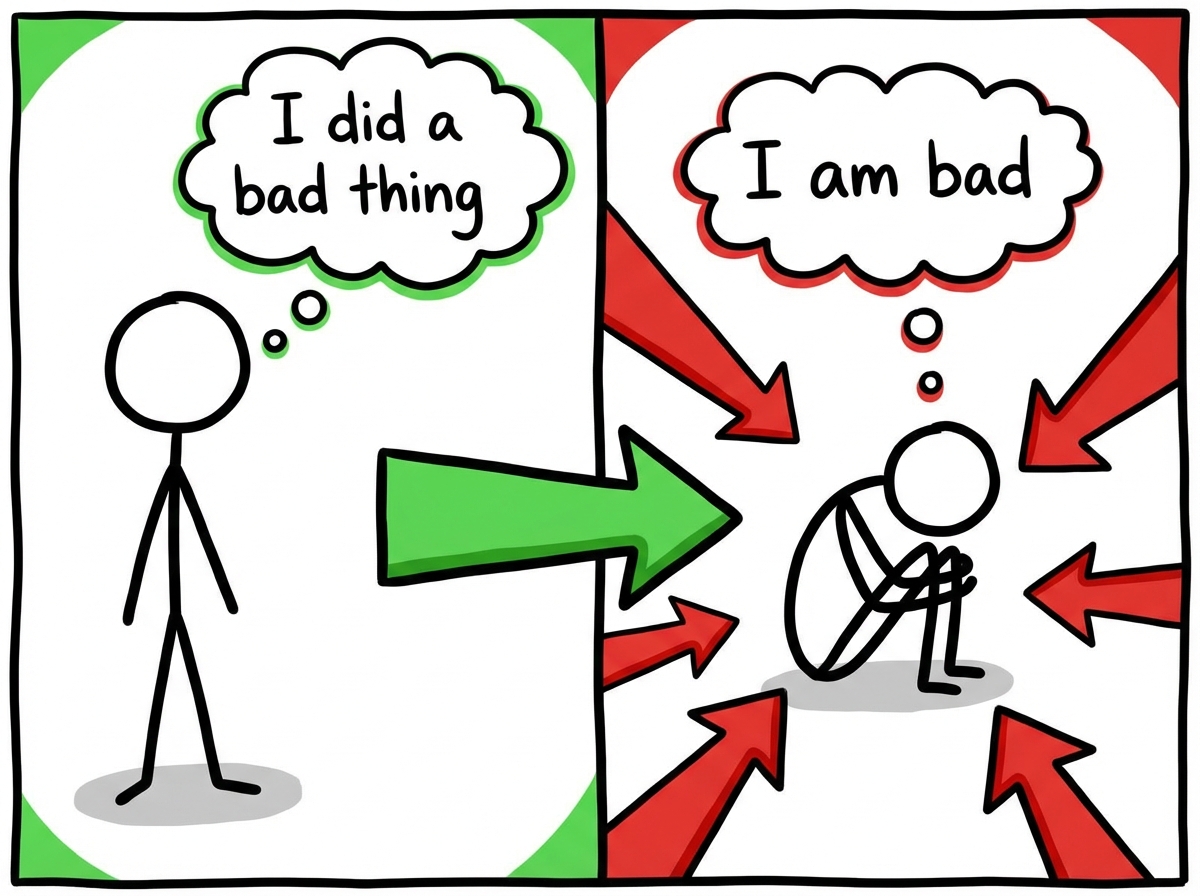
-
Notice Your Shame Triggers
Shame does not strike randomly. It has specific triggers -- situations, topics, memories, or interactions that reliably activate the feeling that something is wrong with you. Mapping your triggers gives you the ability to see shame coming instead of being blindsided by it.
- Think about the last three times you felt that hot, sinking, I-want-to-disappear feeling. What was happening? Who were you with? What was the topic? Write down the specifics.
- Common shame categories include: appearance and body, intelligence and competence, family and background, sexuality, mental health, financial status, parenting, and past mistakes. Most people have one or two categories where shame is especially concentrated.
- Notice the physical signature. Shame has a very distinct body response: heat rising in your chest or face, the urge to shrink or look away, a feeling of being exposed, a sudden desire to leave the room or change the subject. These physical cues can alert you before your mind even catches up.
- Pay attention to what you go to great lengths to hide from others. The things you never mention, the topics you deflect, the parts of your story you have edited out -- these are often the epicenters of your shame. You do not need to expose them all at once. You just need to know where they are.
-
Break the Silence by Sharing With One Safe Person
Shame researcher Brene Brown says shame cannot survive being spoken. That sounds terrifying, and it is -- but it is also true. The single most powerful thing you can do with shame is to share it with someone who can hold it with empathy. Not everyone, not publicly, not all at once. One person, one story, one moment of being seen.
- Choose carefully. The person you share with needs to be someone who has earned your trust. This is not about being vulnerable with everyone. It is about being strategic with your vulnerability. Look for someone who listens without judgment, who does not rush to fix or minimize, and who has shown you empathy before.
- Start small. You do not have to share your deepest shame first. Start with something medium -- a mistake you made that you have been carrying, an insecurity you have never voiced, a part of your story you usually leave out. Test the waters.
- Pay close attention to how the person responds. Empathy sounds like: 'Thank you for telling me that. I understand.' Shame responses sound like: 'It is not that bad' (minimizing), 'Well you should have...' (judging), or immediately sharing their own story (centering themselves). If the person responds with empathy, let that land.
- Notice what happens to the shame after you share it. For most people, the simple act of saying the thing out loud to someone who responds with warmth reduces the shame's intensity significantly. You just proved that the shameful thing did not make you unworthy of connection.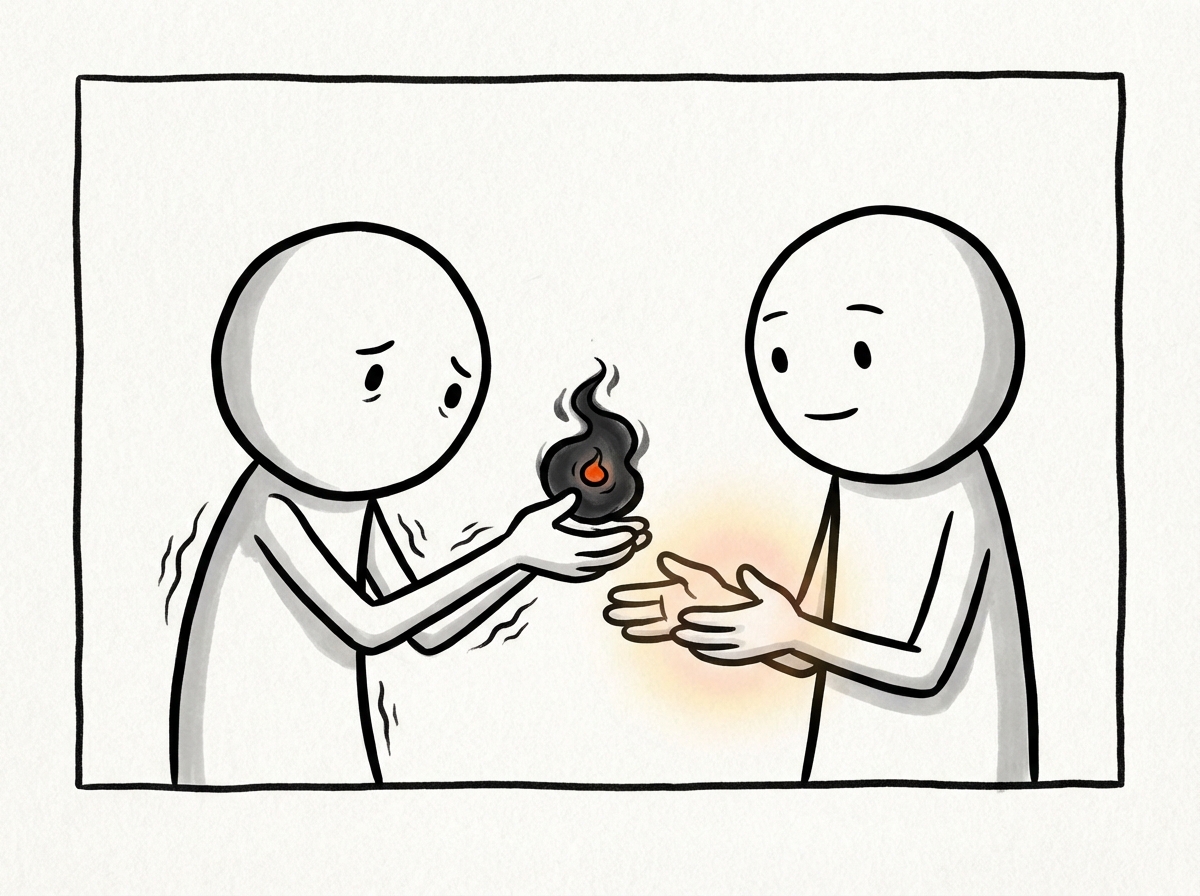
-
Challenge the Shame Story
Shame tells stories. Convincing, absolute, all-encompassing stories about who you are and what you deserve. These stories feel like facts, but they are interpretations -- formed in moments of pain and reinforced by years of silence. Challenging them does not mean pretending they do not exist. It means examining whether they are actually true.
- Write down the shame story in its most brutal form. Whatever shame says about you, put it on paper: 'I am unlovable because _____.' 'I am worthless because _____.' 'I do not belong because _____.' See it in black and white.
- Now interrogate it. Who told you this? When did you first believe it? Was this conclusion drawn by a child or by an adult with full perspective? In most cases, the shame story was written in childhood and has never been revised.
- Look for evidence that contradicts the story. Not to dismiss your pain, but to check the accuracy. Are there people who love you knowing some of your flaws? Have you survived things the shame said would destroy you? Have others who share your shameful experience gone on to live good lives?
- Rewrite the story with more accuracy. Not 'I am perfect and nothing is wrong' but something like 'I have this experience in my past, and it does not define my worth. I am a whole person, not a collection of my worst moments.' The revised story does not have to feel true yet. It just has to be more accurate than the shame version.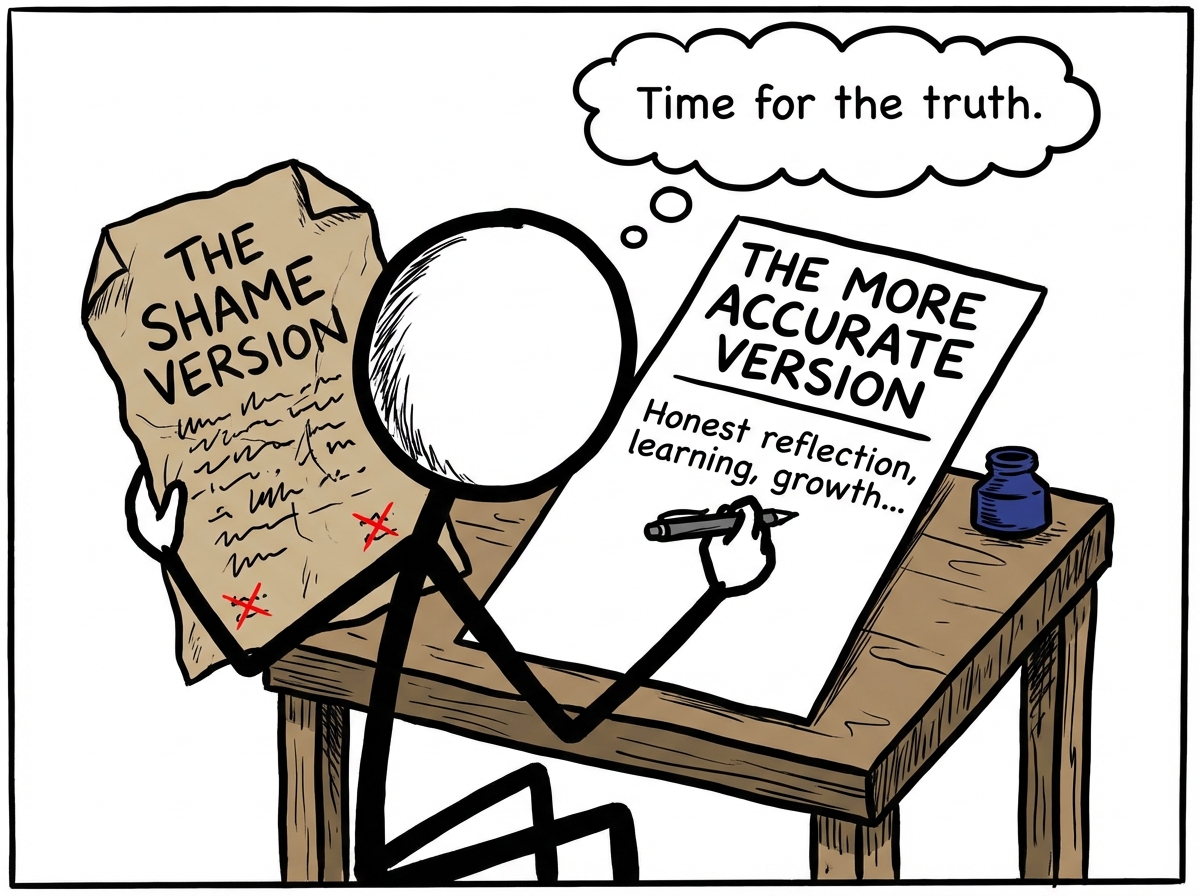
-
Practice Self-Compassion in the Shame Moment
Self-compassion is not self-pity and it is not letting yourself off the hook. It is treating yourself with the same basic decency you would offer someone you care about. In the shame moment, when your whole body is telling you to hide or attack yourself, self-compassion is the most radical and effective intervention available.
- When shame hits, put your hand on your chest and say -- silently or out loud -- 'This is a moment of suffering. This is hard.' This is the mindfulness step: acknowledging the pain without dramatizing or minimizing it.
- Remind yourself that you are not alone. Shame's biggest lie is that you are the only one who feels this way. Whatever you are ashamed of, other people carry the same thing. You are not uniquely broken. You are part of the human experience.
- Speak to yourself the way you would speak to a friend in the same situation. Not 'get over it' and not 'poor you.' Something like: 'Of course this hurts. Anyone would struggle with this. You are allowed to be imperfect and still be worthy of love.'
- Do not wait until the shame passes to practice this. Do it while the shame is active, while your face is hot and your chest is tight. That is when it matters most. Self-compassion in comfort is easy. Self-compassion in shame is the practice that changes your life.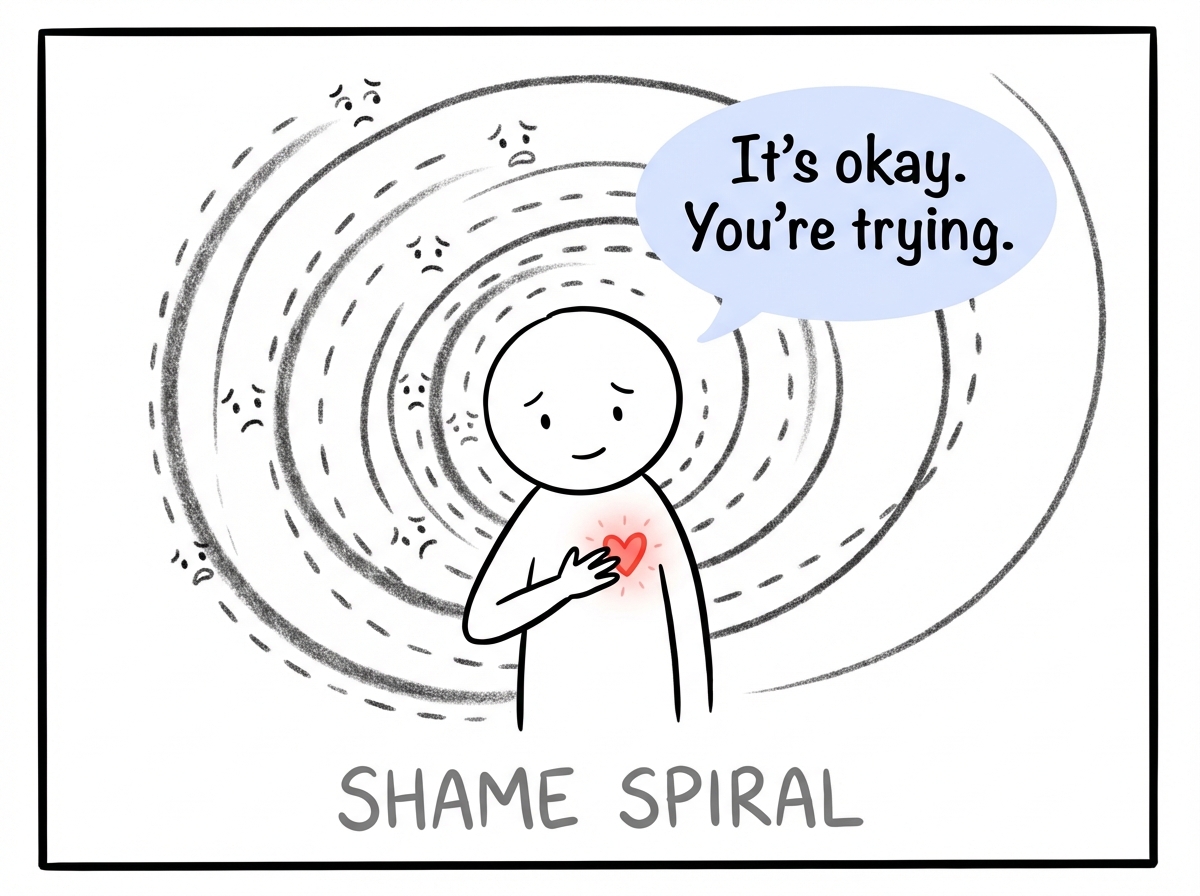
-
Build Shame Resilience Over Time
Shame resilience is not the absence of shame. It is the ability to move through shame without it taking over your identity, your behavior, or your relationships. It is built slowly, through repeated practice, not through a single breakthrough.
- Continue the practice of speaking shame out loud to trusted people. Each time you share and receive empathy, you weaken shame's hold. Build a small network of people -- even two or three -- who can hold space for your imperfections without judgment.
- Develop your critical awareness. When shame strikes, practice asking: 'Is this shame based on my values or on someone else's expectations?' Not all shame is created equal. Some of it comes from genuine misalignment with your values, and that is useful information. Much of it comes from internalized messages that were never yours to carry.
- Watch for shame-driven behaviors and interrupt them. Shame makes people withdraw, lash out, people-please, or perform perfection. When you catch yourself doing any of these, pause and ask: 'Am I doing this because I want to, or because shame is driving?'
- Expect setbacks. There will be days when the shame feels as strong as it ever was, when you fall back into old stories and old hiding patterns. That does not mean the work is not working. Shame resilience is not linear. It is built through thousands of small moments of choosing connection over hiding, and each one counts even when it does not feel like it.