The Body Remembers What You Forgot
A person has a full emotional meltdown triggered by something as small as a specific tone of voice, because their body remembers a danger their conscious mind has filed away.

The long-term impact of repeated trauma that reshapes your identity, not just your memories.
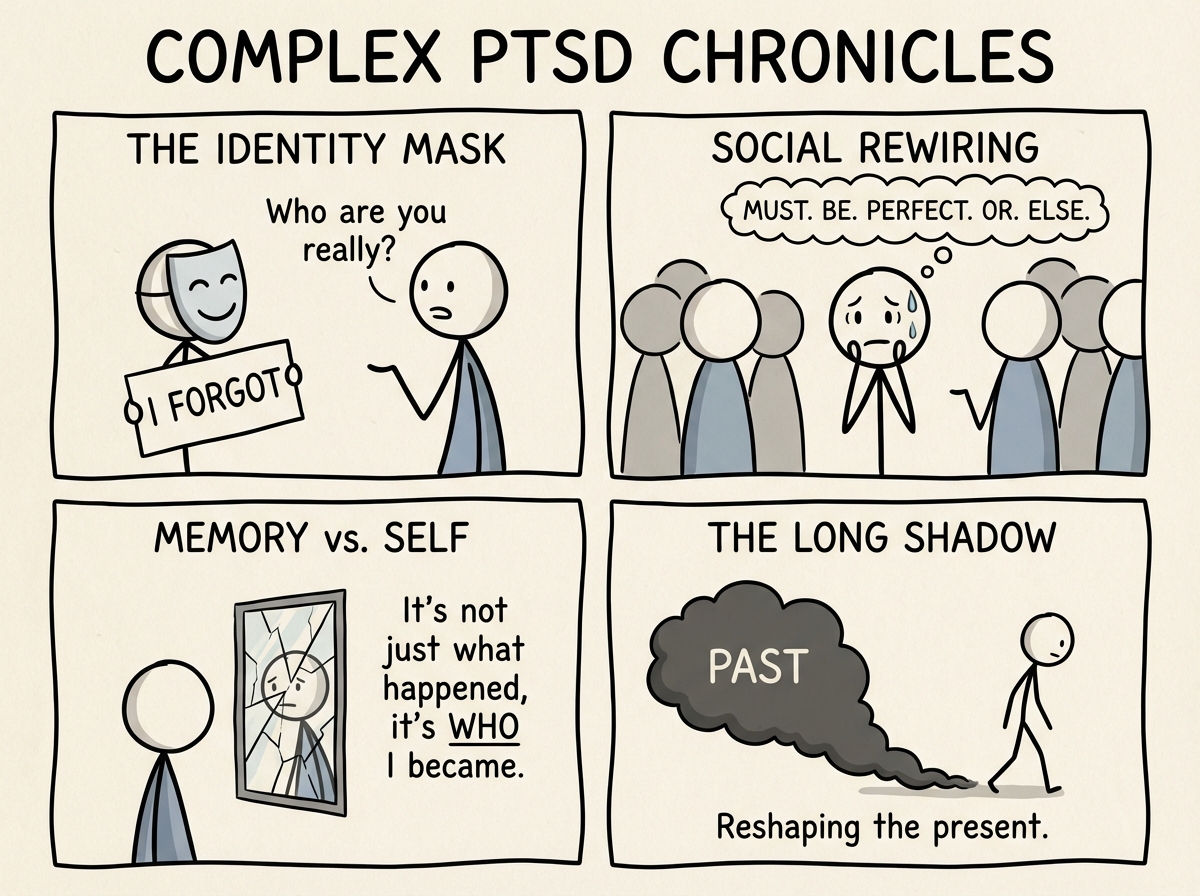
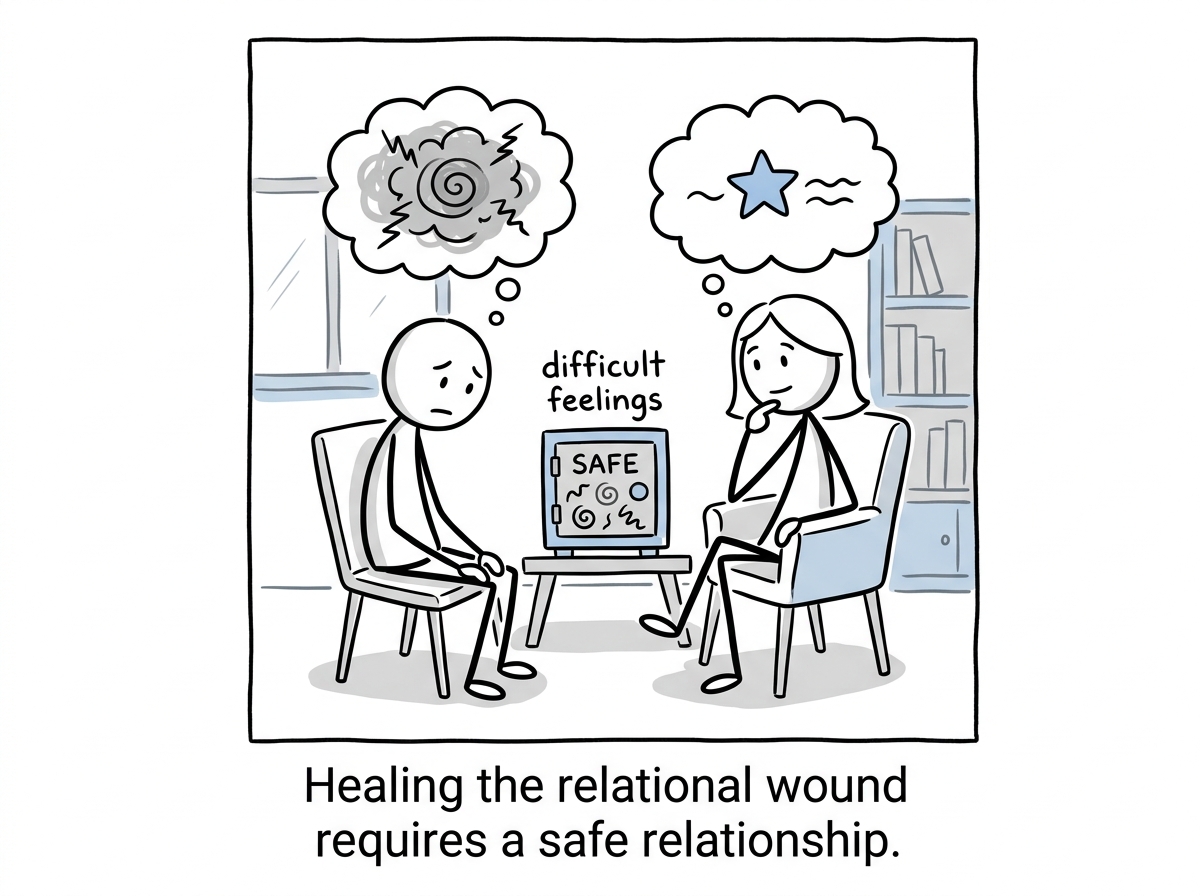
Complex PTSD (C-PTSD) is what happens when trauma is not a single event but a prolonged experience -- repeated abuse, neglect, captivity, or growing up in a chronically unsafe environment. Unlike classic PTSD, which centers on a specific traumatic memory, C-PTSD reshapes your entire sense of self. You do not just have flashbacks to what happened; you carry a deep, wordless belief that you are fundamentally broken, that the world is dangerous, and that relationships will always hurt you. Judith Herman first described C-PTSD in her landmark book 'Trauma and Recovery,' arguing that prolonged interpersonal trauma creates a distinct syndrome beyond what standard PTSD captures. The symptoms include emotional flashbacks (sudden regressions to the feelings of childhood helplessness), chronic shame, difficulty regulating emotions, a fractured sense of identity, and profound disturbances in relationships. Bessel van der Kolk's research has shown that repeated trauma, especially in childhood, literally alters brain development -- shrinking the hippocampus, dysregulating the amygdala, and weakening the prefrontal cortex's ability to manage emotional responses. Pete Walker, in 'Complex PTSD: From Surviving to Thriving,' describes how C-PTSD survivors often cycle through the four F responses -- fight, flight, freeze, and fawn -- as default survival strategies that persist long after the original danger has ended. Understanding C-PTSD matters because it explains why standard approaches to anxiety or depression often fall short for trauma survivors. You are not broken. Your system adapted to an environment that was. Recovery is possible, but it requires addressing the relational wound at the core, not just the symptoms on the surface.
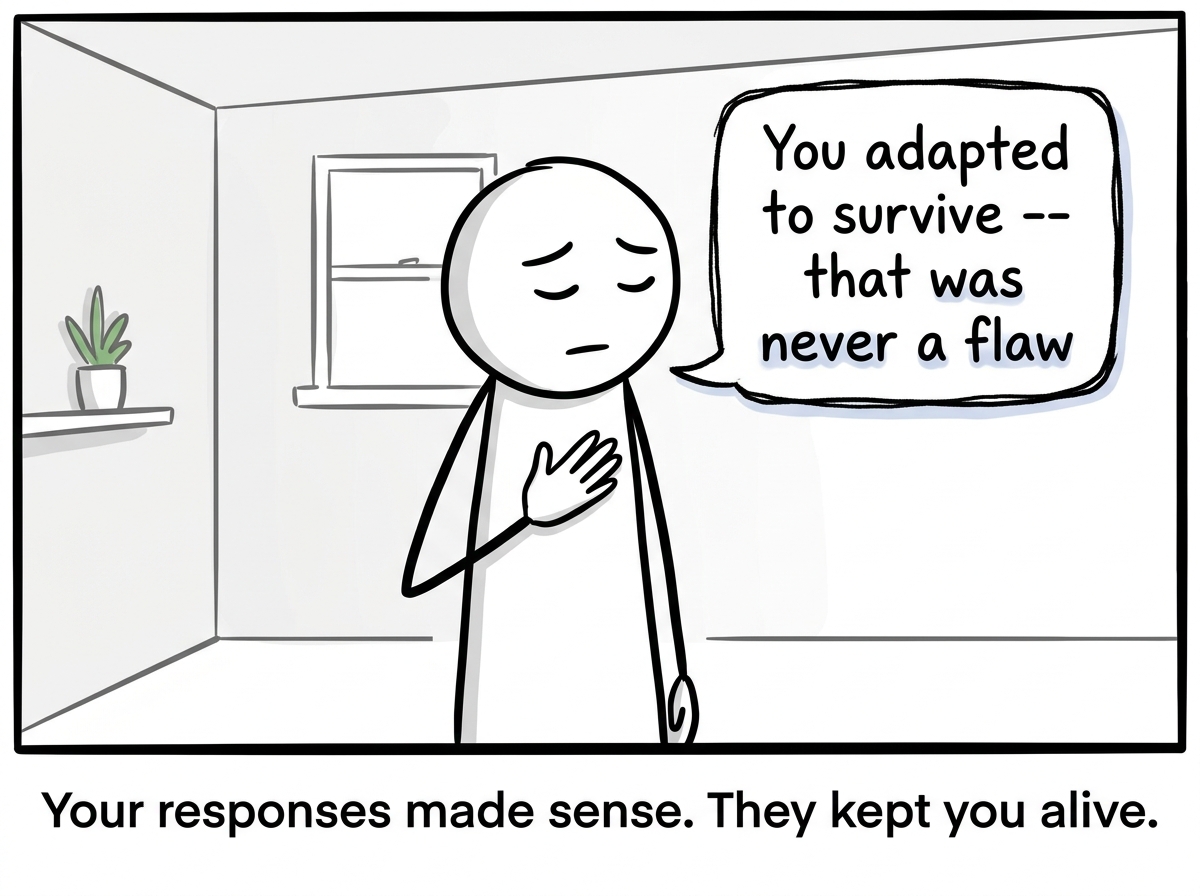
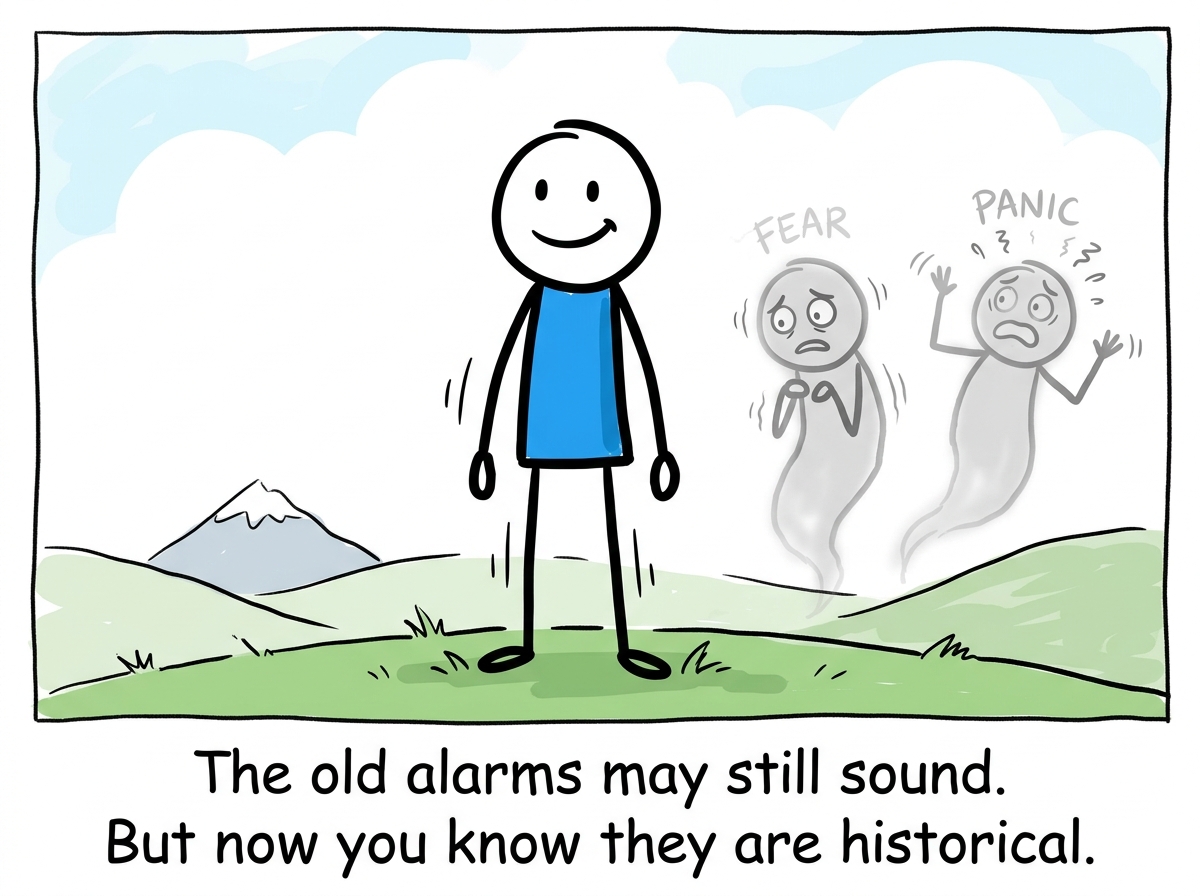
Recovery from C-PTSD starts with recognizing that your survival responses made sense then, and learning to gently update them for now.
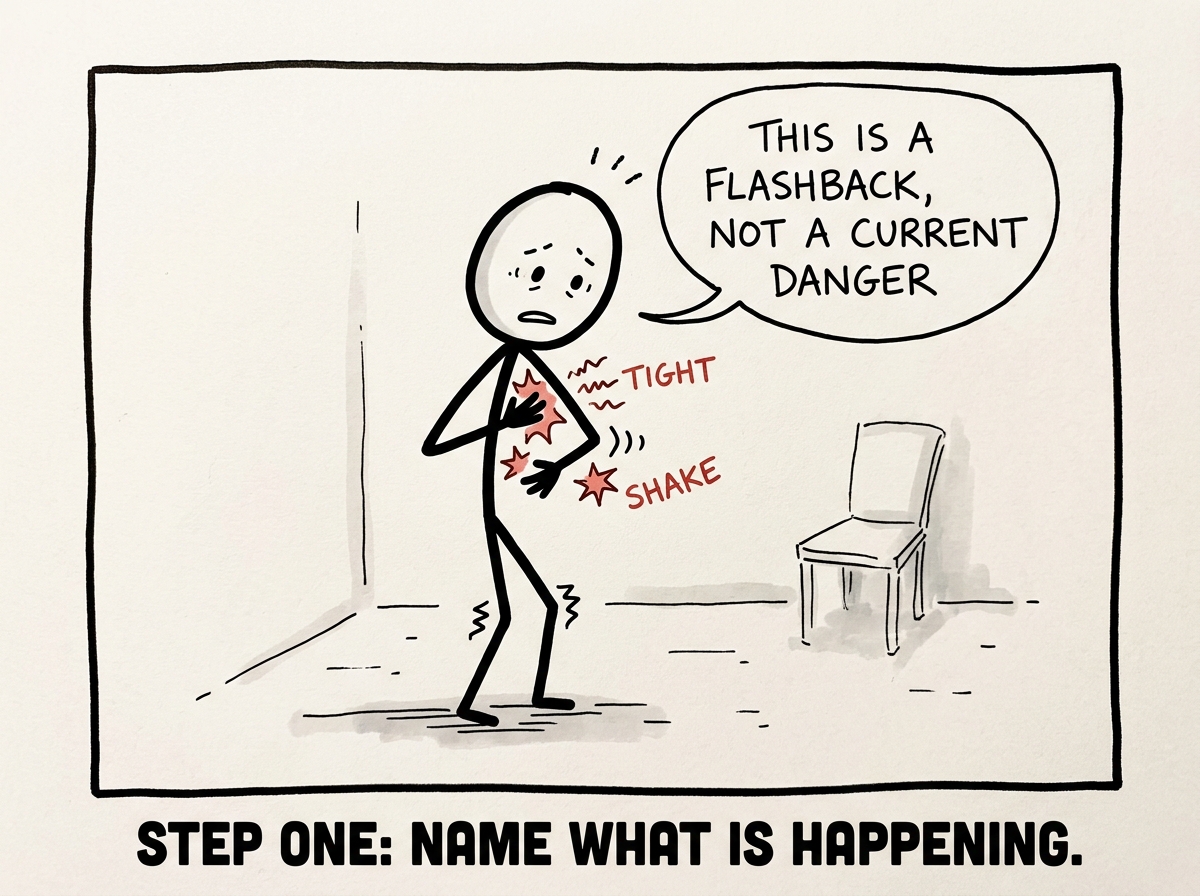
A person has a full emotional meltdown triggered by something as small as a specific tone of voice, because their body remembers a danger their conscious mind has filed away.
A person with C-PTSD automatically morphs into whatever version of themselves will keep everyone around them calm, until they realize they have no idea who they actually are.