6 steps
How to Recognize and Reduce Fawning
Learn to identify your fawning responses, understand them as a trauma pattern, and gradually replace automatic accommodation with authentic self-expression.

When your trauma response is to become whatever the other person needs you to be.
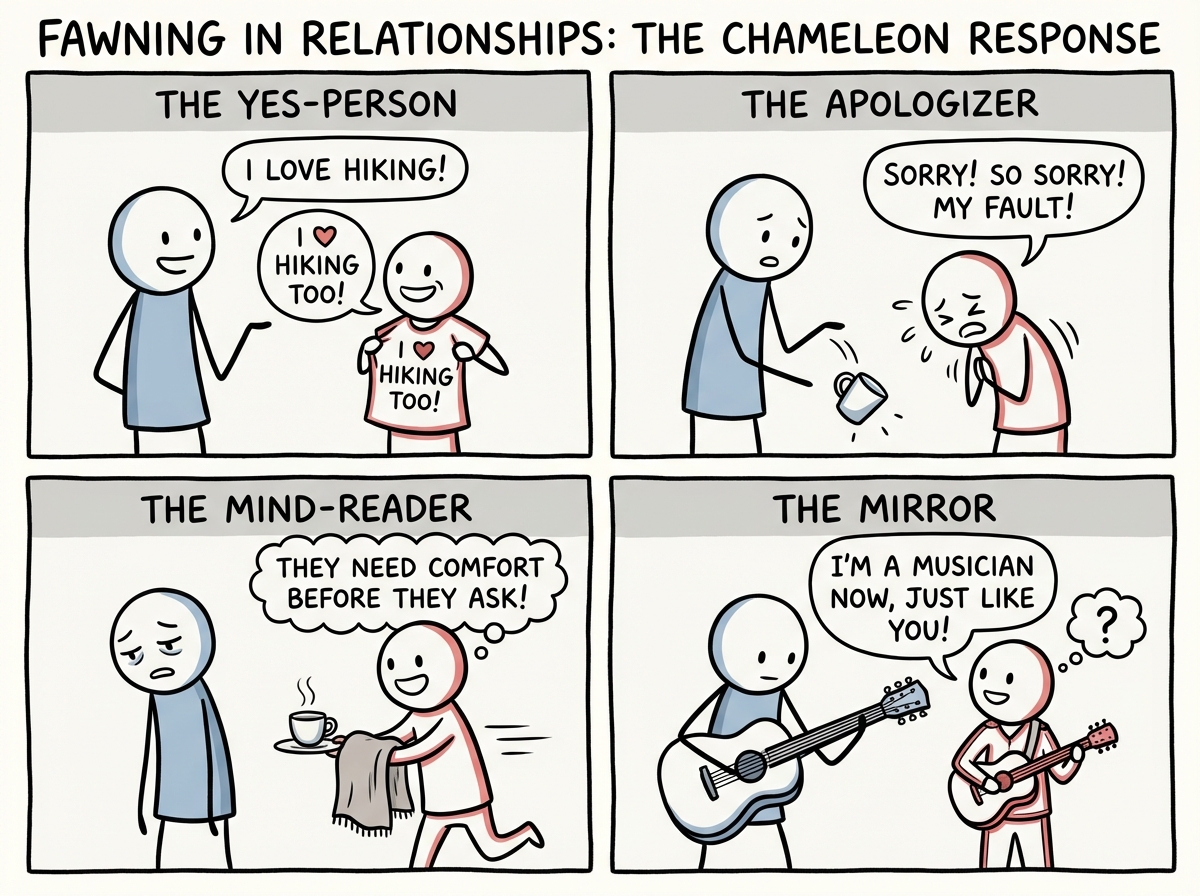
Most people know about fight, flight, and freeze -- but there is a fourth trauma response that often goes unrecognized: fawning. Identified by therapist Pete Walker, fawning is the instinct to appease, please, and merge with another person's needs in order to avoid conflict or danger. In relationships, fawning looks like automatically agreeing with your partner, abandoning your own opinions to match theirs, over-apologizing, and chronically prioritizing their comfort over your own. It is not kindness or generosity -- it is survival. Fawning often develops in childhood when expressing your own needs was met with punishment, withdrawal, or chaos. You learned that the safest way to exist was to make yourself useful and agreeable. In adult relationships, this means you may not even know what you actually want, because your entire identity has been shaped around anticipating what others need from you. Recognizing fawning is uncomfortable because it looks so much like being a good partner. But there is a difference between choosing to be generous and compulsively erasing yourself to keep the peace.
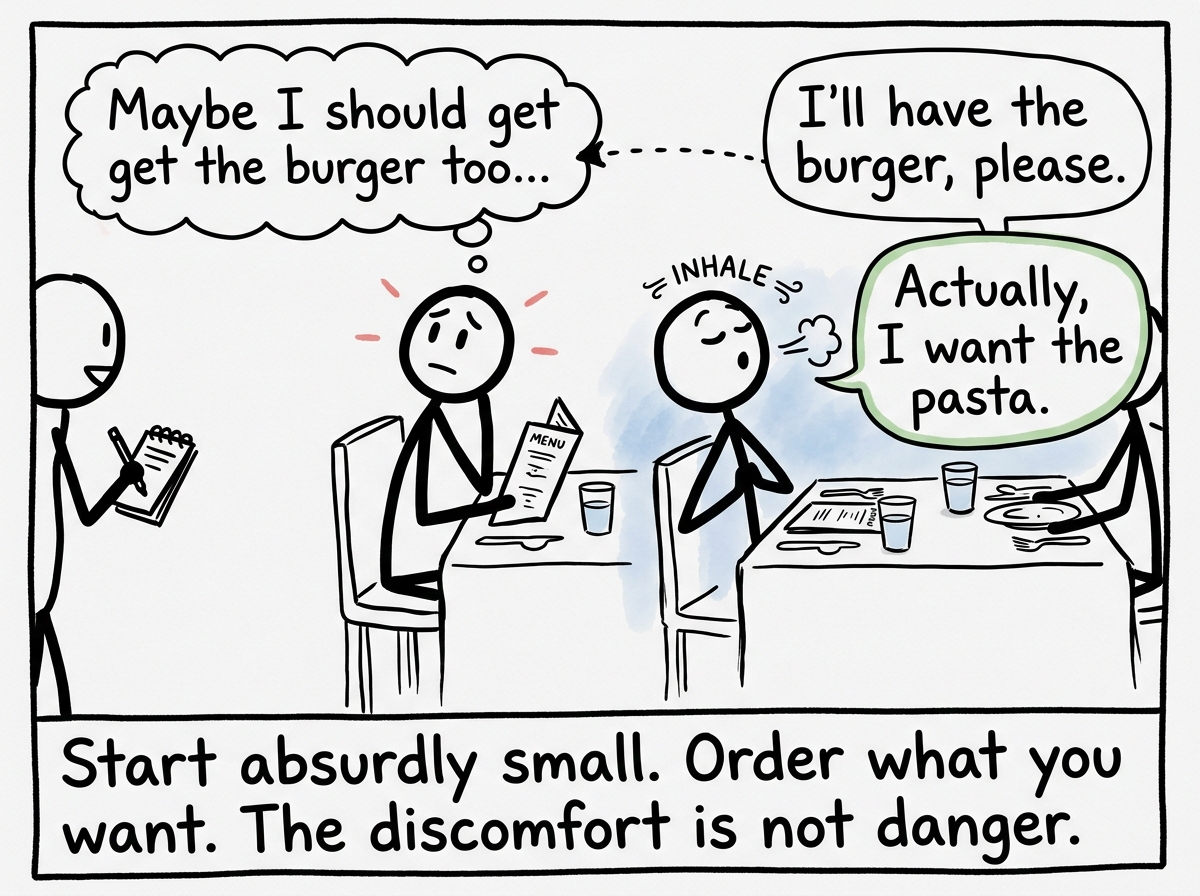
Recovery from fawning starts with the smallest acts of honesty -- ordering what you actually want and noticing the world does not end.
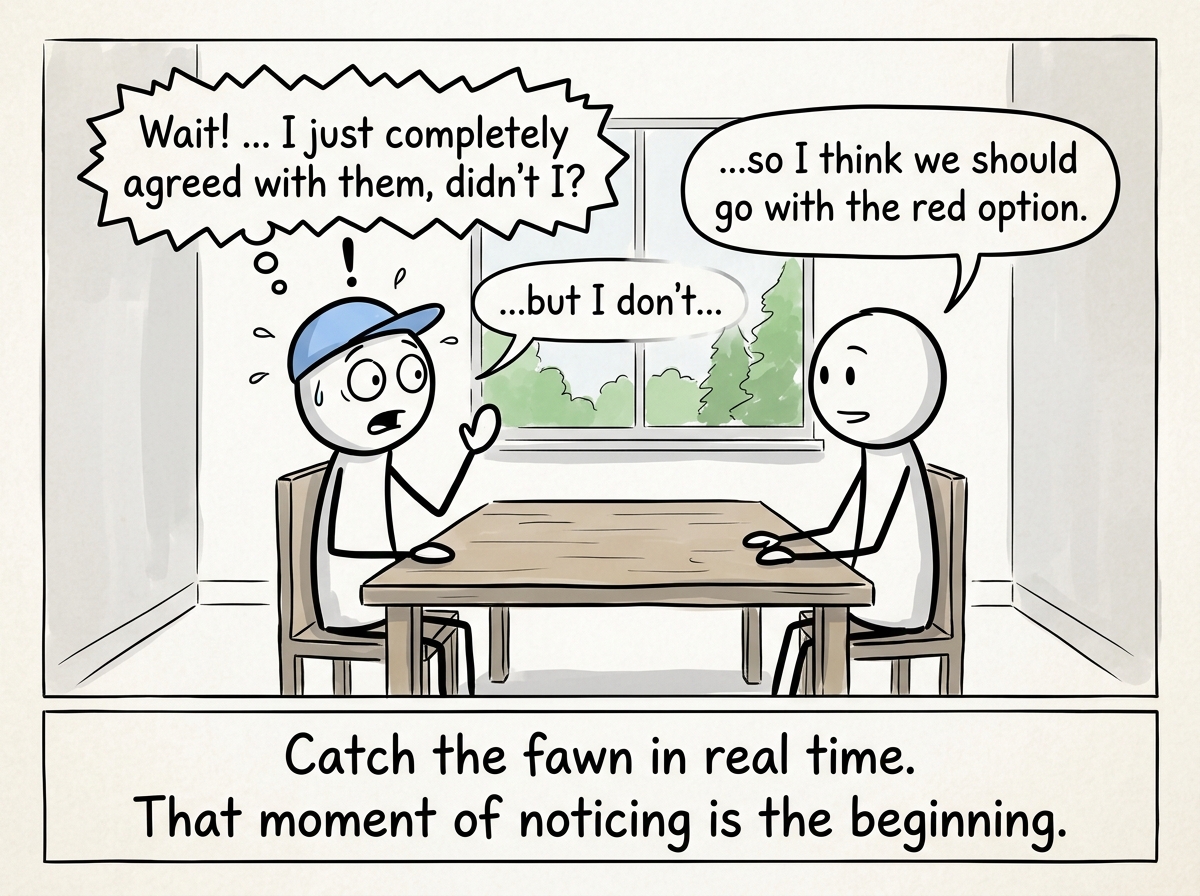
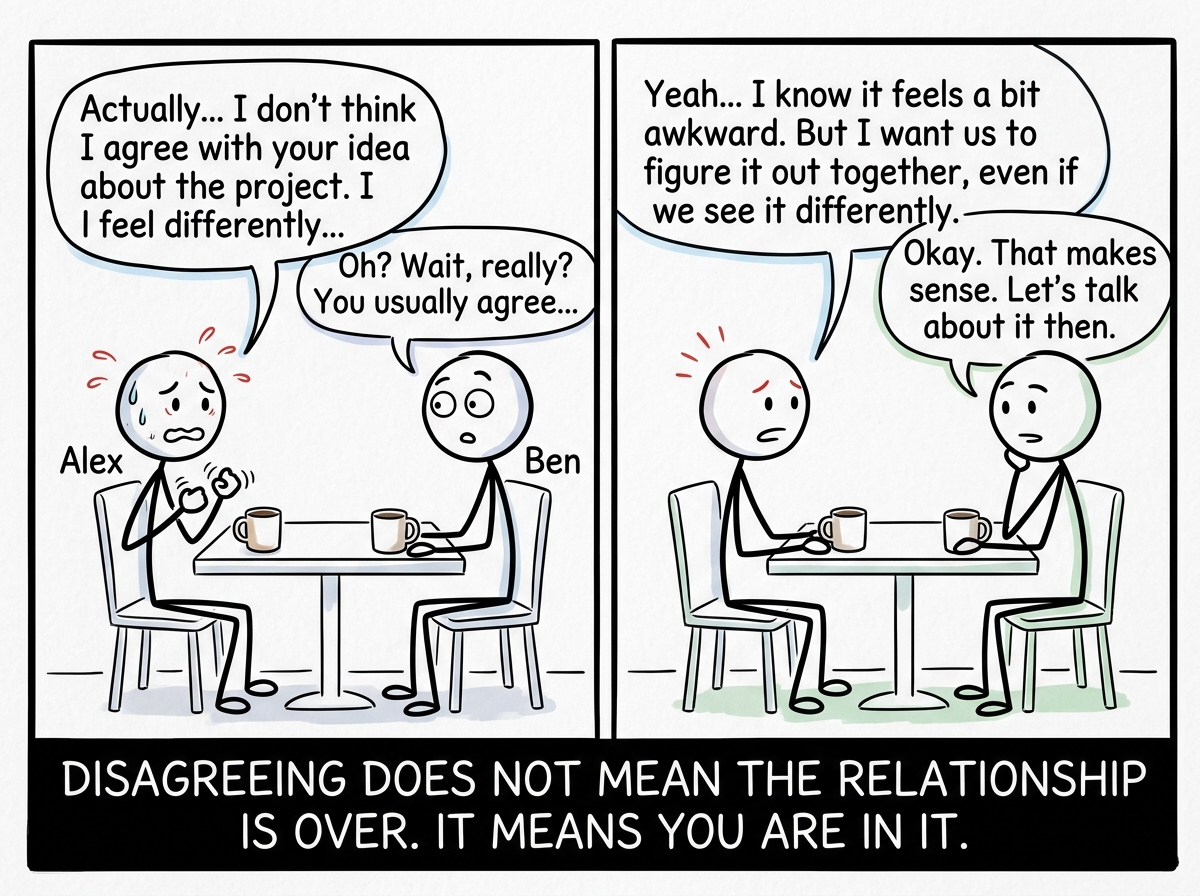
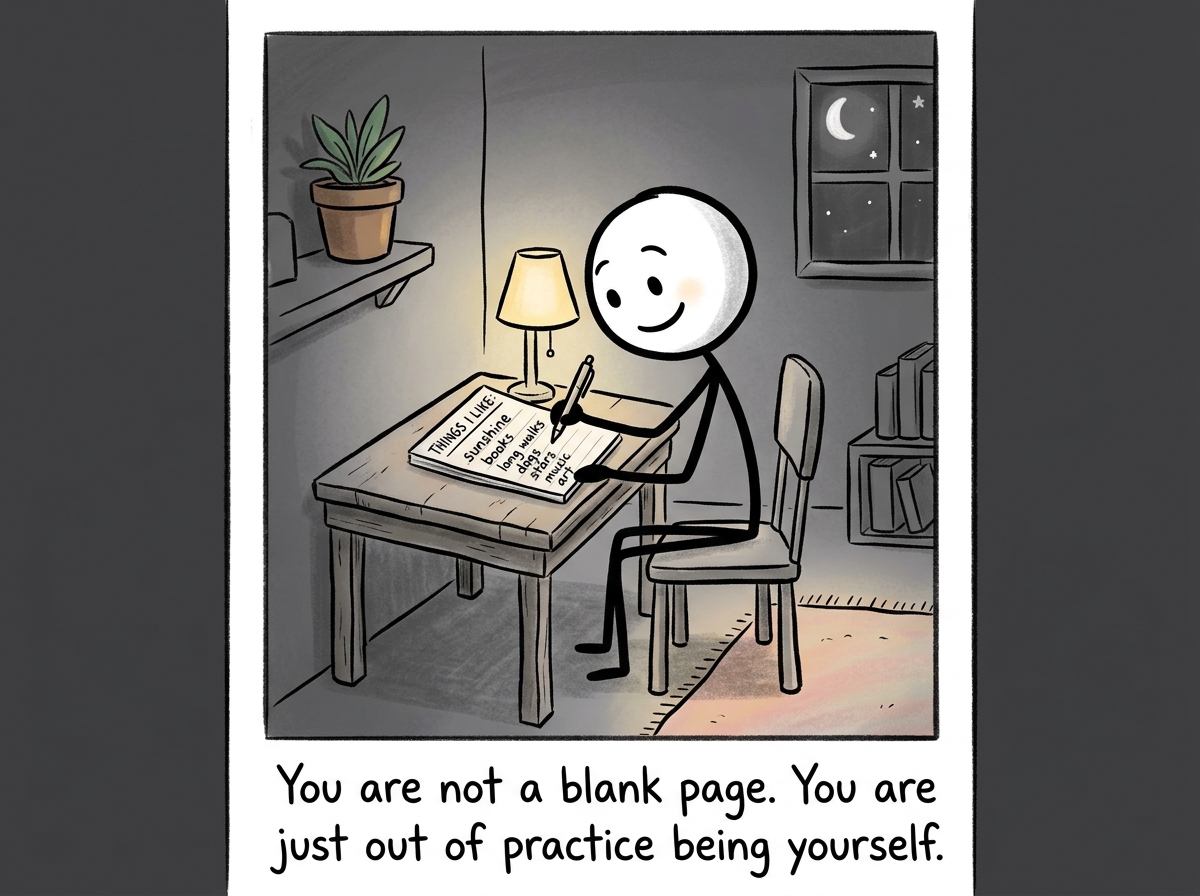
A person automatically adopts every opinion, hobby, and preference of whoever they are dating, losing themselves completely in each relationship.
A person changes their entire restaurant order to match their partner's preferences, then sits silently eating food they hate with a frozen smile.