The Reality Rewrite
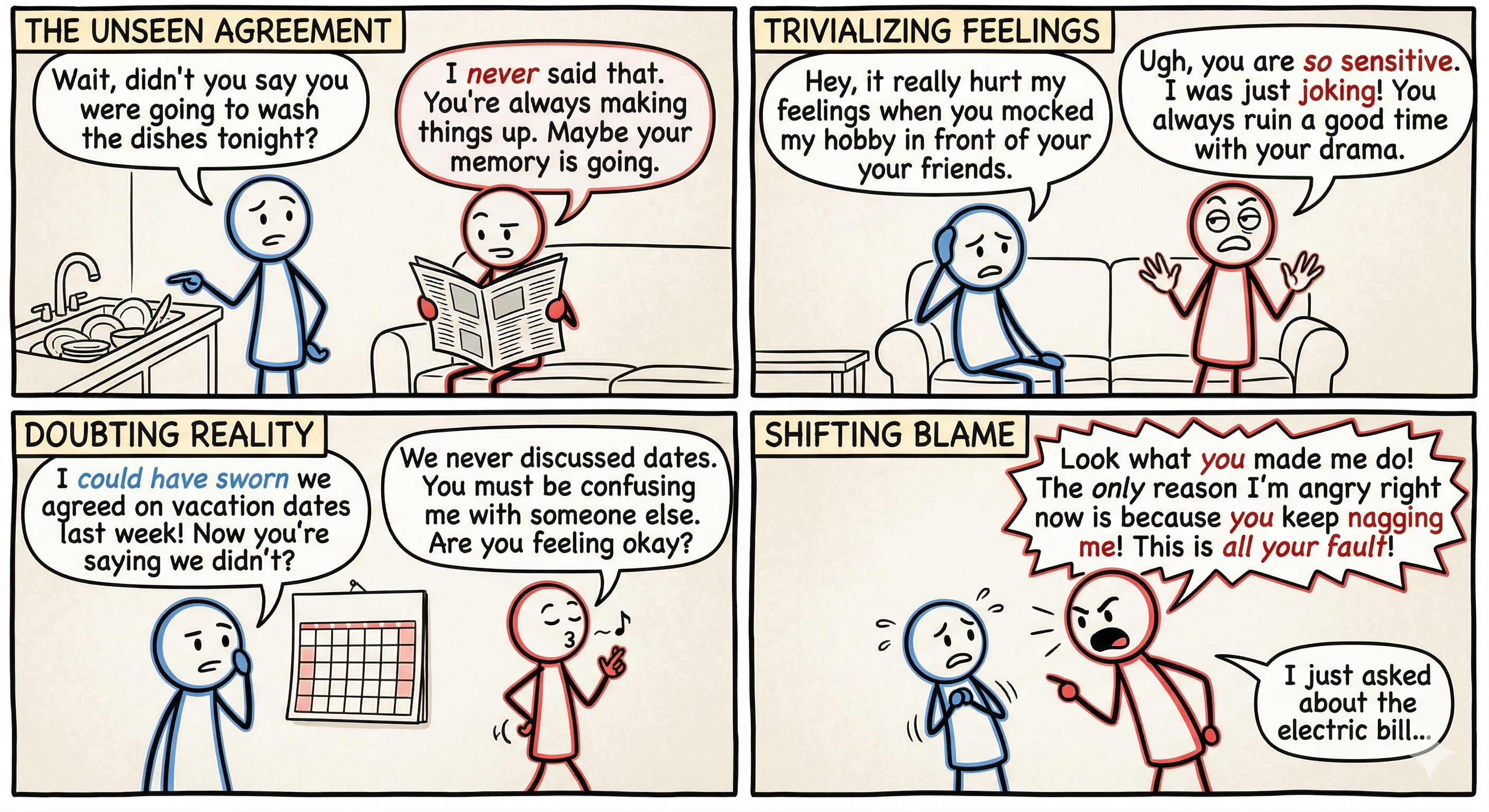
A person clearly remembers an event happening, but another person rewrites the story so convincingly that the first person begins to doubt their own memory and sanity.

How manipulation can make you question your memory, instincts, and sense of reality.
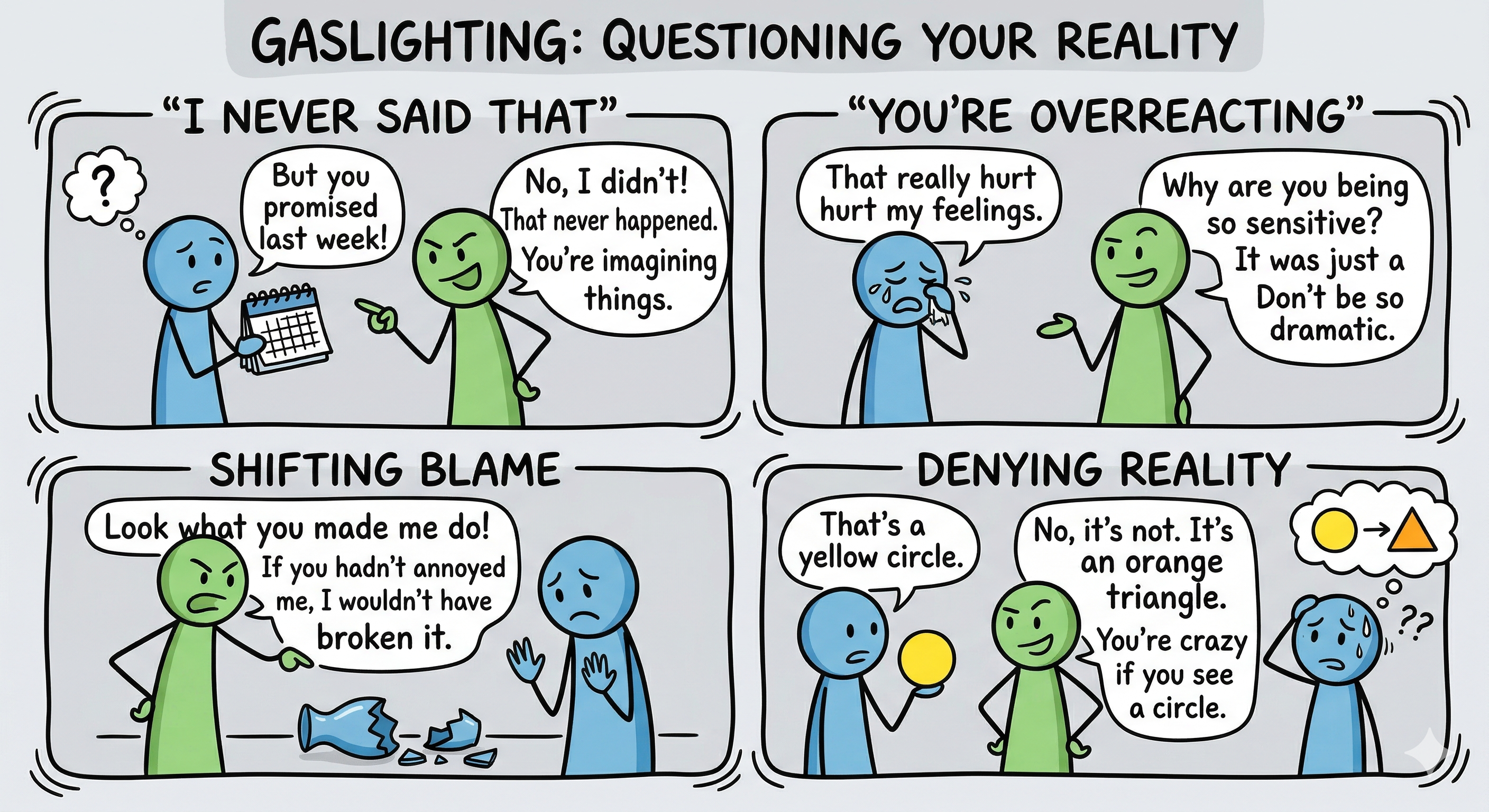
Gaslighting is a form of psychological manipulation in which one person causes another to question their own perception of reality, memory, and sanity. The term comes from the 1944 film 'Gaslight,' in which a husband systematically manipulates his wife into believing she is losing her mind. In real life, gaslighting can be subtle -- a partner who denies saying something you clearly remember, a boss who insists an event never happened, or a friend who tells you that you are 'too sensitive' every time you express a valid concern. Over time, gaslighting erodes your confidence in your own judgment. You start second-guessing yourself, apologizing for things that are not your fault, and relying on the other person to define reality for you. Recognizing gaslighting is the first step to reclaiming your sense of self. If you frequently feel confused, anxious, or like you are 'going crazy' in a specific relationship, gaslighting may be at play.
Trust your own memory and instincts -- if someone consistently makes you question reality, the distortion is theirs, not yours.
A stick figure writing down what happened in a journal immediately after a conversation, anchoring their own memory
The stick figure noticing the familiar 'maybe I am crazy' thought, pausing and labeling it: 'This is the gaslighting pattern'
The stick figure talking to a trusted friend, saying 'Does this sound normal to you?' and getting honest outside perspective
The stick figure standing firm, saying 'I know what happened' calmly, no longer looking to the other person to define what is real