The Trophy and the Shadow
One sibling is displayed on a pedestal as a gleaming trophy while the other stands in their shadow -- but a closer look reveals that both are equally trapped in roles they never chose.

The roles siblings are cast in and what they cost.
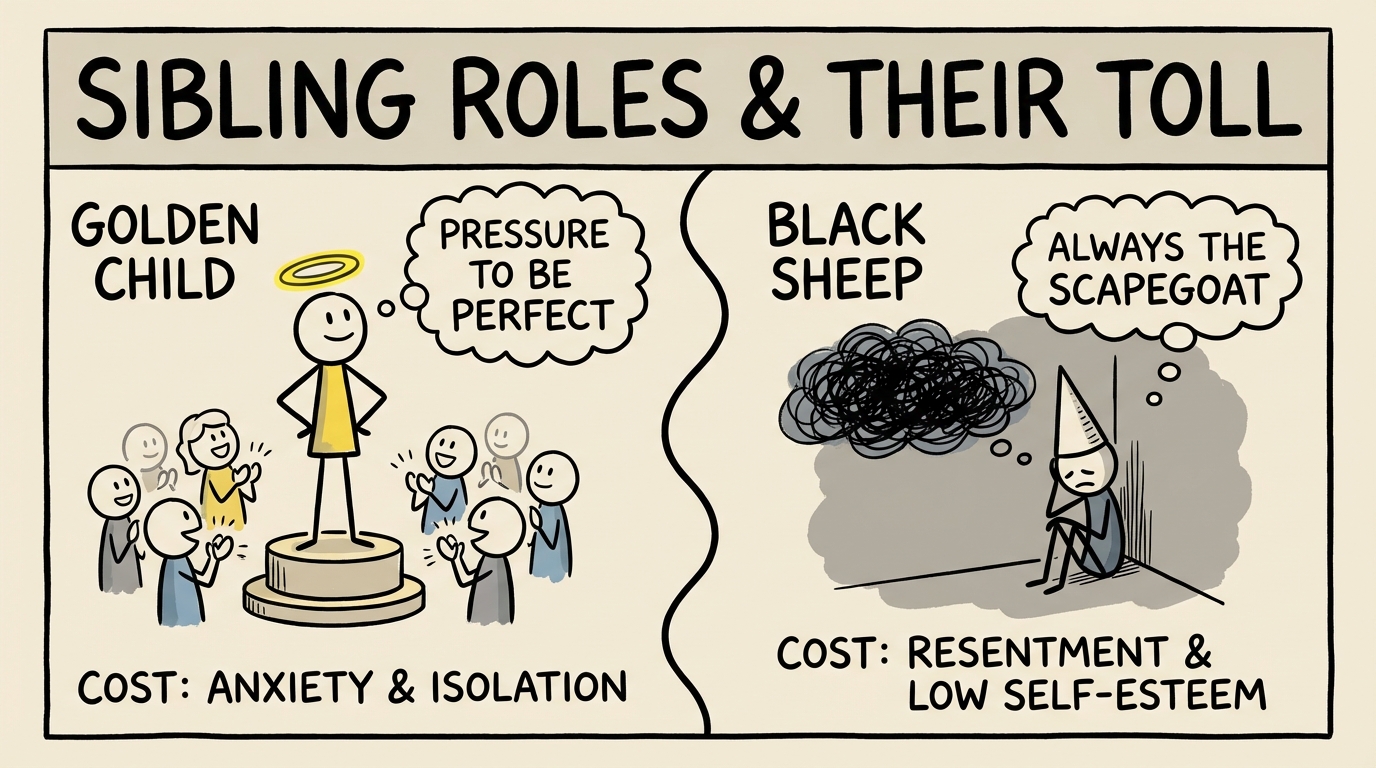
In many families, children get sorted into roles that serve the family system more than they serve the children themselves. The golden child is idealized -- held up as the family's proof that everything is fine. The black sheep is marginalized -- cast as the reason things go wrong. Neither role is chosen, and neither role is free. The golden child pays with the pressure of perfection, the terror of falling from grace, and an identity built on performance rather than authenticity. The black sheep pays with rejection, shame, and the constant message that who they are is not enough. Family therapists working in the tradition of Virginia Satir recognized these rigid role assignments as survival strategies for the family system -- ways of organizing anxiety and maintaining a fragile equilibrium. The tragedy is that both siblings are trapped in a dynamic that pits them against each other while the real issues go unaddressed. If you were the golden child, you might struggle to know who you are without achievement. If you were the black sheep, you might struggle to believe you deserve good things. Healing begins when you realize that the role you were given was never a reflection of your worth -- it was a reflection of what your family needed you to carry.
The role your family gave you was never a reflection of your worth -- healing means separating who you are from who your family needed you to be.
A stick figure looking at their reflection and seeing their family role label instead of their real self, then peeling the label off
The golden child allowing themselves to fail at something small without panic, hands open
The black sheep standing tall, removing sticky notes labeled 'difficult' and 'too much' from their body
Both siblings meeting at eye level, outside their old roles, seeing each other as whole people for the first time