Helicopter Parent: College Application Edition
When a parent writes their teenager's college essay and wonders why the kid cannot do anything on their own.

Overprotective parenting styles that remove all obstacles and accidentally teach kids they cannot handle life.
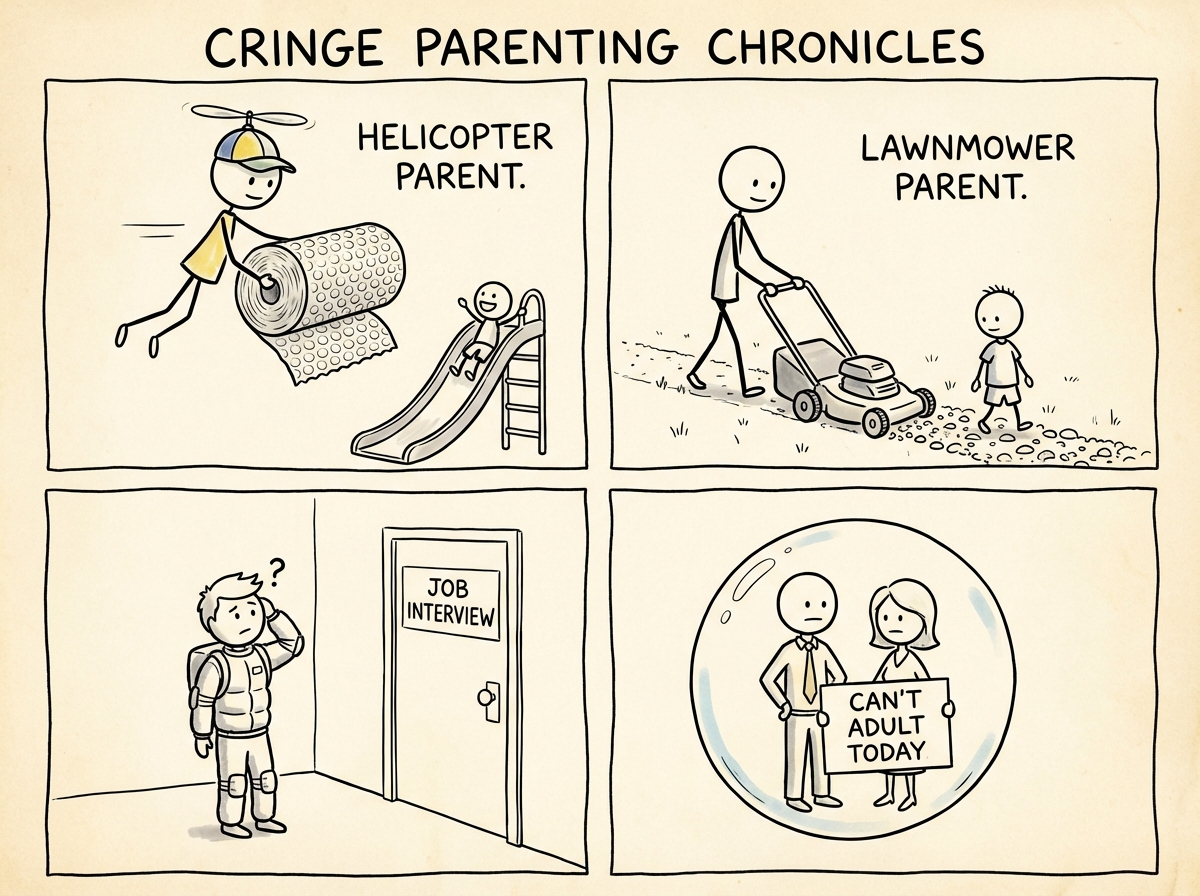
Helicopter parents hover. Lawnmower parents mow. Both styles emerge from the same place — a parent's anxiety about their child experiencing pain, failure, or discomfort — and both deliver the same unintended message: you cannot handle this without me. Helicopter parenting, a term coined by Foster Cline and Jim Fay, describes the parent who monitors every interaction, micromanages every homework assignment, and intercedes at the first sign of struggle. Lawnmower parenting takes it further — instead of hovering over obstacles, these parents clear them entirely before the child even encounters them. They call the teacher before the bad grade arrives. They resolve the friend drama before their child knows it exists. They remove every pebble from the path and then wonder why their child cannot walk on rough ground. The psychology behind both styles is well-documented. Research consistently shows that overprotective parenting is associated with higher rates of anxiety, lower self-efficacy, and reduced resilience in children. When you never let a child struggle, you deprive them of the experience that builds the neural pathways for coping. The message they internalize is not 'my parent loves me.' It is 'the world is dangerous and I am not equipped for it.' Understanding these patterns matters because the line between protection and overprotection is thinner than most parents realize — and the long-term cost of erasing that line is a child who reaches adulthood without ever having learned that they can survive discomfort on their own.
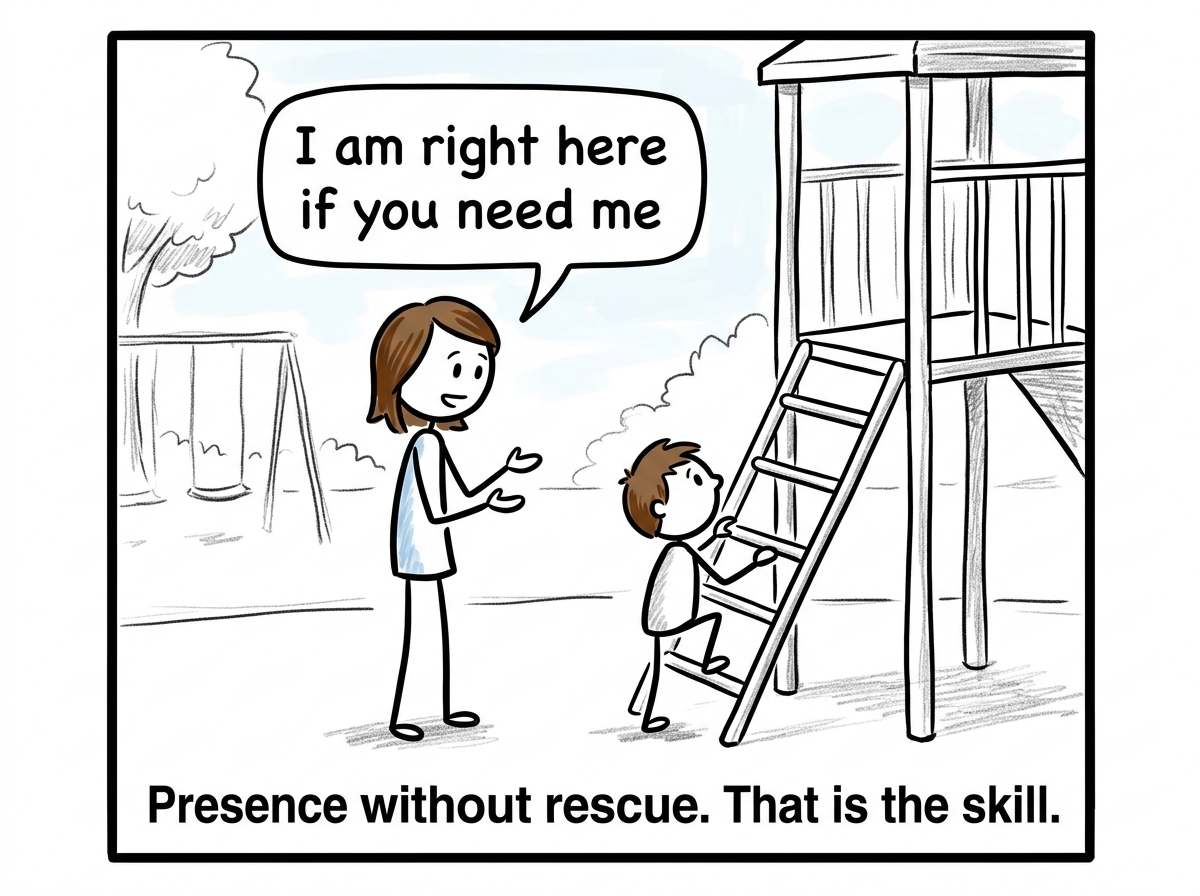
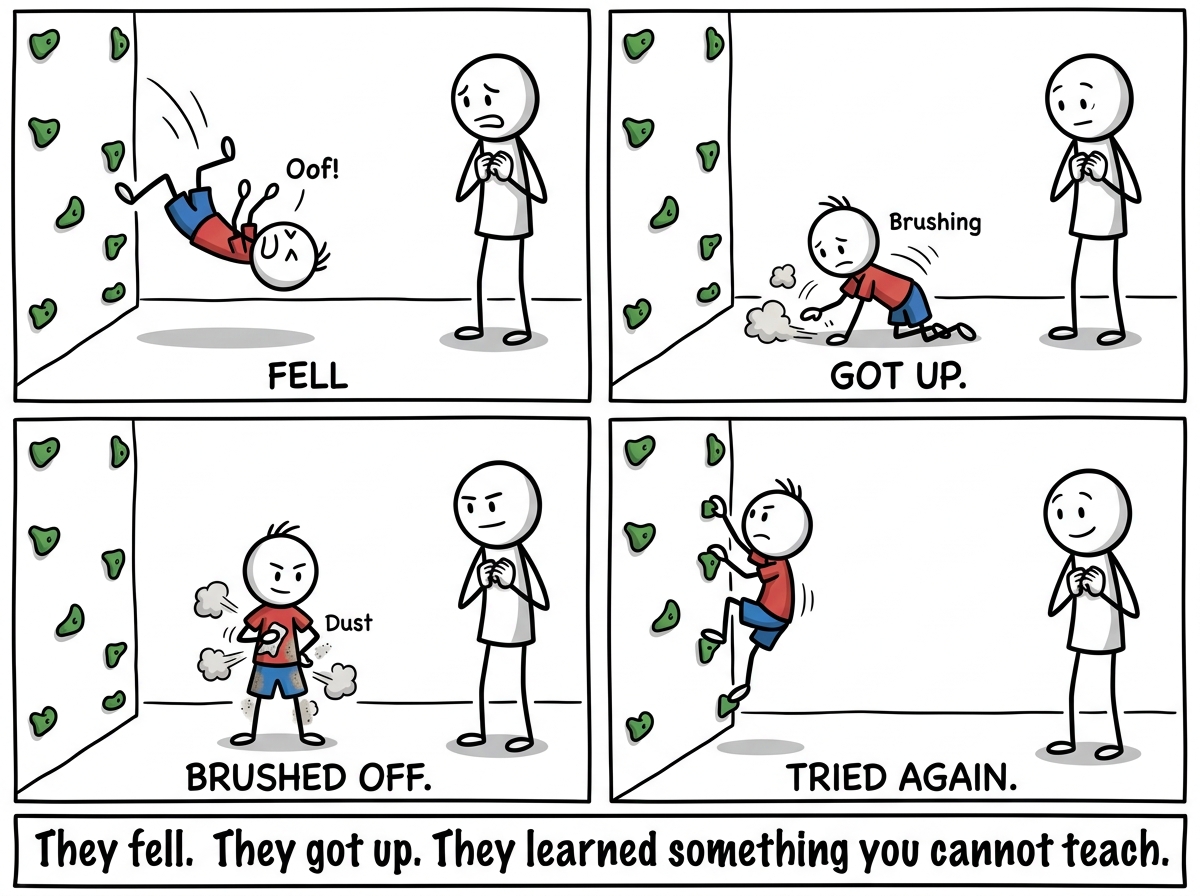
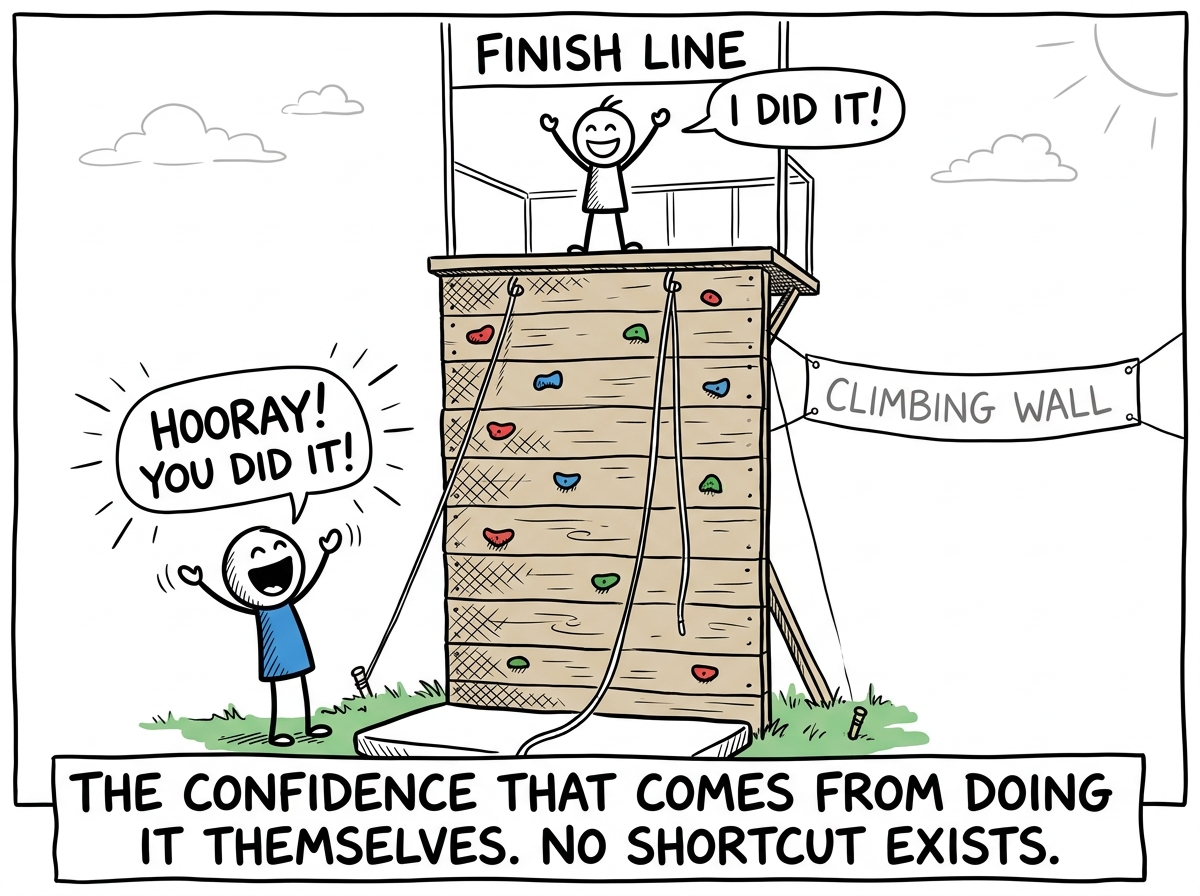
Children build resilience by encountering manageable difficulty -- the goal is not to remove every obstacle but to be nearby while they learn to handle them.

When a parent writes their teenager's college essay and wonders why the kid cannot do anything on their own.
When a parent runs ahead of their child at the playground removing every possible source of discomfort before the child encounters it.