The Nothing Works Door
A person sits in front of an unlocked door convinced it is sealed shut, having stopped trying after past failures, while the door has been open the entire time.

When repeated failure teaches you to stop trying, even when the cage door is open.
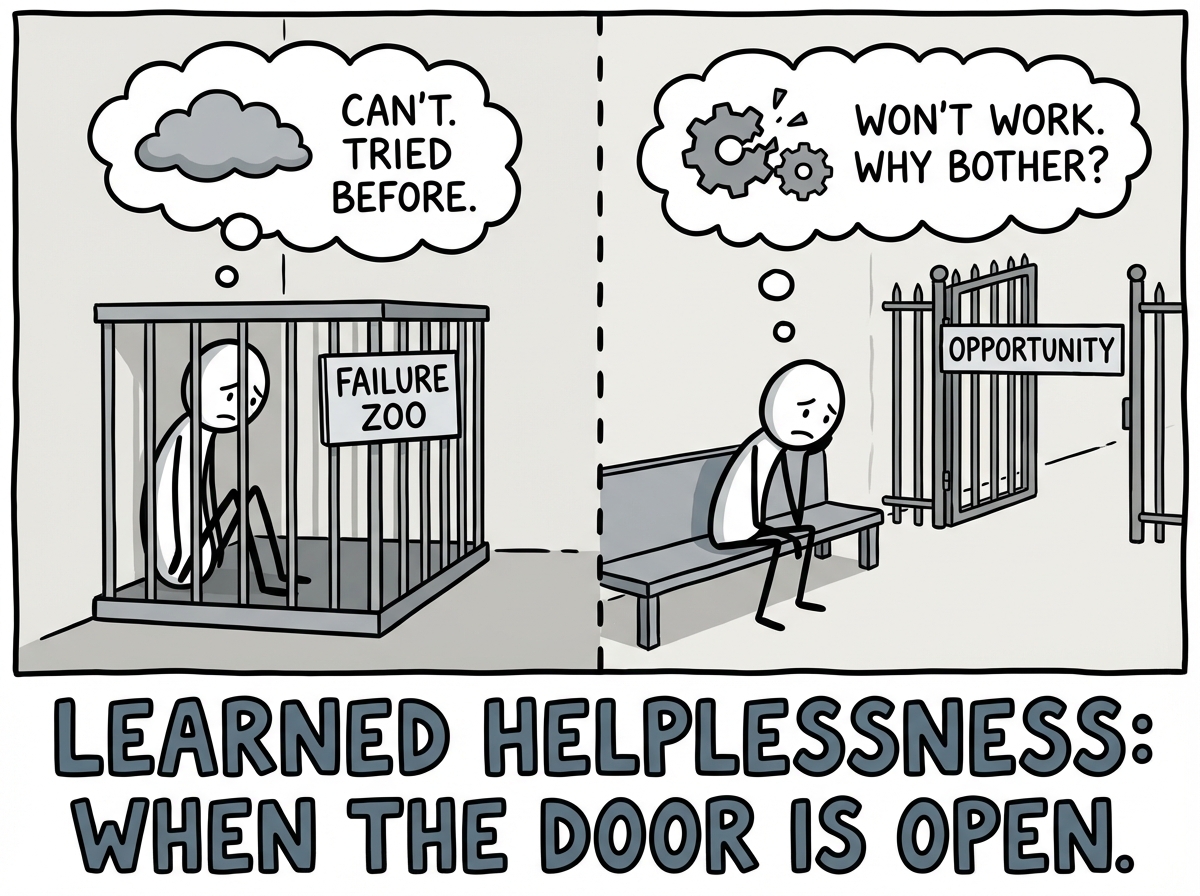
In the 1960s, psychologist Martin Seligman conducted a now-famous experiment: dogs that had been repeatedly exposed to unavoidable electric shocks eventually stopped trying to escape, even when the door was opened and they could easily leave. He called this learned helplessness -- the state of believing you have no control over your situation, even when you do. In humans, learned helplessness develops when you experience repeated failure, rejection, or trauma that feels inescapable. Over time, your brain stops distinguishing between situations where you genuinely have no power and situations where you do. You stop applying for jobs because you were rejected five times. You stop speaking up because no one listened before. You stop trying to change your circumstances because every previous attempt failed. The cruelest part of learned helplessness is that it feels like truth. It does not feel like a pattern or a cognitive distortion -- it feels like a clear-eyed assessment of reality. But it is not. It is your brain generalizing from past pain and applying it to a future that has not happened yet. The cage door may be open, but you have stopped looking.
Breaking learned helplessness starts with one small experiment -- not to succeed, but to prove that trying is still possible.
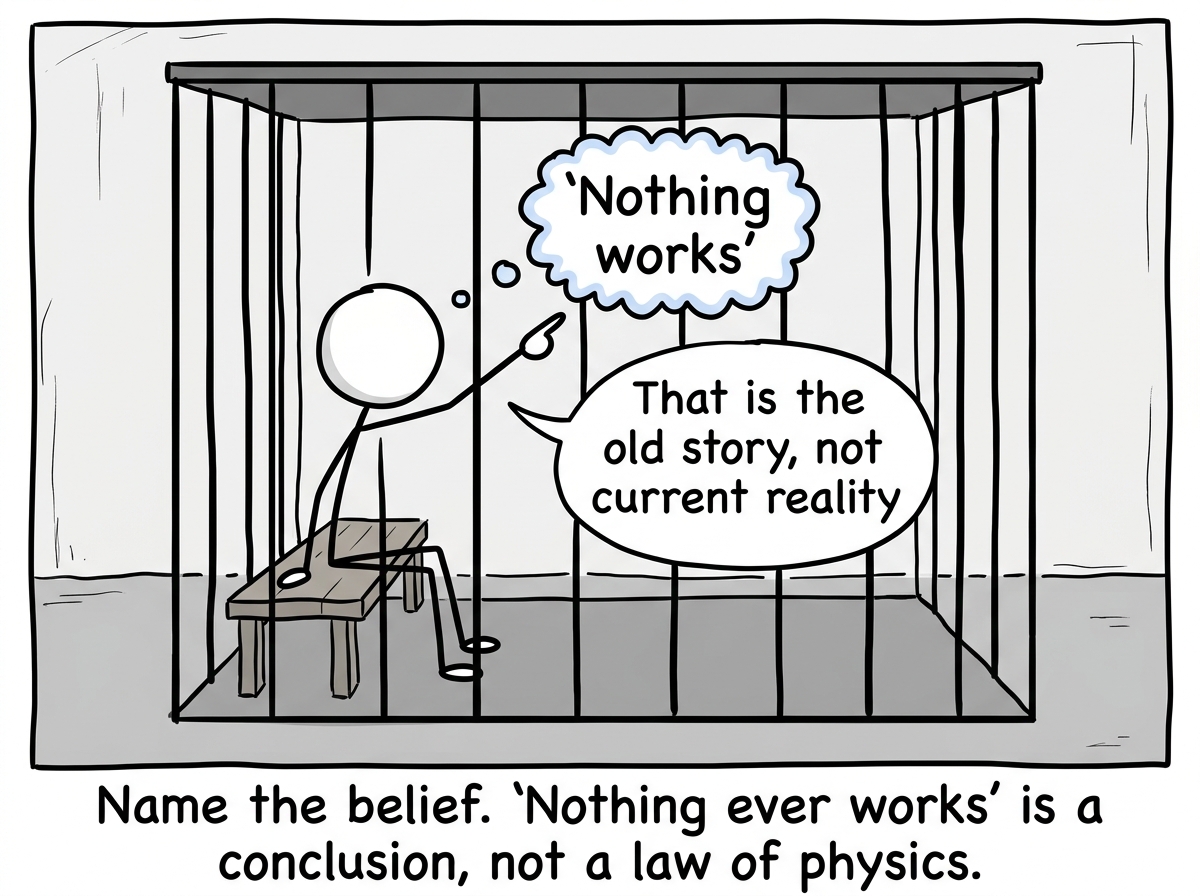
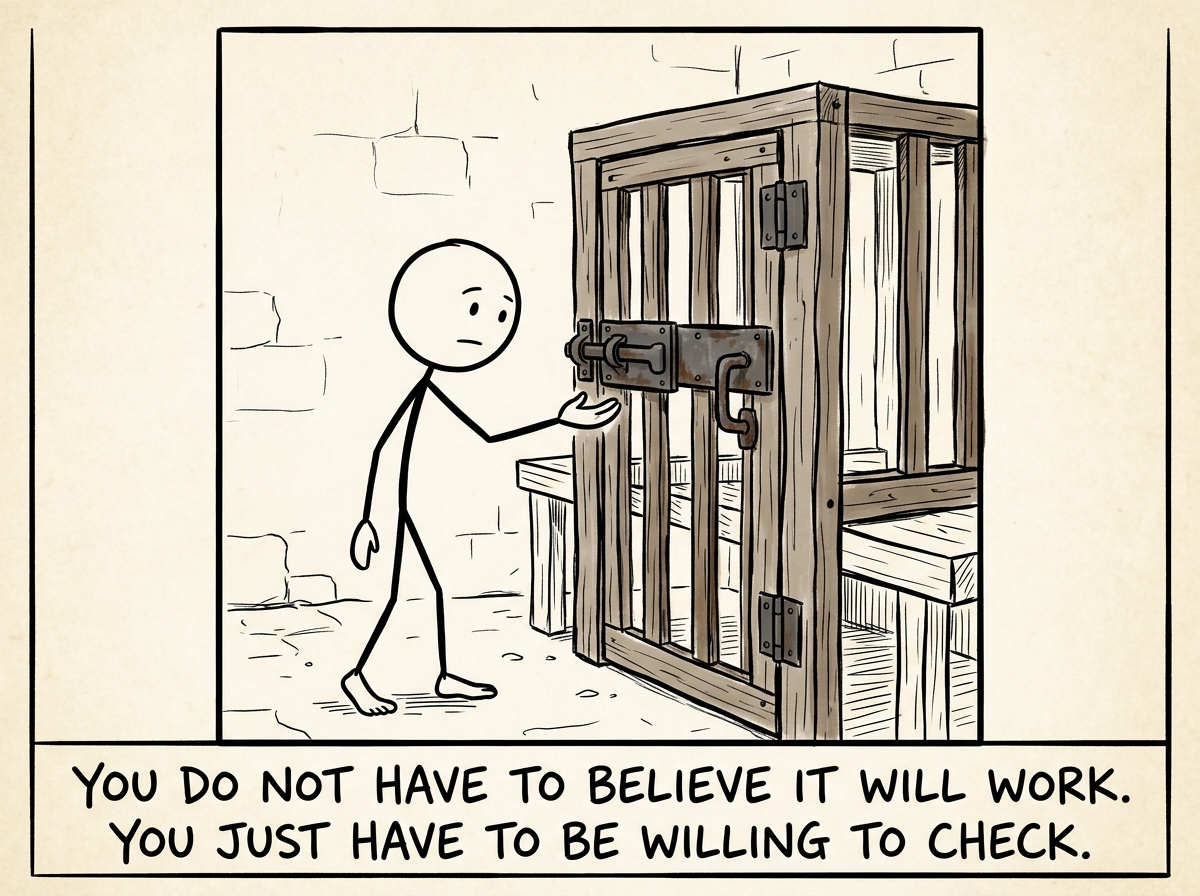
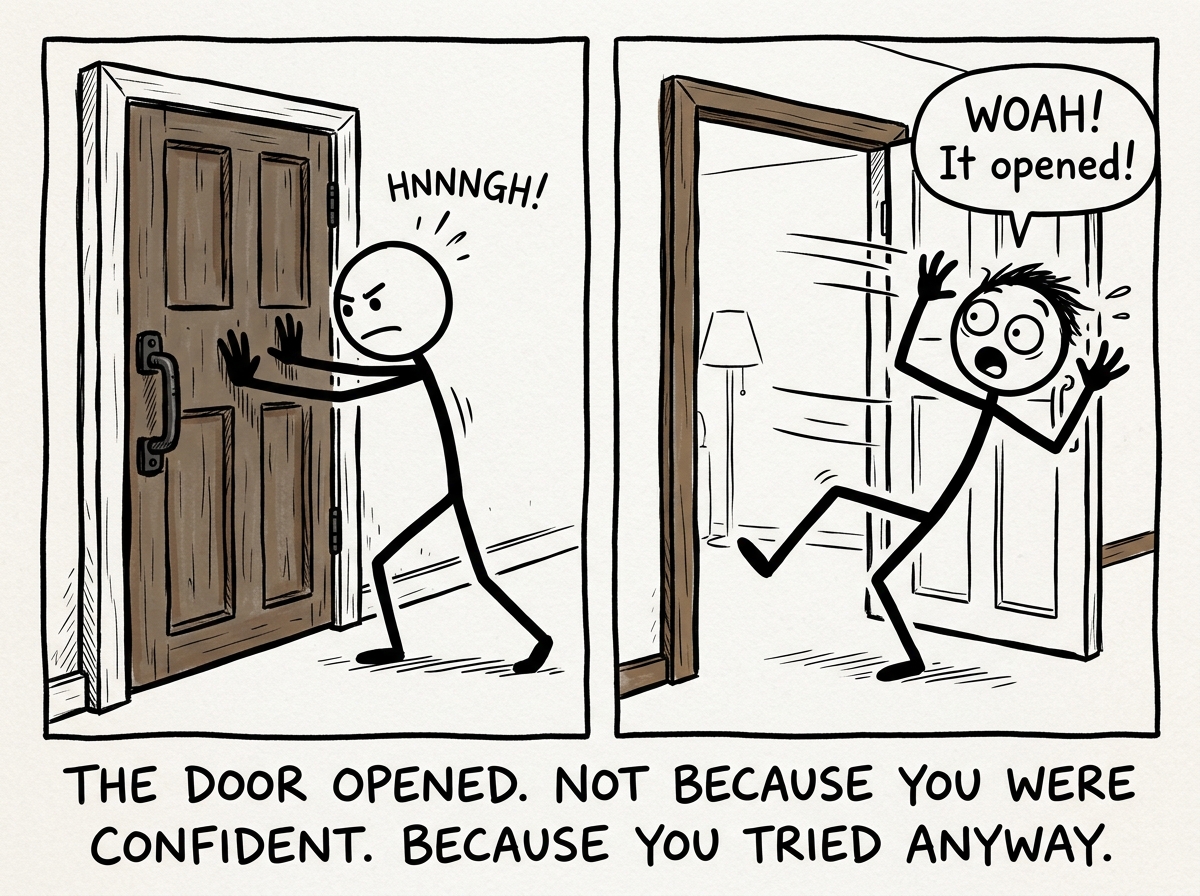
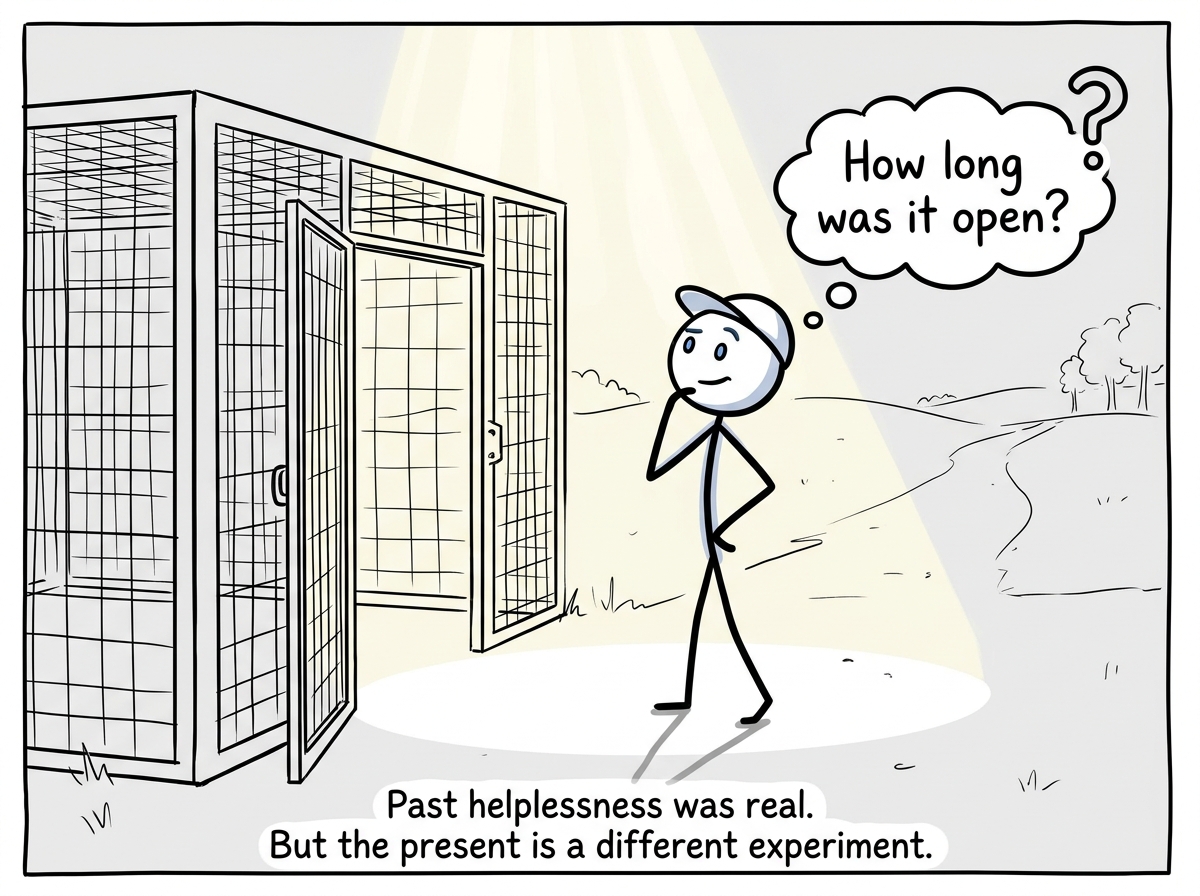
A person sits in front of an unlocked door convinced it is sealed shut, having stopped trying after past failures, while the door has been open the entire time.
A person sits in a cage with the door wide open, unable to leave because they tried so many times before when it was locked that they stopped checking.
A student who failed three tests stops studying entirely, then fails the fourth test and takes it as proof they were right not to try.