The Emotional Teflon
A person with psychopathic traits moves through situations that would devastate most people — betrayal, harm, consequences — and nothing sticks. No guilt, no shame, no lessons learned.

The personality pattern defined by shallow emotions, fearless dominance, and a chilling absence of guilt or remorse.
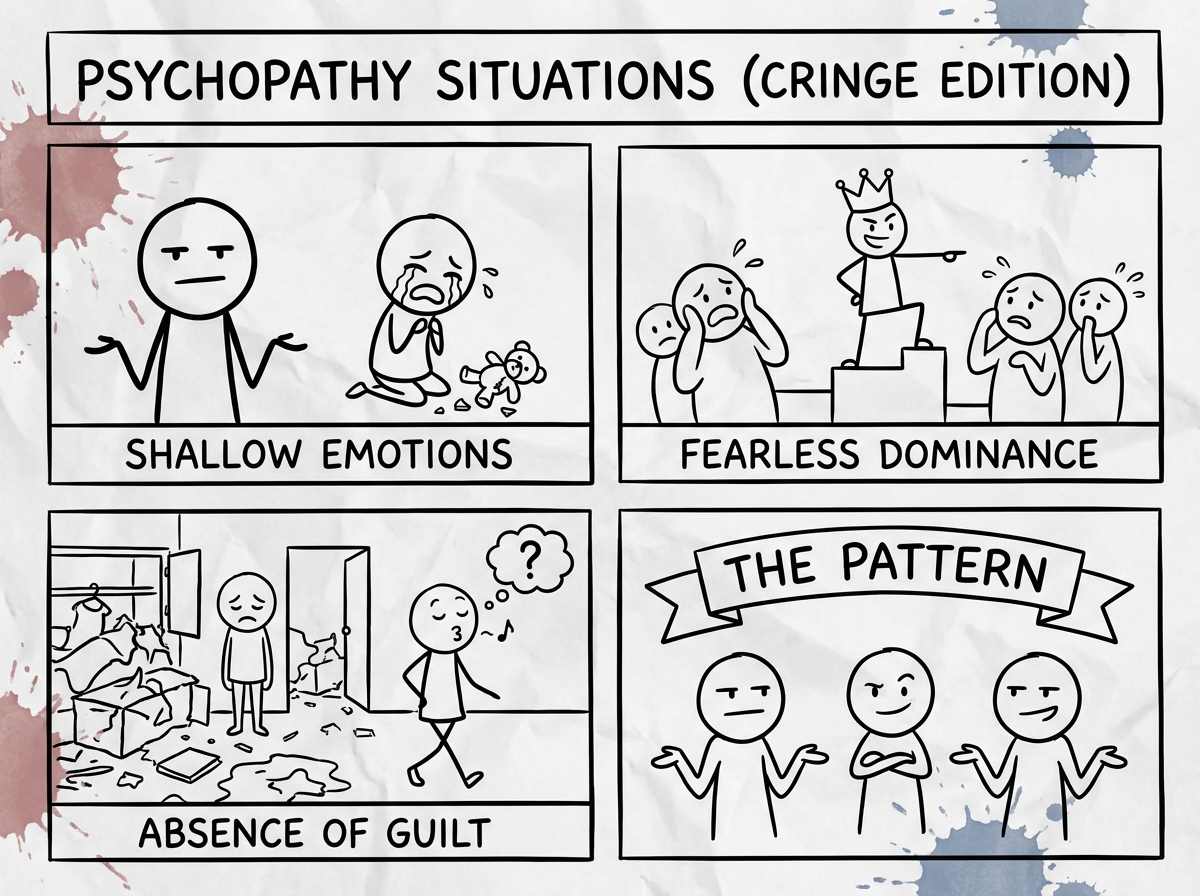
Psychopathy is a personality pattern characterized by shallow emotional responses, a lack of empathy and remorse, superficial charm, and bold, often impulsive behavior. It is the third pillar of the Dark Triad, alongside narcissism and Machiavellianism, and in many ways the most unsettling — because the psychopathic individual can appear completely normal, even charismatic, while feeling very little of what the rest of us take for granted. Psychopathy exists on a spectrum. Not every person with psychopathic traits is a criminal or a predator. Some channel these traits into high-stakes careers where fearlessness and emotional detachment are advantages — surgery, law, business, military operations. But in personal relationships, psychopathic traits create a specific kind of damage: the person across from you can mirror your emotions perfectly without actually feeling them. They can say exactly what you need to hear and mean none of it. The mask is flawless until it slips. Understanding psychopathy is not about fearmongering — it is about recognizing when someone's charm is a tool rather than a genuine expression of who they are.
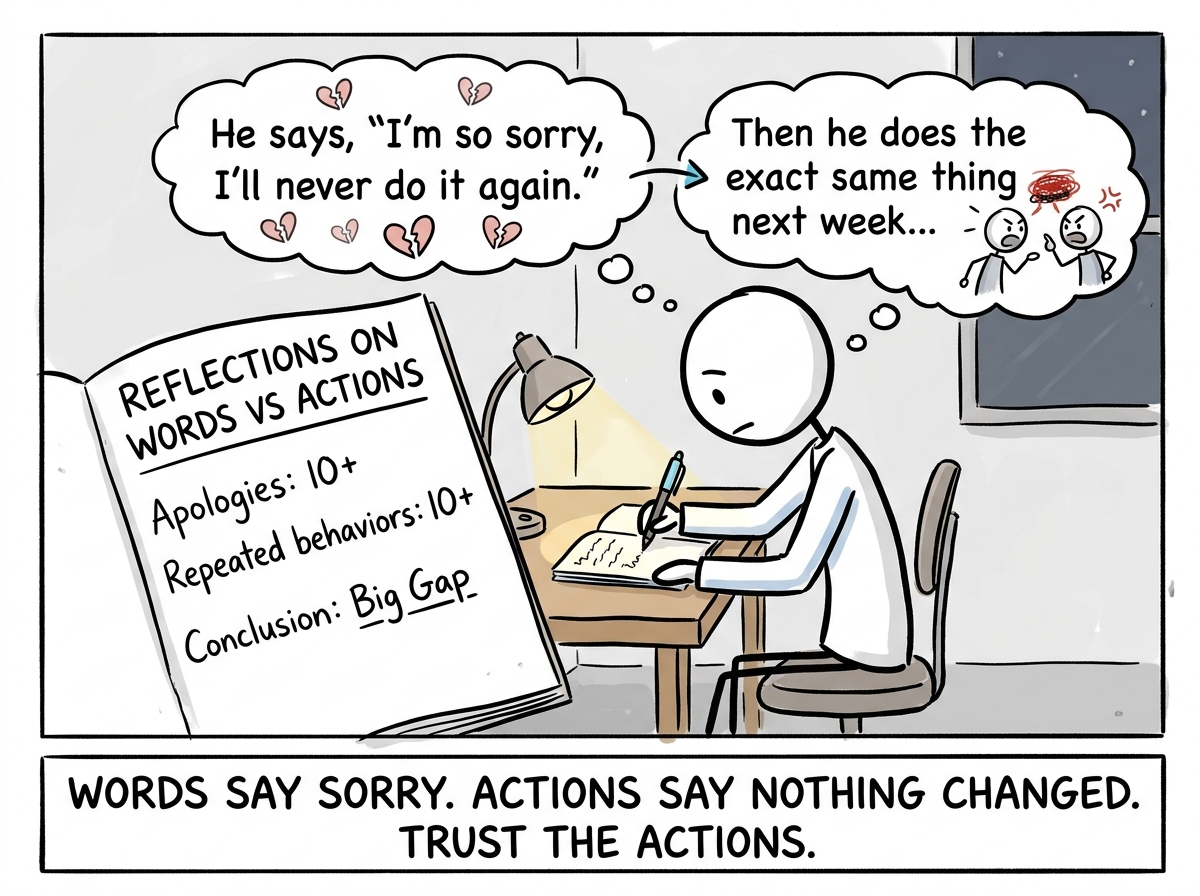
When someone's charm feels too perfect and their remorse never changes their behavior, believe the pattern — not the performance.
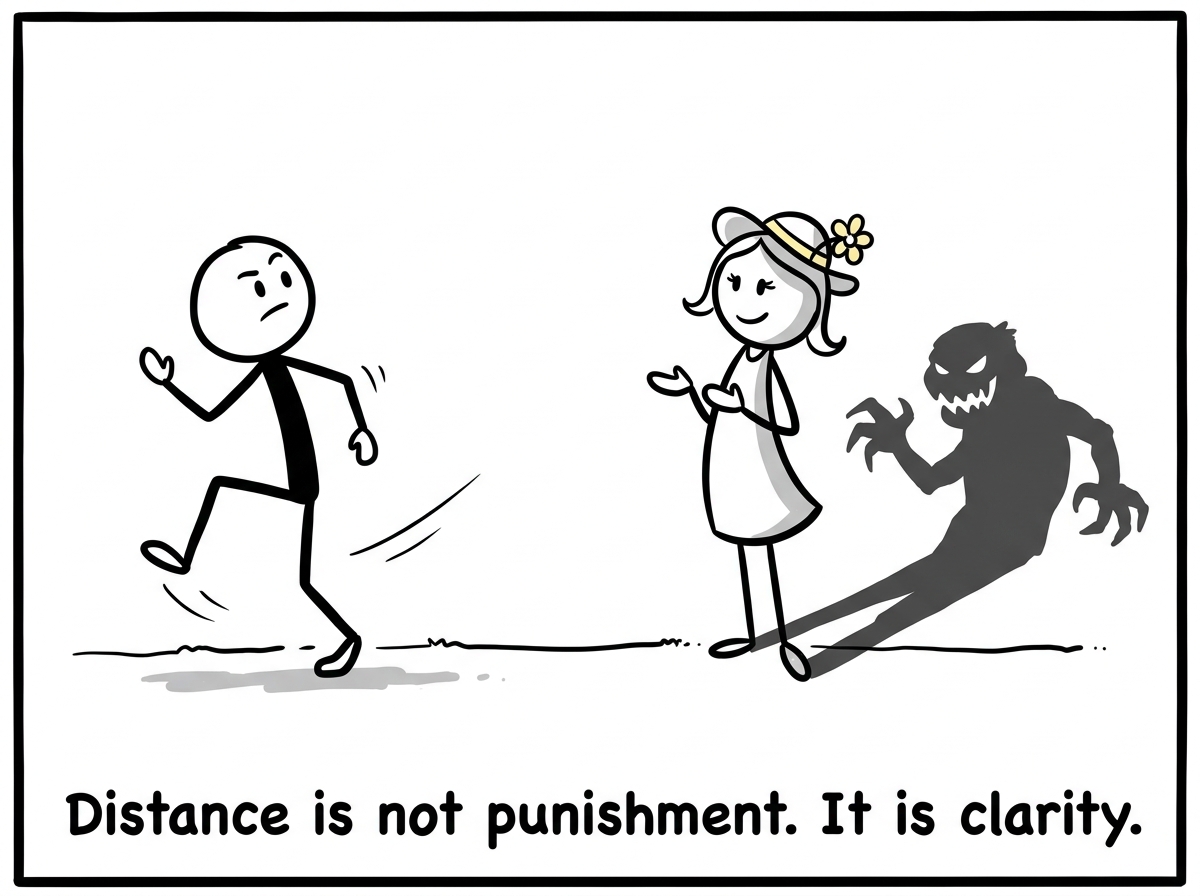
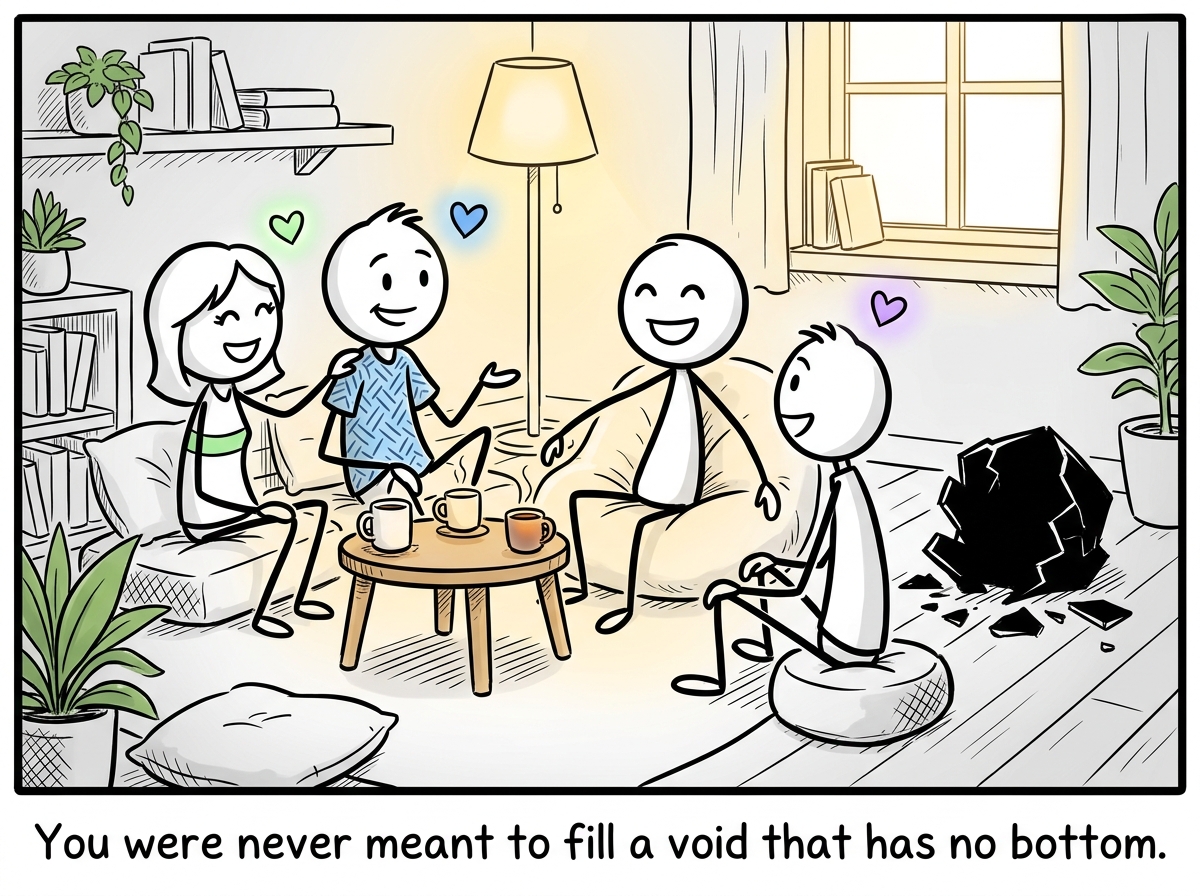
A person with psychopathic traits moves through situations that would devastate most people — betrayal, harm, consequences — and nothing sticks. No guilt, no shame, no lessons learned.
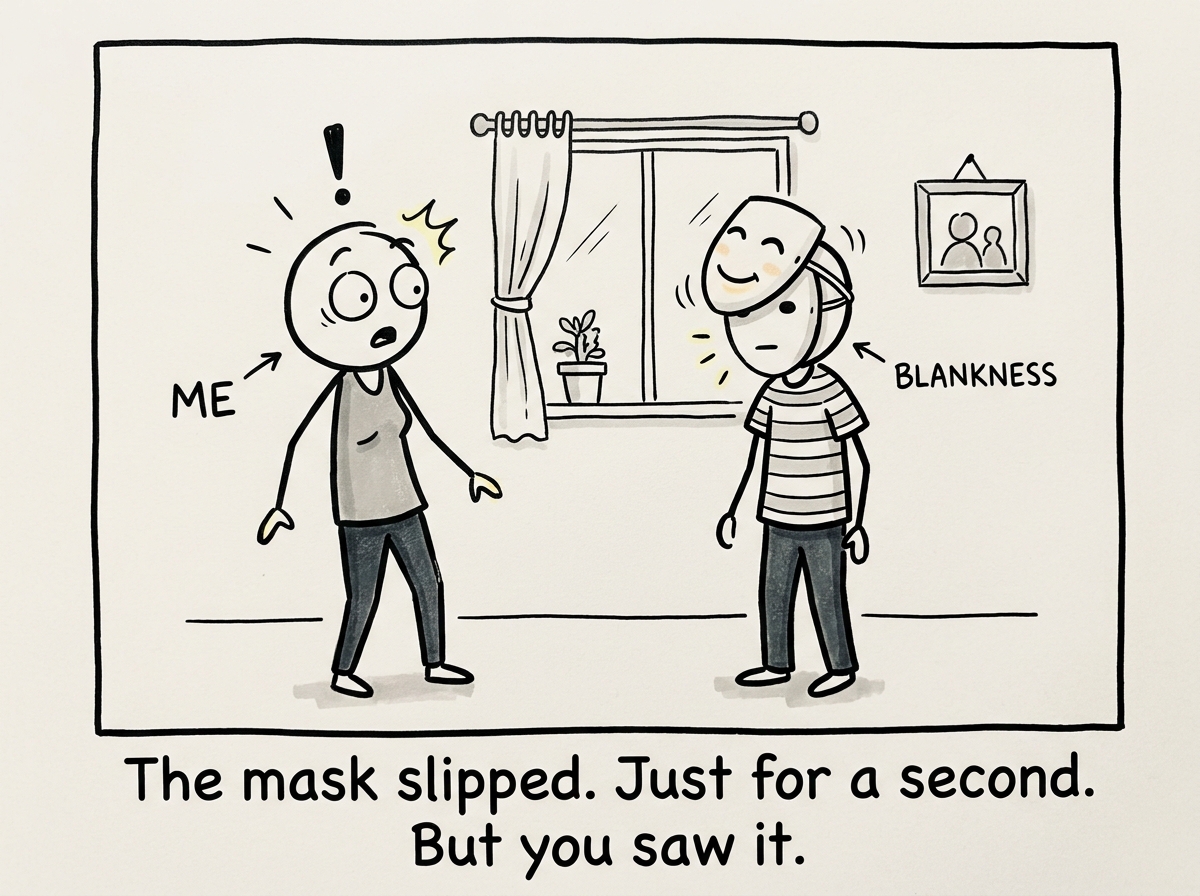
A person with psychopathic traits keeps a closet of different masks — one for each audience — and the real face underneath is disturbingly blank.