RSD: When 'Good Job, But...' Erases the Good Job Entirely
A person with rejection sensitive dysphoria receives mild constructive feedback and their brain instantly translates it into total rejection and failure.

The intense emotional pain triggered by perceived rejection that hits neurodivergent brains like a physical blow.
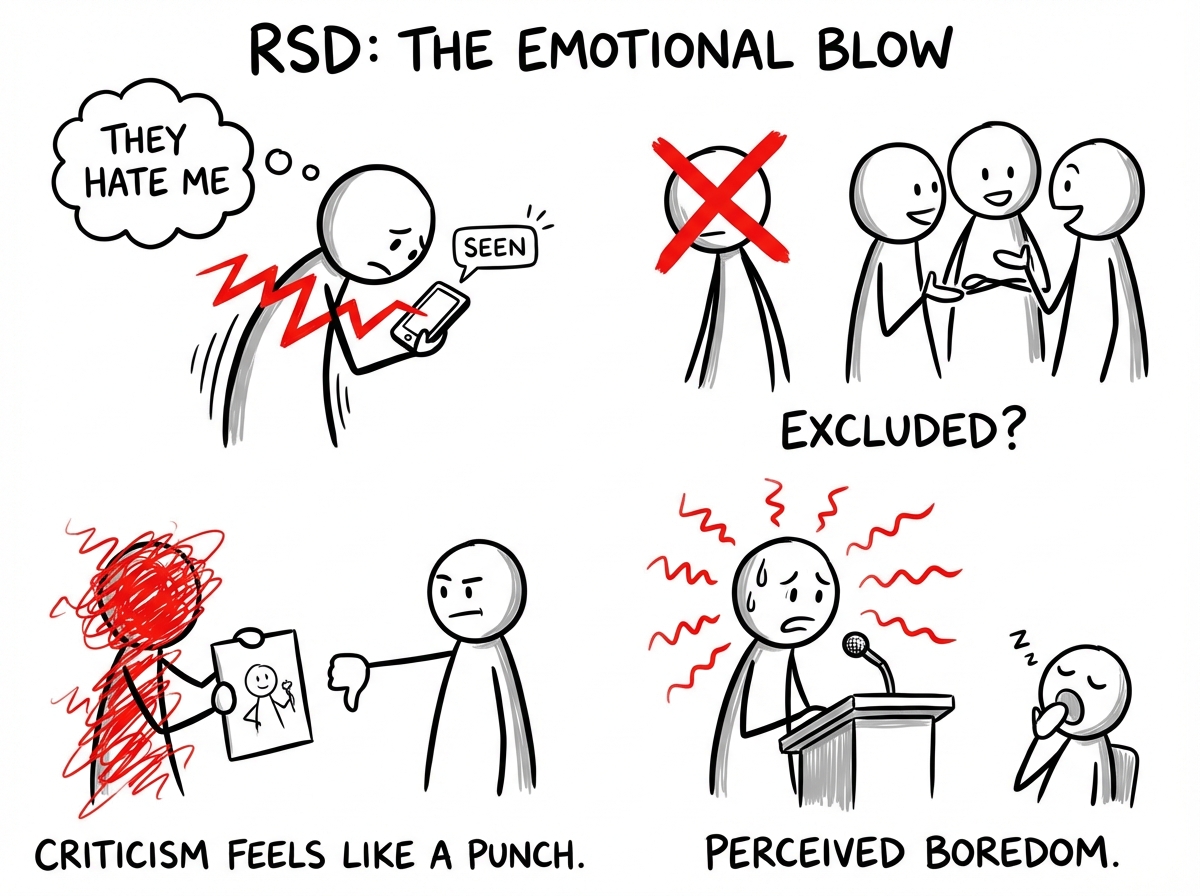
Rejection sensitive dysphoria (RSD) is an extreme emotional response to the perception -- real or imagined -- of being rejected, criticized, or falling short. While everyone dislikes rejection, RSD produces a level of pain that is disproportionate, immediate, and overwhelming. It can feel like a physical wound in your chest, a sudden plunge into despair, or a flash of white-hot rage -- all triggered by something as small as a friend's tone of voice, an unanswered message, or a piece of constructive feedback. Dr. William Dodson, who popularized the term, describes RSD as nearly universal in people with ADHD, estimating that it affects up to 99 percent of adolescents and adults with the condition. The dysphoria in RSD is key: it is not just sadness but a deep, unbearable emotional anguish that can mimic the sudden onset of a depressive episode. Because the pain is so intense, people with RSD often develop elaborate avoidance strategies -- people-pleasing to prevent any possibility of criticism, withdrawing from situations where rejection might occur, or not trying at all so there is nothing to fail at. The cruel irony is that these protective strategies often create the very isolation and underachievement that reinforce feelings of rejection. Recognizing RSD as a neurological sensitivity rather than an overreaction is crucial because it shifts the response from 'toughen up' to 'how do we manage this enormous feeling until it passes.'
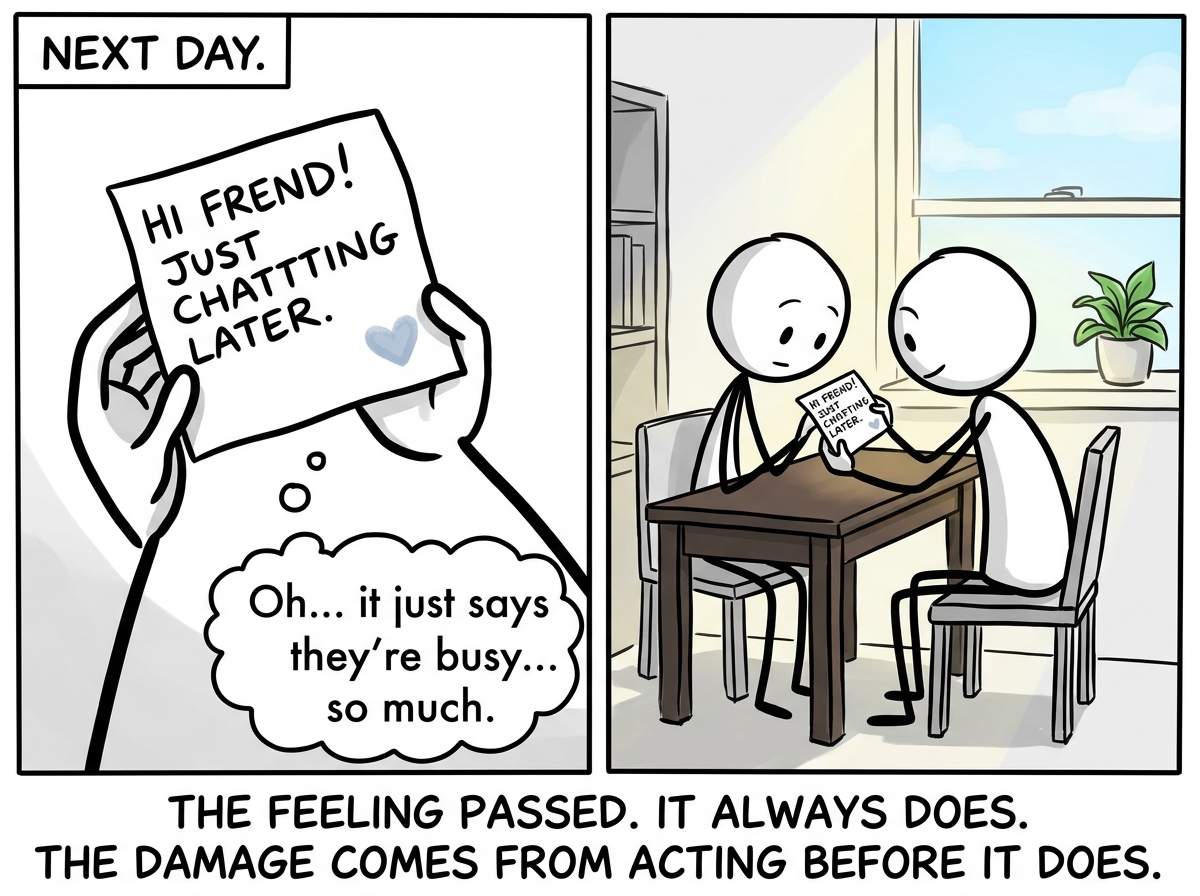
RSD is a neurological storm, not a character flaw -- and the best strategy is to ride the wave without acting on it.
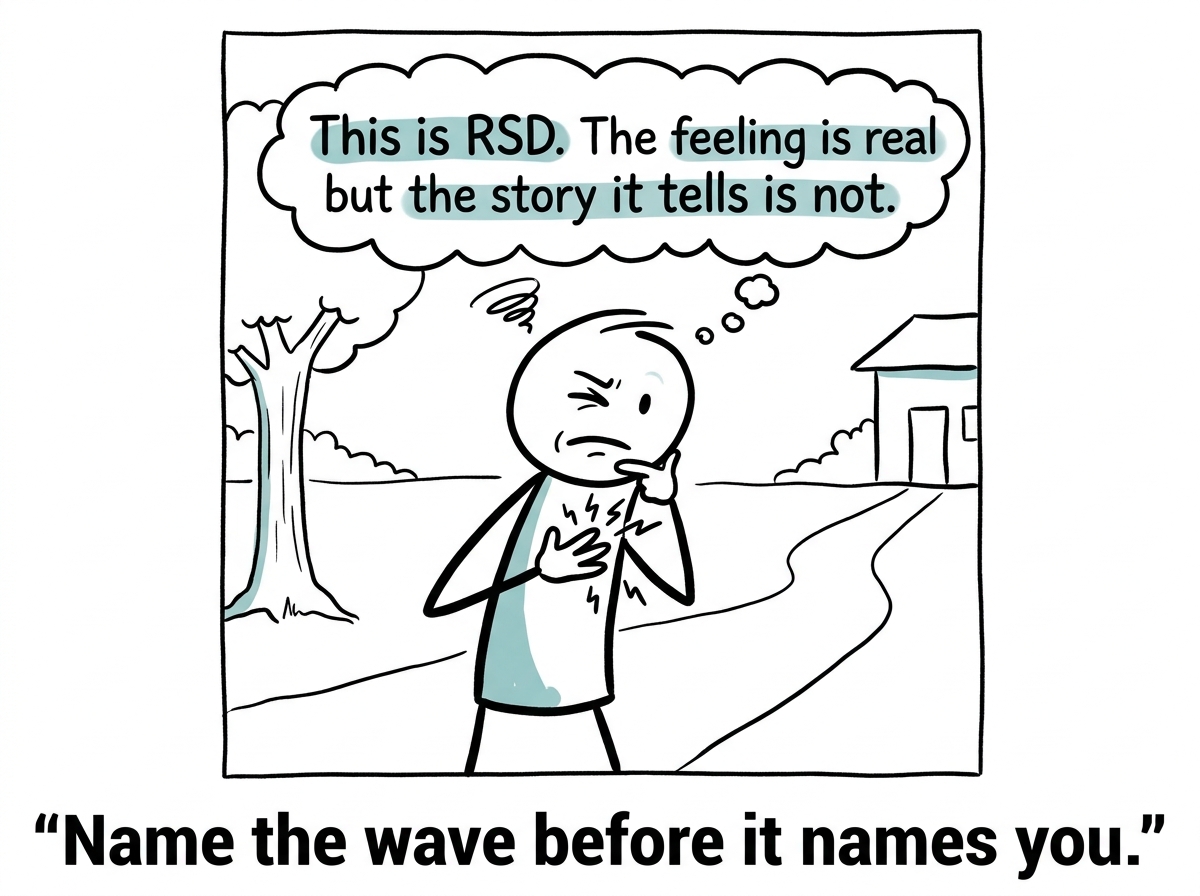
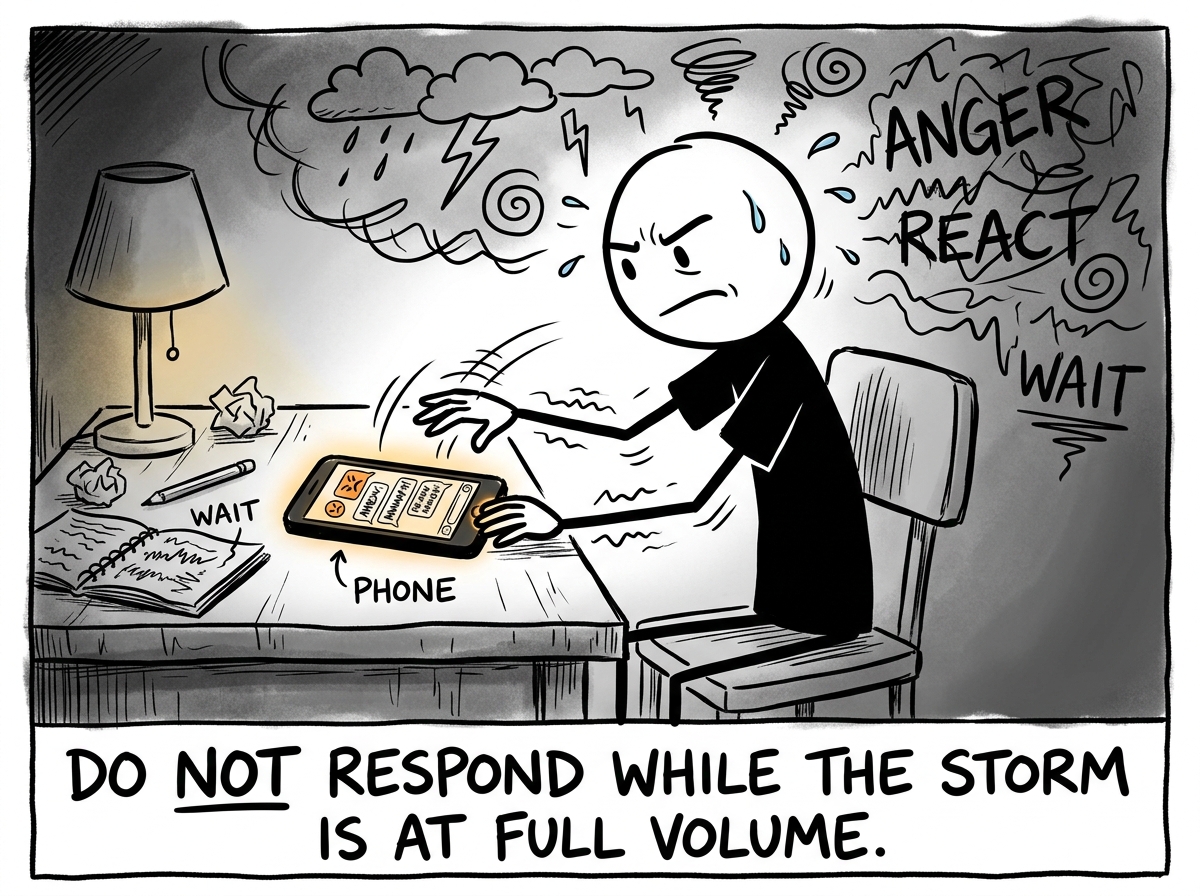
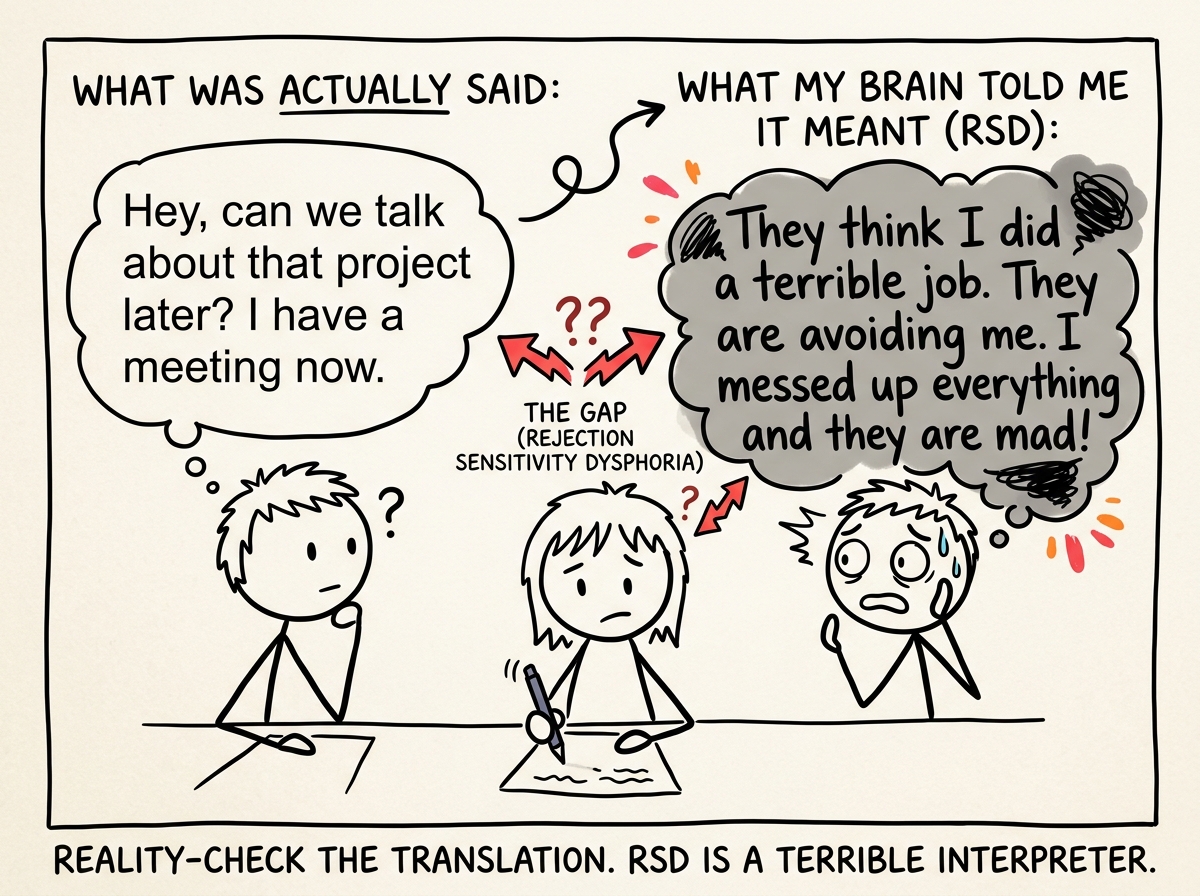
A person with rejection sensitive dysphoria receives mild constructive feedback and their brain instantly translates it into total rejection and failure.
A person with RSD receives a perfectly normal text from a friend cancelling plans and spirals into the certainty that the friendship is over.