The Party Thermostat
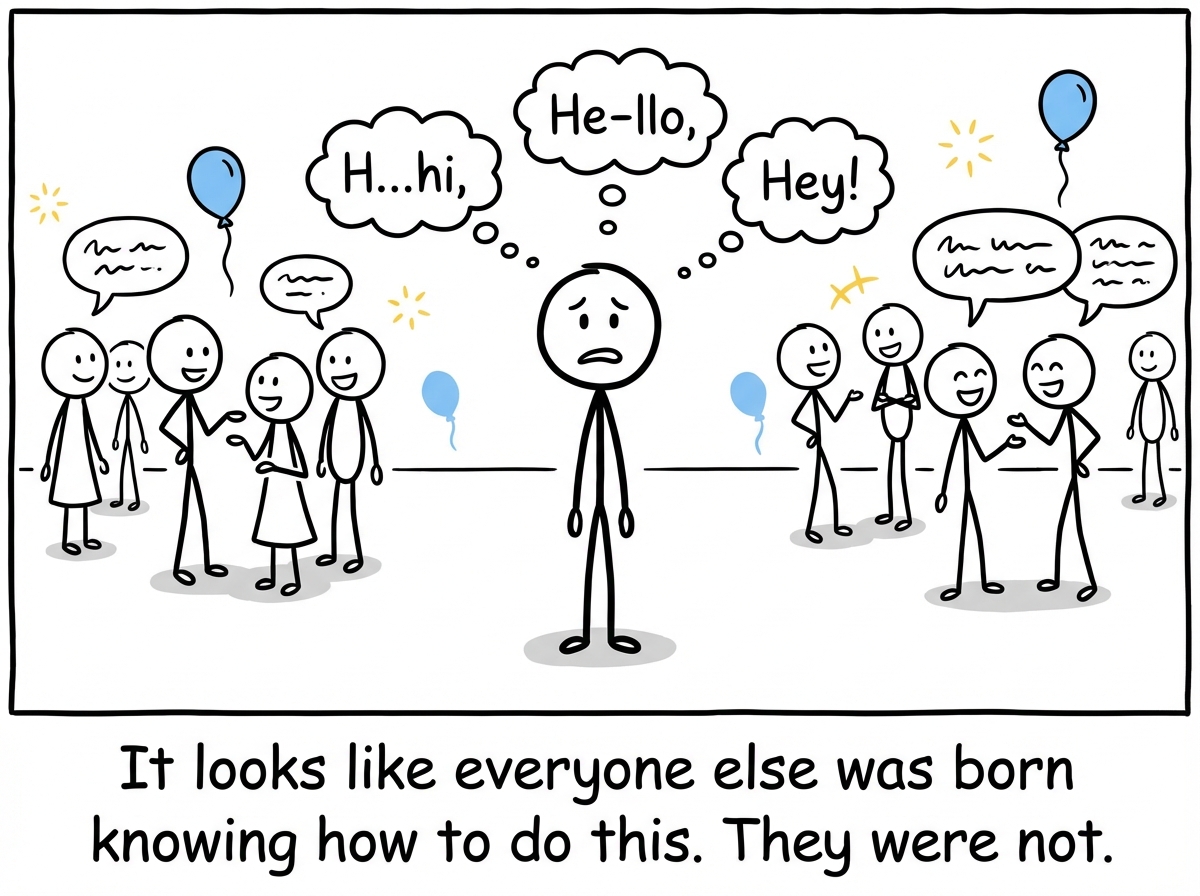
A person walks into a social event and their internal anxiety thermostat immediately spikes -- they spend the whole night trying to regulate it instead of actually connecting with anyone.

Why some people seem effortless in groups while you are rehearsing your exit strategy in the bathroom.
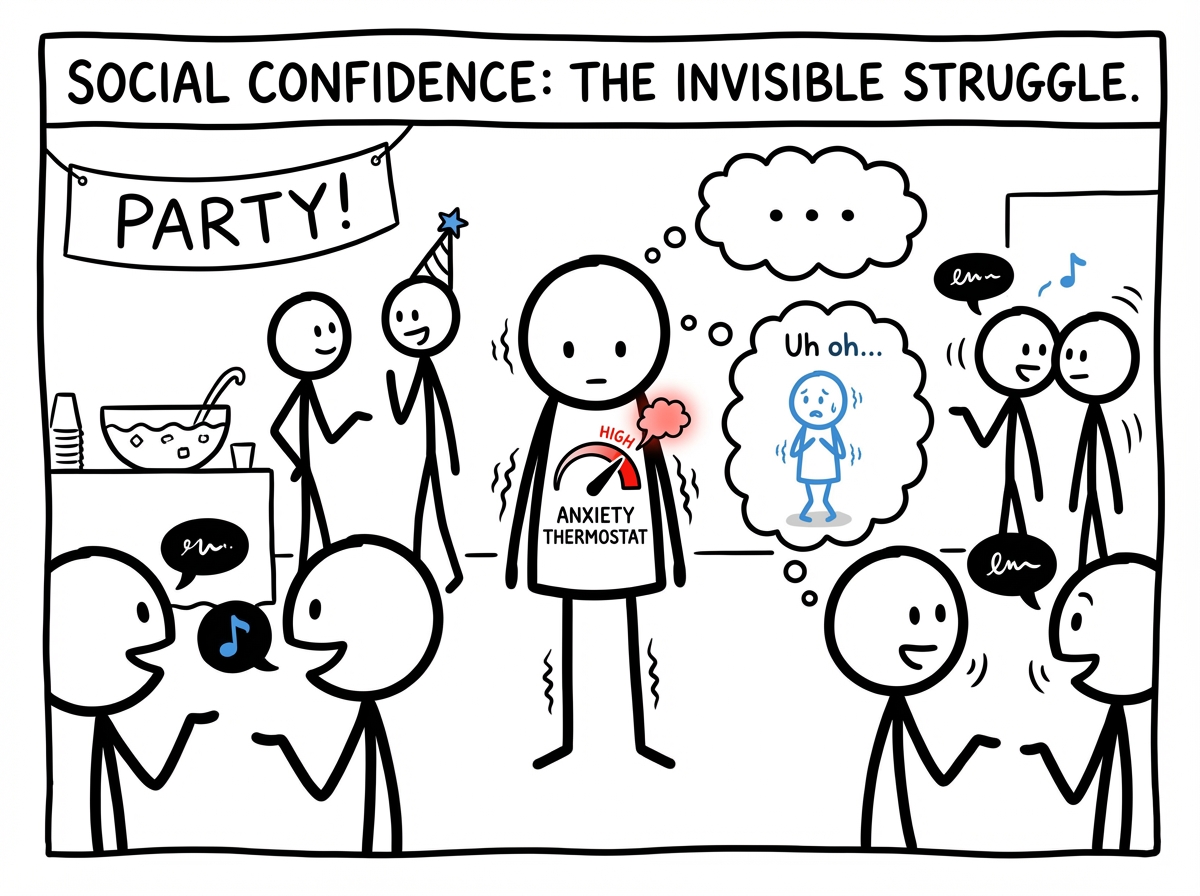
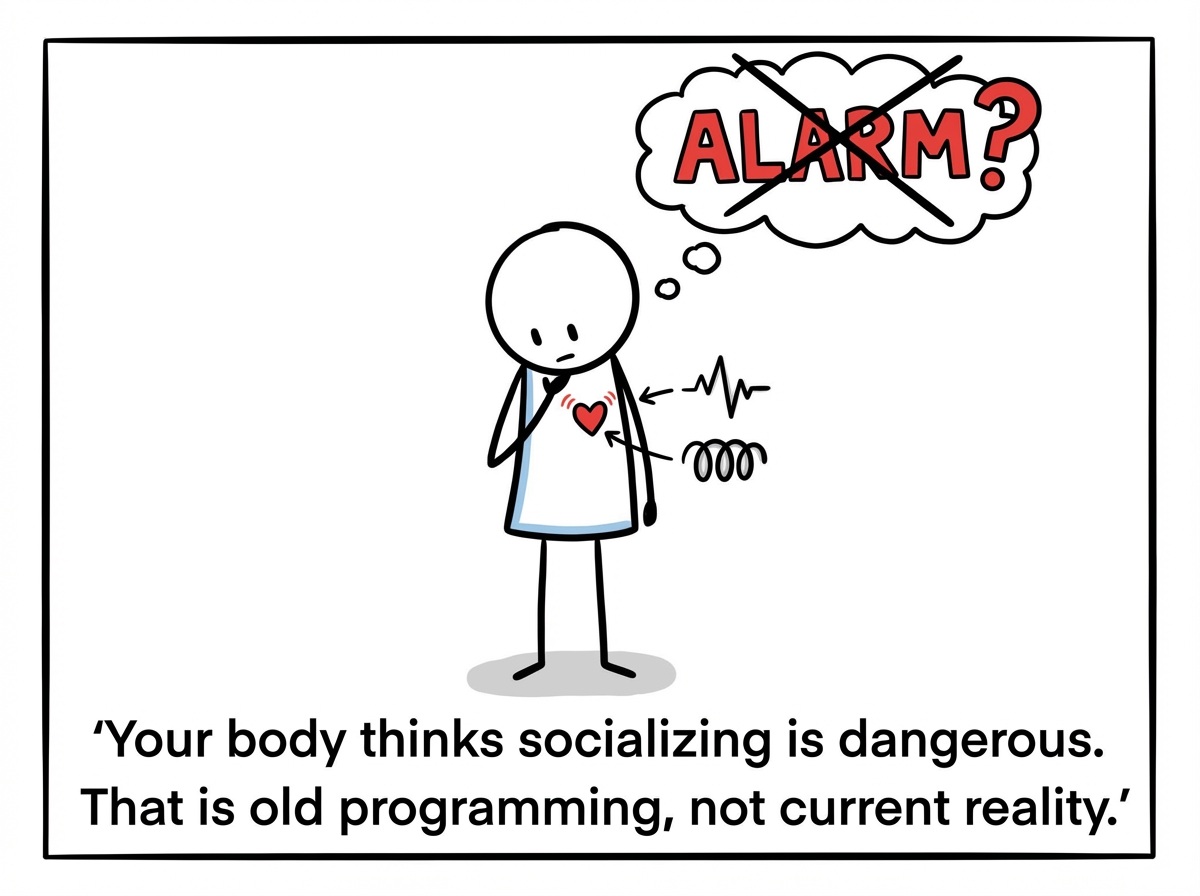
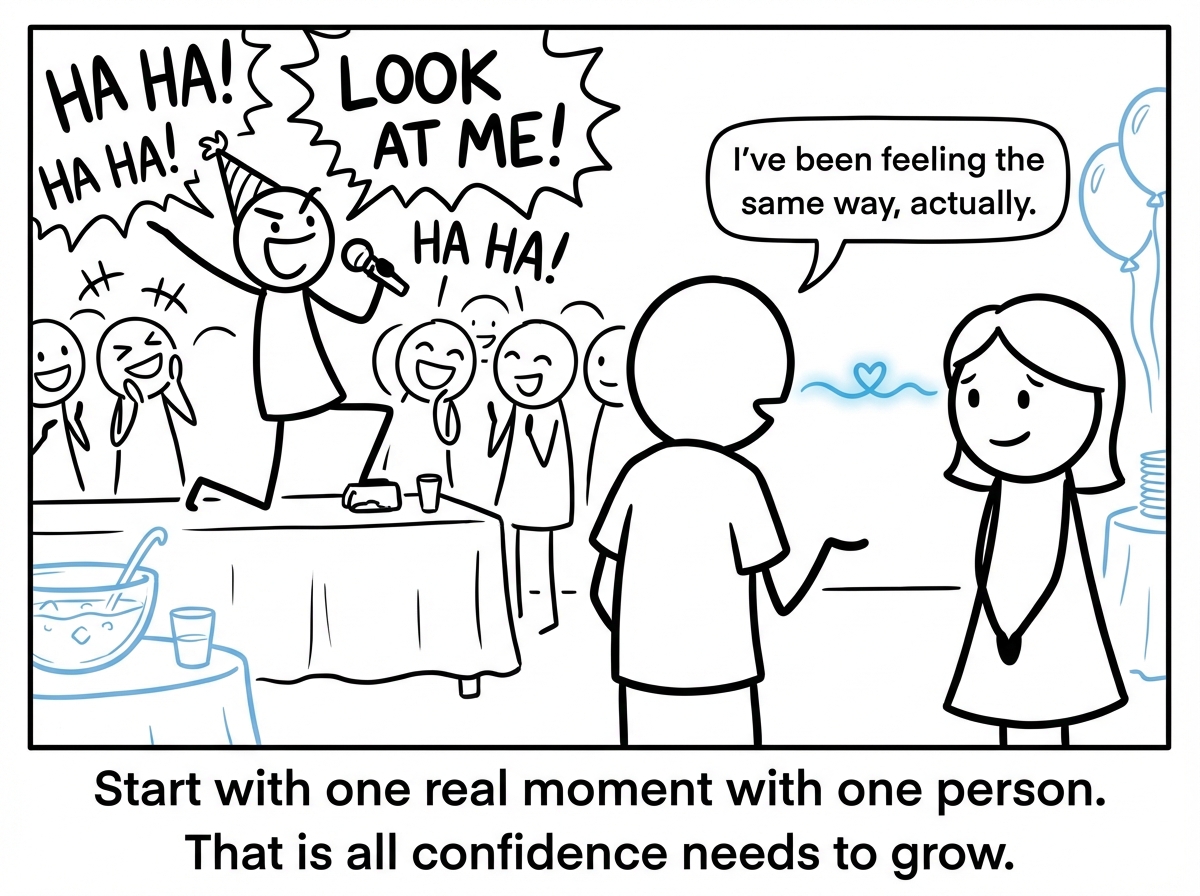
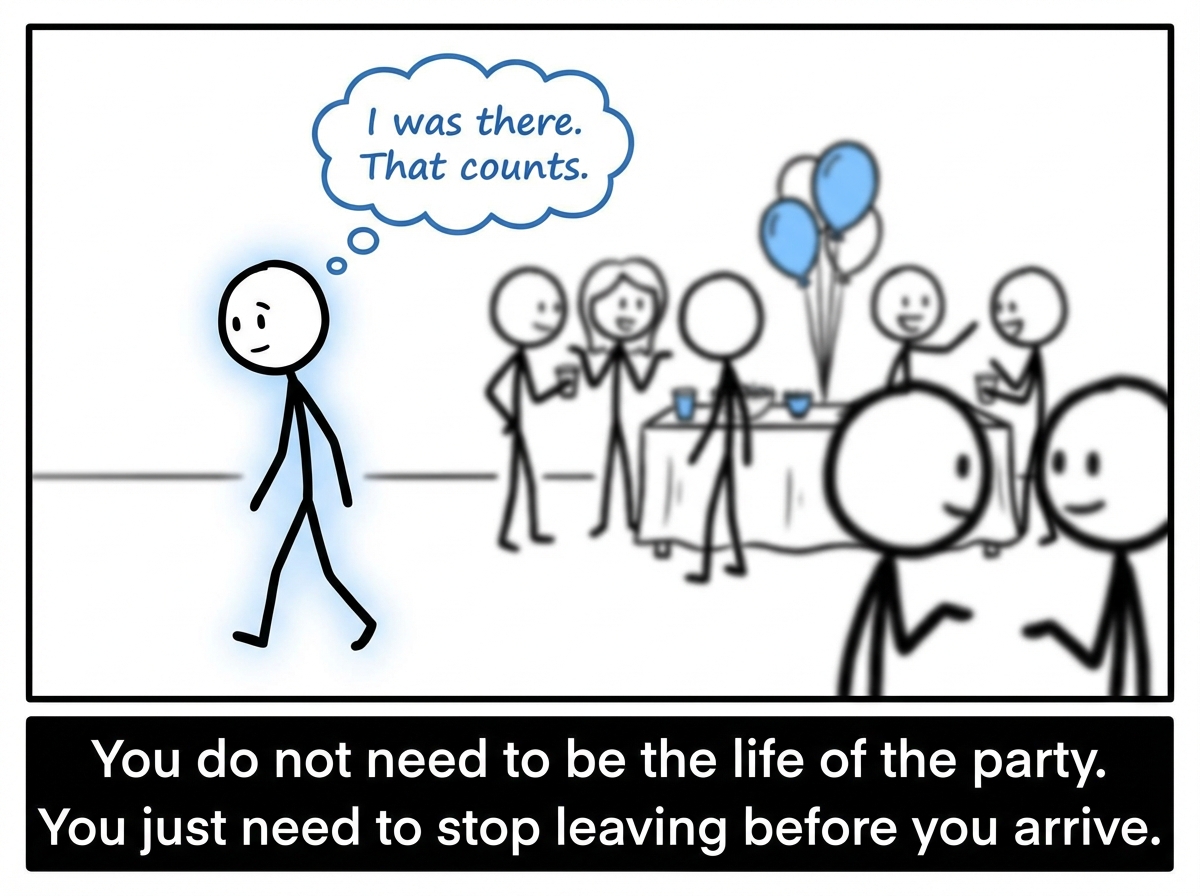
Social confidence is not about being extroverted, charismatic, or having the right things to say. It is about your nervous system feeling safe enough to let you show up as yourself around other people. Most people who struggle socially do not lack social skills -- they lack social safety. Somewhere along the way, they learned that being visible means being judged, that saying the wrong thing means being rejected, and that authentic presence is too risky. So they developed strategies: staying quiet, over-preparing what to say, performing a version of themselves that feels safer, or avoiding social situations entirely. The irony is that these protective strategies create the very disconnection they are trying to prevent. When you are performing, people sense it and cannot connect with you. When you avoid, you never collect the evidence that you could be okay. Social confidence is rebuilt by gradually increasing your tolerance for being seen -- not perfectly, not impressively, just as you are. It means learning to tolerate the discomfort of a pause in conversation, the vulnerability of saying something genuine, and the uncertainty of not knowing whether people like you. The goal is not to become someone who loves parties. It is to become someone who can enter a room without their survival brain running the show.
Social confidence is not about being impressive. It is about your nervous system feeling safe enough to let you be real.