The Four Survival Modes
Four people encounter the same trigger -- a partner raising their voice -- and each responds with a different trauma response: fight, flight, freeze, or fawn, showing that these are survival strategies, not character flaws.

How fight, flight, freeze, and fawn show up in everyday relationships and personal growth.
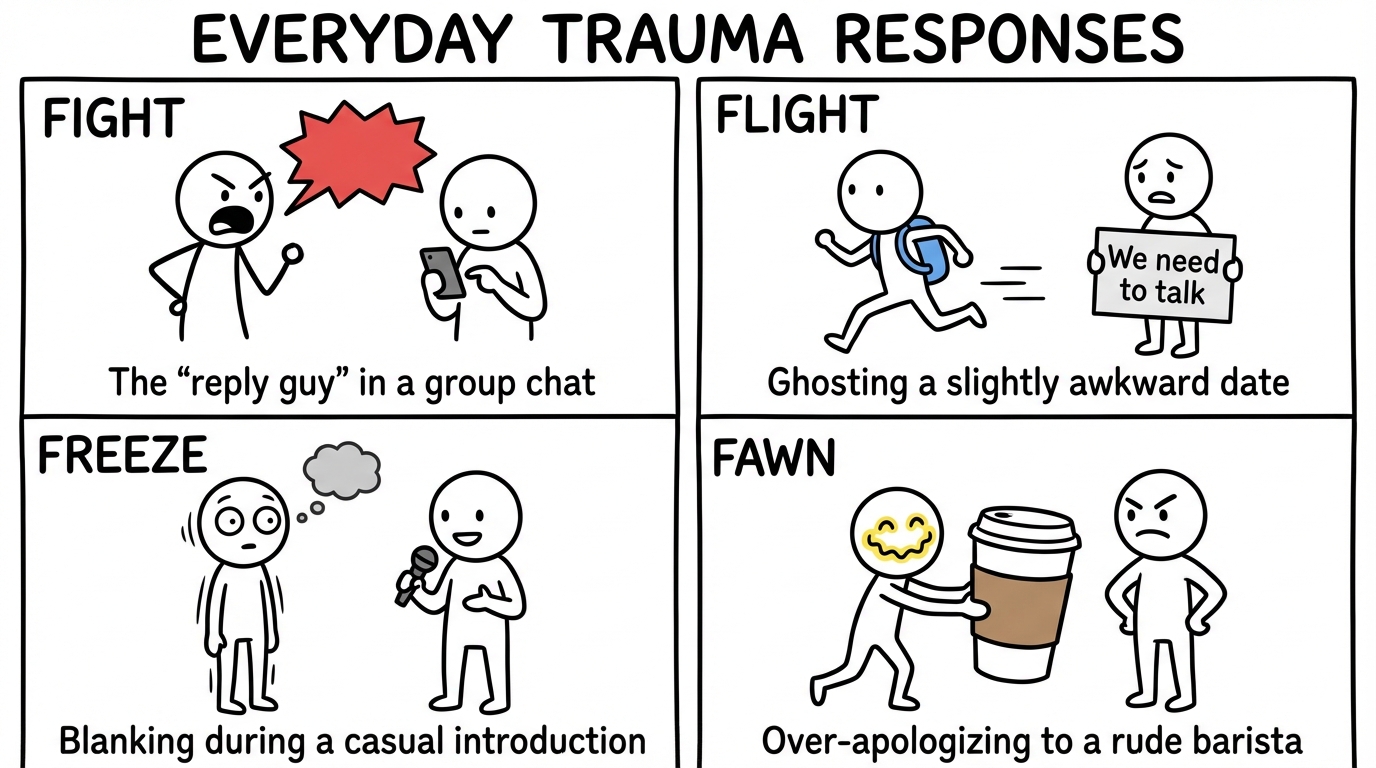
Trauma responses are the automatic survival strategies your nervous system activates when it perceives threat -- even long after the original danger has passed. The four primary trauma responses are fight (aggression, controlling behavior, anger), flight (running away, staying busy, escaping), freeze (shutting down, dissociating, going numb), and fawn (people-pleasing, over-accommodating, abandoning your own needs to stay safe). These responses are not choices -- they are hardwired reactions that developed to keep you alive. The problem is that your nervous system does not always distinguish between a genuine threat and a trigger that merely resembles one. A partner raising their voice might activate the same freeze response you learned as a child when yelling preceded danger. Criticism at work might trigger a fawn response developed to manage an unpredictable caregiver. Understanding your dominant trauma responses is not about diagnosing yourself -- it is about recognizing that many of the patterns you judge yourself for are survival adaptations that made perfect sense at one time. Healing involves building safety in the present so your nervous system can learn that the old rules no longer apply.
Your trauma response kept you alive then -- healing means building enough safety now that your nervous system can learn the old rules no longer apply.
A stick figure in a triggering moment, noticing their body activating -- fists clenching, legs tensing, voice going quiet -- and labeling it: 'This is my freeze response'
The stick figure placing a hand on their heart and reminding themselves 'I am safe right now. This is not then.'
The stick figure choosing a new response -- speaking up instead of freezing, staying instead of fleeing -- even though it feels unfamiliar
The stick figure after the moment, looking surprised that they survived doing it differently, with their nervous system a little calmer