The Language You Lost
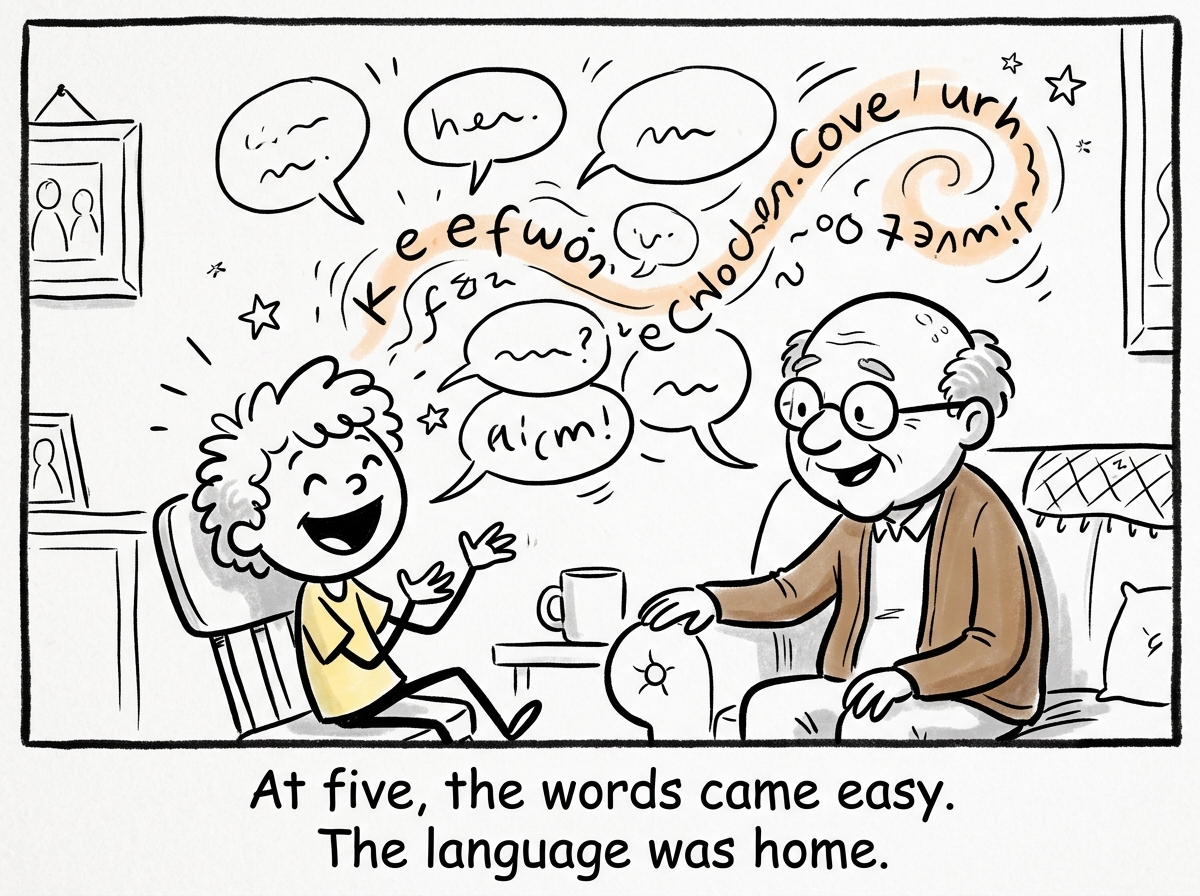
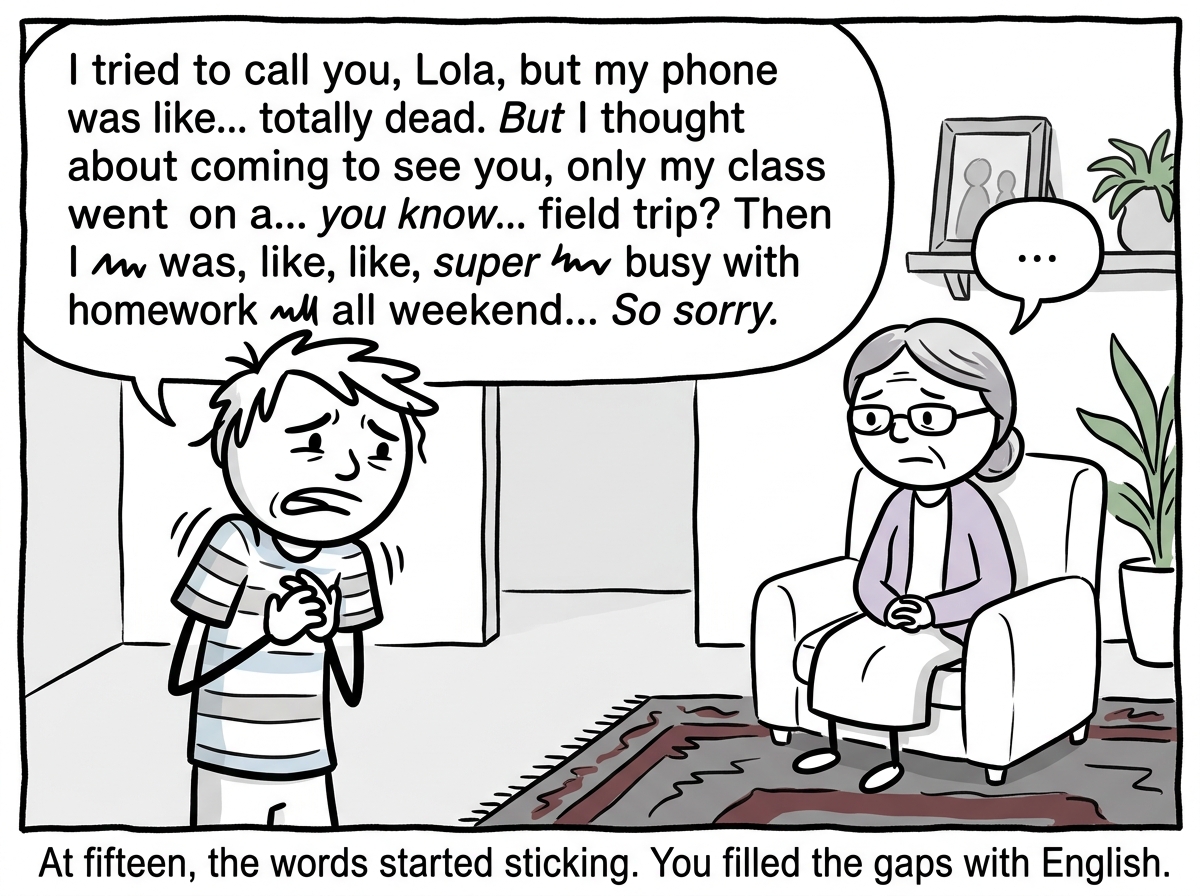
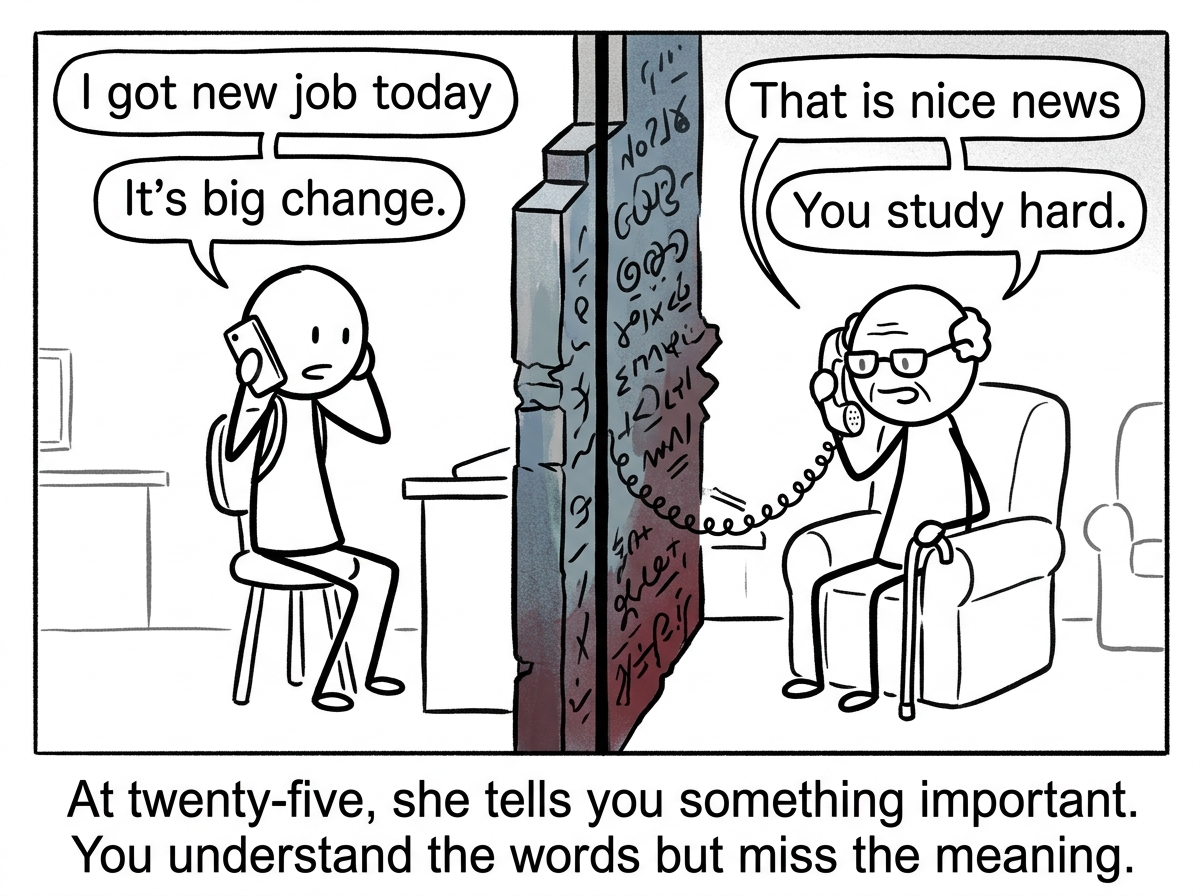
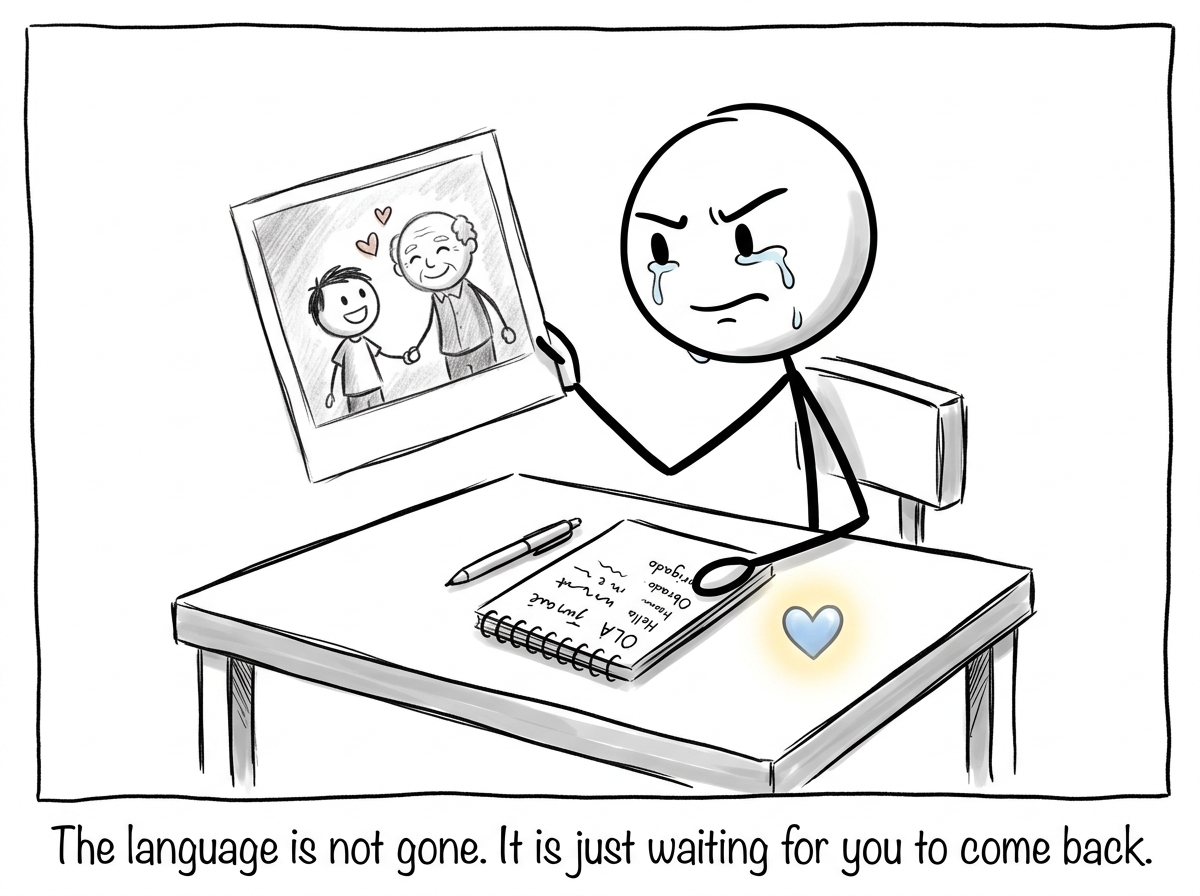
A second-generation person realizes they can no longer fully communicate with their grandparent because they lost the mother tongue, and nobody planned for it to happen.
Explanation
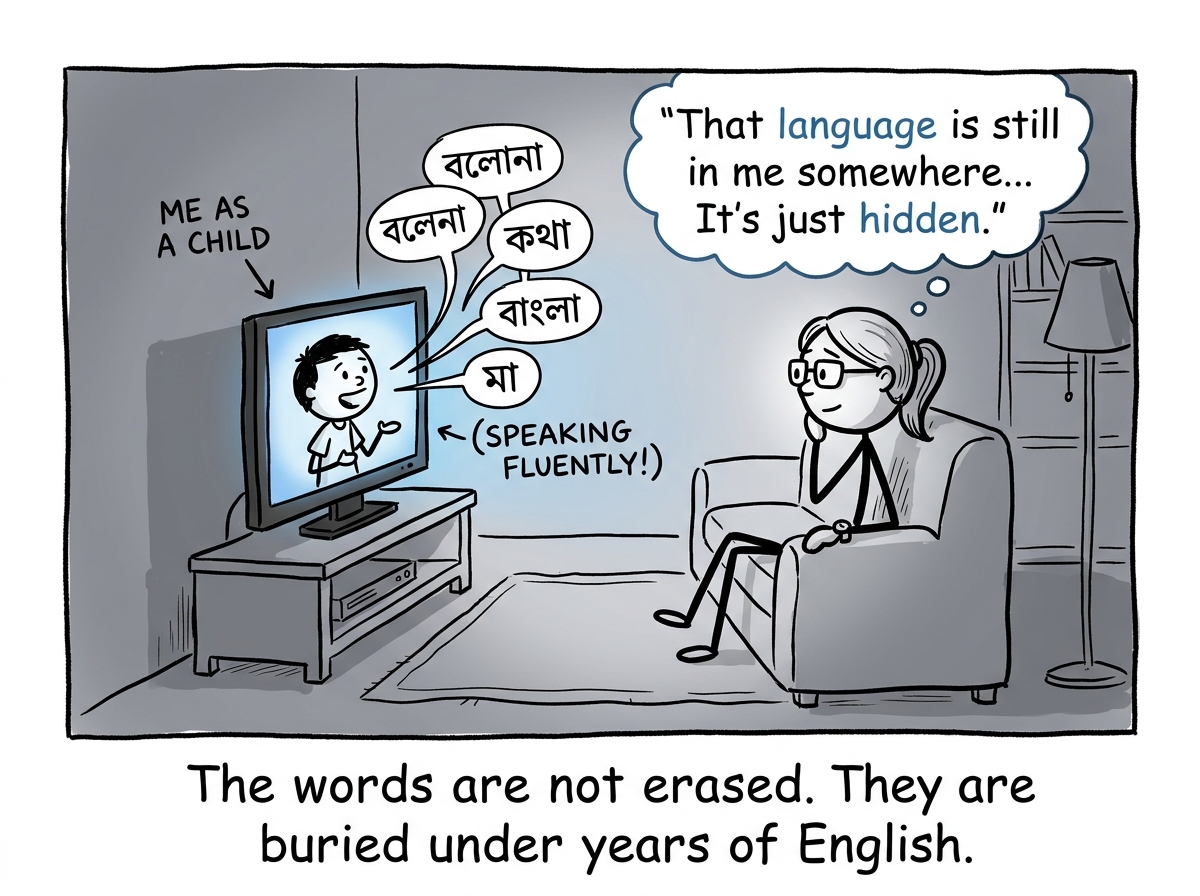
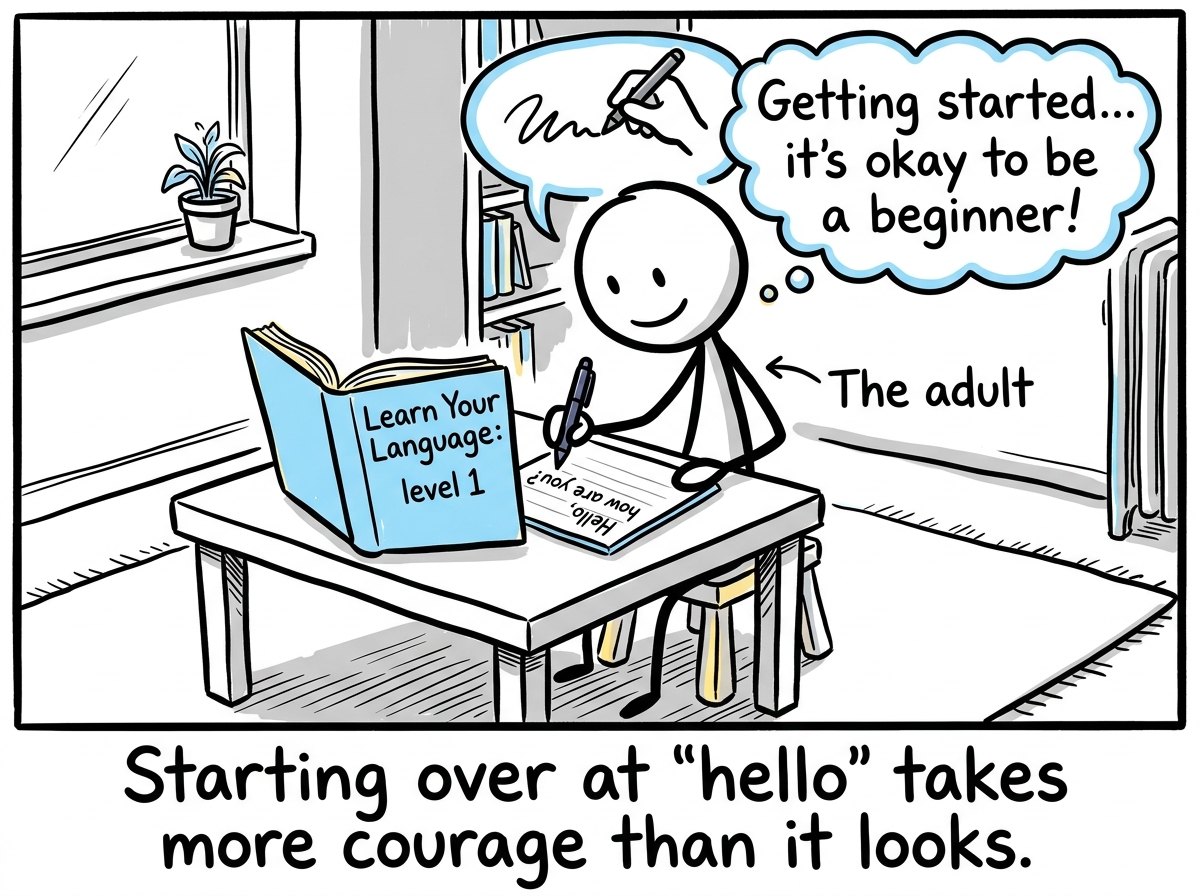
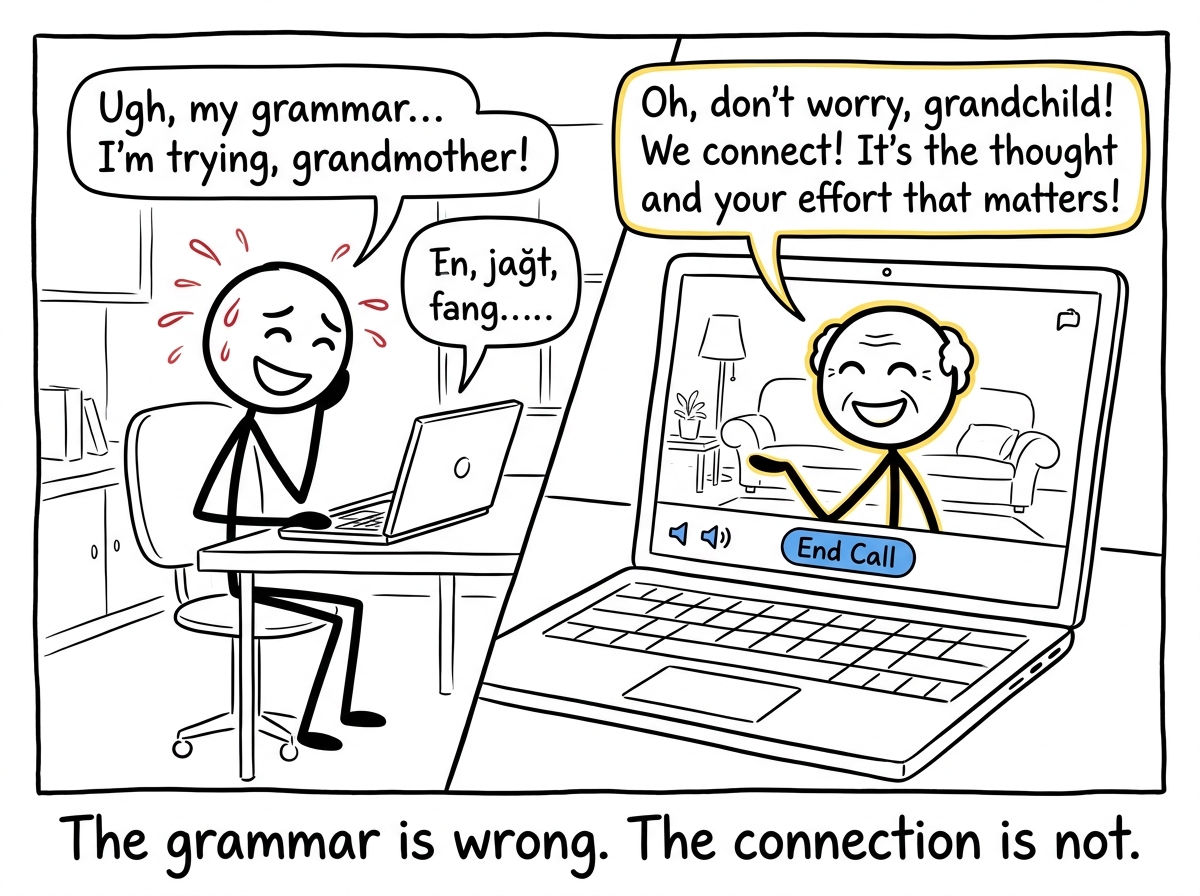
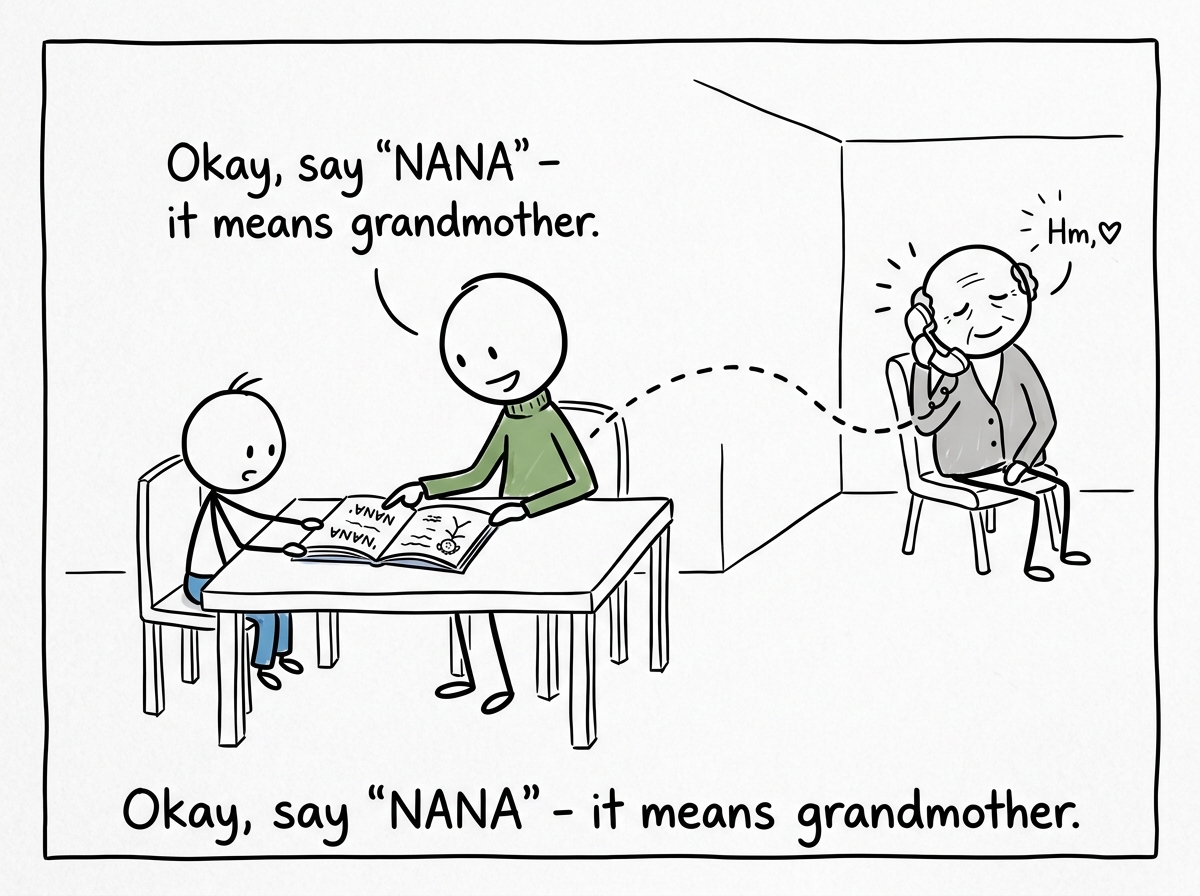
Your grandmother calls. You pick up the phone and start with the basics -- hello, how are you, I miss you. But when she starts talking about something real, something from her heart, you hit a wall. The words you need are in a language you used to speak but no longer can. She switches to simpler phrases so you can follow. You both pretend this is fine. It is not fine. The language that once connected your family is slipping through your fingers, and with it, an entire dimension of intimacy. Language loss in immigrant families is rarely a deliberate choice -- it is a slow erosion caused by assimilation pressure, school systems that punish non-English speech, and parents who wanted their children to fit in. Sociolinguist Lily Wong Fillmore's research found that when children lose their home language, families lose their primary means of emotional connection. The grandparent who holds the family stories cannot pass them to the grandchild who needs them most. What gets lost is not just vocabulary -- it is the emotional texture, the jokes, the proverbs, and the particular way love was expressed in the original tongue. Grieving this loss is complicated because there is no one to blame. Your parents were trying to protect you. The school was trying to include you. The culture was trying to assimilate you. Everyone had reasons. But the result is a gap between generations that no translation app can bridge. Healing means acknowledging the loss, and -- for some -- beginning the slow, tender work of reclaiming what was taken.
Key Takeaway
When you lose your family's language, you do not just lose words -- you lose the specific way your people said 'I love you.'