The Halftime Show
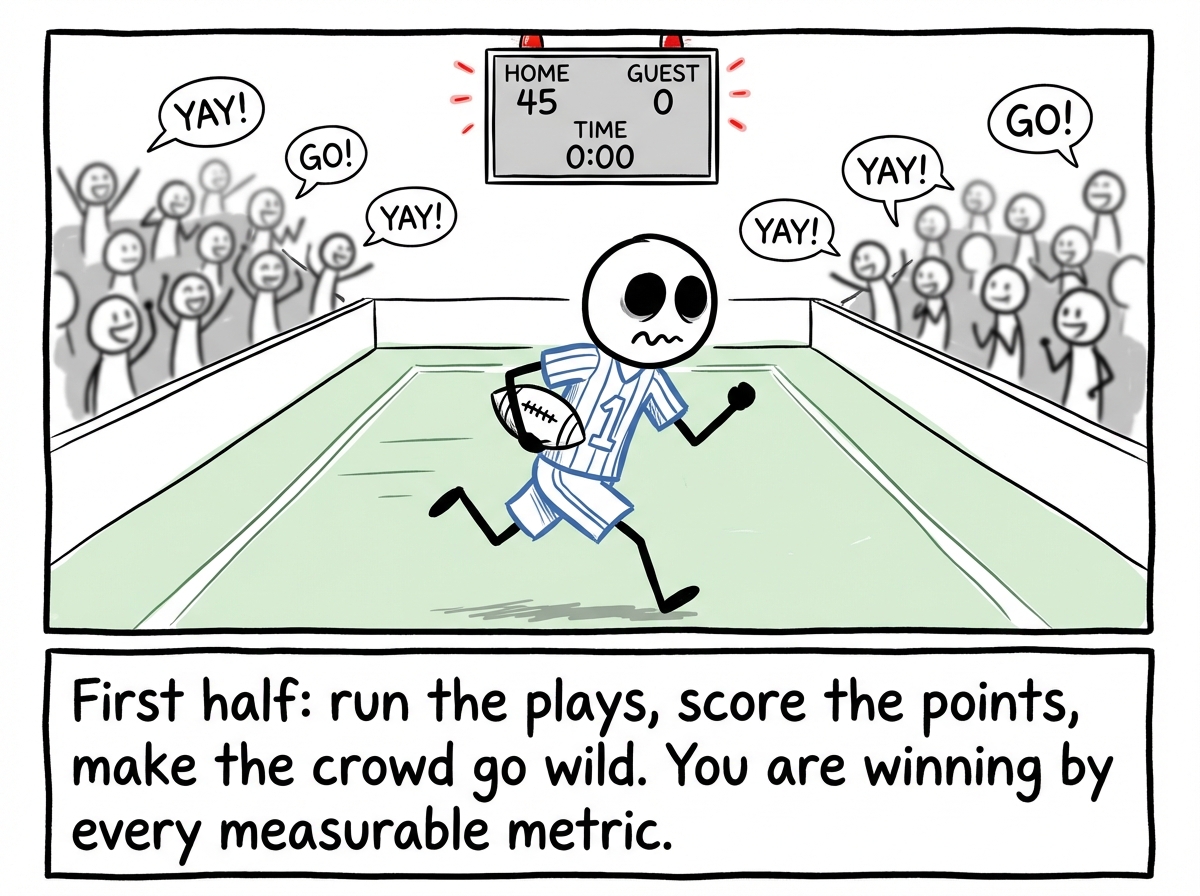
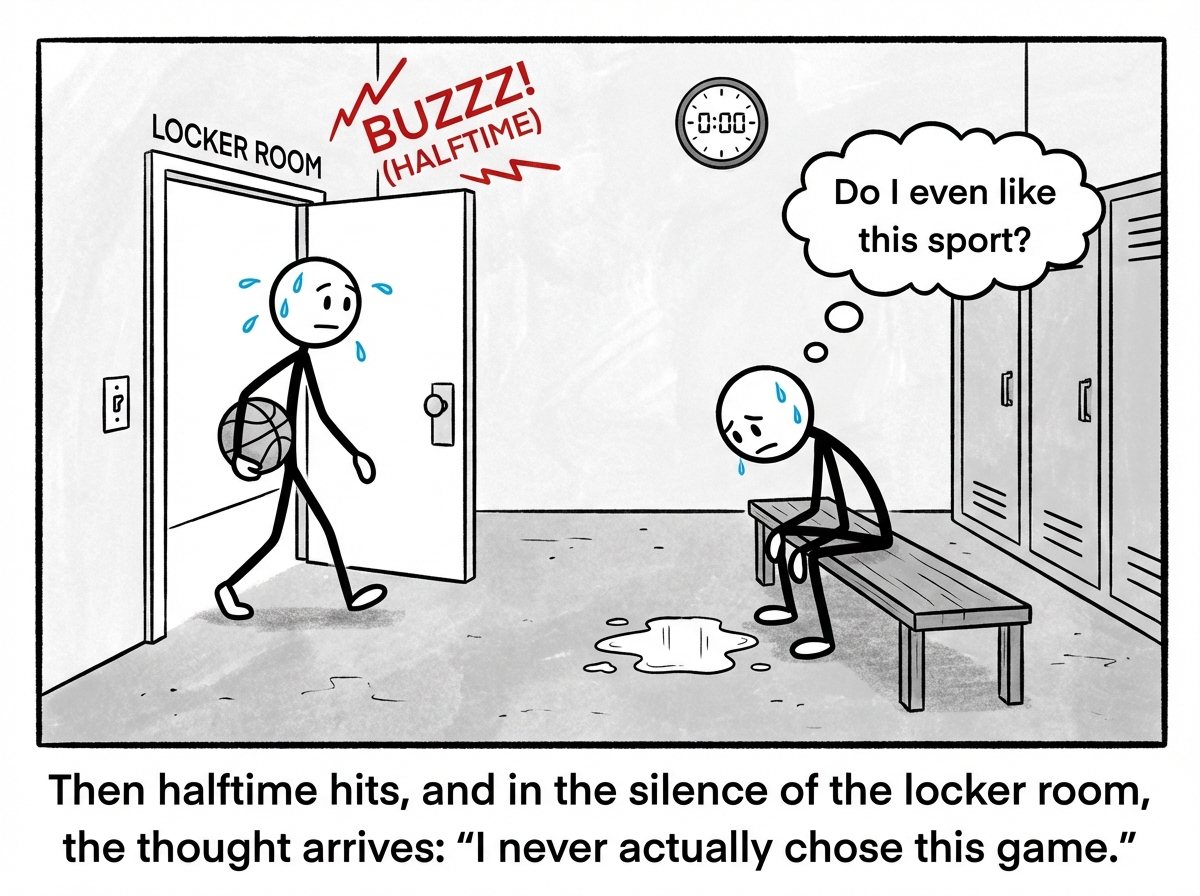
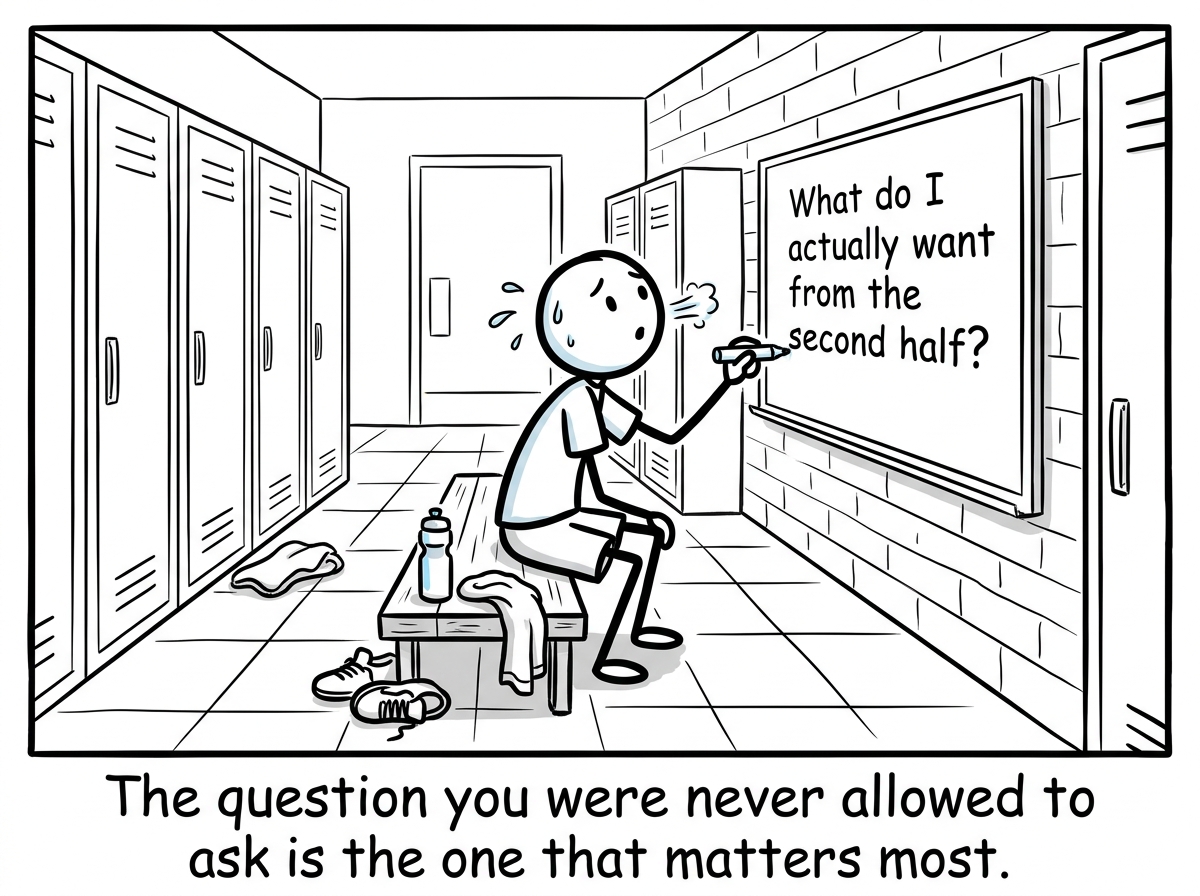
A person at halftime of the game of life sits in the locker room realizing they have been playing the wrong sport entirely.
Explanation
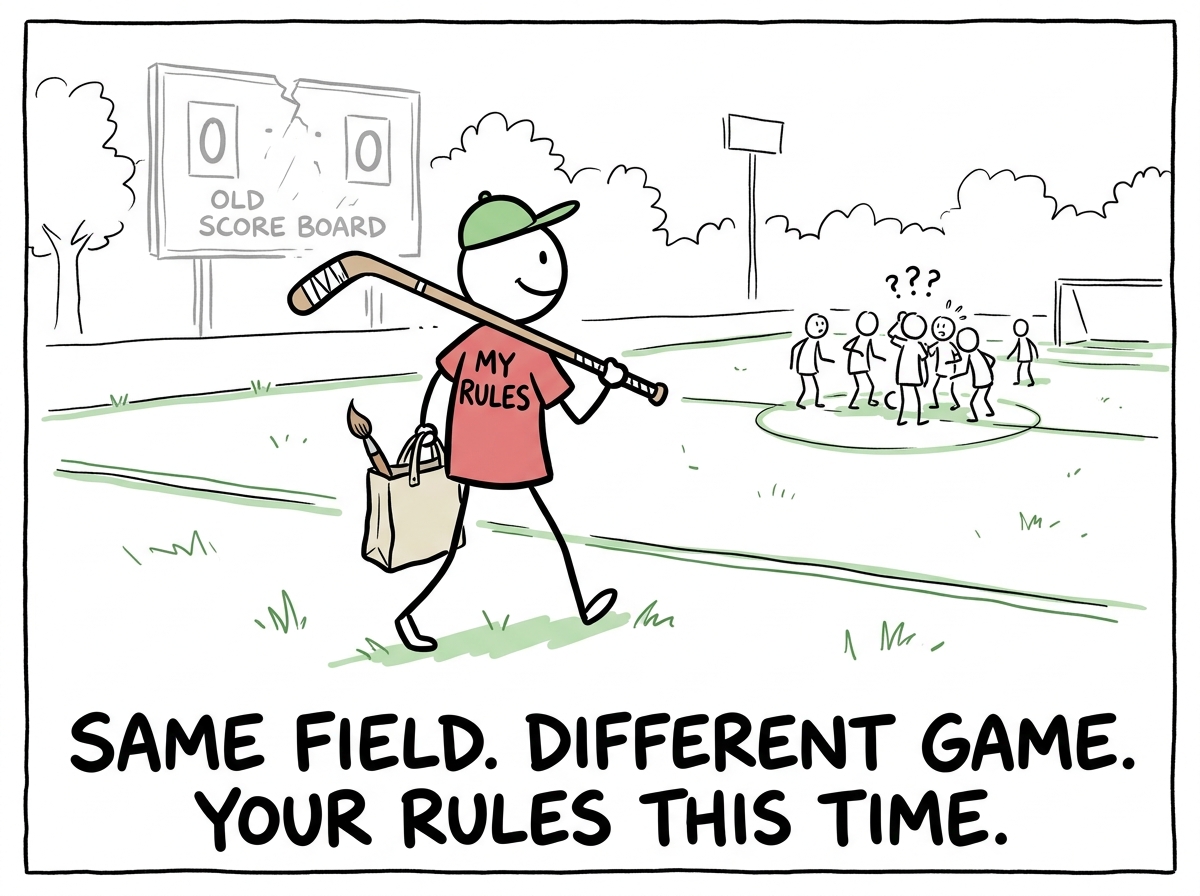
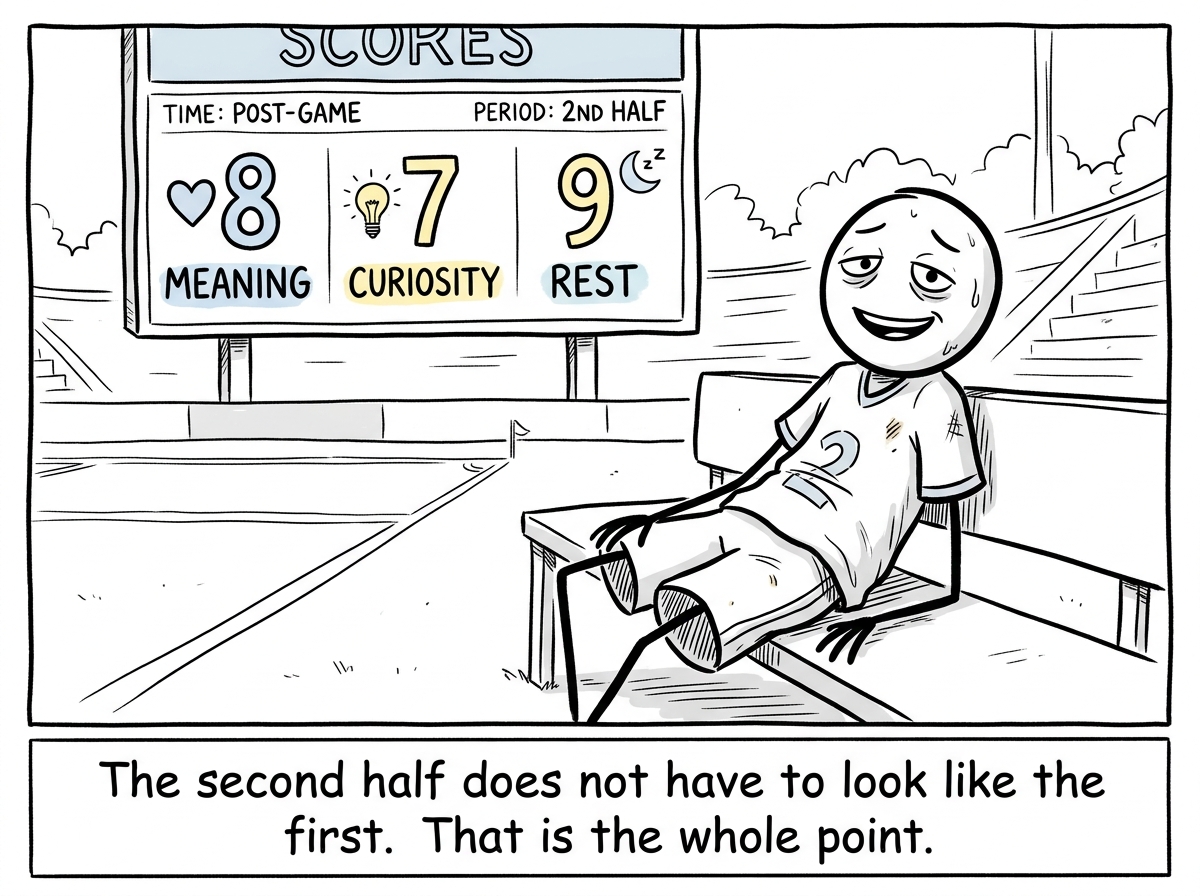
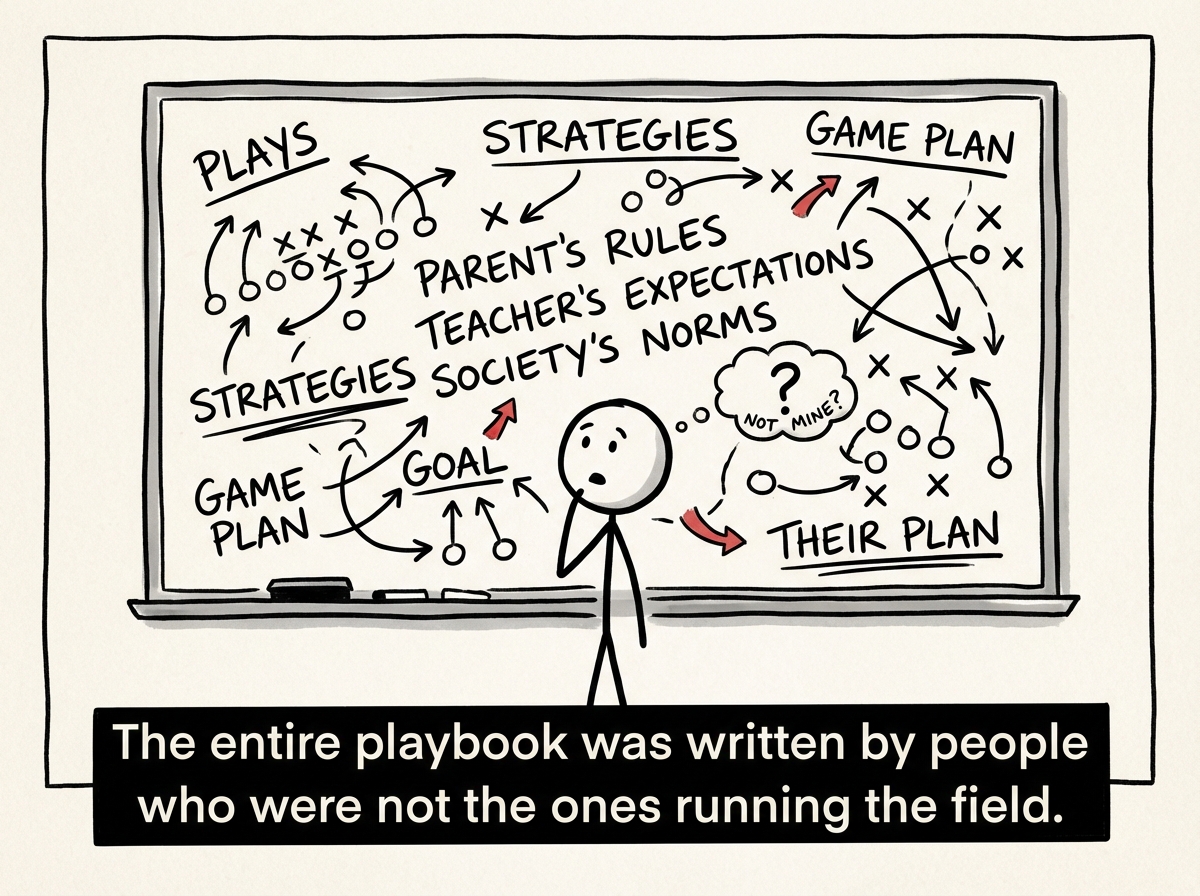
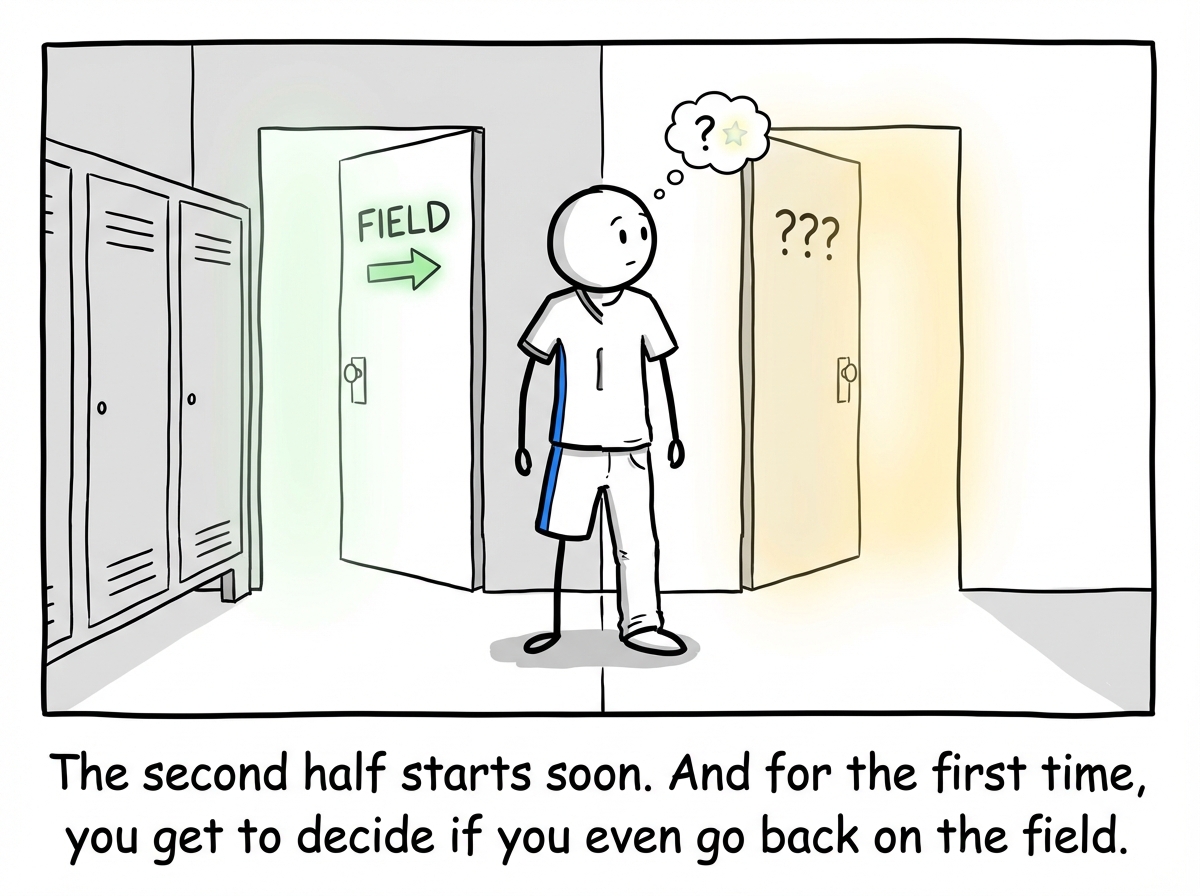
You have been playing hard for the first half. Running the plays, scoring the points, doing everything the coach told you to do. Then the halftime buzzer sounds and you sit down in the locker room, sweating and exhausted, and a strange thought arrives: you do not actually like this sport. You never did. You just happened to be good at it, and everyone cheered, so you kept playing. Now you are halfway through a game you never chose, and the scoreboard everyone else is watching means nothing to you. This is the midlife identity crisis distilled to its essence. Developmental research shows that midlife is uniquely positioned for identity reassessment because it sits at the intersection of accumulated experience and remaining time. You now have enough lived data to evaluate whether your choices reflect your actual values, and enough awareness of mortality to feel the urgency of the mismatch. Psychologist Oliver Robinson's research on midlife transitions found that the crisis often begins with a growing sense of inauthenticity -- a gap between the external performance and the internal experience that becomes too large to ignore. The halftime is not a failure. It is the only point in the game where you are allowed to stop and reassess. Some people change sports entirely -- new careers, new relationships, new ways of living. Others stay in the same game but start playing it differently, on their own terms. The key insight is that the second half does not have to look like the first. And unlike the first half, where the playbook was handed to you, this time you get to call your own plays.
Key Takeaway
Halftime is not a crisis -- it is the first moment in the game where you are allowed to question whether you even want to keep playing.