The Partner Who Sounds Like Your Parent
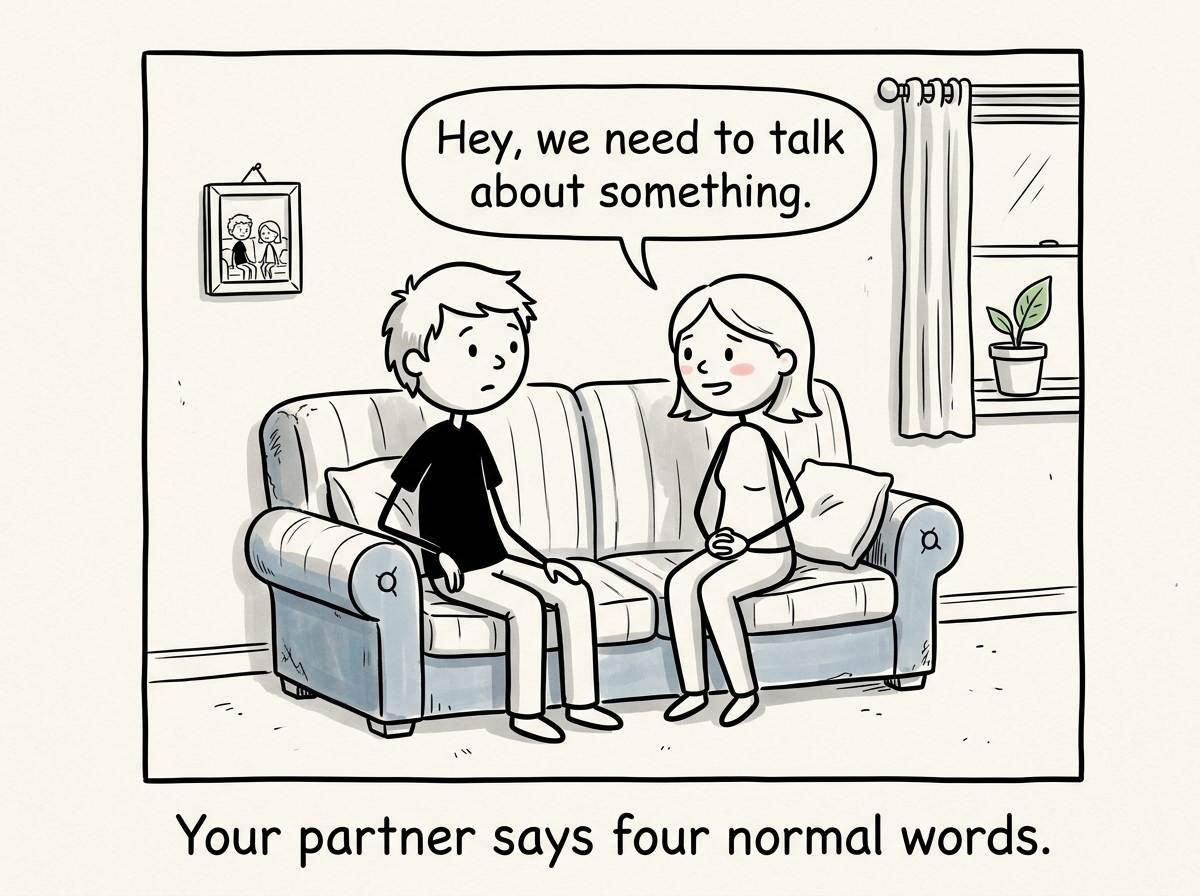
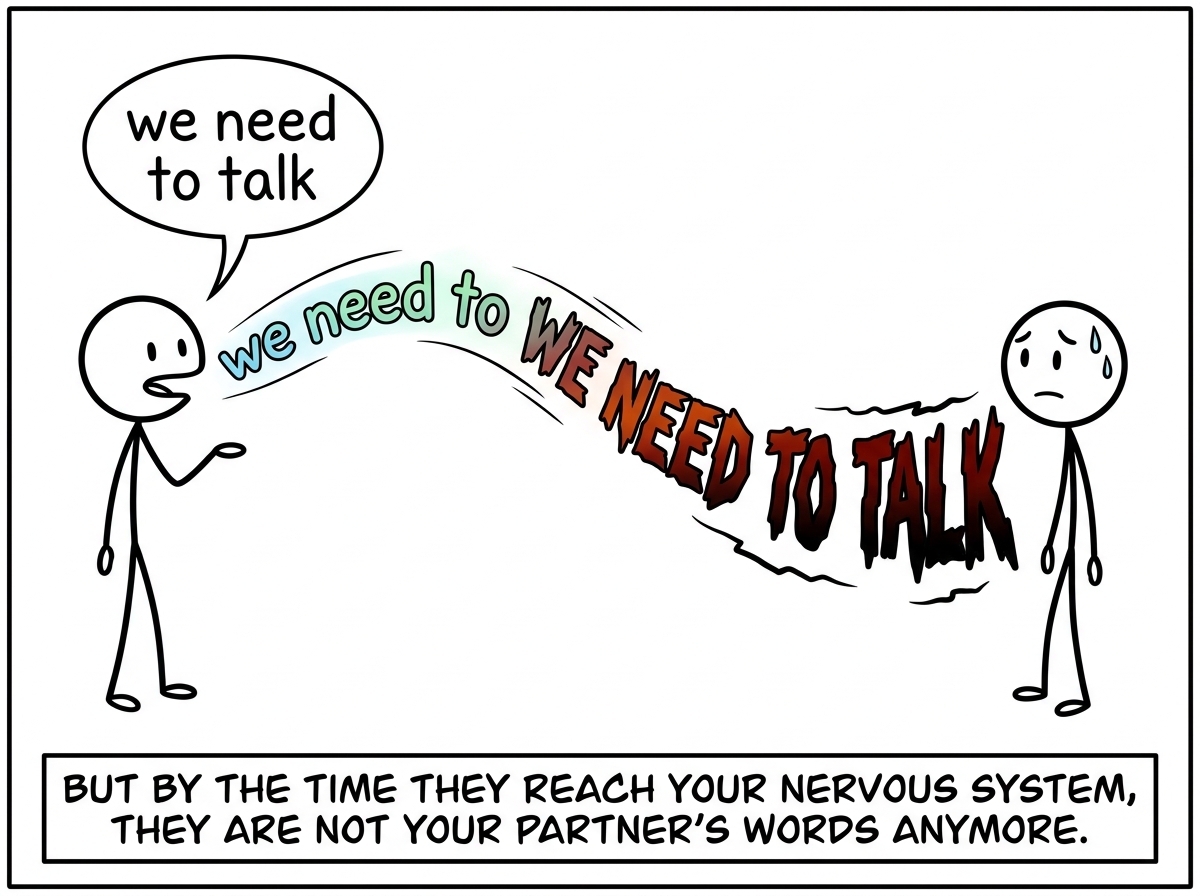
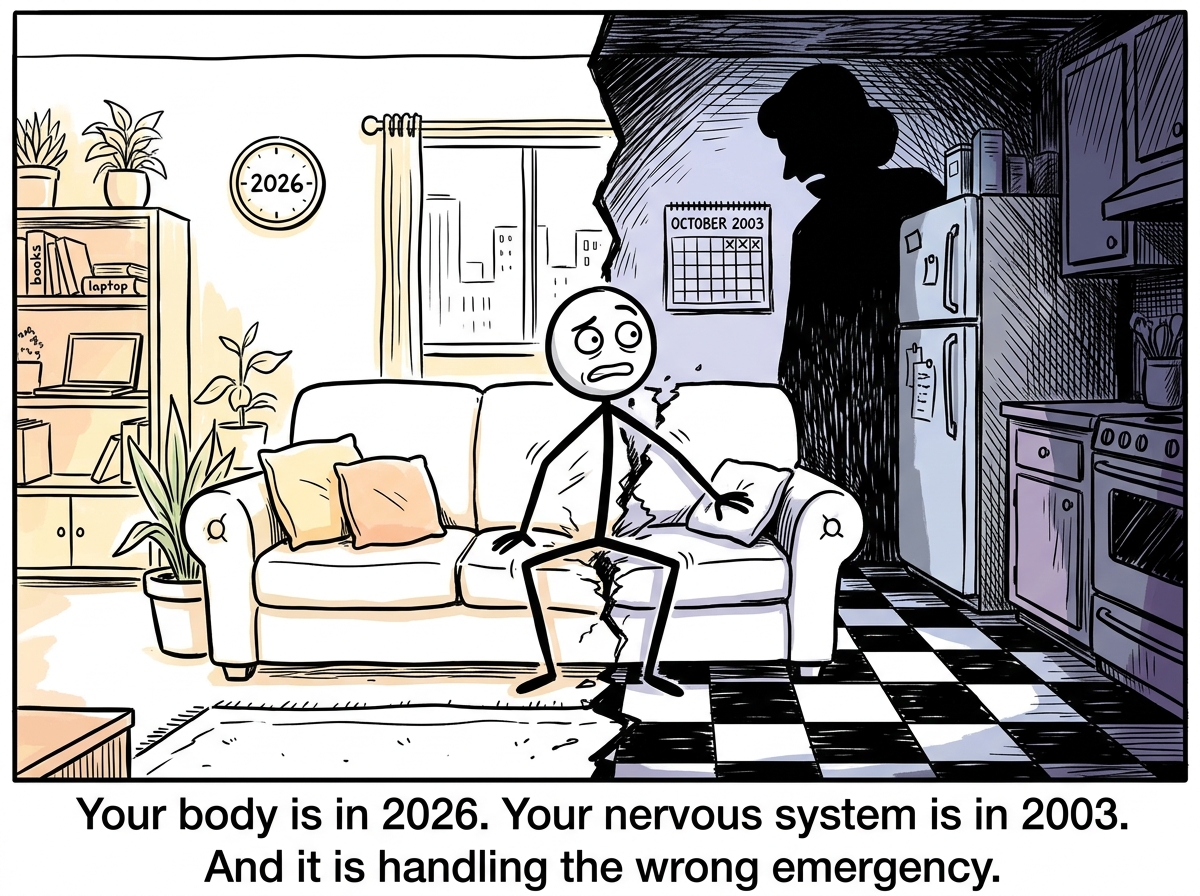
A person's loving partner says something innocuous that perfectly mirrors a phrase their abusive parent used, triggering a full nervous system response that has nothing to do with the current relationship.
Explanation
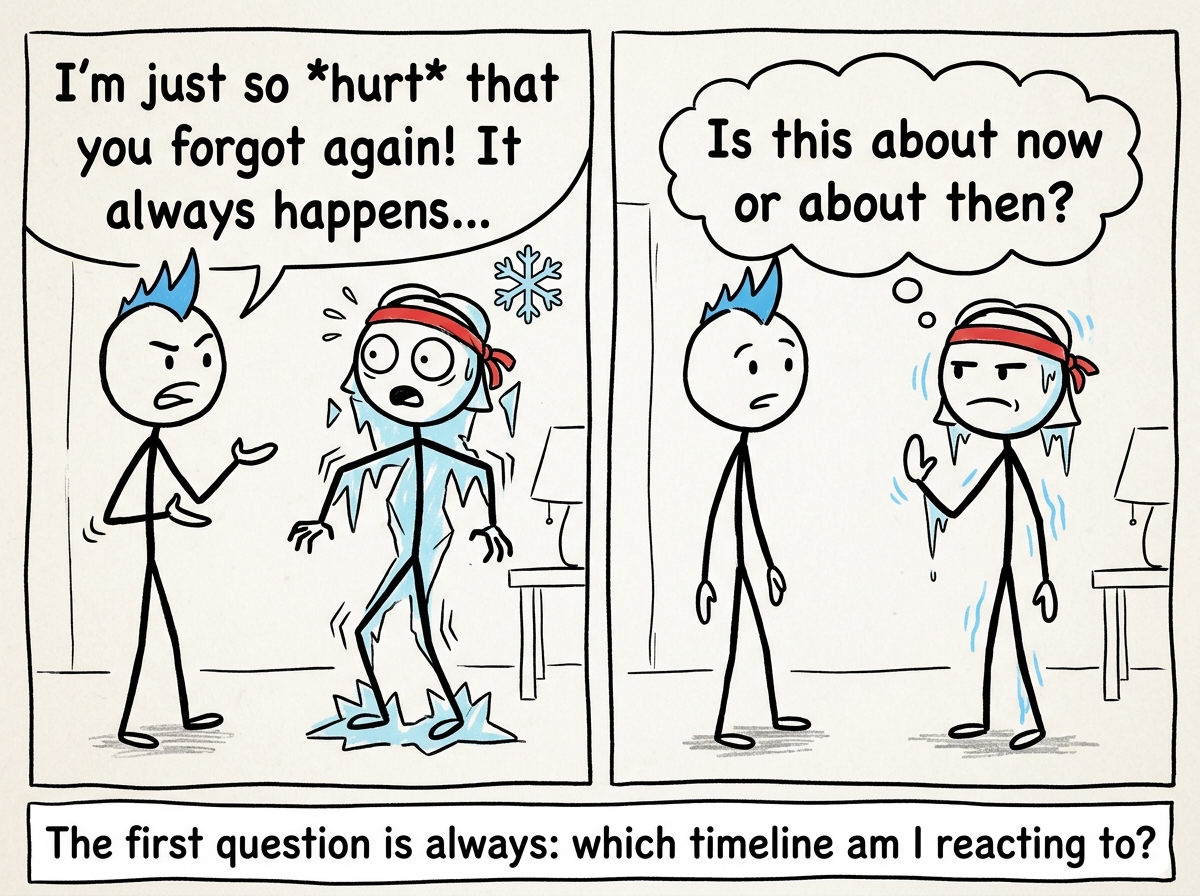
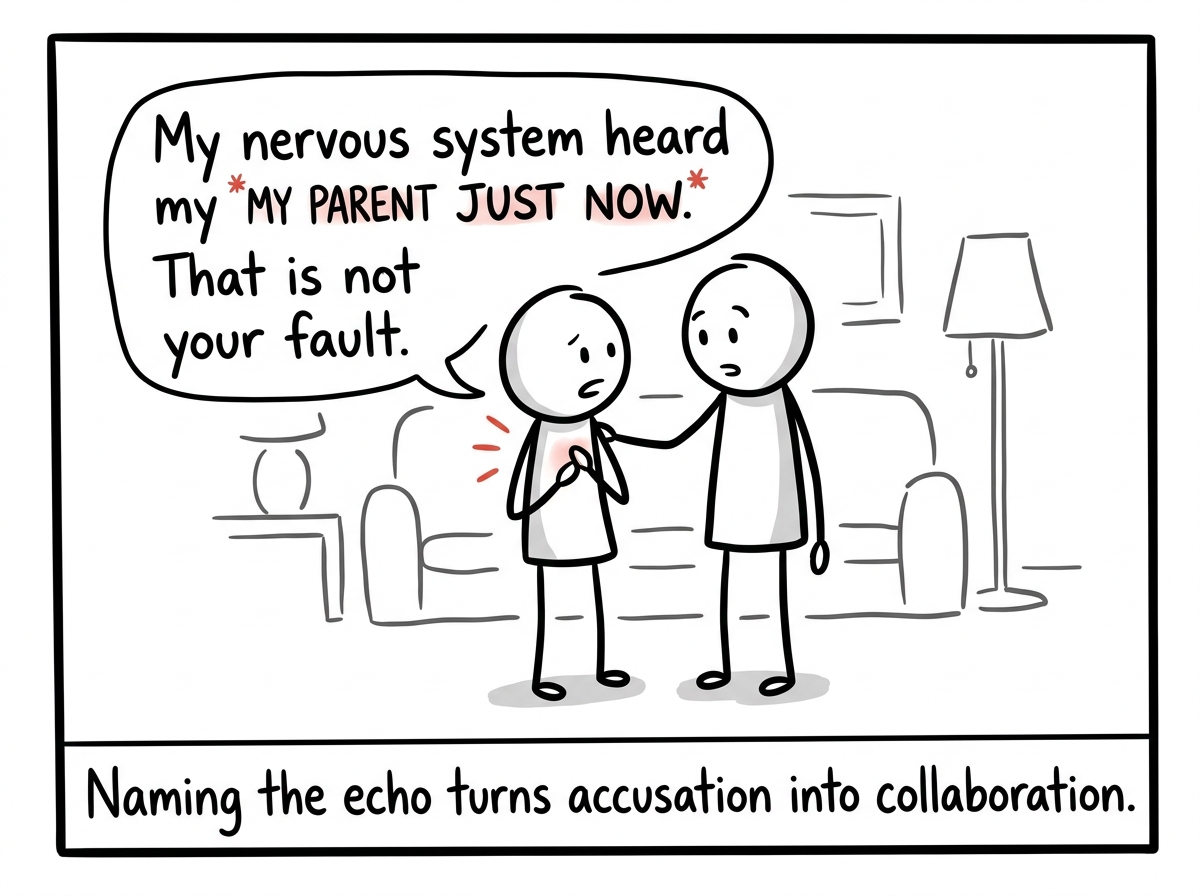
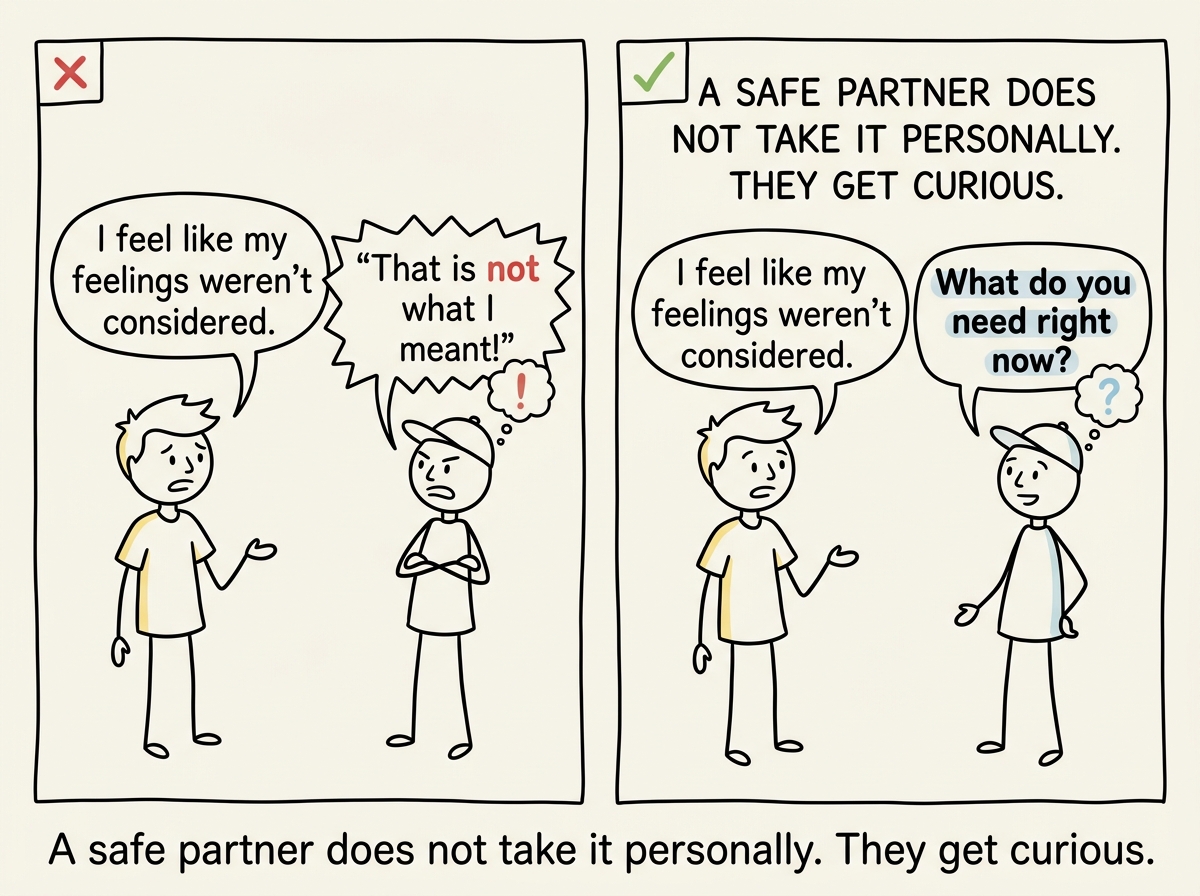
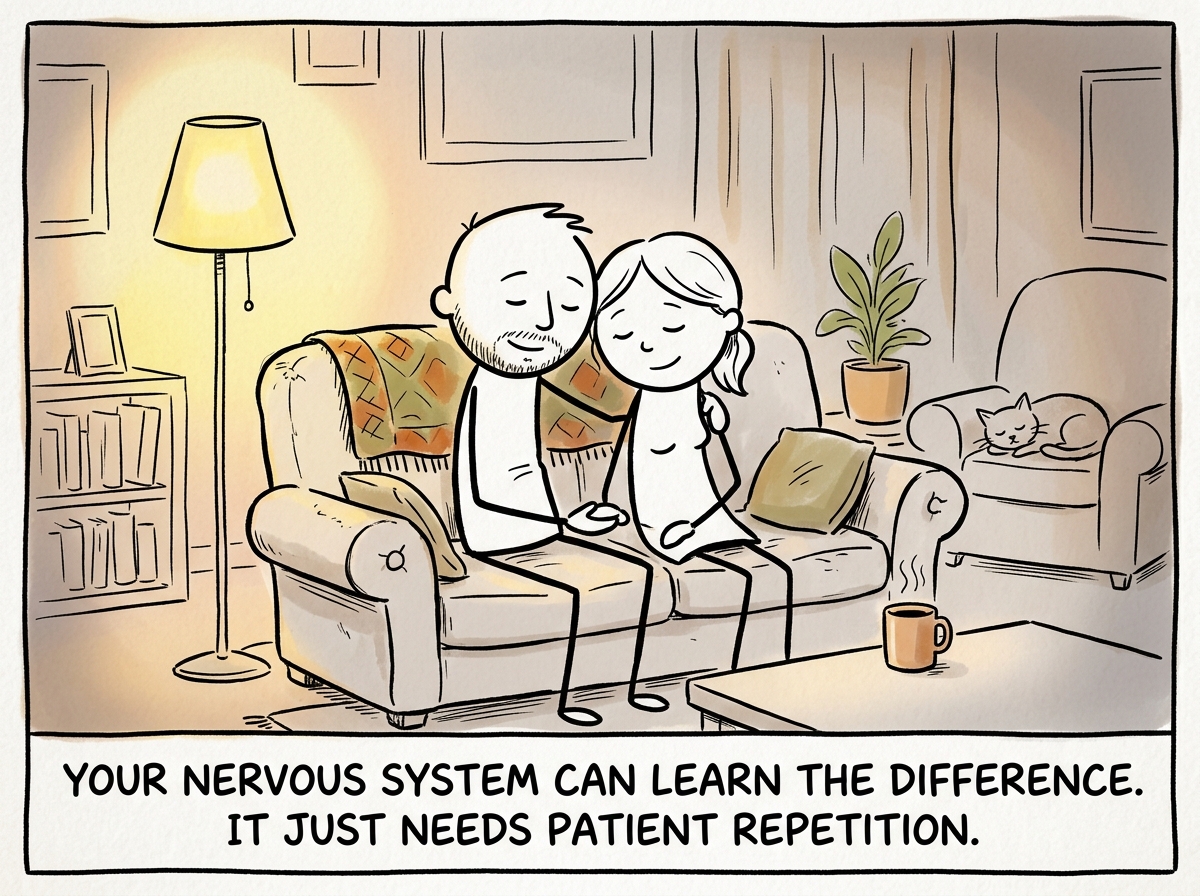
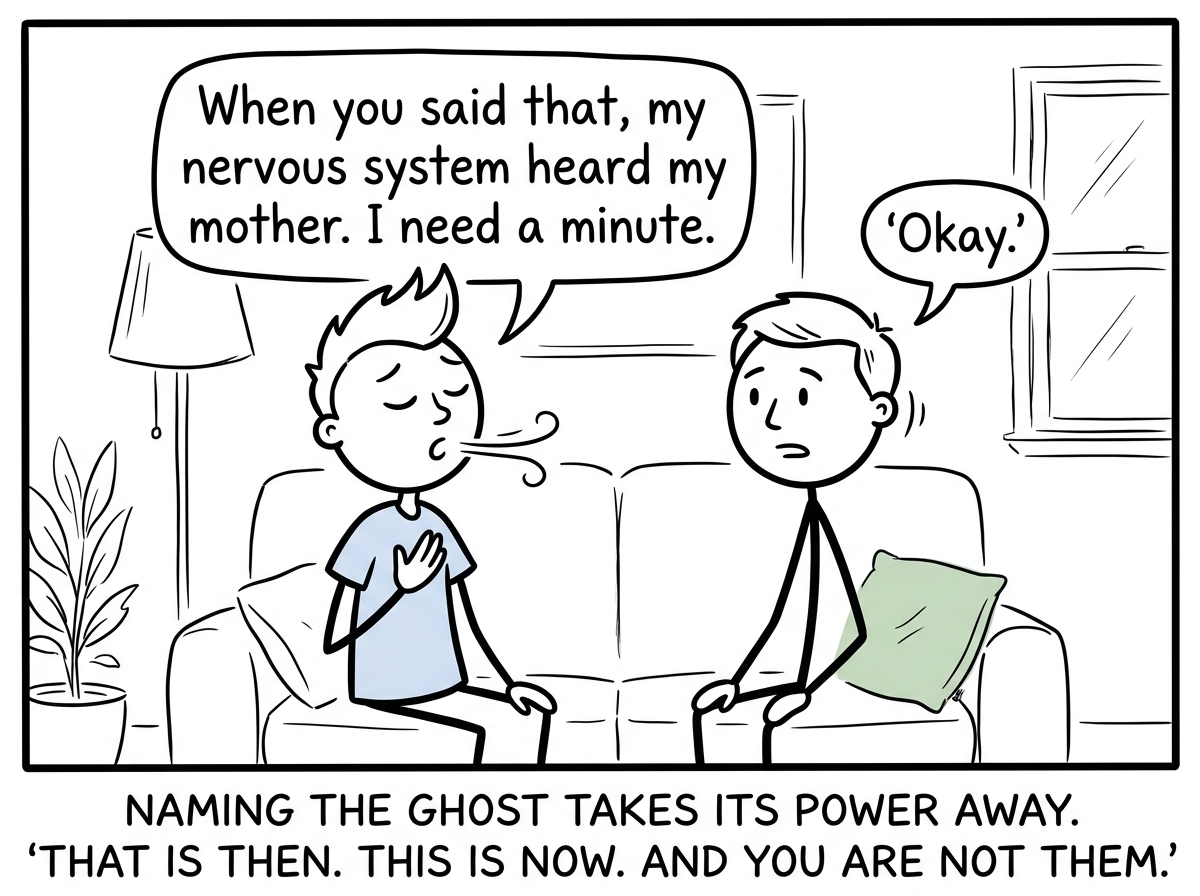
Your partner says 'we need to talk' and your vision tunnels. Your partner sighs while doing the dishes and you are suddenly calculating how to make yourself invisible. Your partner raises an eyebrow during a disagreement and you feel the same full-body terror you felt at eleven years old. They have done nothing wrong. But your nervous system does not know that, because their gesture just matched a pattern filed under 'danger' twenty years ago. Re-traumatization in relationships often happens through these small, accidental echoes. A tone, a phrase, a facial expression, a silence -- any of these can be close enough to the original wound that your nervous system cannot tell the difference between then and now. The amygdala, your brain's threat detection system, operates on pattern matching, not logic. It does not assess whether the current person is safe. It assesses whether the current pattern matches a stored threat. When it matches, the alarm fires, and you react with the survival response you developed as a child -- fight, flight, freeze, or fawn. The path forward is not to blame your partner for your triggers or to blame yourself for having them. It is to build a shared language around what is happening. 'When you said that, my nervous system heard my mother.' This kind of naming takes the charge out of the trigger and moves the conversation from accusation to collaboration. Over time, your nervous system can learn to differentiate -- to recognize that this person's sigh is not that person's sigh. But that learning only happens in an environment of patience, safety, and mutual understanding.
Key Takeaway
Your nervous system does not know the difference between your partner's tone and your parent's -- but with awareness, you can teach it.