Same Partner, Different Face
A person realizes they keep dating the same emotionally unavailable person over and over -- different names, same pattern -- because their abandonment schema picks the partners.
Explanation
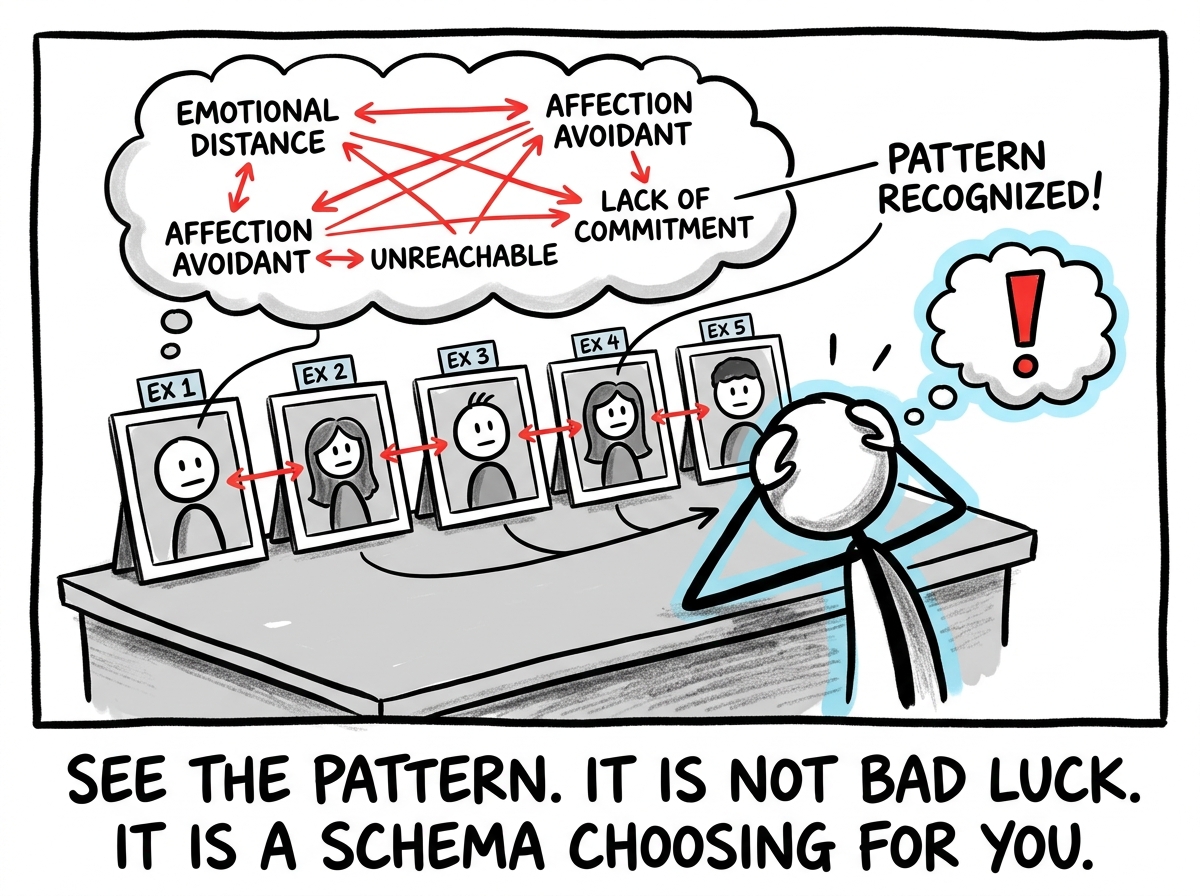
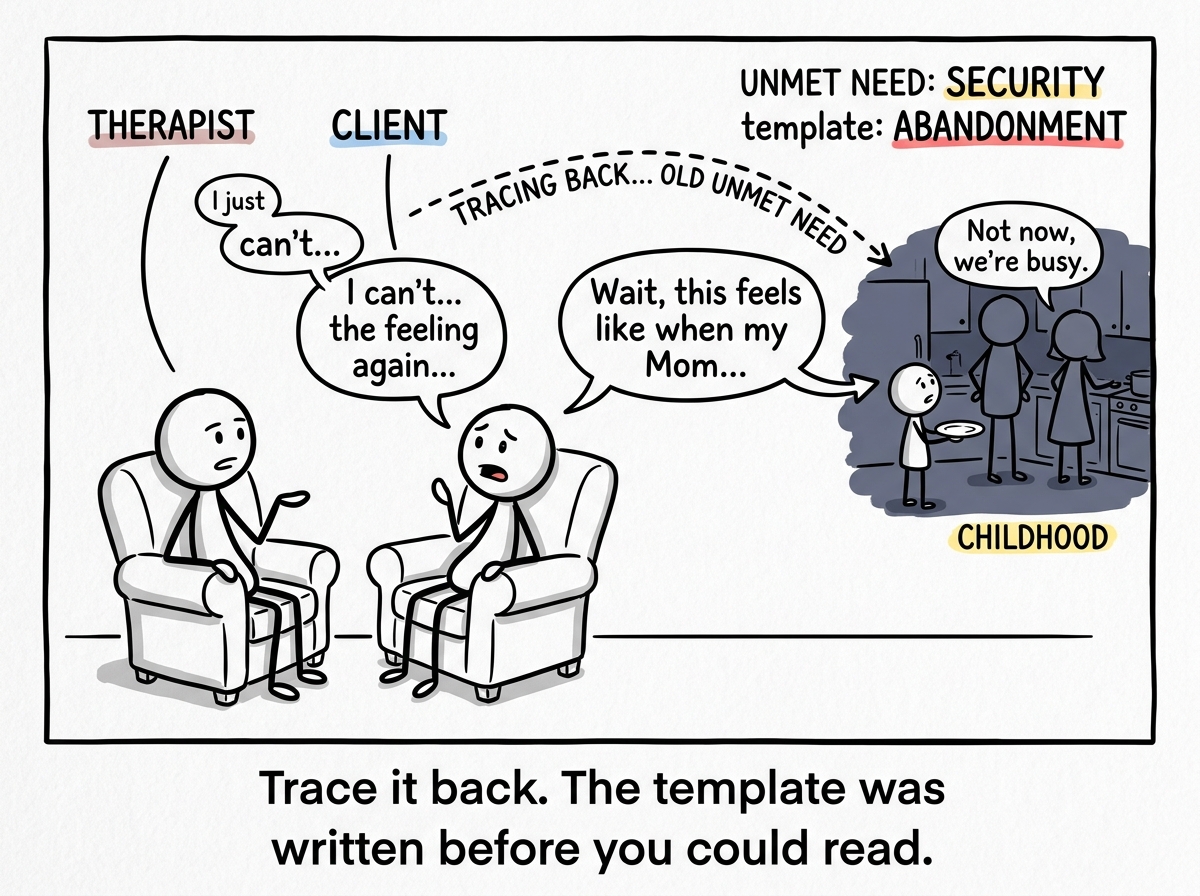
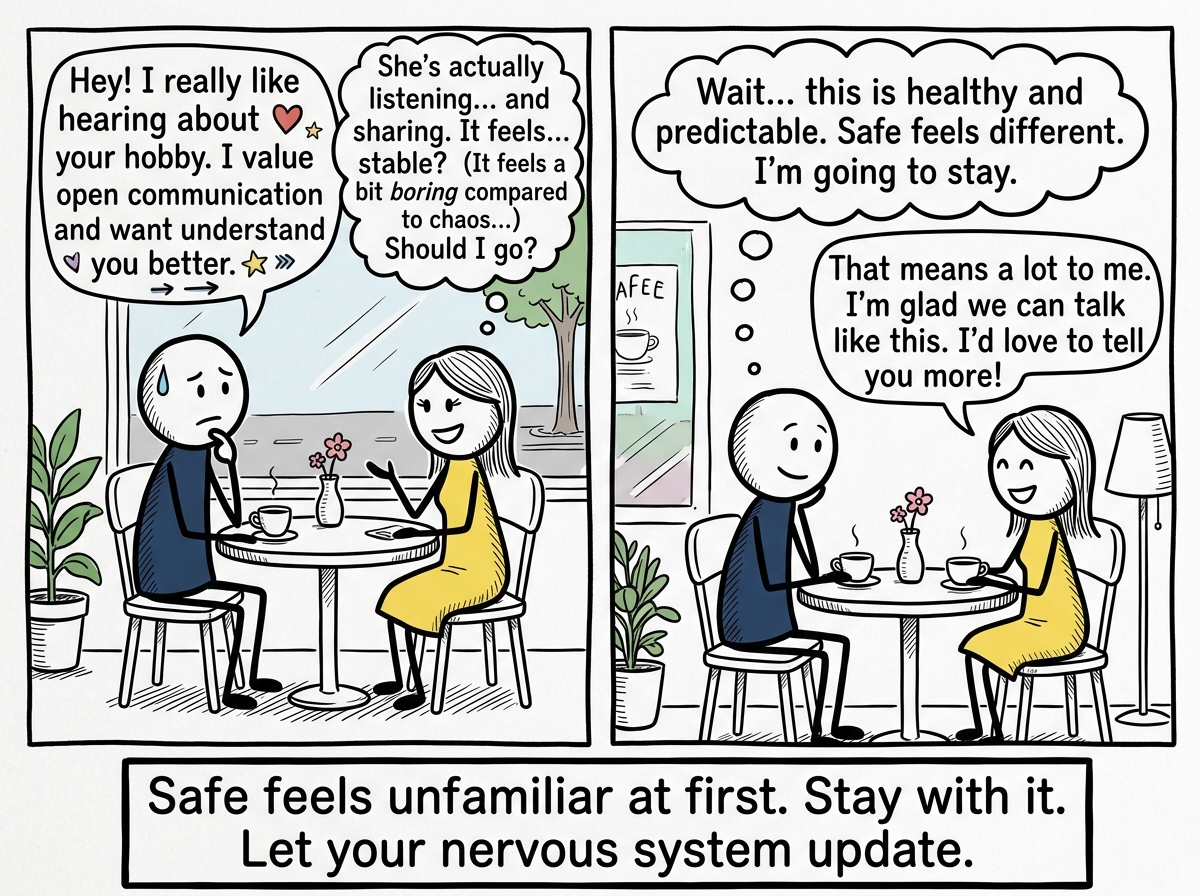
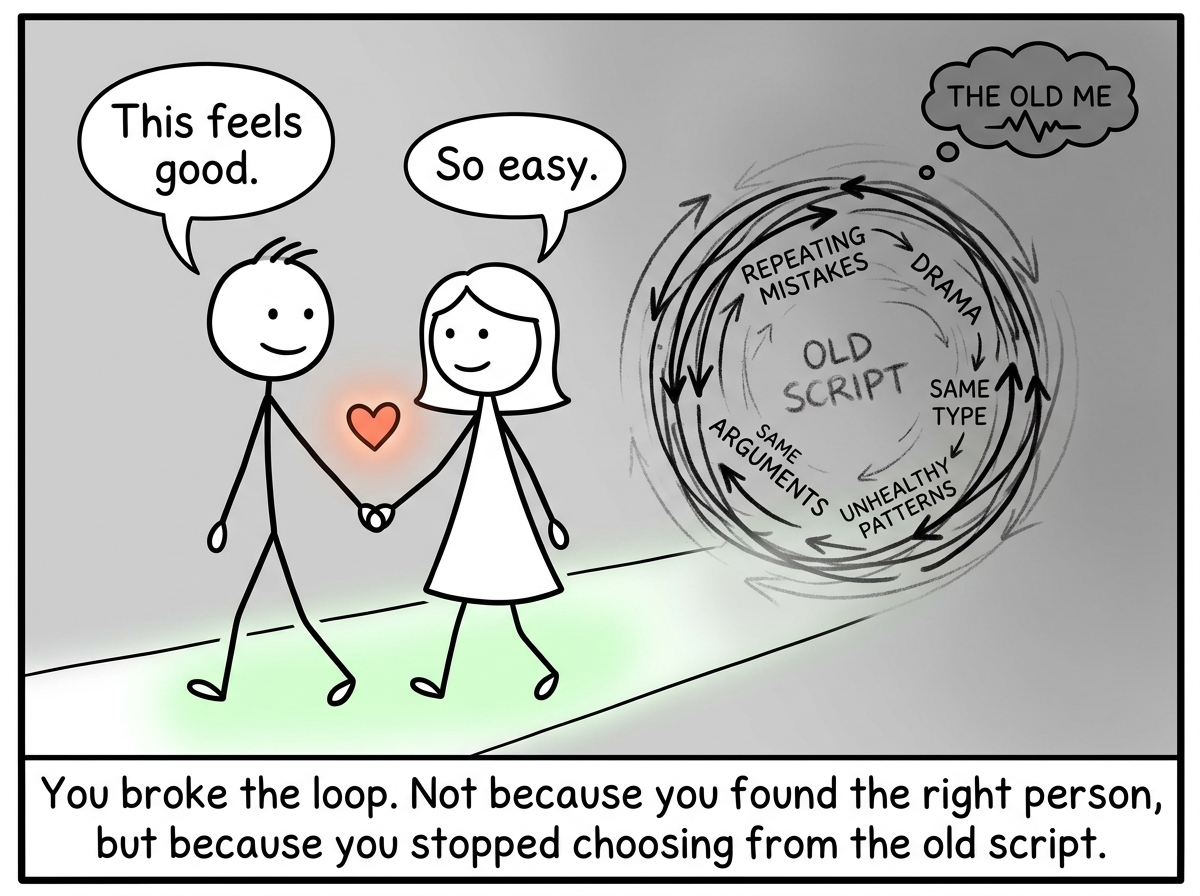
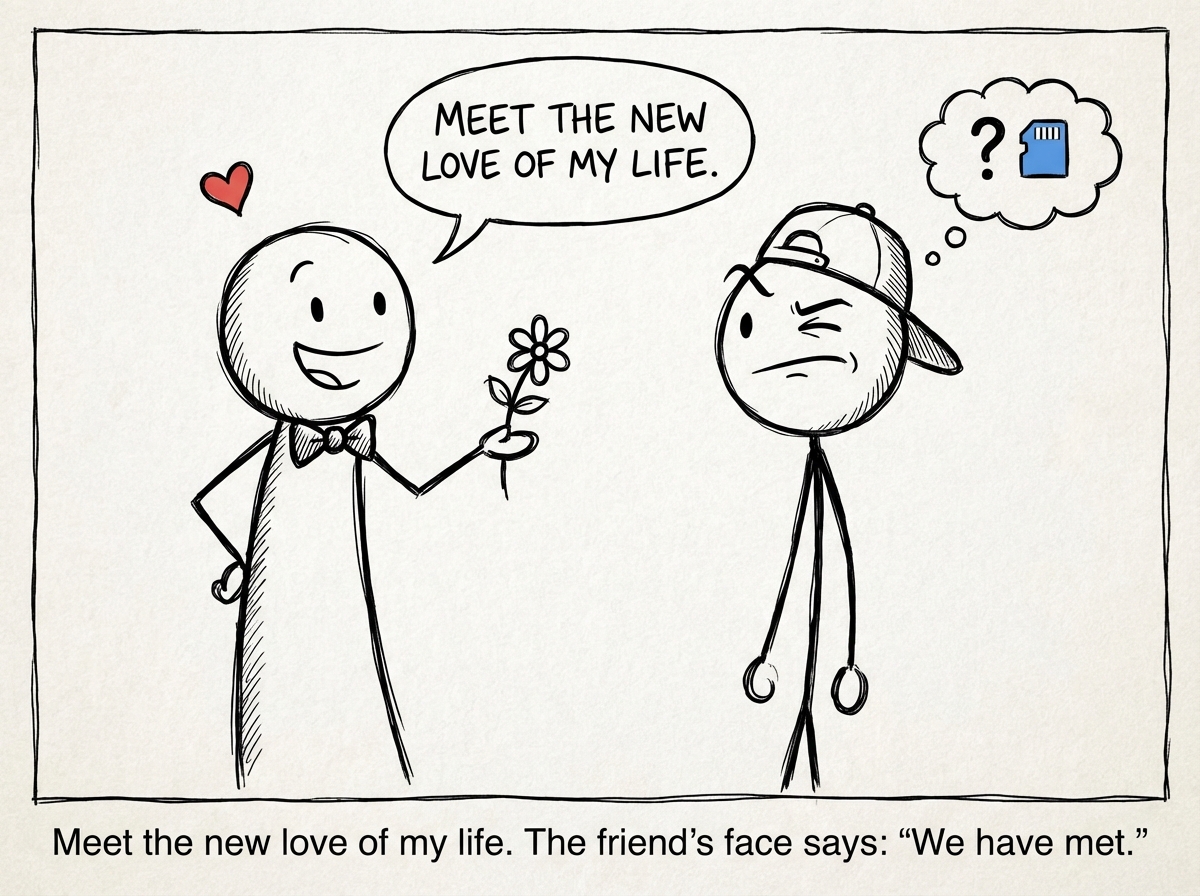
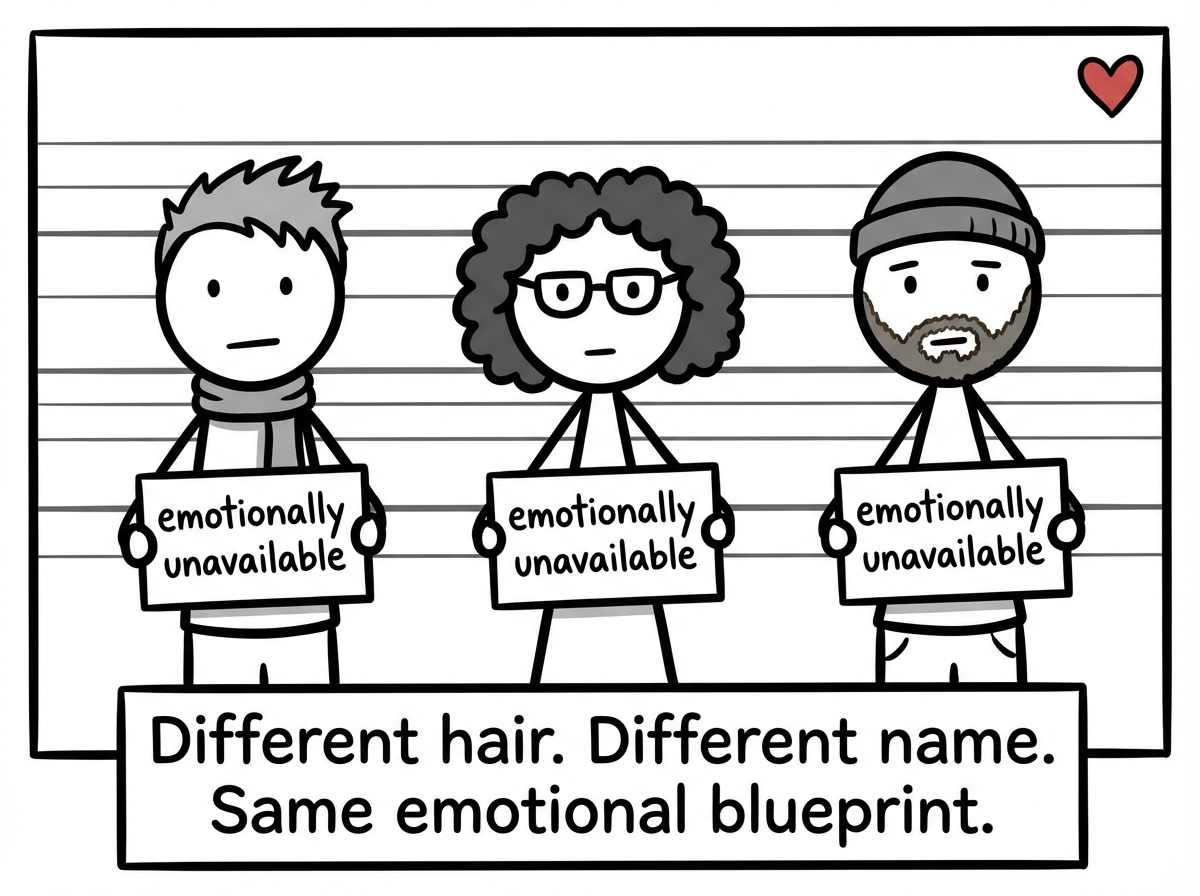
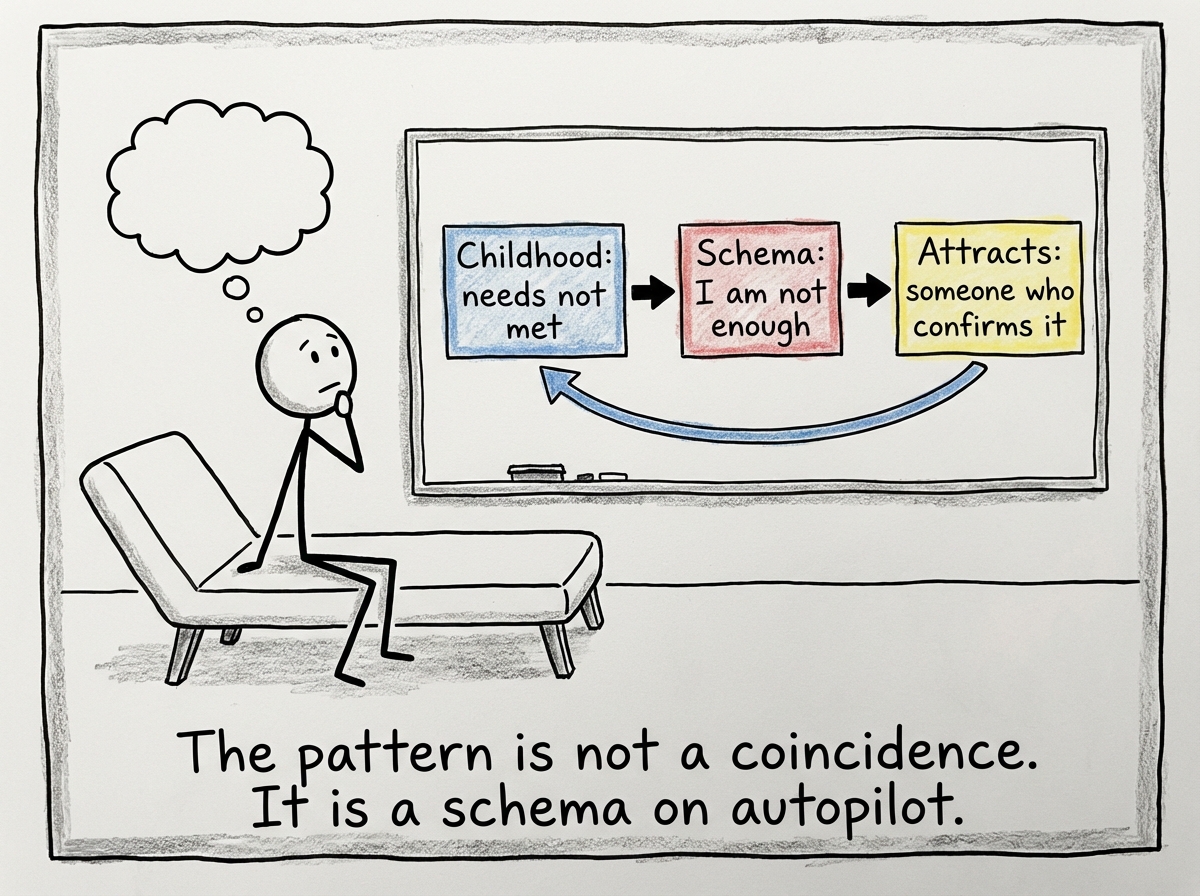
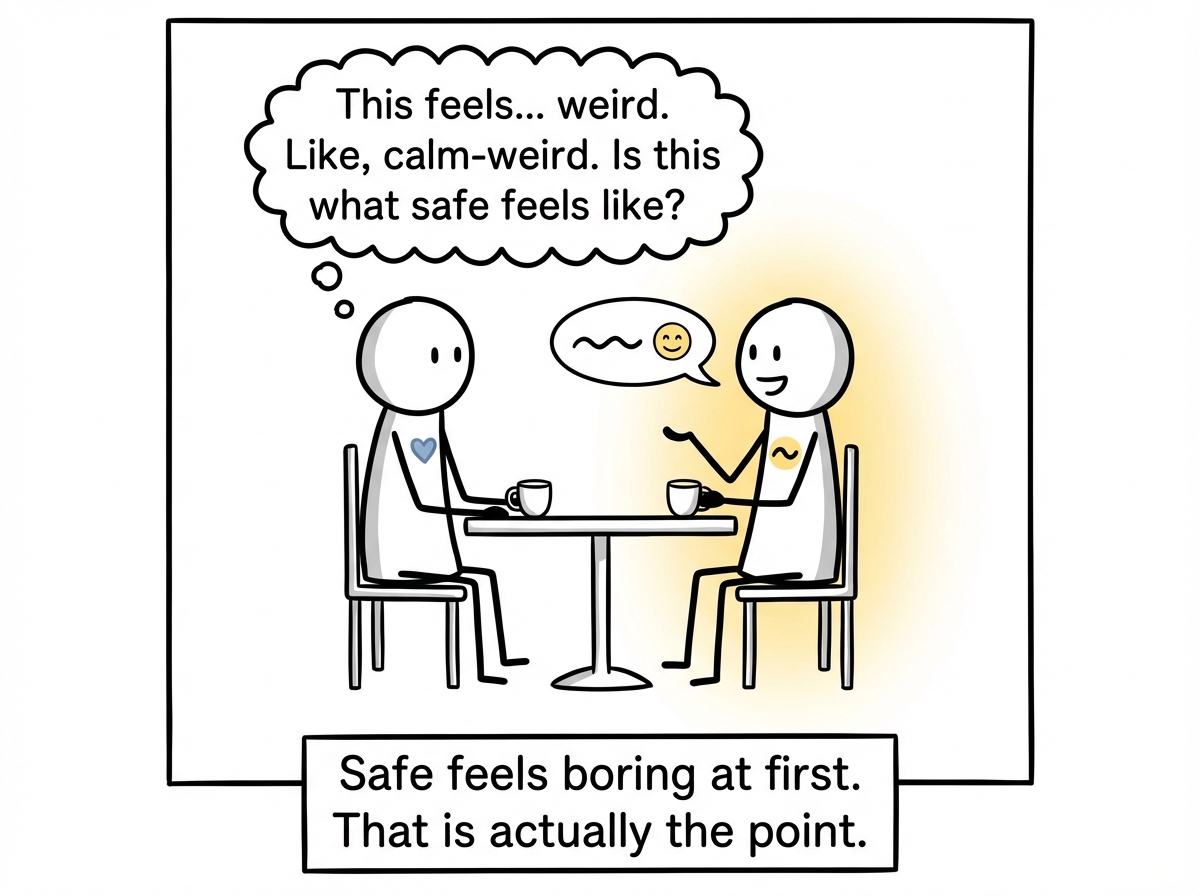
You are telling your friend about your new partner and they interrupt you to say: 'This sounds exactly like your ex. And the one before that.' You want to argue, but you look at the pattern and the evidence is damning. Different hair, different name, same emotional unavailability. Same initial intensity followed by the same slow withdrawal. Same you, bending yourself into impossible shapes trying to earn love from someone who is fundamentally unable to give it the way you need it. This is not bad luck. This is a schema running your love life. In schema therapy, Jeffrey Young identified 18 early maladaptive schemas -- deep patterns formed in childhood that act as invisible filters on your adult life. An abandonment schema, for example, does not just make you afraid of being left. It actually draws you toward people who are likely to leave, because your nervous system is calibrated to the familiar, not the healthy. Emotional deprivation schemas attract you to partners who cannot meet your needs, because unmet needs feel like home. The schema creates a self-fulfilling prophecy: you choose someone who confirms the belief, the belief gets stronger, and you choose the same type again. Schema therapy breaks this cycle by helping you see the pattern clearly, trace it back to its childhood origin, and then -- crucially -- practice making different choices, even when they feel unfamiliar and uncomfortable. The partner who texts back promptly and communicates openly might feel boring at first. That 'boring' feeling is actually safety. Your schema just does not recognize it yet.
Key Takeaway
You are not unlucky in love -- your childhood schema is choosing partners who confirm what you already believe about yourself.