The Compliment That Does Not Compute
A person receives a genuine compliment but their defectiveness schema immediately rejects it, twists it, and files it under 'things people say to be polite.'

Jeffrey Young's framework for understanding the deep, repeating life patterns (schemas) that drive your emotional reactions.
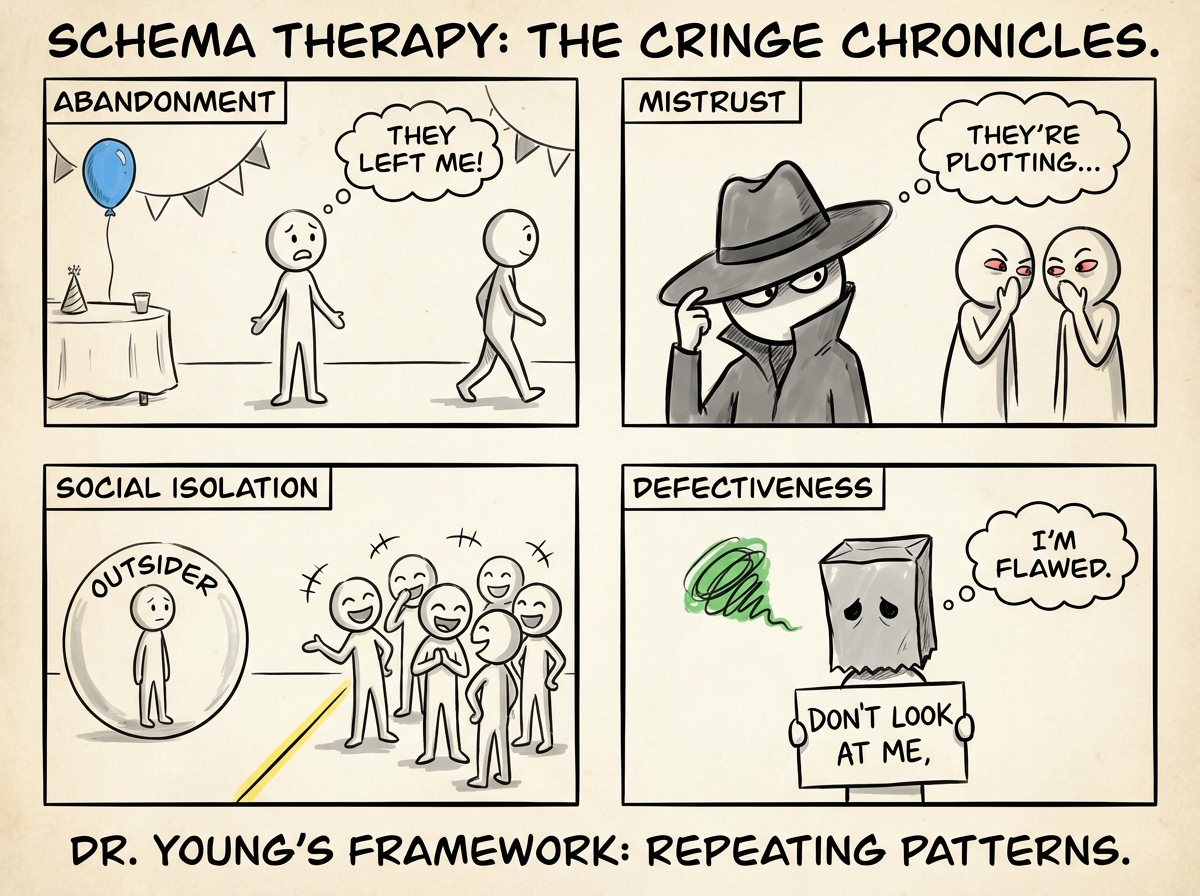
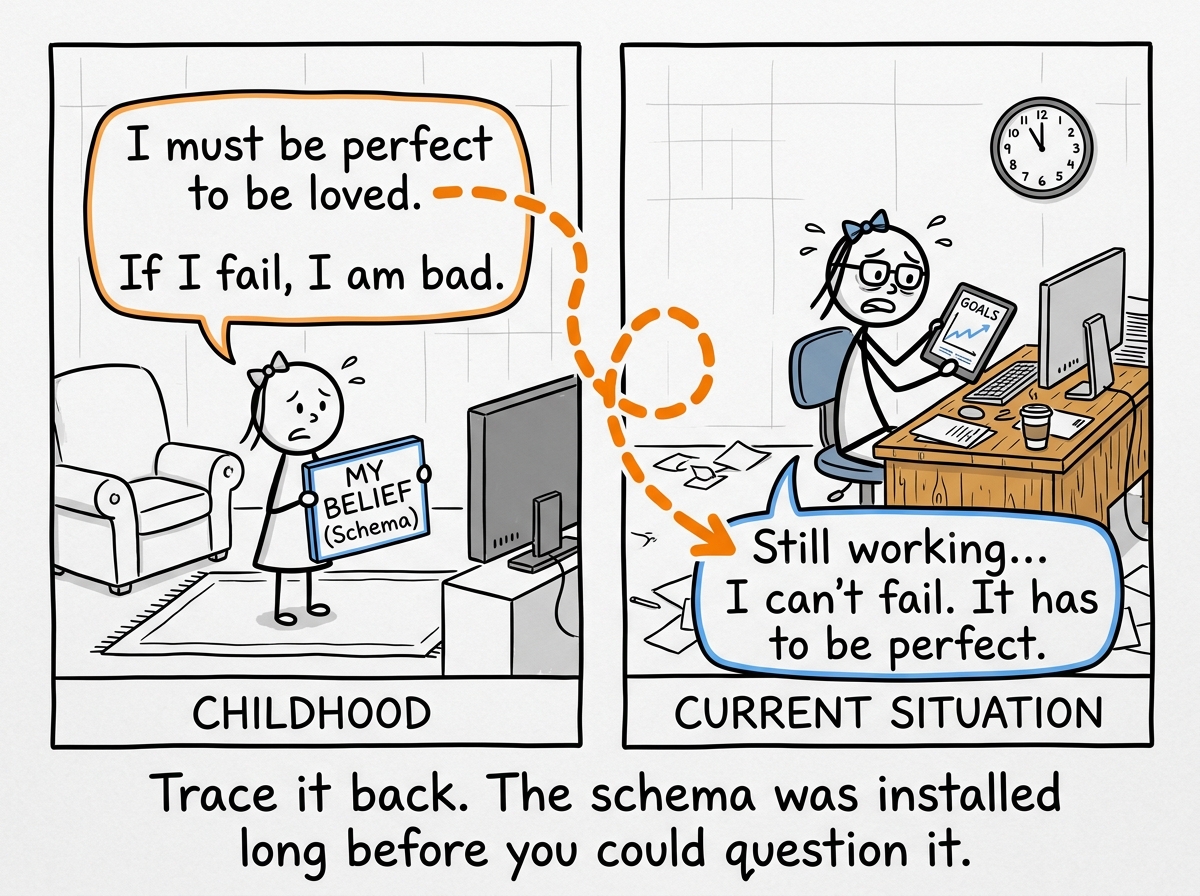
Schema therapy, developed by psychologist Jeffrey Young in the 1990s, was born from a simple observation: some people do not respond well to standard cognitive behavioral therapy because their problems are not just about distorted thoughts in the moment -- they are about deep, pervasive patterns that formed in childhood and have been running their lives ever since. Young called these patterns 'early maladaptive schemas.' They are like emotional blueprints that shape how you interpret every situation, every relationship, every setback. There are 18 identified schemas organized into five domains, covering unmet needs like safety, connection, autonomy, self-worth, and boundaries. If you grew up with emotionally unavailable parents, you might carry an 'emotional deprivation' schema -- a deep belief that your emotional needs will never be met, which causes you to either withdraw from relationships or become desperately clingy. If you were harshly criticized, you might carry a 'defectiveness' schema -- a core belief that you are fundamentally flawed and unlovable. The insidious thing about schemas is that they are self-reinforcing. You unconsciously create situations that confirm what you already believe. Someone with an abandonment schema might push partners away and then say 'see, everyone leaves.' Schema therapy helps you identify these patterns, understand where they came from, connect with the childhood experiences that created them, and gradually build healthier ways of getting your needs met. It is not about quick fixes -- it is about rewriting the operating system you have been running since you were five.
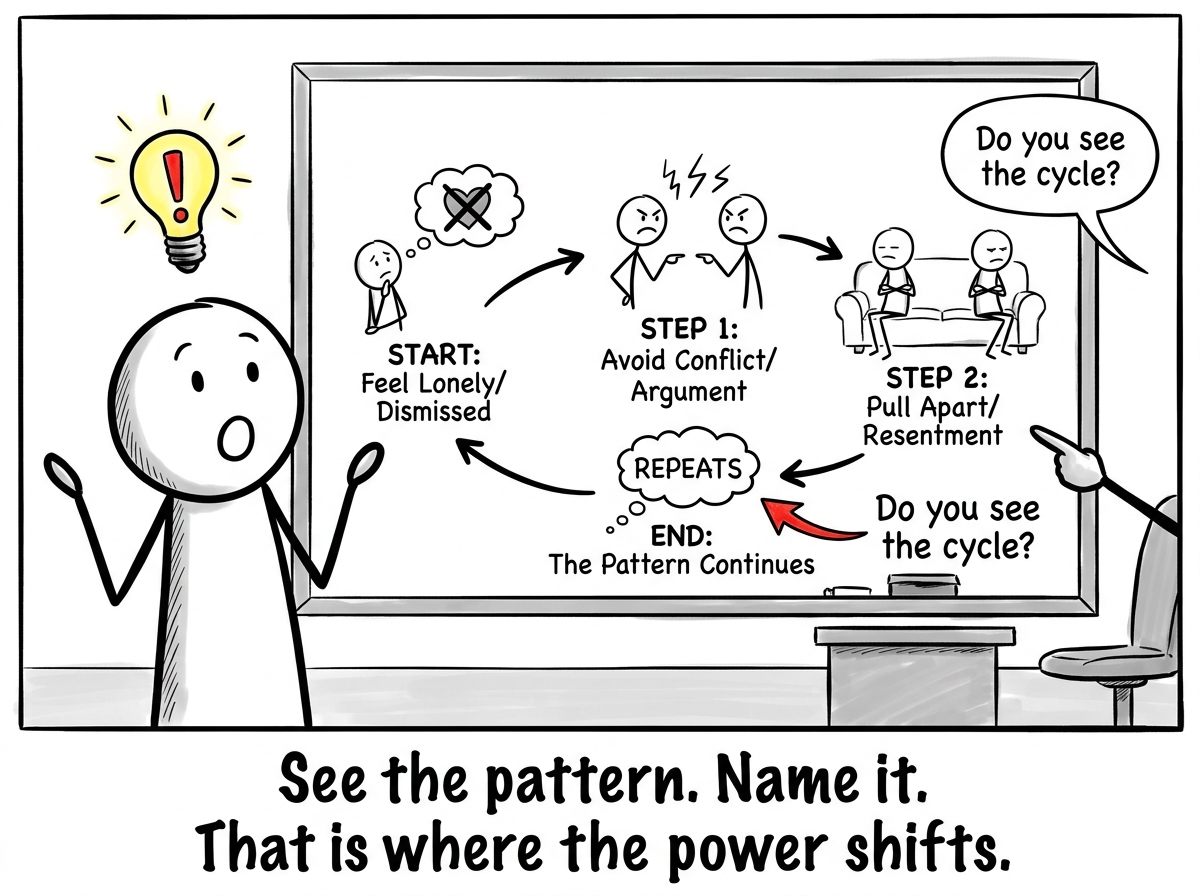
Once you can see the pattern and name the schema, you can start making choices based on what you need now -- not what you learned to expect as a child.
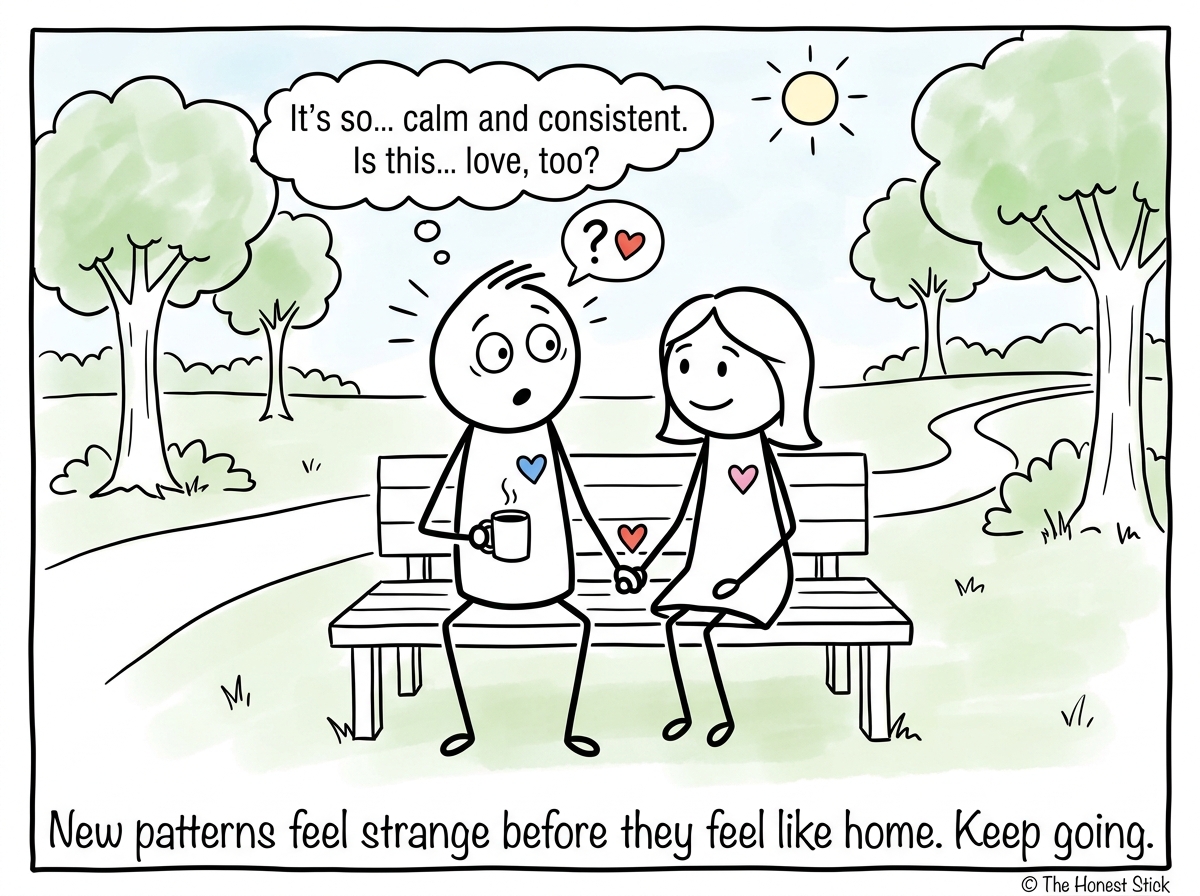
A person receives a genuine compliment but their defectiveness schema immediately rejects it, twists it, and files it under 'things people say to be polite.'
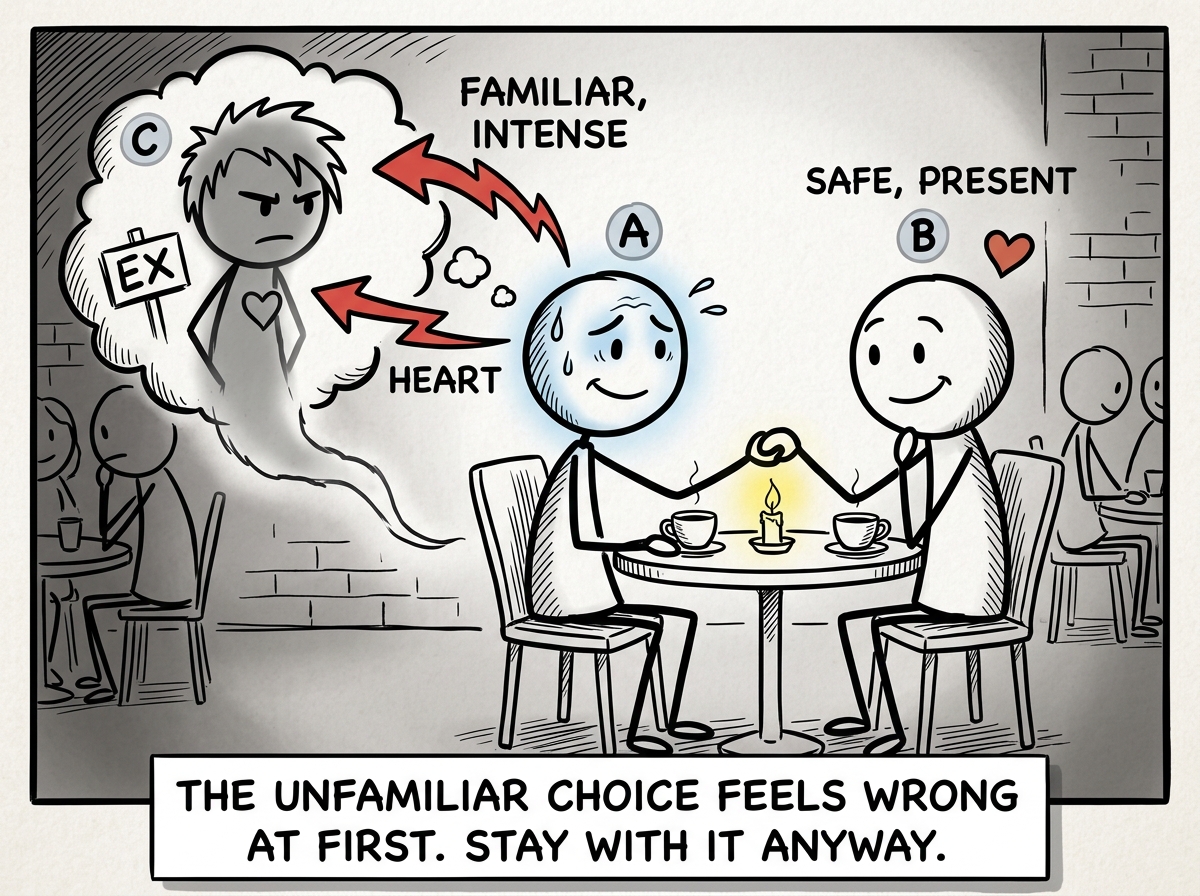
A person realizes they keep dating the same emotionally unavailable person over and over -- different names, same pattern -- because their abandonment schema picks the partners.