
The Accountability Dodge
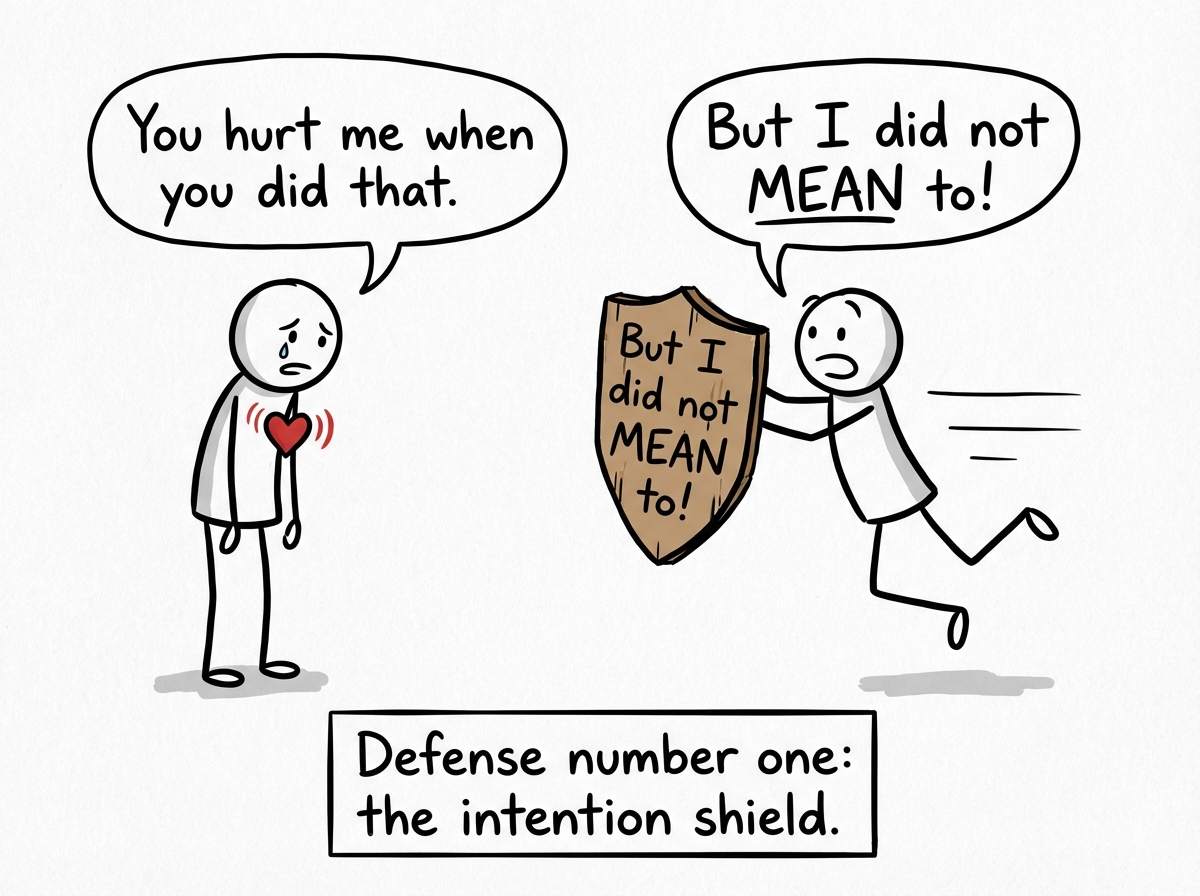
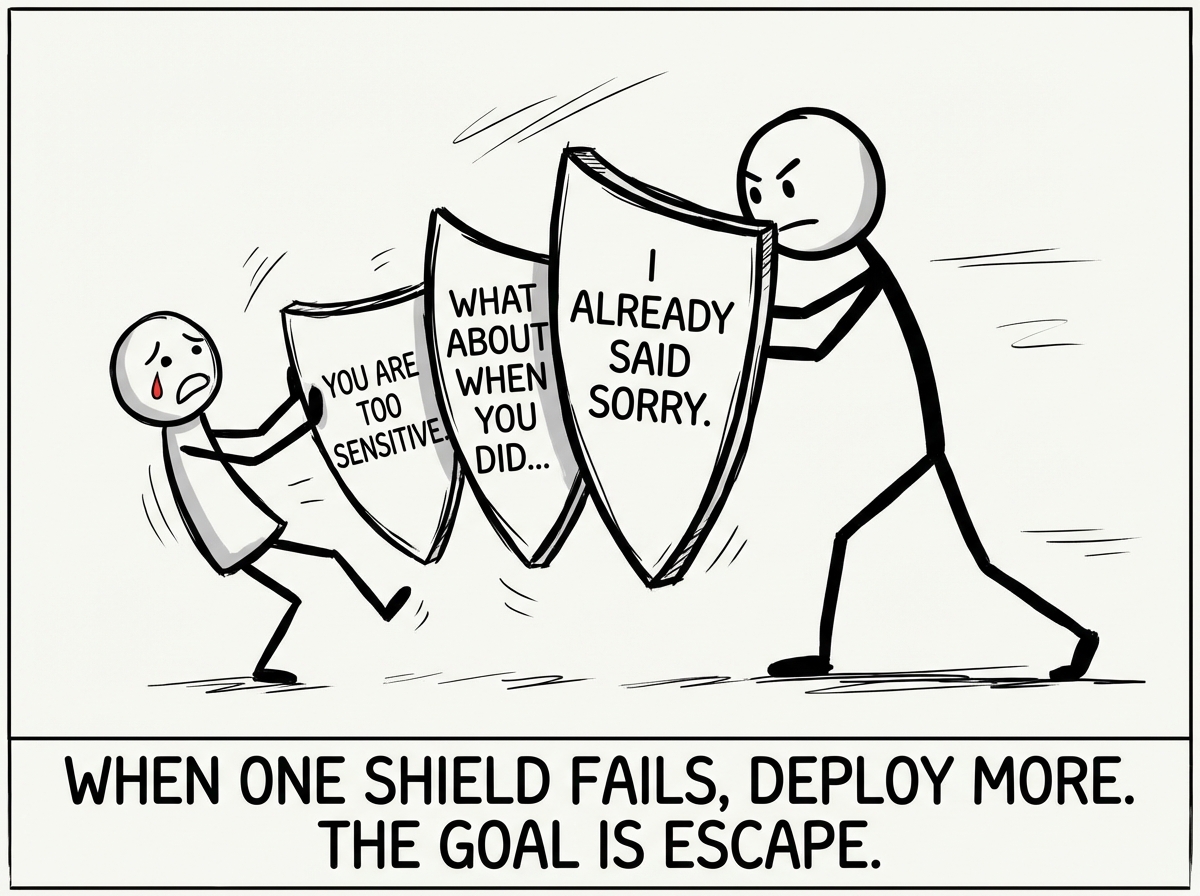
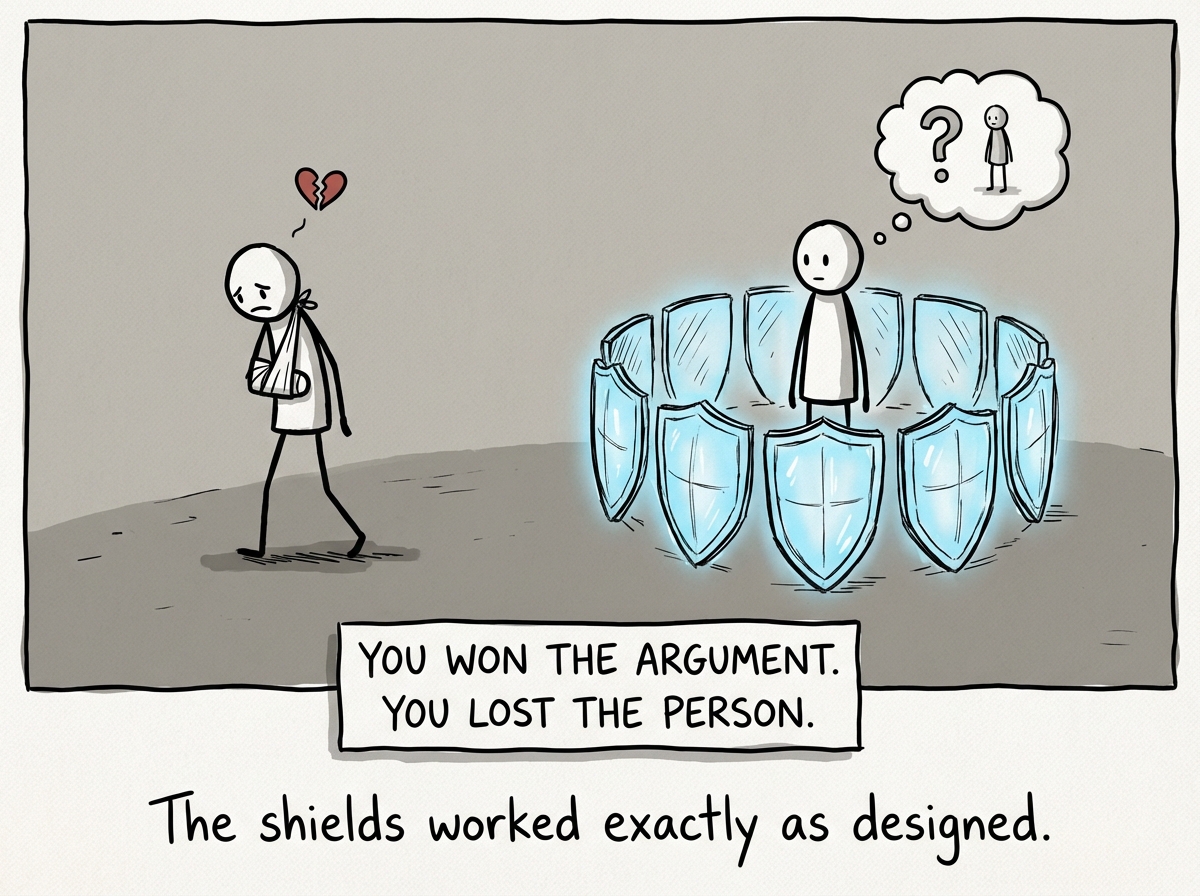
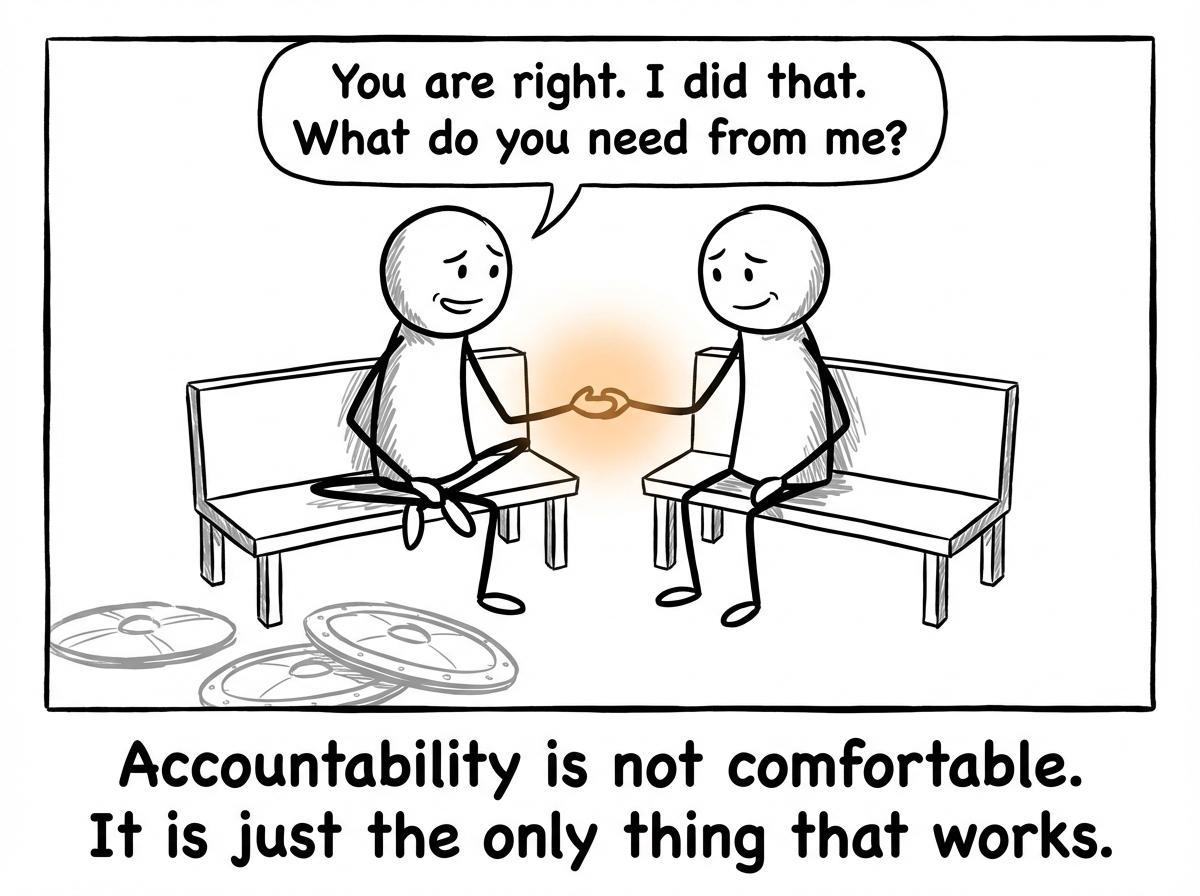
A partner is confronted with the impact of their behavior and deploys every classic deflection -- intentions, counter-attacks, and the non-apology -- before finally seeing what accountability actually looks like.
Explanation
When someone tells you that you hurt them, the shame system activates and the brain scrambles for an exit. The most common exits are the intention defense ('But I did not mean to!'), the counter-attack ('What about when YOU did...'), the minimizer ('You are being too sensitive'), and the non-apology ('I am sorry you feel that way'). Each one protects the person from the discomfort of being wrong -- but at the cost of the relationship. Gottman's research shows that the ability to accept influence and take responsibility is one of the strongest predictors of whether a relationship survives conflict. The final panel shows what accountability actually looks like: sitting with the discomfort, owning the impact regardless of intent, and asking what repair looks like. It is simple. It is also one of the hardest things a person can do.
Key Takeaway
Every deflection protects you from discomfort and costs you the relationship. Accountability is choosing the discomfort.