The Accountability Dodge
A partner is confronted with the impact of their behavior and deploys every classic deflection -- intentions, counter-attacks, and the non-apology -- before finally seeing what accountability actually looks like.

The difference between saying 'I am sorry you feel that way' and 'I see what I did and I am going to change it.'
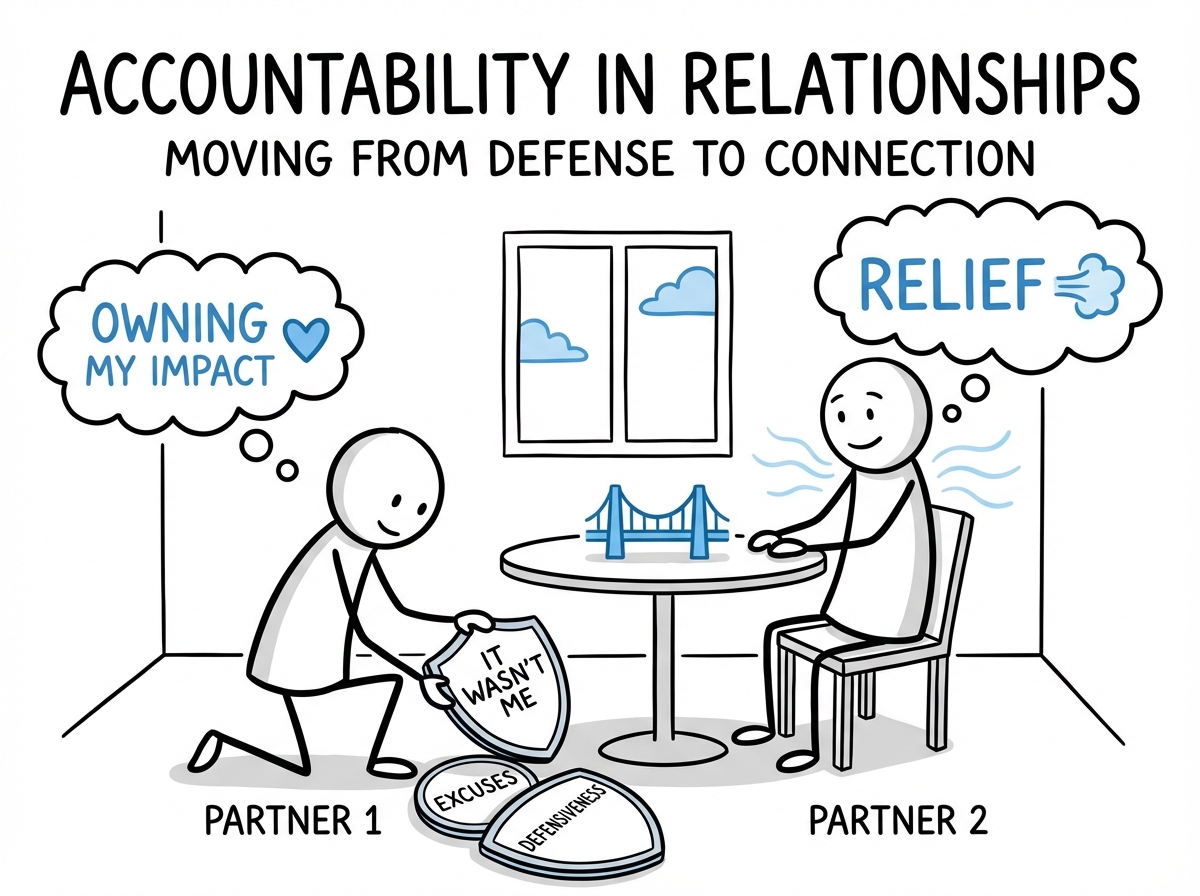
Accountability in relationships is the willingness to own your impact -- not just your intentions. It means saying 'I did that, it hurt you, and I am going to do something different' without immediately deflecting, minimizing, or turning the conversation into a debate about who was worse. Most people think they are accountable because they apologize. But apology without behavioral change is just performance. Researcher John Gottman found that the ability to accept influence from a partner -- which requires accountability -- is one of the strongest predictors of relationship success. Brené Brown's work on vulnerability shows that accountability requires tolerating the discomfort of being wrong without collapsing into shame. The reason accountability is so hard is that it activates the shame system. When someone says 'you hurt me,' the brain often hears 'you are bad' -- and then the defenses kick in: deflection, counter-attack, victim-positioning, or the classic non-apology. Real accountability is not about being perfect. It is about being willing to look at yourself honestly, tolerate the discomfort of having caused harm, and take concrete steps to repair. It is one of the most attractive and trust-building qualities a person can develop -- and one of the rarest.
Accountability is not about being perfect. It is about being willing to say 'I did that, it hurt you, and here is what I am going to do differently' -- and then actually doing it.
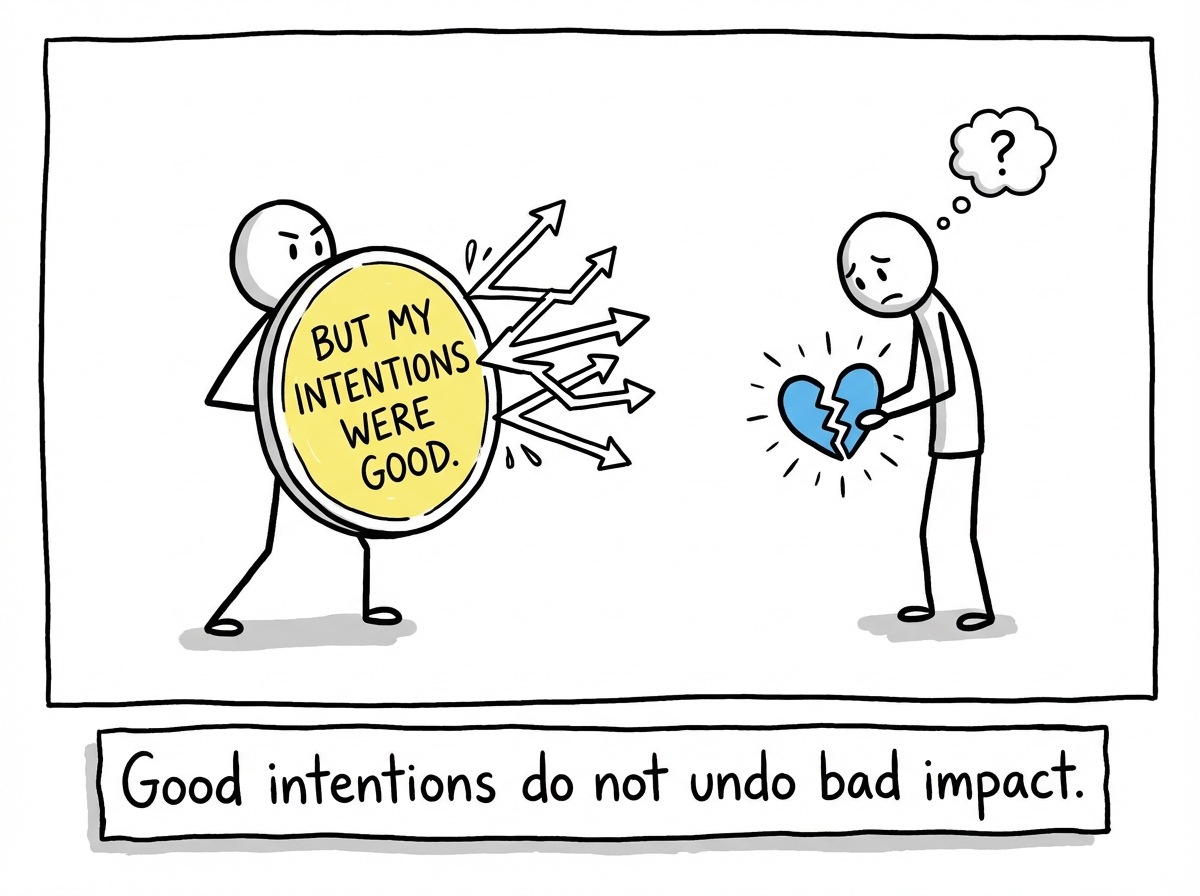
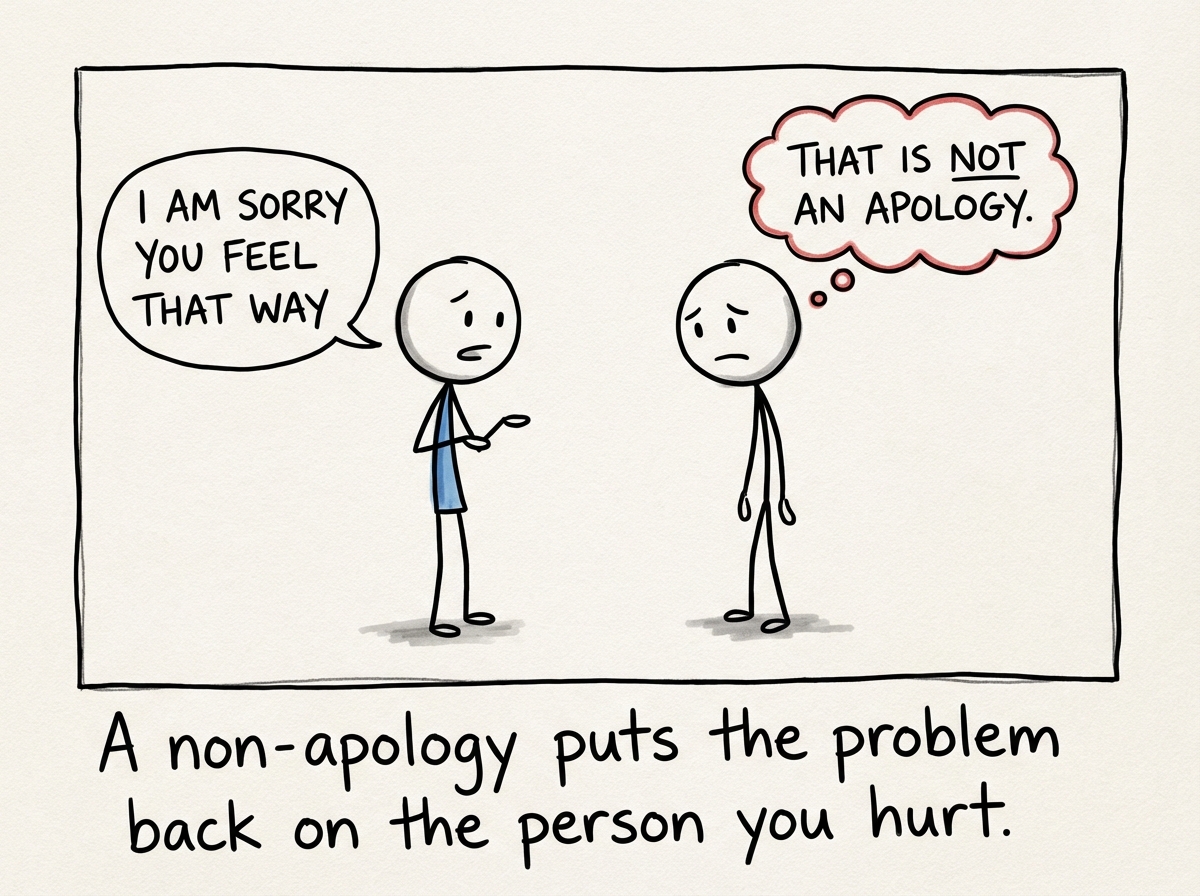
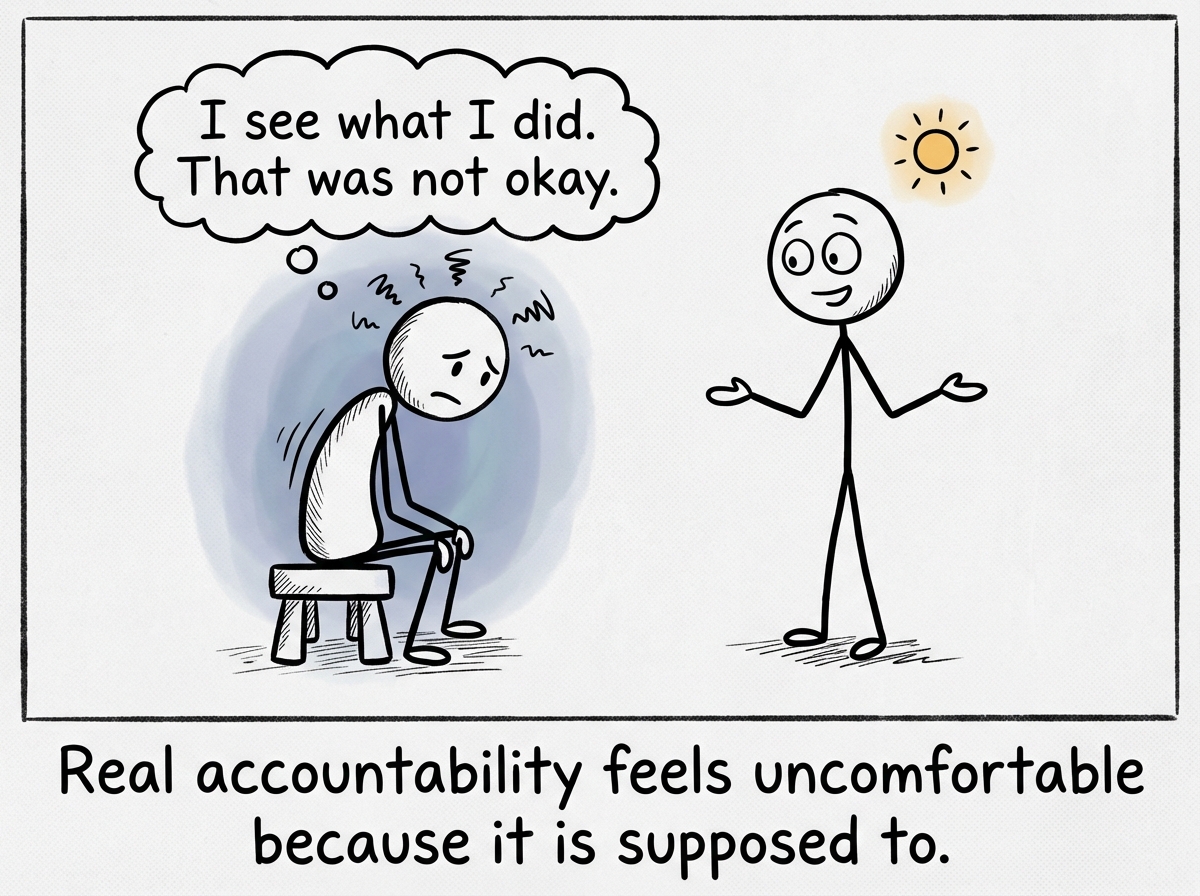
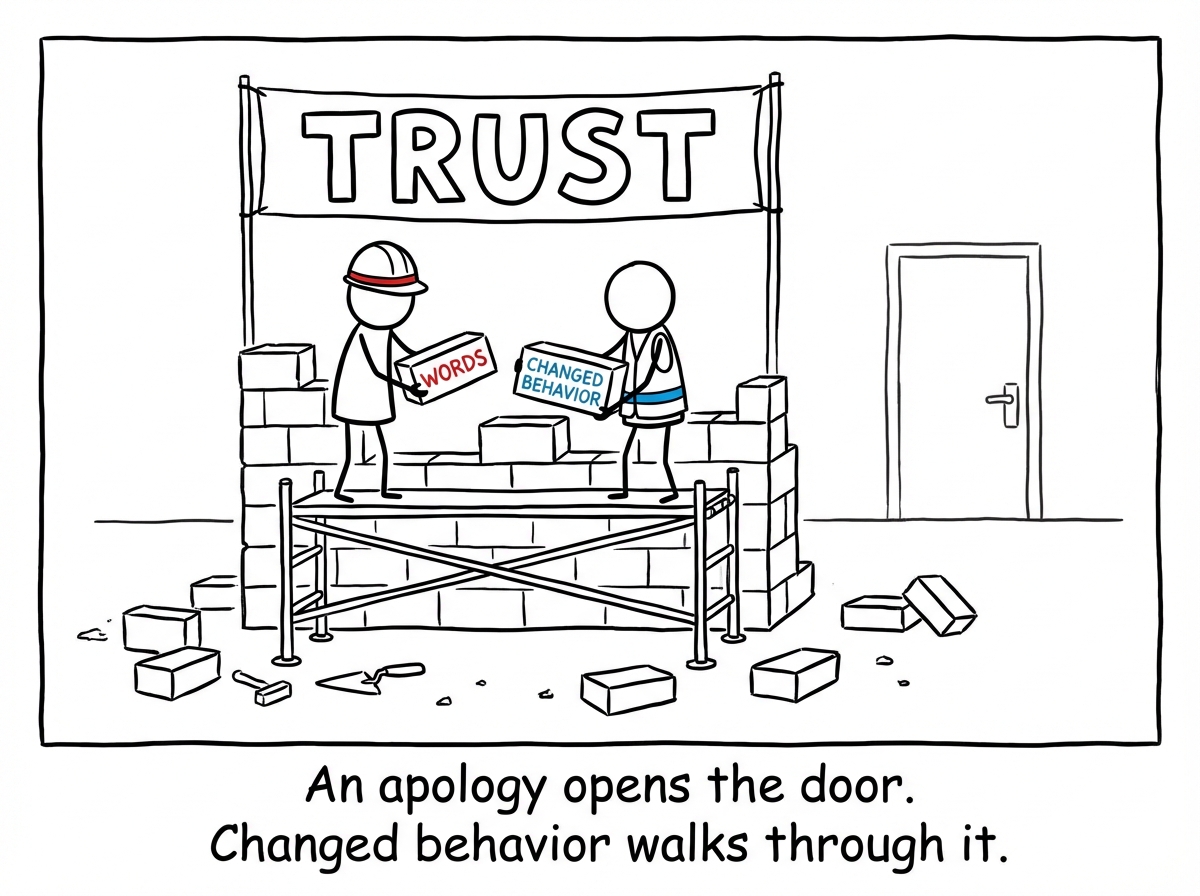
A partner is confronted with the impact of their behavior and deploys every classic deflection -- intentions, counter-attacks, and the non-apology -- before finally seeing what accountability actually looks like.
A tour through the most common fake apologies -- the deflection, the excuse, the weaponized sorry -- before arriving at what a real apology actually sounds like.