
The Apology That Isn't
A tour through the most common fake apologies -- the deflection, the excuse, the weaponized sorry -- before arriving at what a real apology actually sounds like.
Explanation
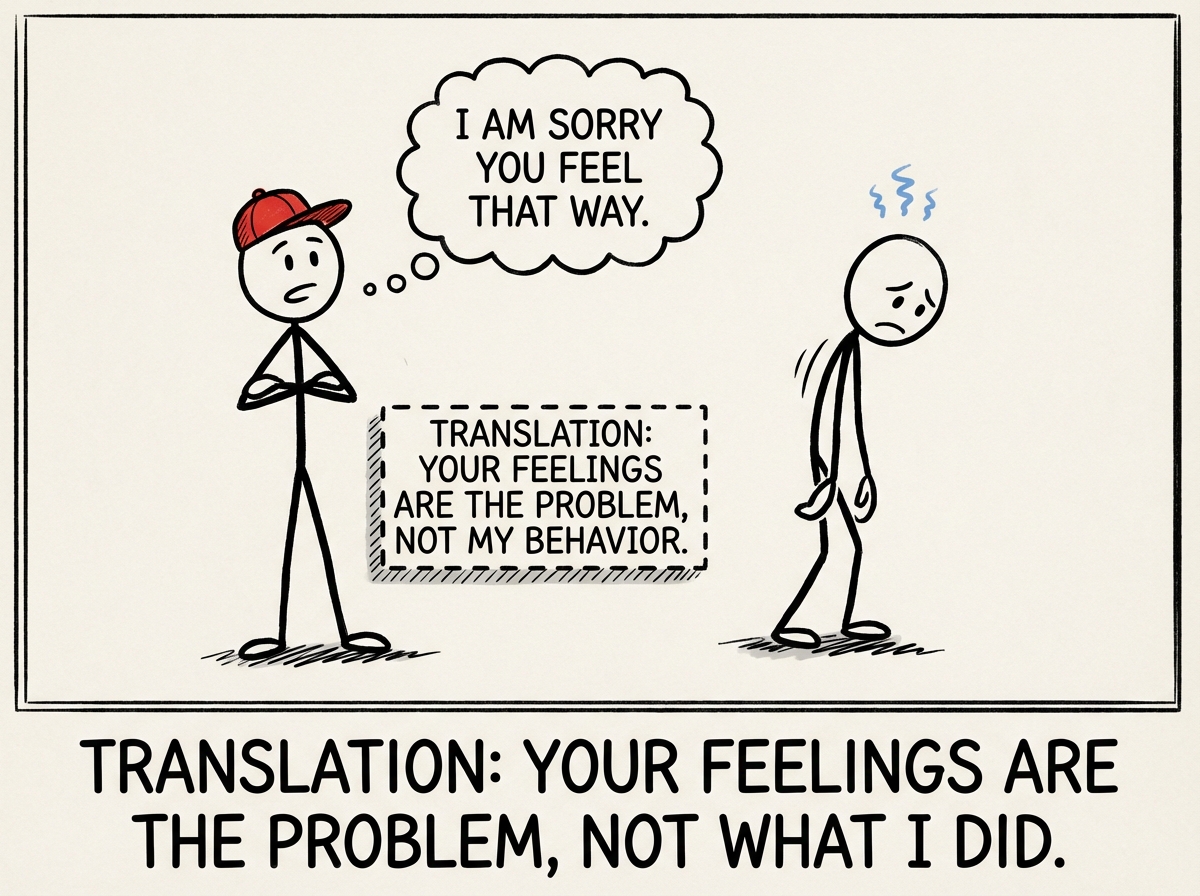
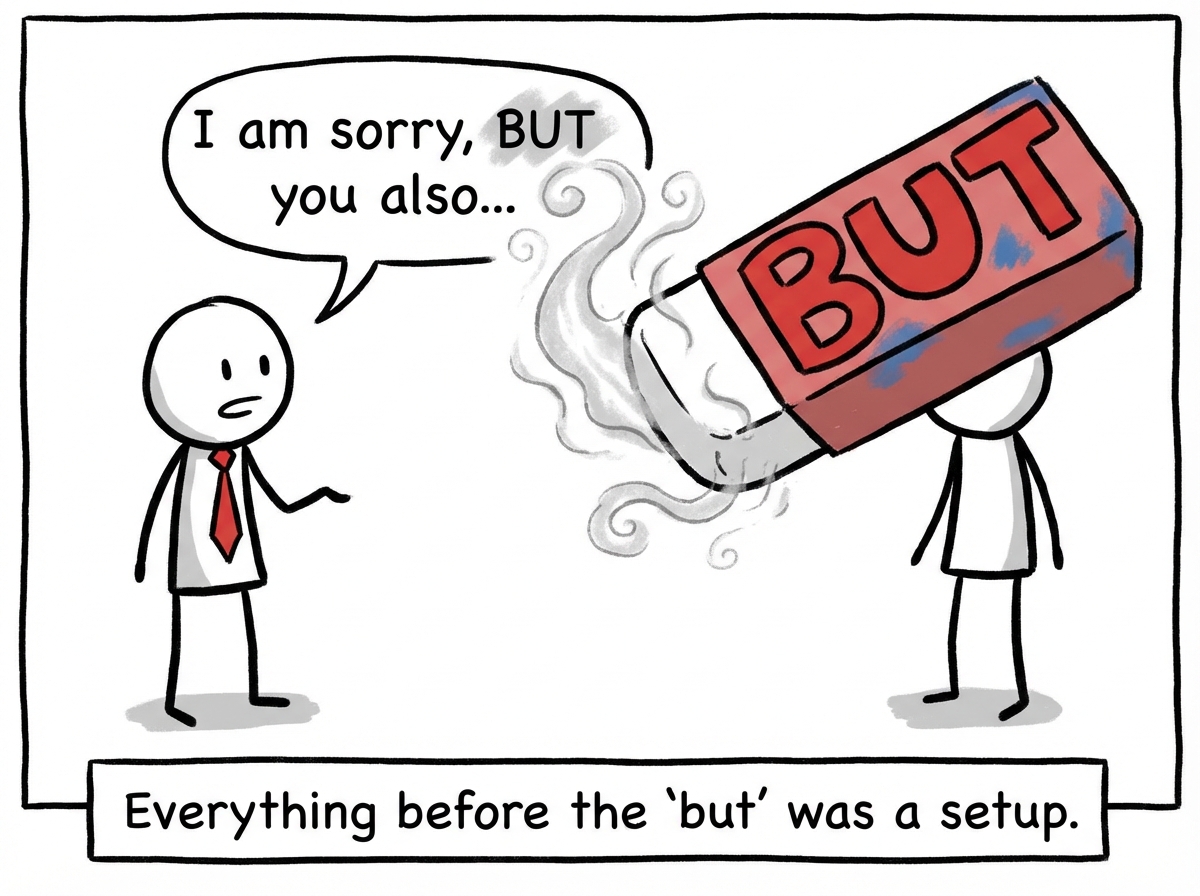
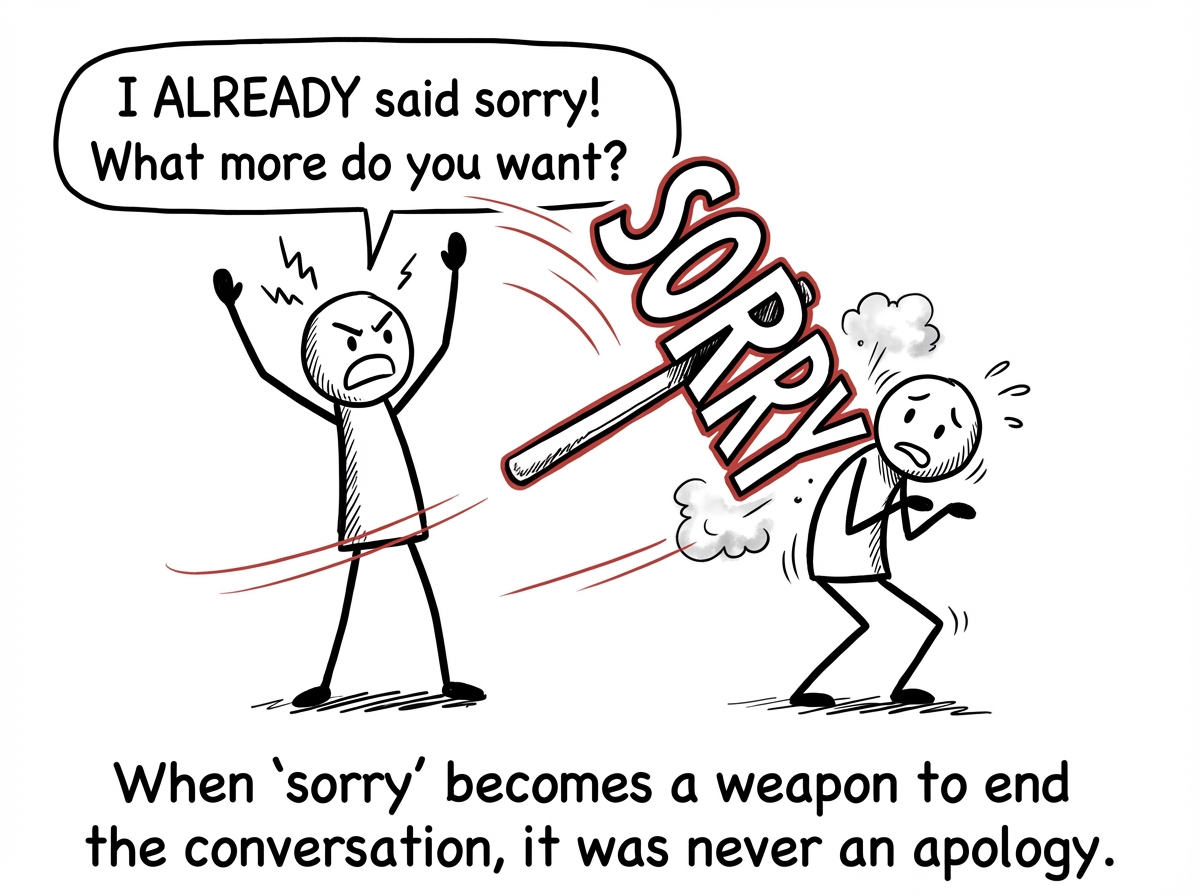
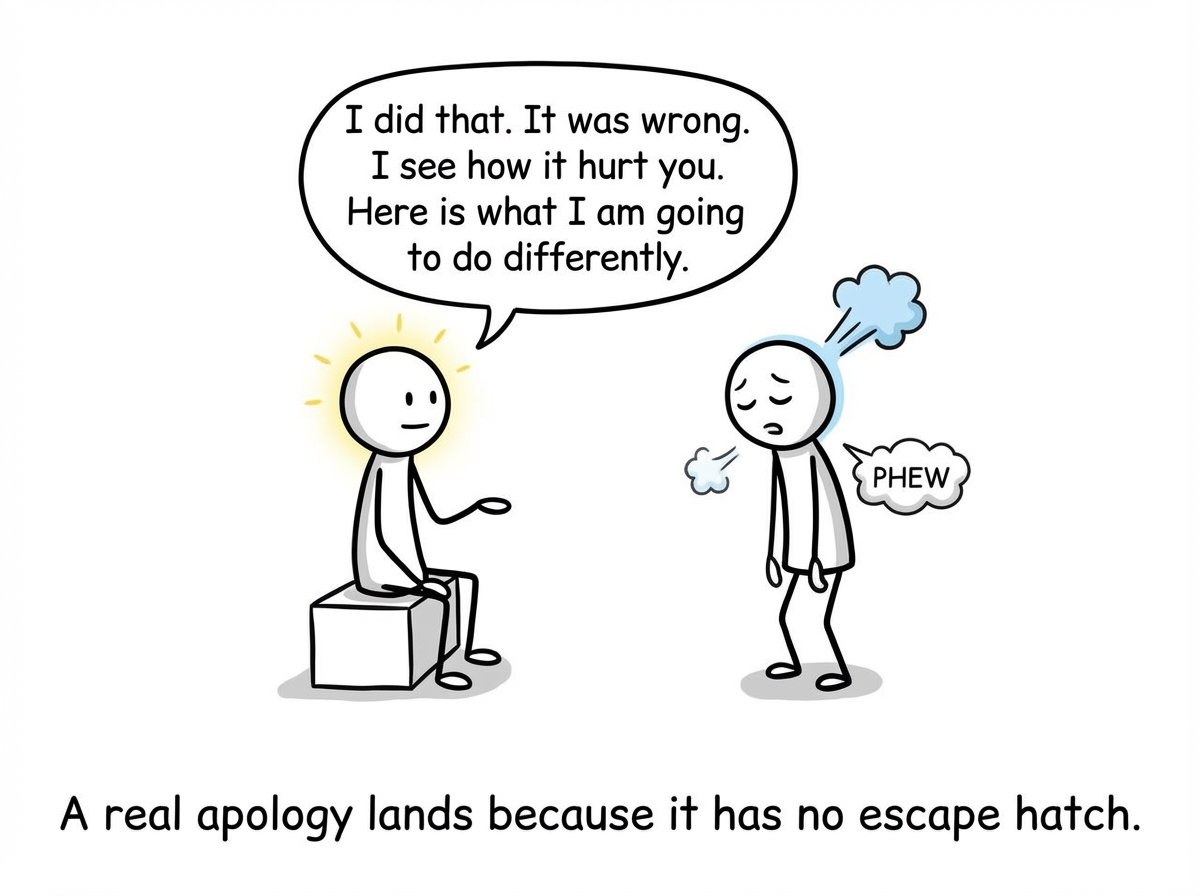
Non-apologies are one of the most corrosive patterns in relationships because they wear the disguise of accountability while doing the opposite. 'I am sorry you feel that way' puts the problem on the hurt person's emotional response. 'I am sorry, but...' immediately negates the apology with a justification. 'I already said sorry, what more do you want?' weaponizes the apology itself, turning it into a tool to shut the conversation down. Harriet Lerner, author of 'Why Won't You Apologize?', identifies nine elements of a genuine apology, but the core is simple: acknowledge specifically what you did, validate the impact without caveat, and state what you will do differently. The hardest part is resisting the urge to explain, defend, or equalize. A real apology has no 'but.'
Key Takeaway
A real apology has no 'but,' no redirect, and no expiration date. It sounds like: 'I did this. It hurt you. Here is what I will change.'