The All-or-Nothing Workout
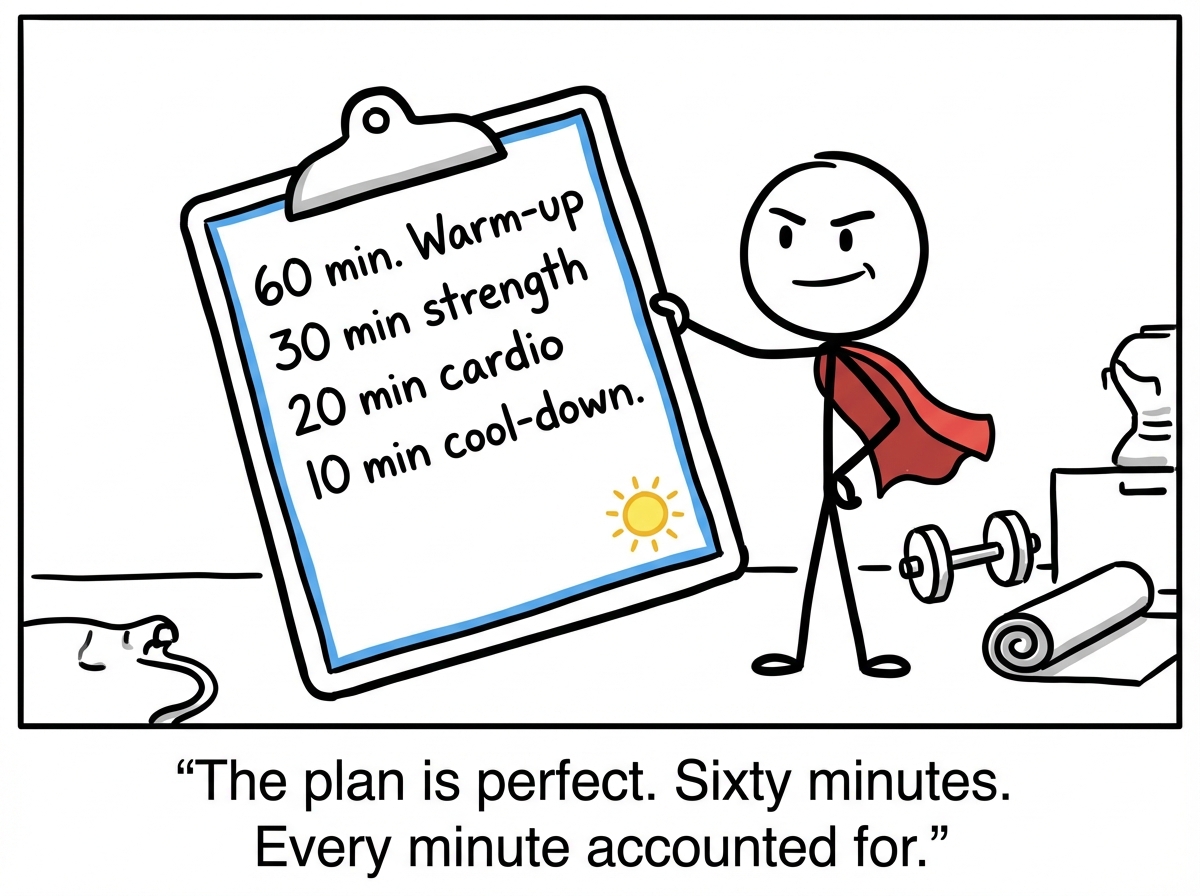
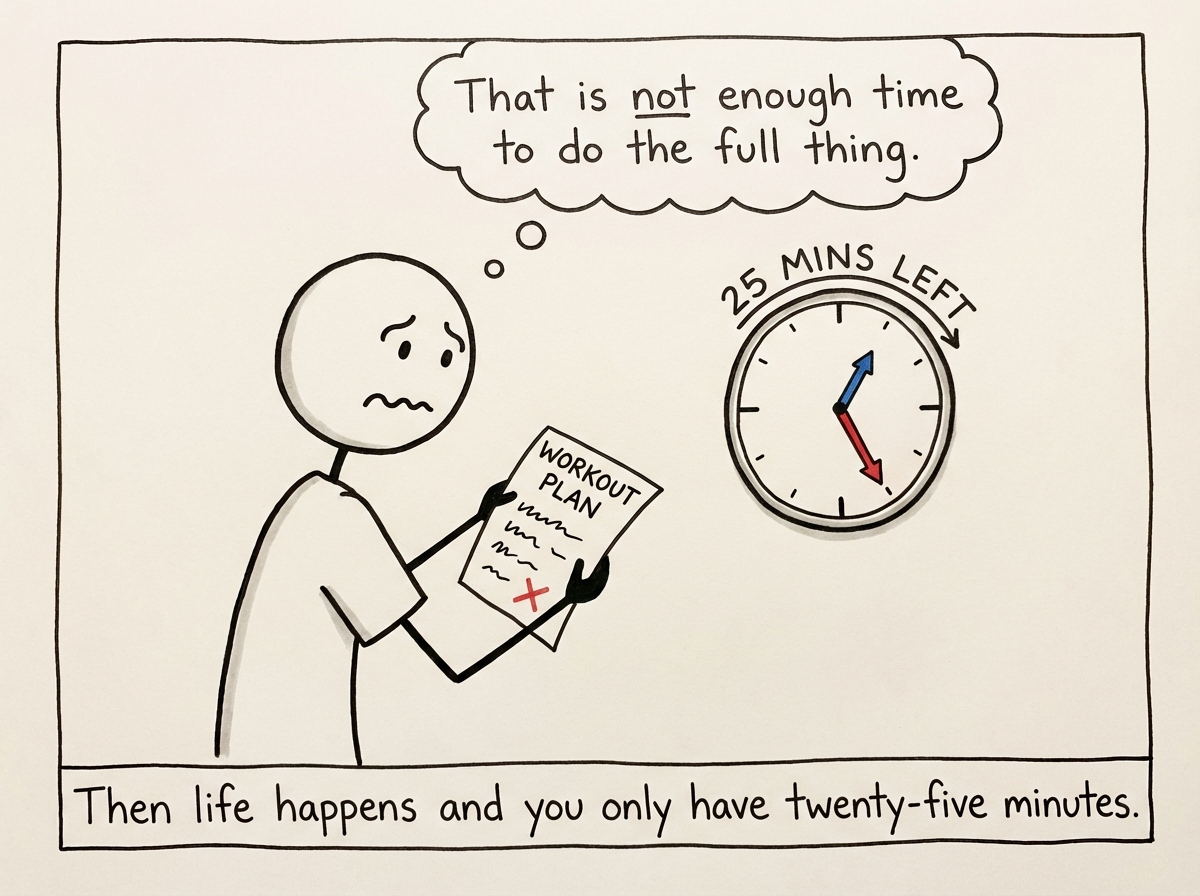
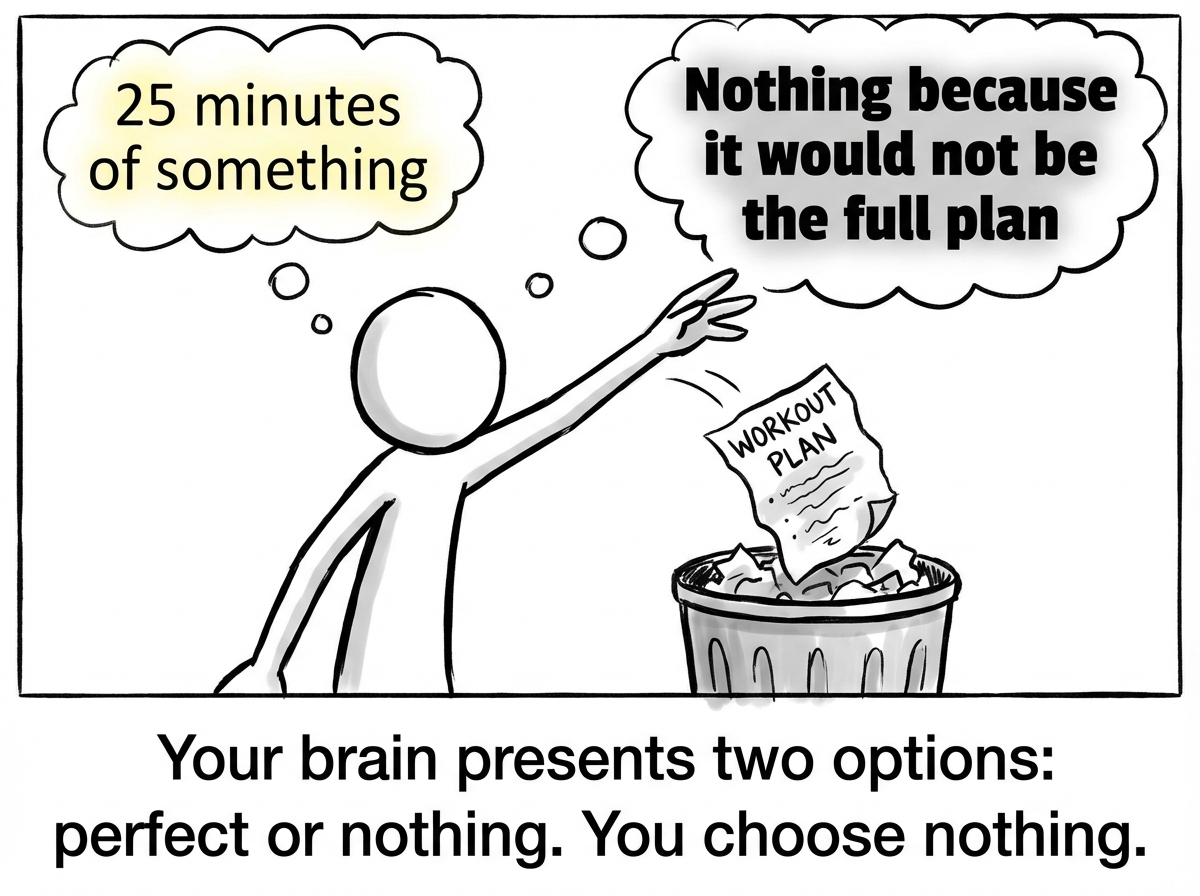

A person skips exercise entirely because they cannot do the full planned workout -- choosing zero over something because perfection was the only acceptable option.
Explanation
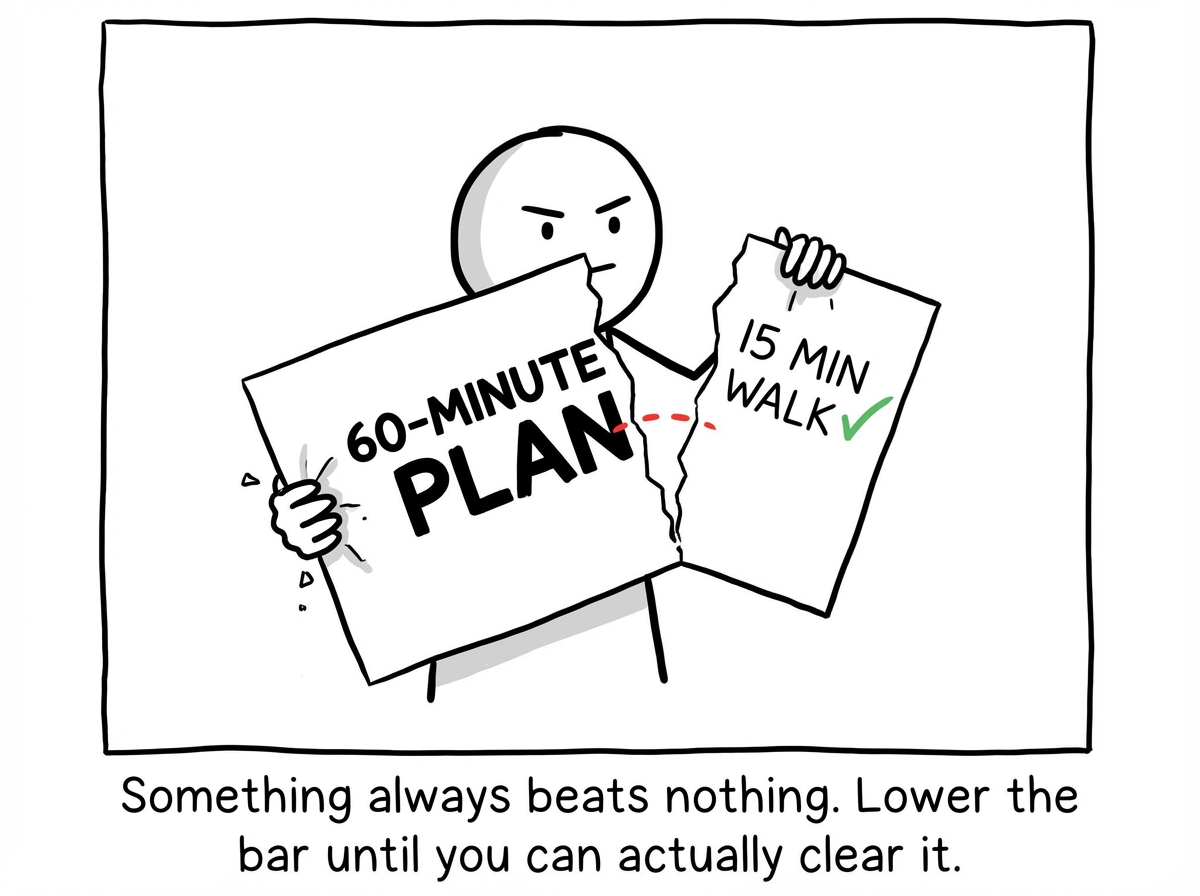
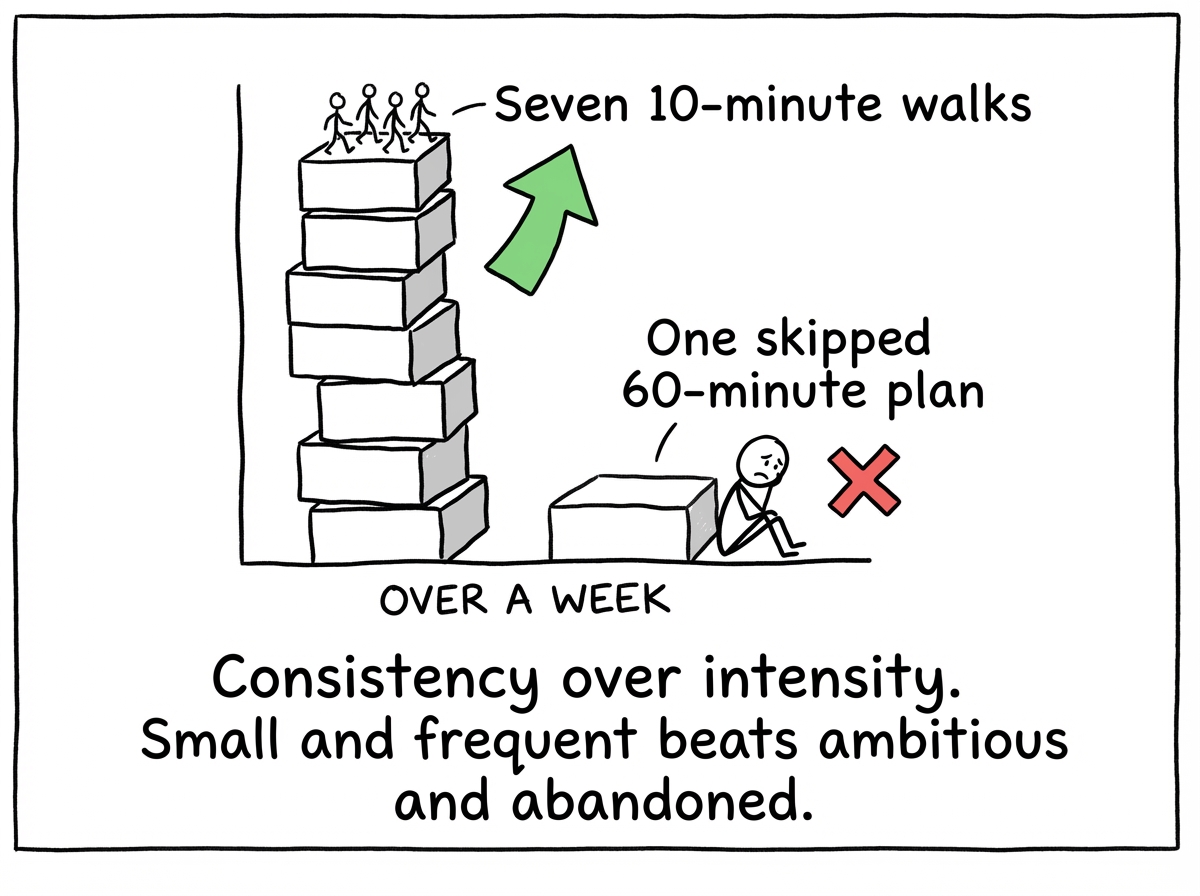
You had a plan. One hour at the gym. Full routine. Warm-up, strength, cardio, cool-down. Then something happened -- you woke up late, got stuck at work, or just felt tired -- and suddenly you only have twenty minutes. So what do you do? You skip it entirely. Because twenty minutes is not a real workout. Because if you cannot do it right, why do it at all? This is all-or-nothing thinking applied to exercise, and it is one of the most common psychological barriers to consistent physical activity. Research on dichotomous thinking in health behavior shows that people who hold rigid standards for exercise are significantly more likely to abandon the habit entirely when those standards cannot be met. The irony is devastating: the pursuit of the perfect workout becomes the enemy of any workout at all. Perfectionism in exercise often stems from deeper patterns. If you grew up in an environment where partial effort was dismissed or criticized, your brain learned that anything less than complete is worthless. That belief gets applied to workouts, diets, and every other health behavior. The gym becomes another arena where you either perform flawlessly or fail completely, with no middle ground. The psychological shift is learning to value consistency over intensity. A ten-minute walk has more cumulative benefit than a weekly plan you abandon every Tuesday. Exercise science backs this up -- research consistently shows that frequency and duration over time matter far more than the intensity of any single session. The best workout is the one that actually happens.
Key Takeaway
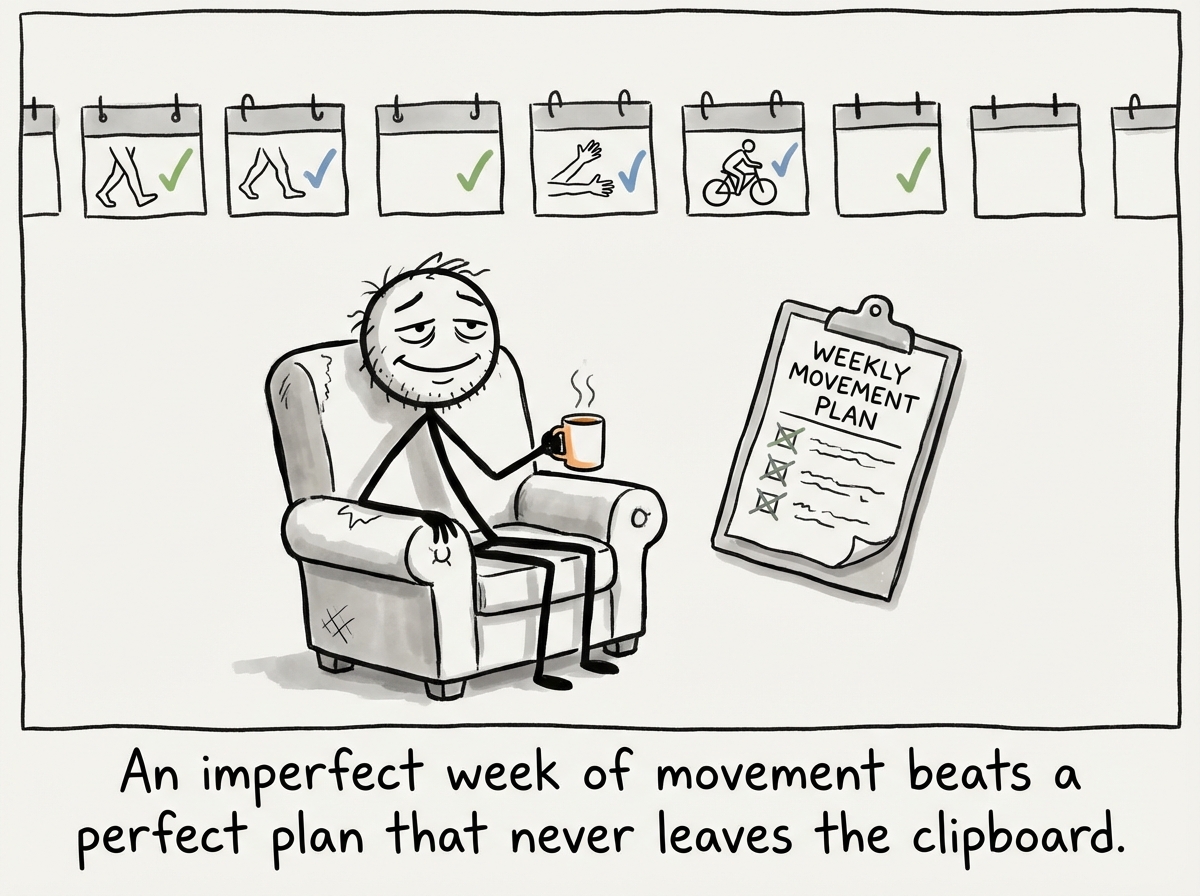
Skipping the workout because you cannot do all of it is not discipline. It is perfectionism disguised as standards.