The Gym Door Barrier
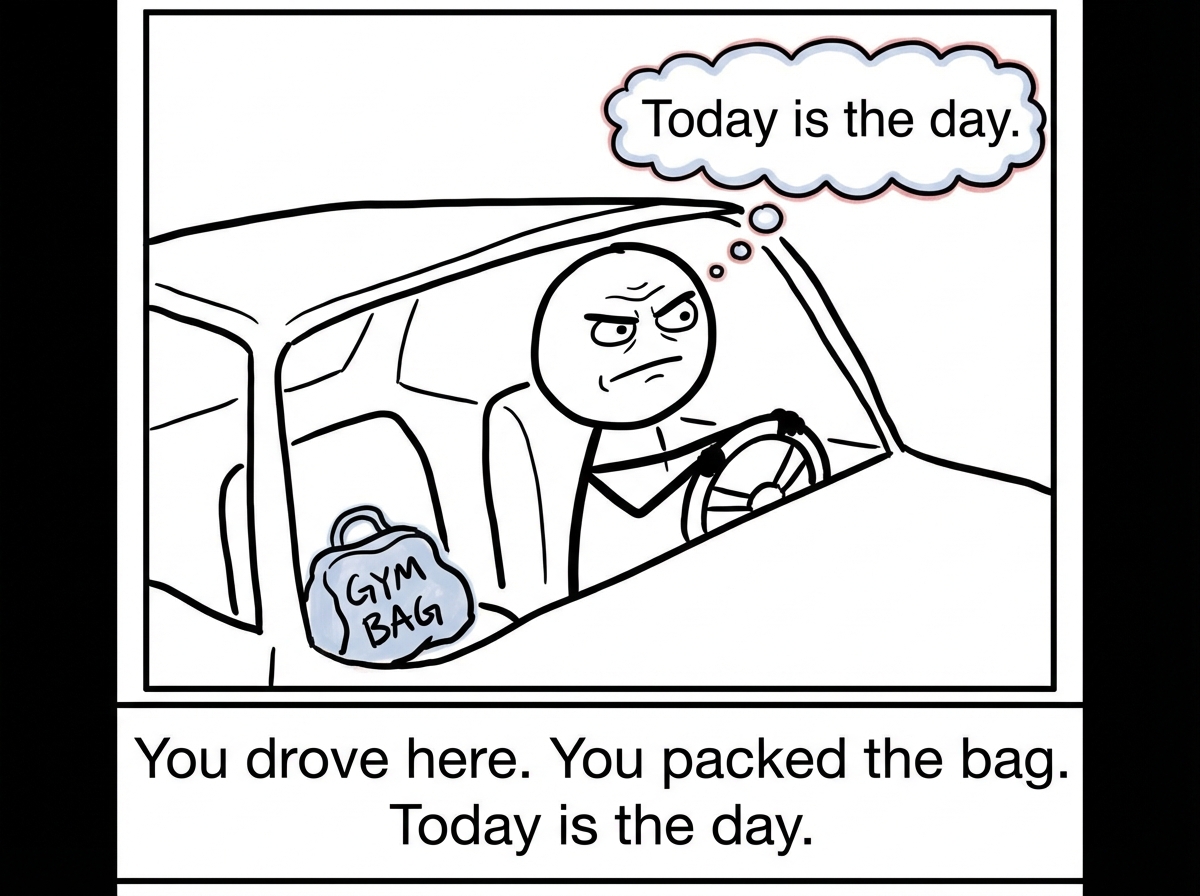
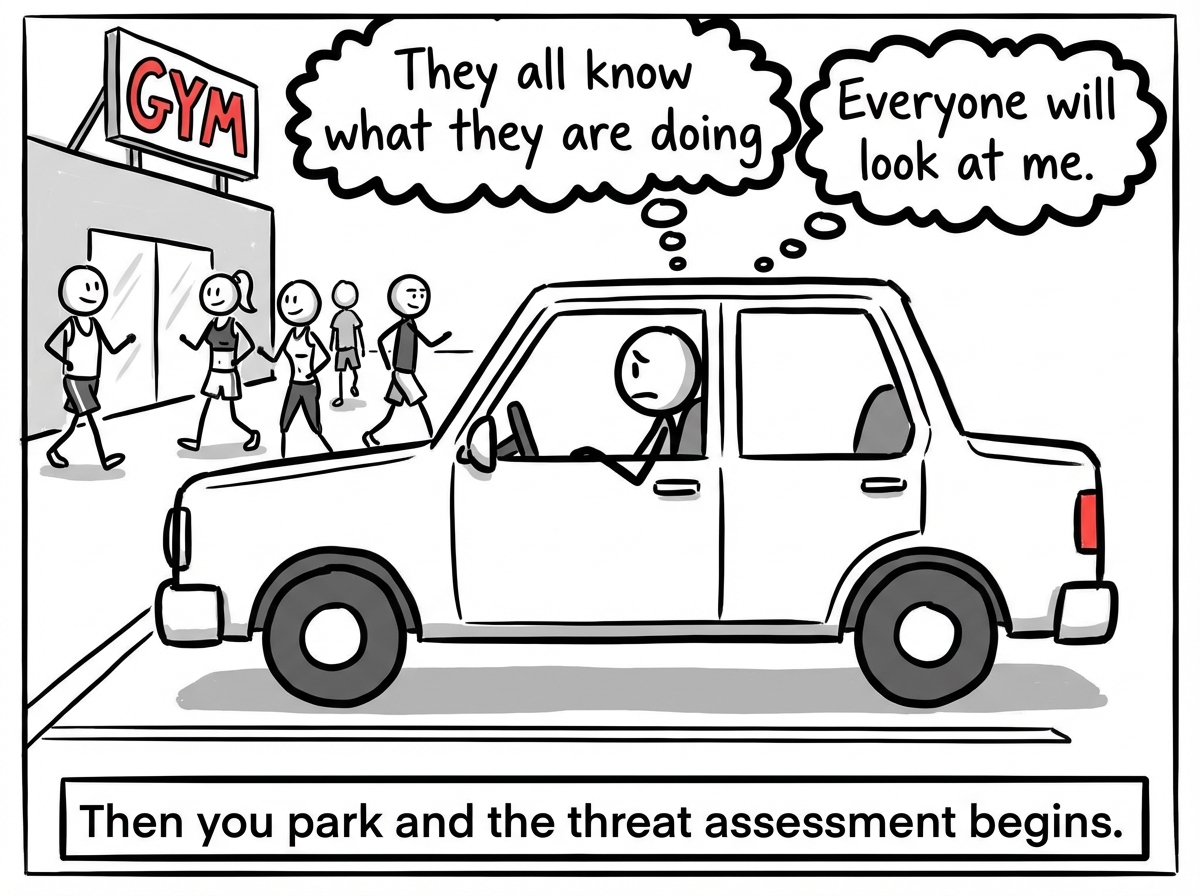
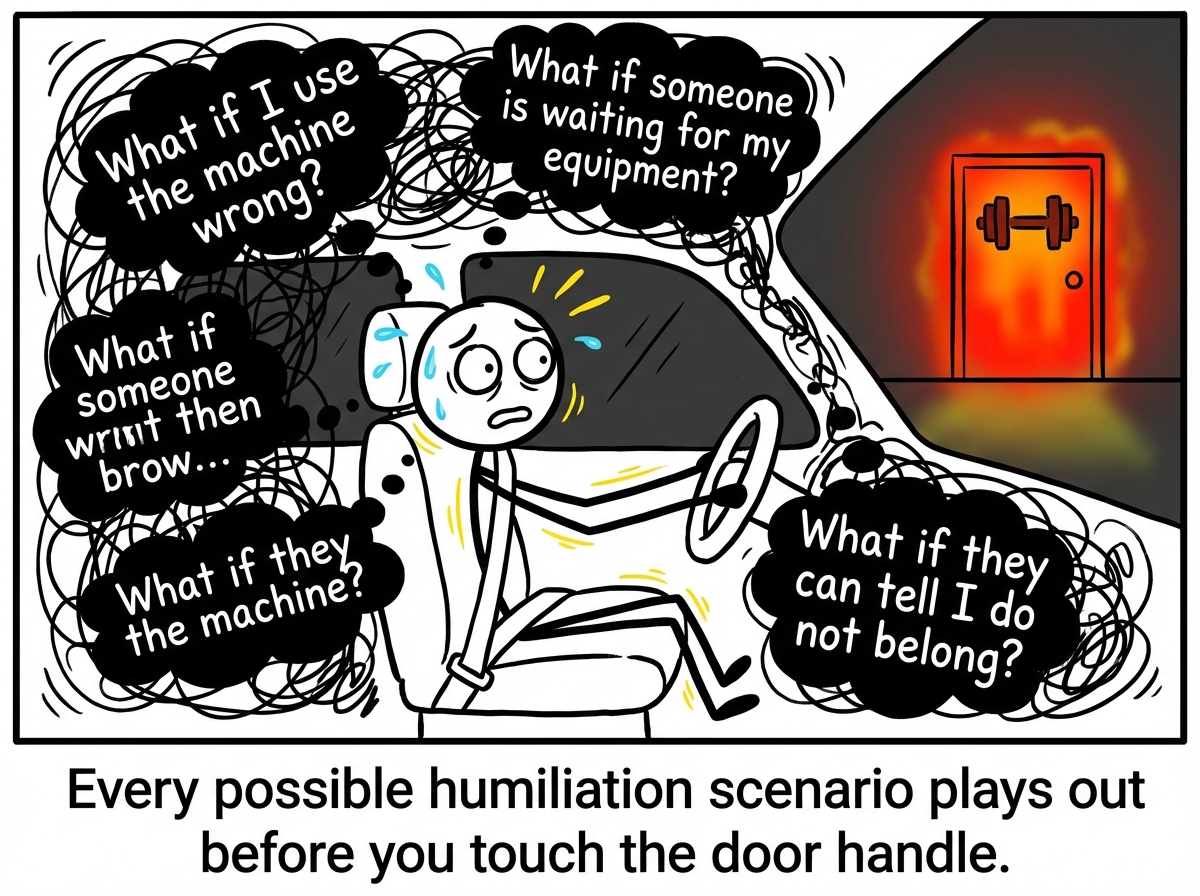
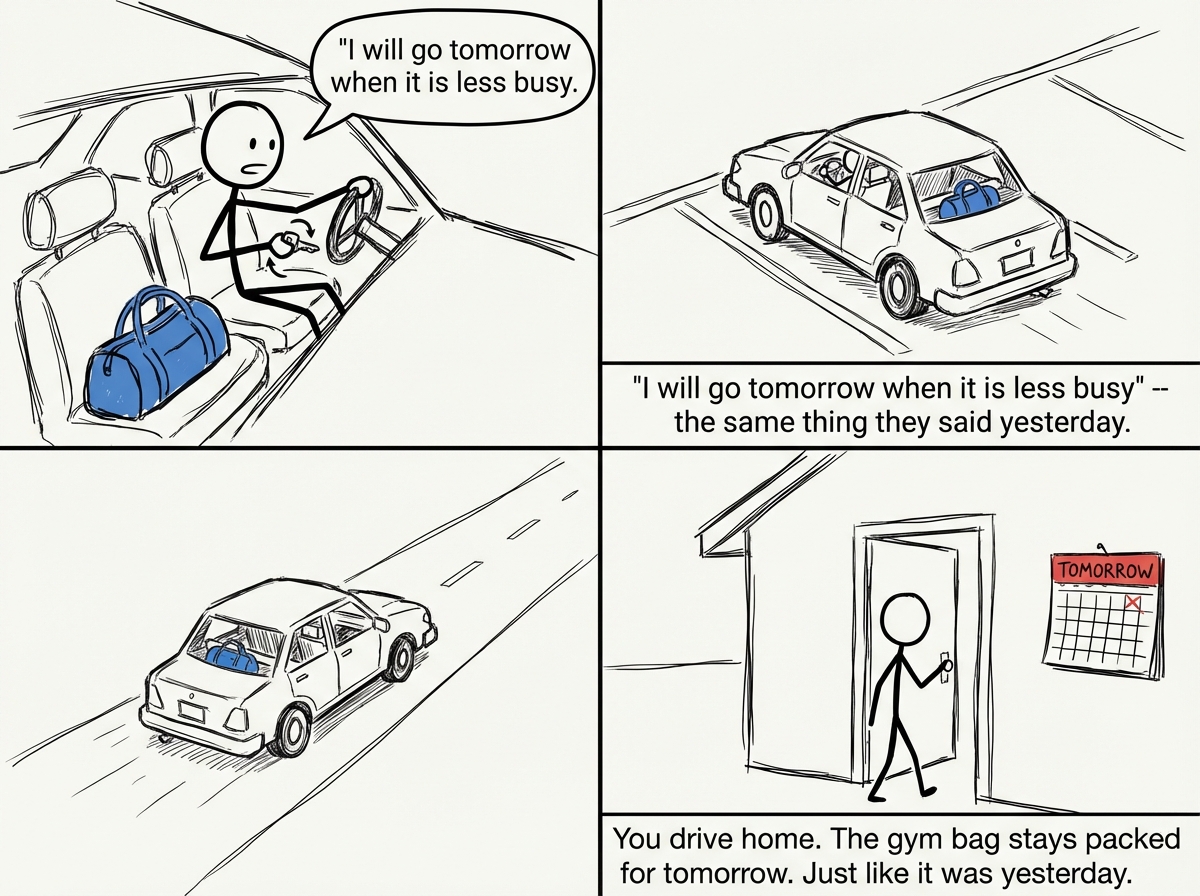
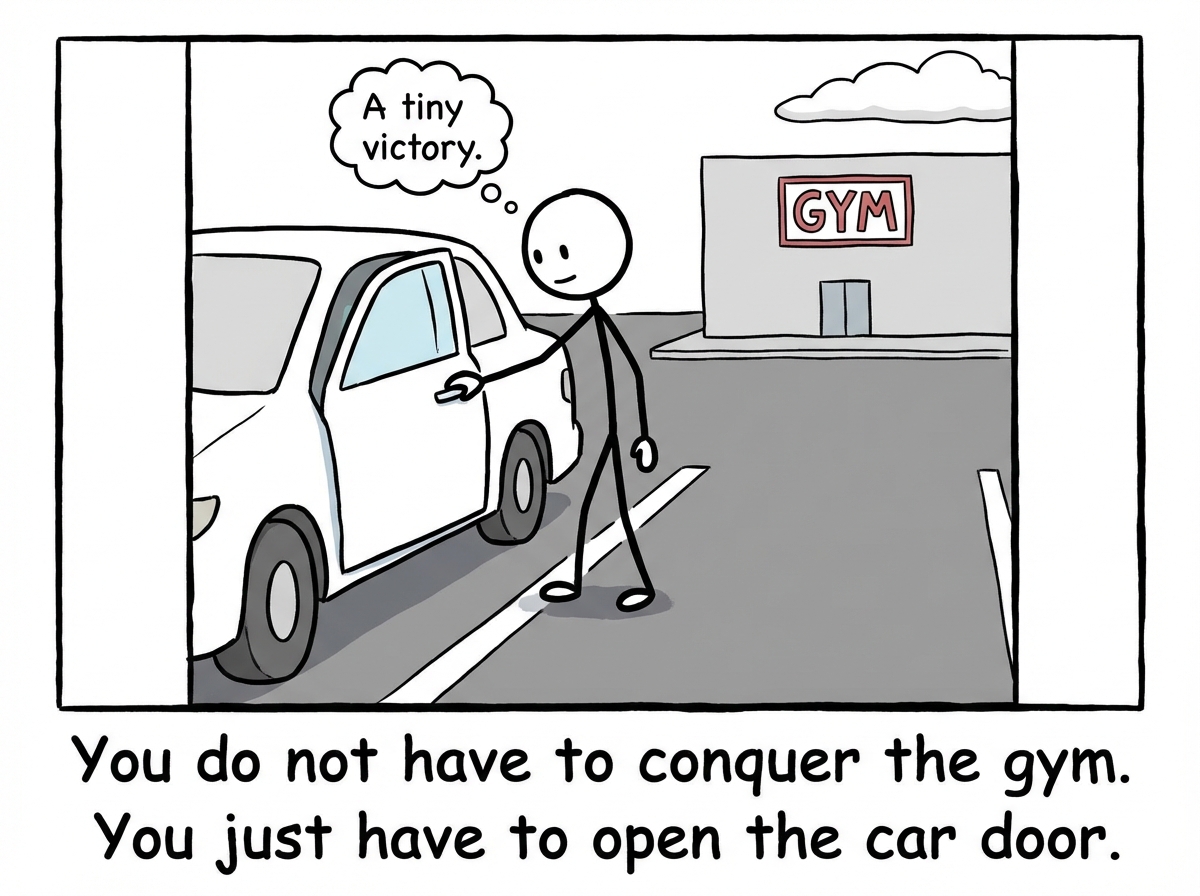
A person drives to the gym, parks, sits in the car, spirals through every possible judgment scenario, and drives home -- having never opened the door.
Explanation
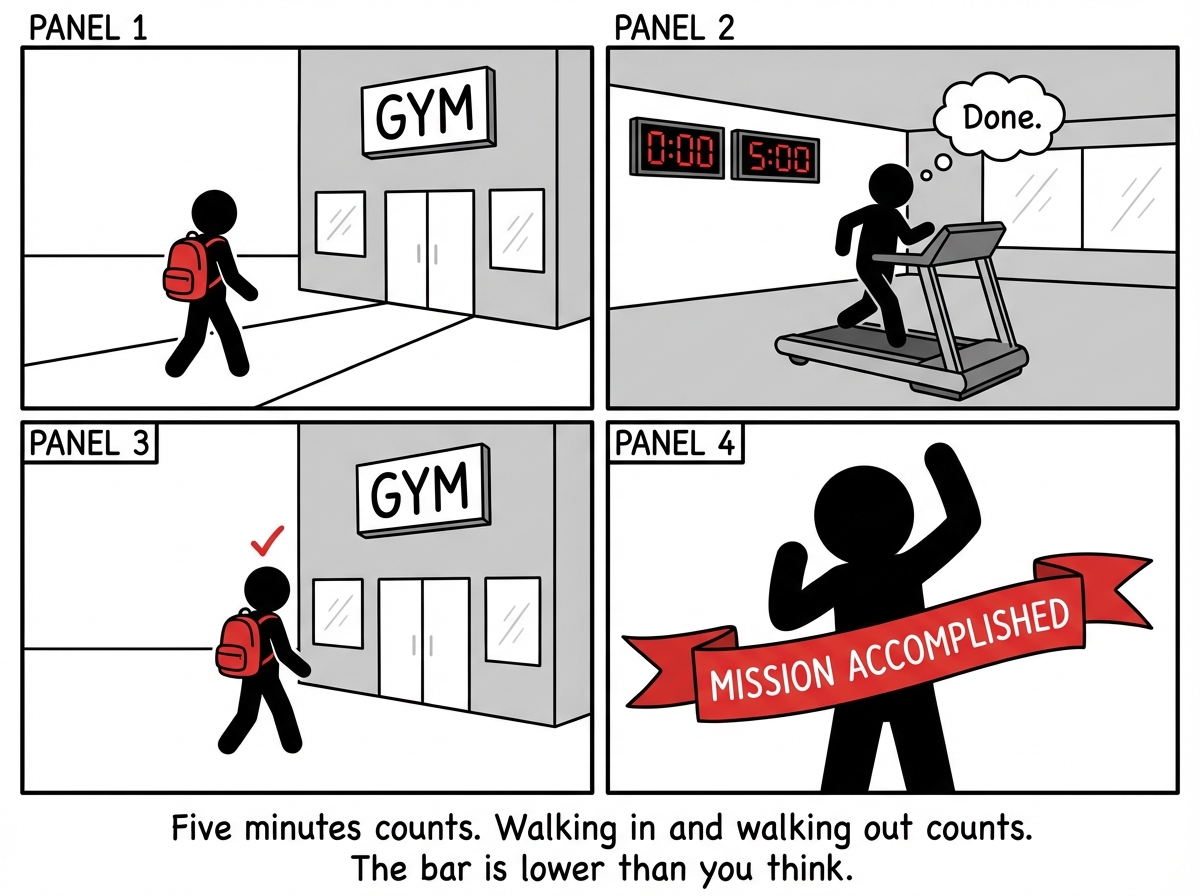
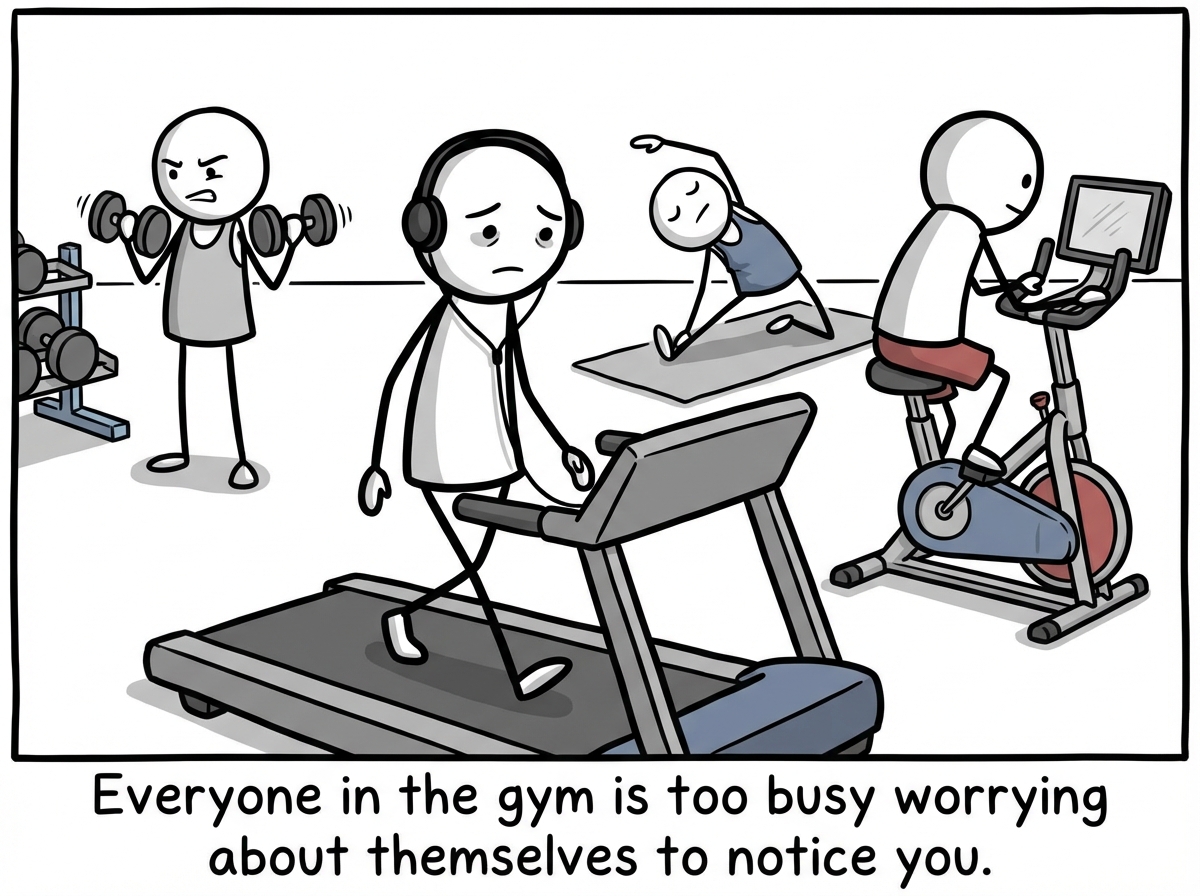
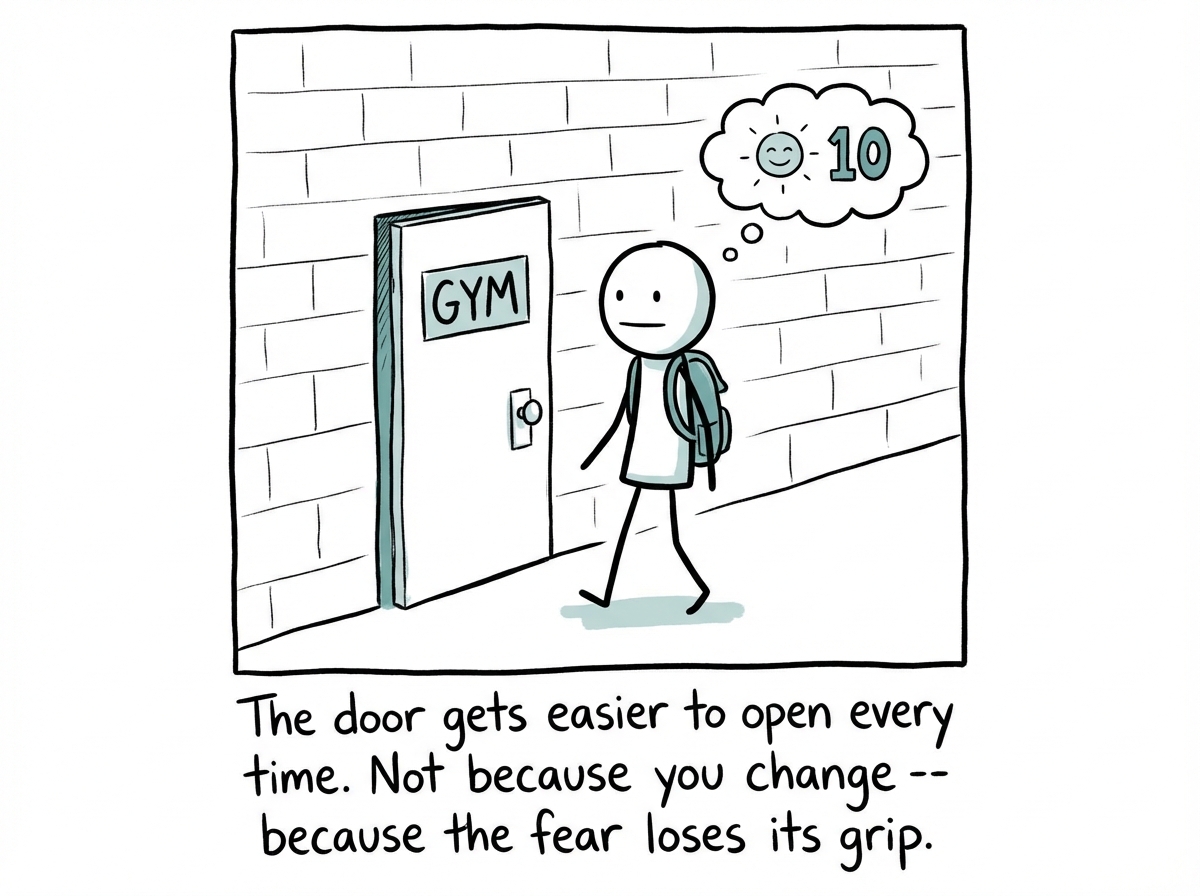
You drove to the gym. You parked. You even turned off the engine. But now you are sitting in the car, gripping the steering wheel, watching fit people walk in and out, and your brain has launched a full threat assessment. What if everyone stares? What if I use the machine wrong? What if someone is waiting for me to finish and I am too slow? What if I look ridiculous? The threat is not physical danger. It is social evaluation -- and for your nervous system, that can feel just as real. Gym anxiety is a well-documented phenomenon in exercise psychology. Research by Salvatore and Marecek has shown that the gym environment is perceived as an evaluative space where bodies are on display and performance is visible. For people who already carry body dissatisfaction or social anxiety, walking through those doors requires overcoming a psychological barrier that has nothing to do with fitness and everything to do with fear of judgment. The cruel irony is that the people most likely to benefit from exercise are often the ones most psychologically blocked from accessing it. The gym is marketed as a place of transformation, but the implicit message is that you need to already be somewhat transformed to belong there. This creates a catch-22: you need to exercise to feel better about your body, but you need to feel better about your body to exercise. Breaking the barrier does not require confidence. It requires one small act of defiance against the voice that says you do not belong -- even if that act is walking in, doing five minutes on a treadmill, and leaving. The door gets easier to open every time.
Key Takeaway
The hardest rep is not inside the gym. It is the moment between the parking lot and the front door where your brain tries to talk you out of belonging.