The Dressing Room Mirror
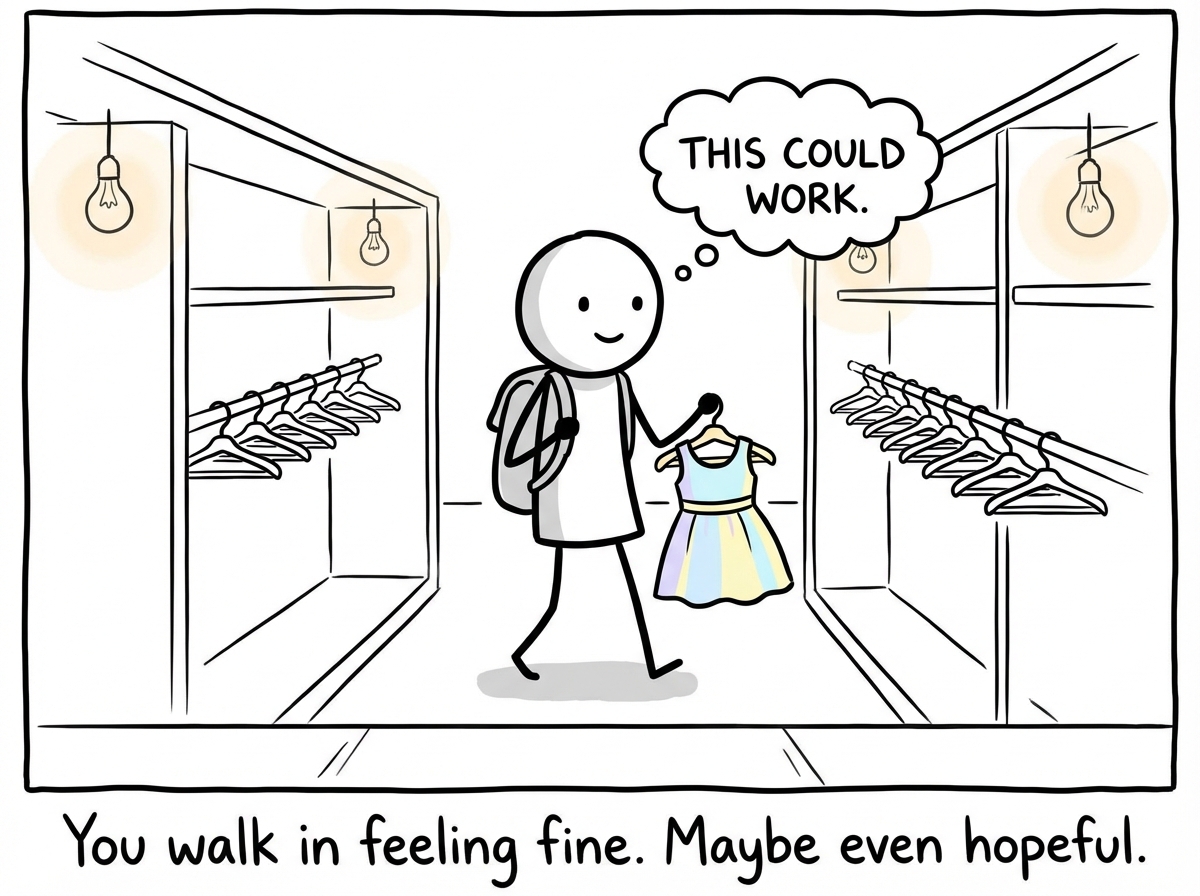
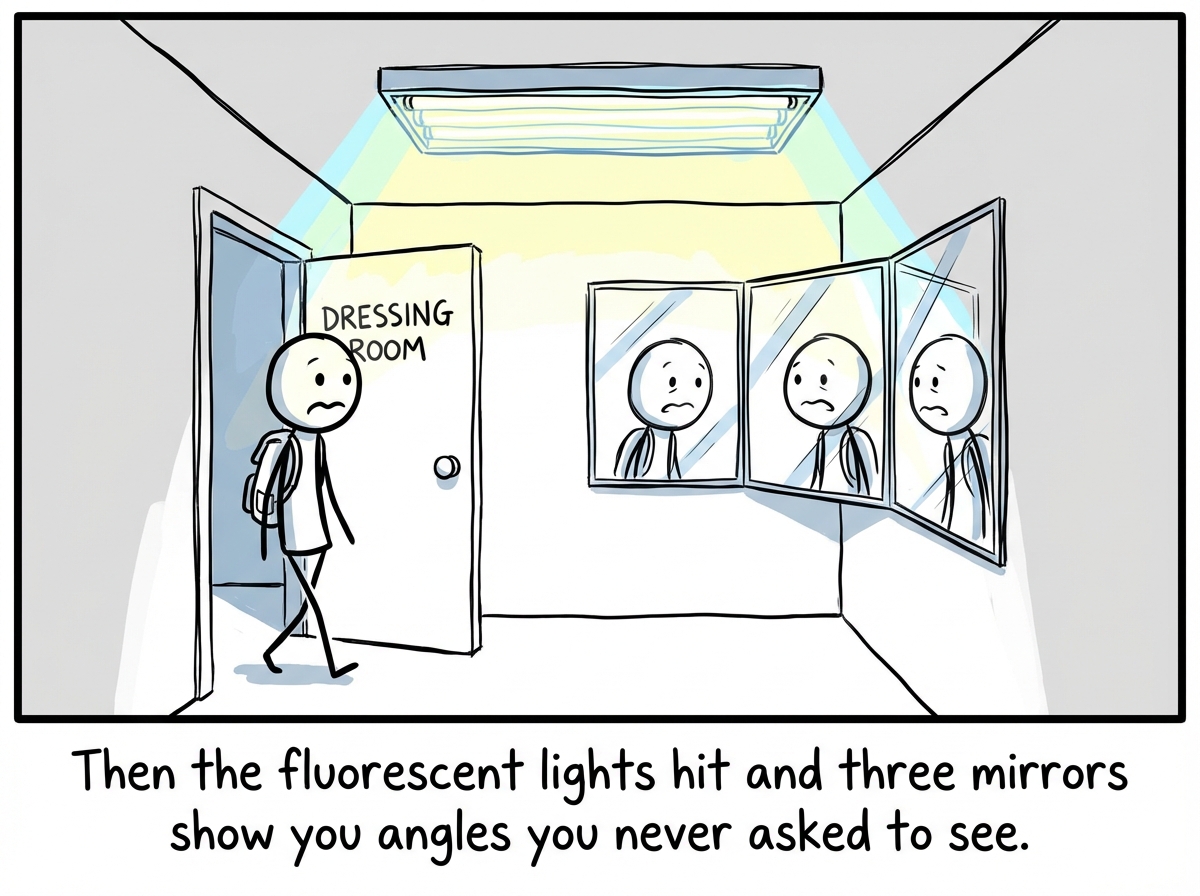
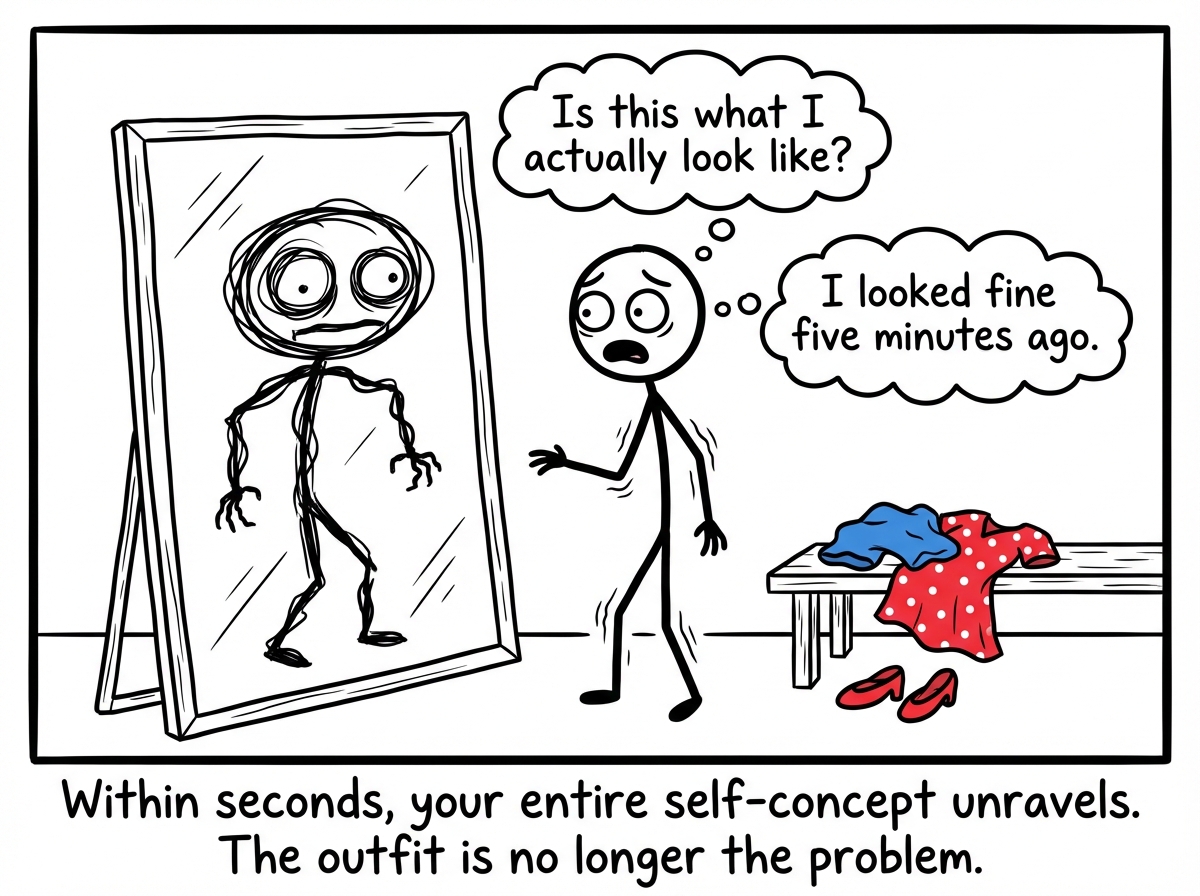
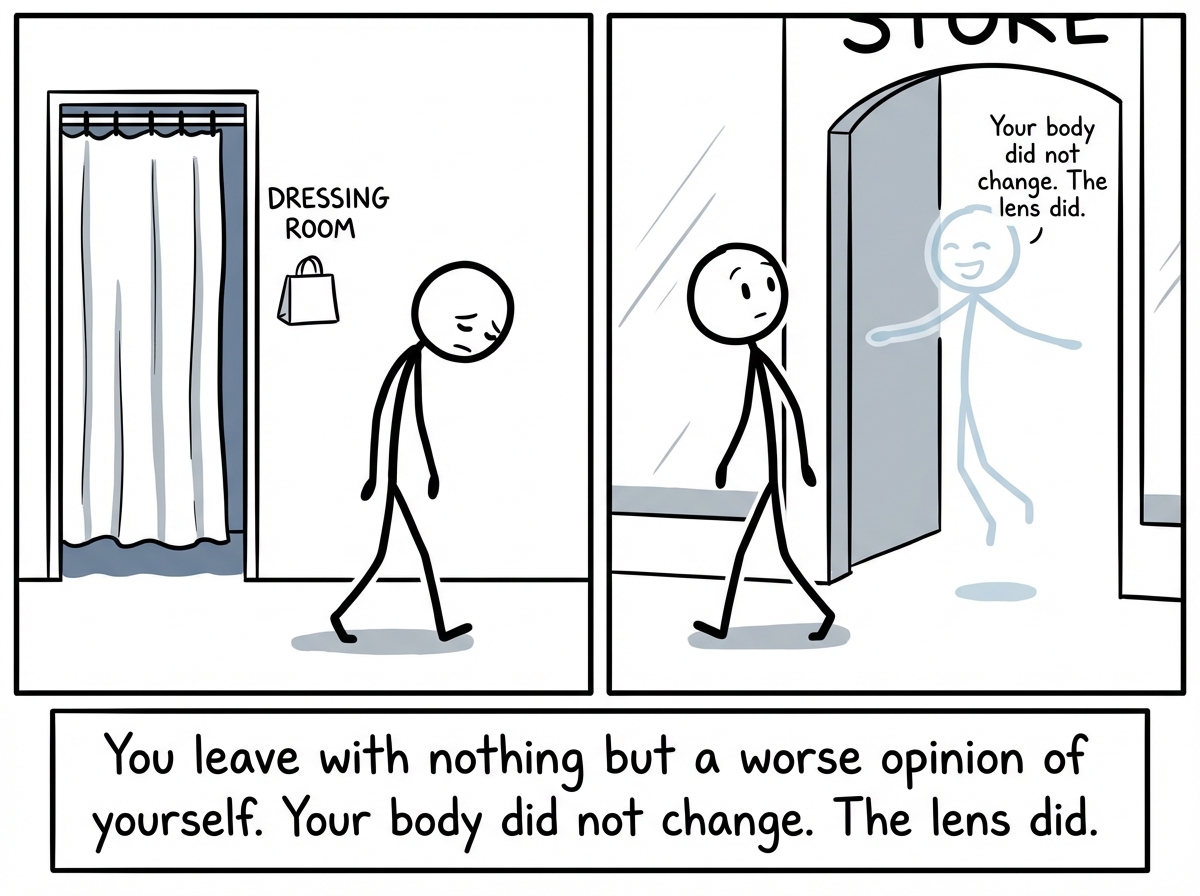
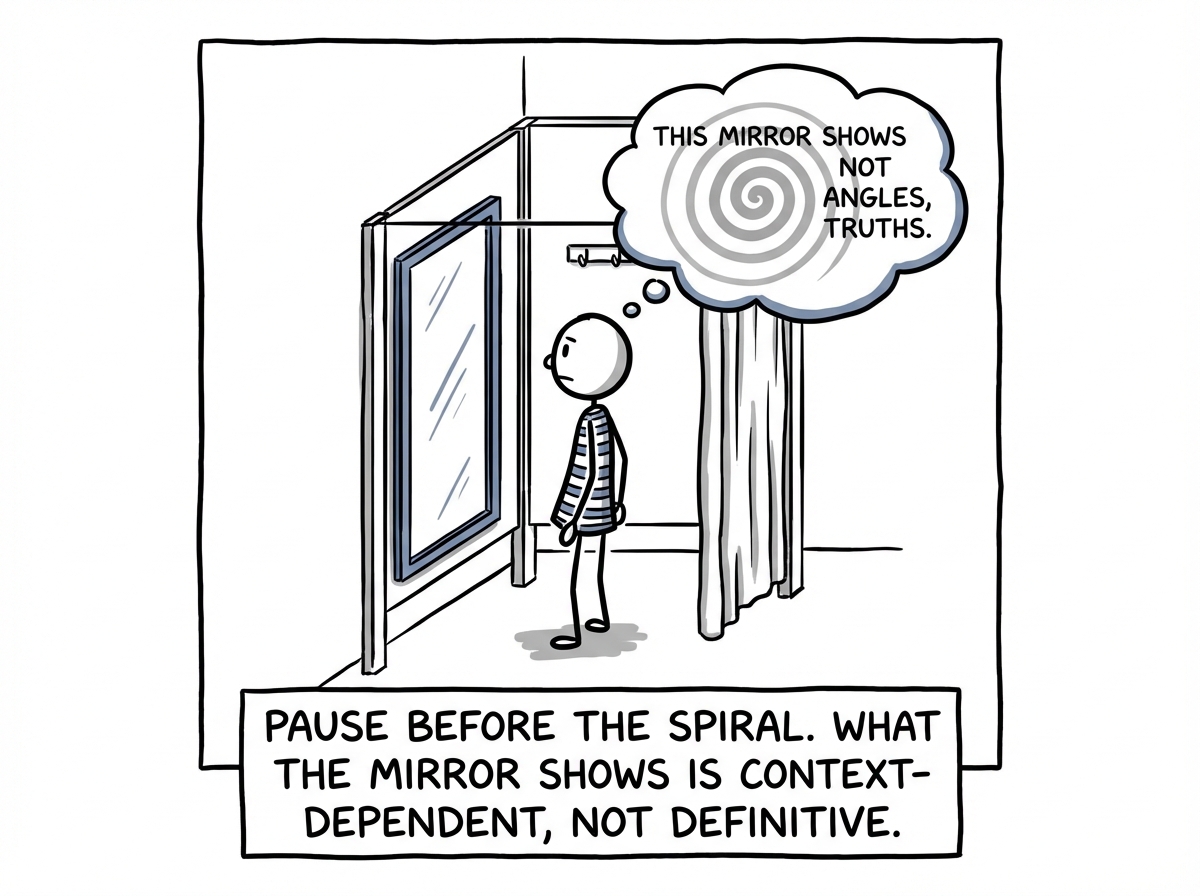
A person walks into a dressing room feeling fine, but the fluorescent lights and three-way mirror transform their self-perception into something unrecognizable within seconds.
Explanation
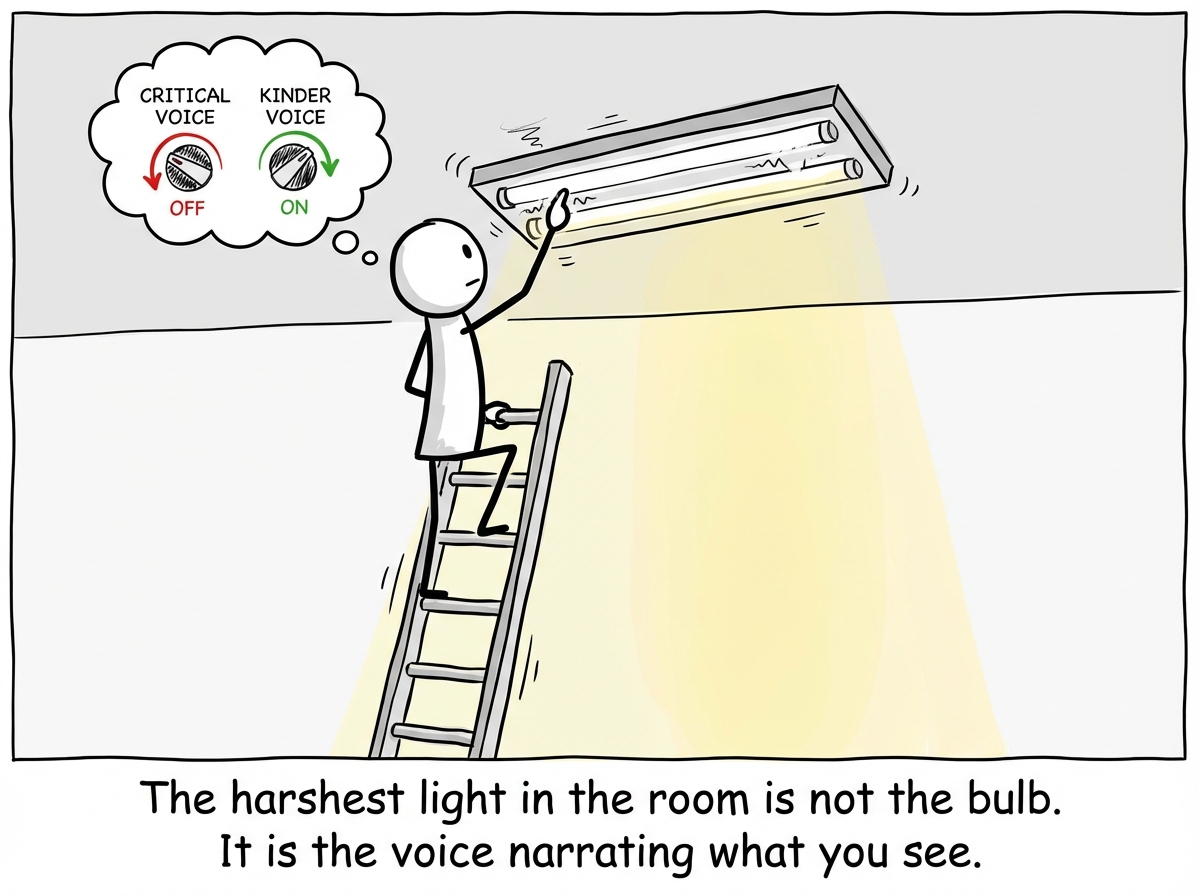
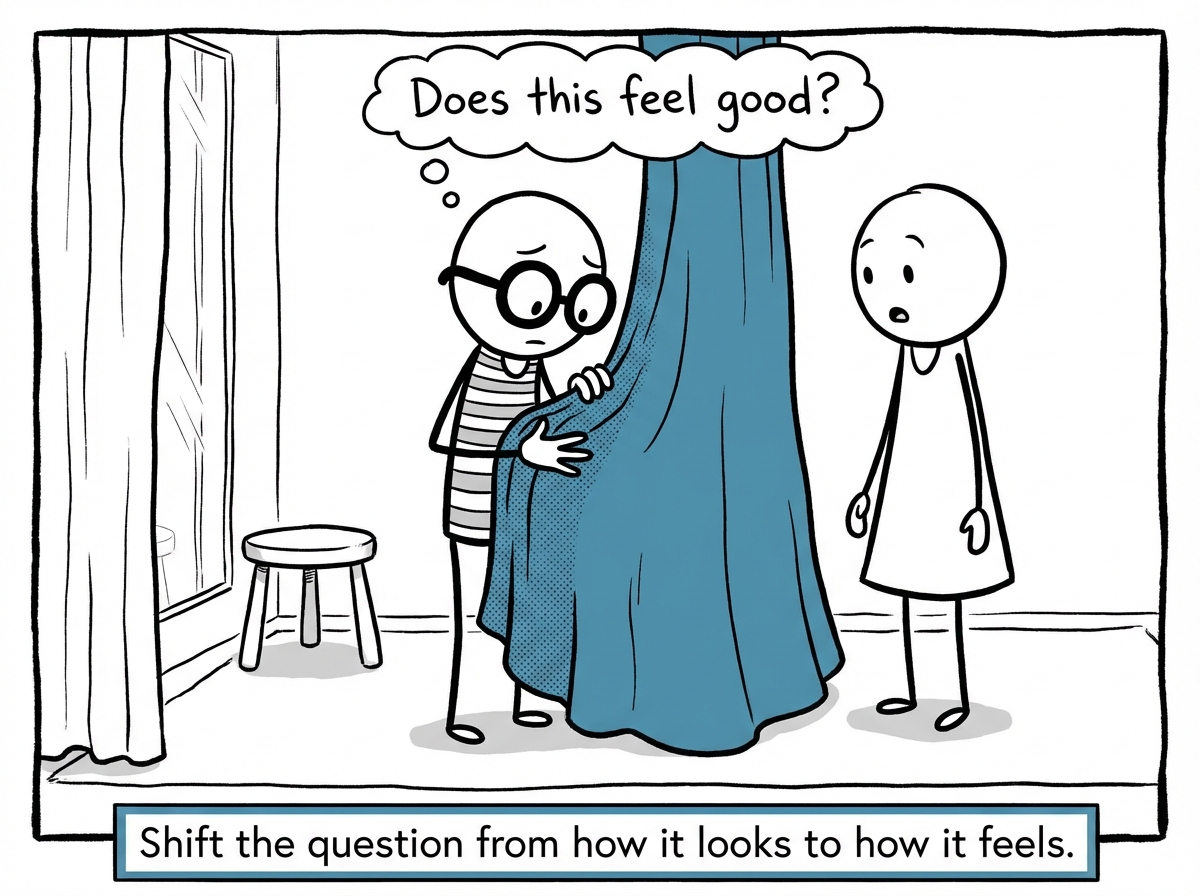
You were having a perfectly acceptable day. You felt decent. Maybe even good. Then you stepped into a dressing room -- the fluorescent lighting overhead, the unforgiving three-way mirror, the tiny space that somehow amplifies every insecurity you carry -- and within thirty seconds, your entire self-concept collapsed. The outfit that looked great on the hanger now highlights every flaw your brain has cataloged since childhood. You are no longer trying on clothes. You are standing trial. This is body image distortion in its most everyday, most relatable form. Research by Thomas Cash has shown that body image is not a stable perception -- it fluctuates based on context, mood, lighting, social comparison, and emotional state. The dressing room is a perfect storm of all these triggers. The lighting is harsh, the mirrors show angles you never see, and the implicit task -- evaluating whether something looks good on you -- activates every internalized standard you have ever absorbed. What makes the dressing room moment so psychologically revealing is the speed of the shift. You did not gain weight between the store entrance and the fitting room. Your body did not change. What changed was the lens through which you were seeing it. That lens was ground years ago by comments from family, images from media, and comparisons with peers. The dressing room just puts it under a spotlight. The way out is not avoiding dressing rooms forever. It is learning to notice the shift -- to catch the moment when perception hijacks reality -- and to remind yourself that what you are seeing is a story, not a photograph.
Key Takeaway
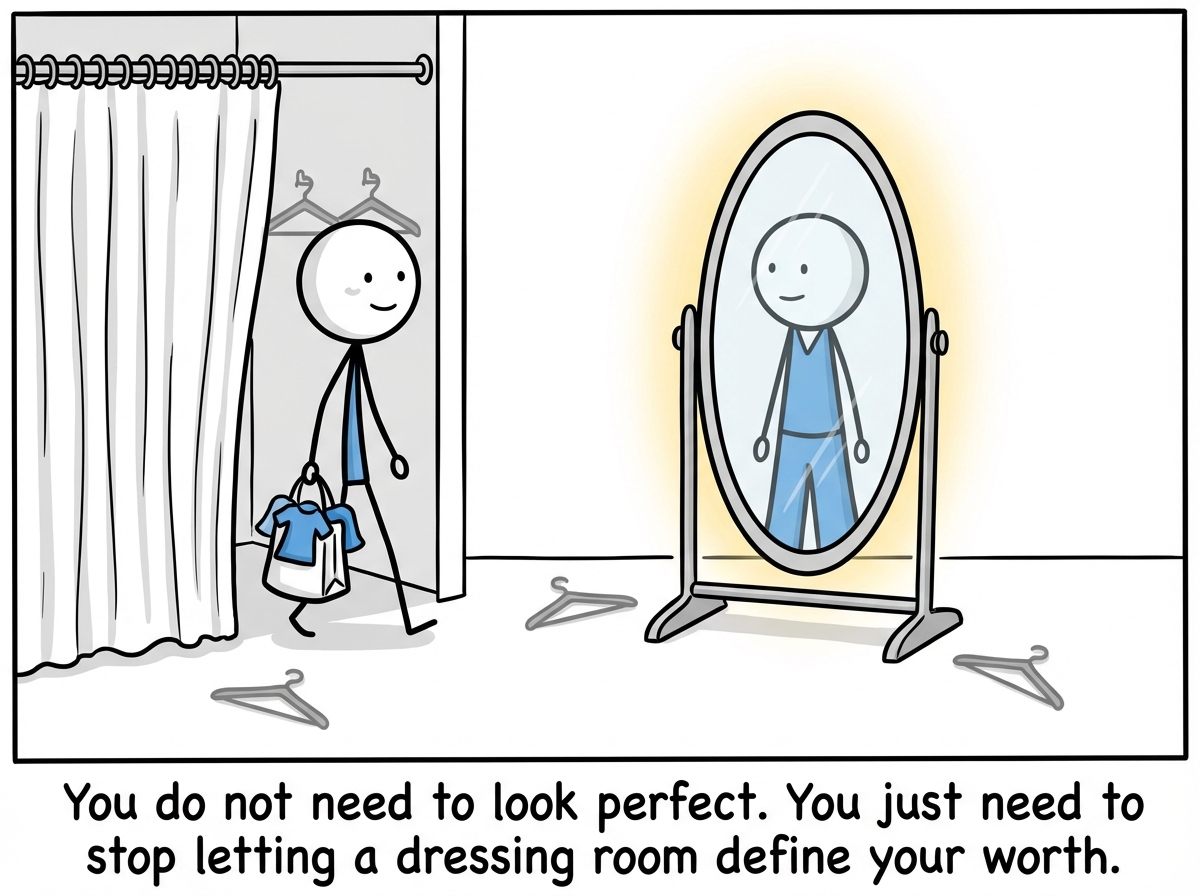
You did not suddenly change between the store entrance and the fitting room. The dressing room just activates a lens that was shaped years before you walked in.