The Funhouse Mirror
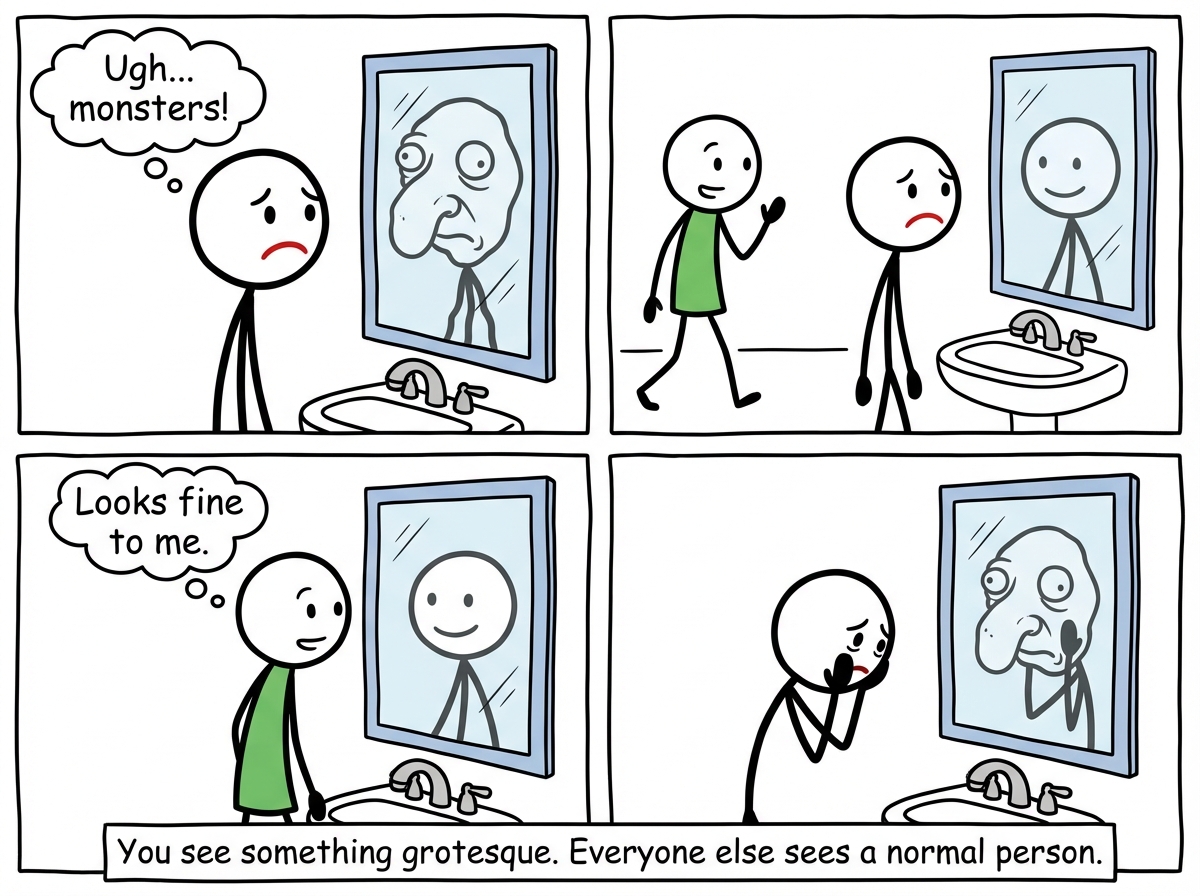
A person sees a grotesquely distorted reflection in an ordinary mirror while everyone around them sees a completely normal person -- but they cannot be convinced the distortion is not real.
Explanation
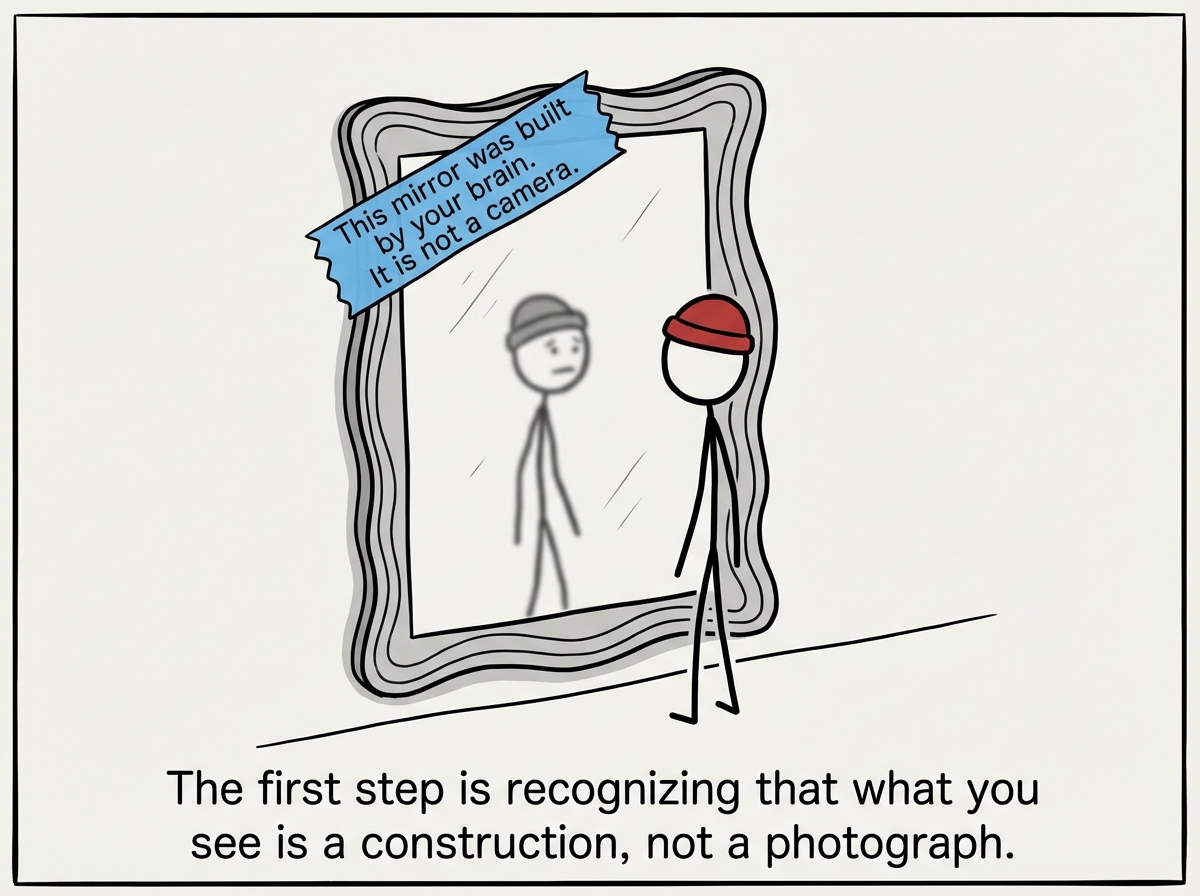
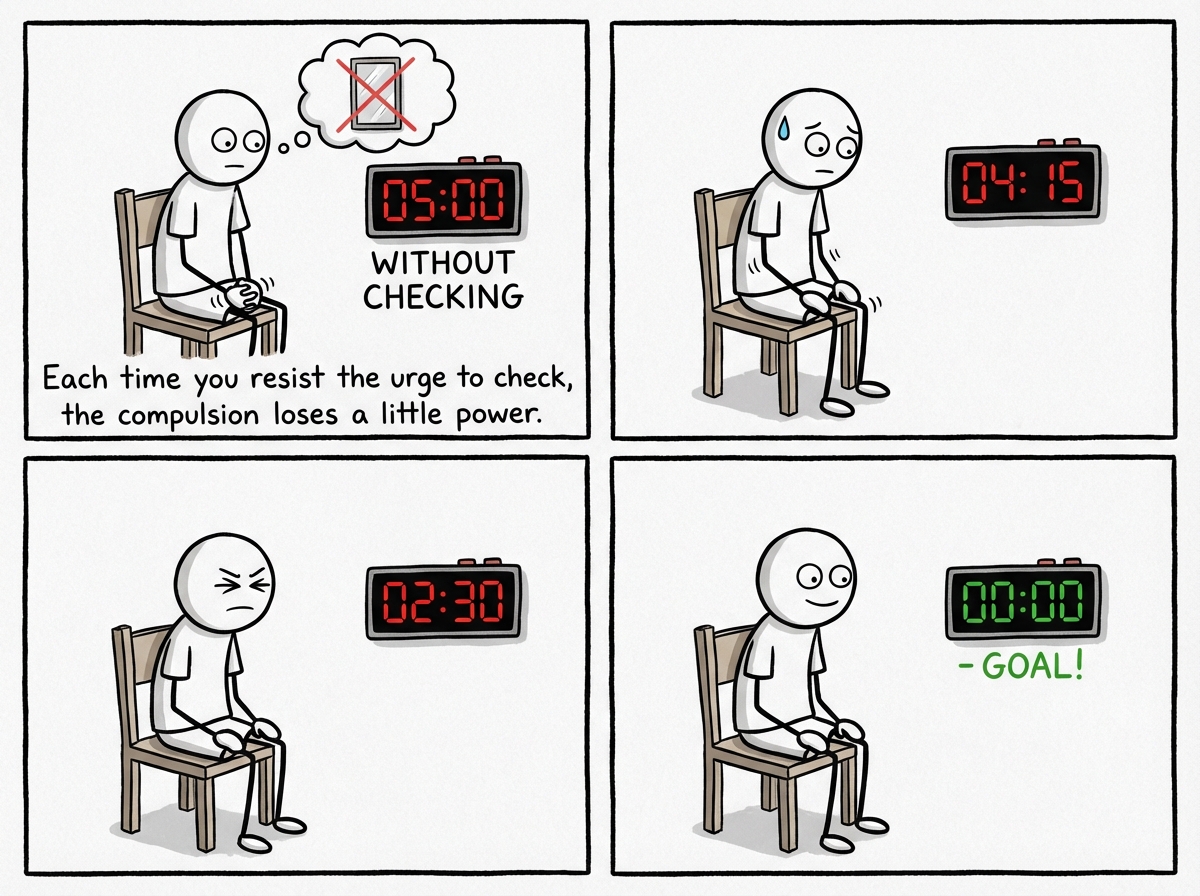
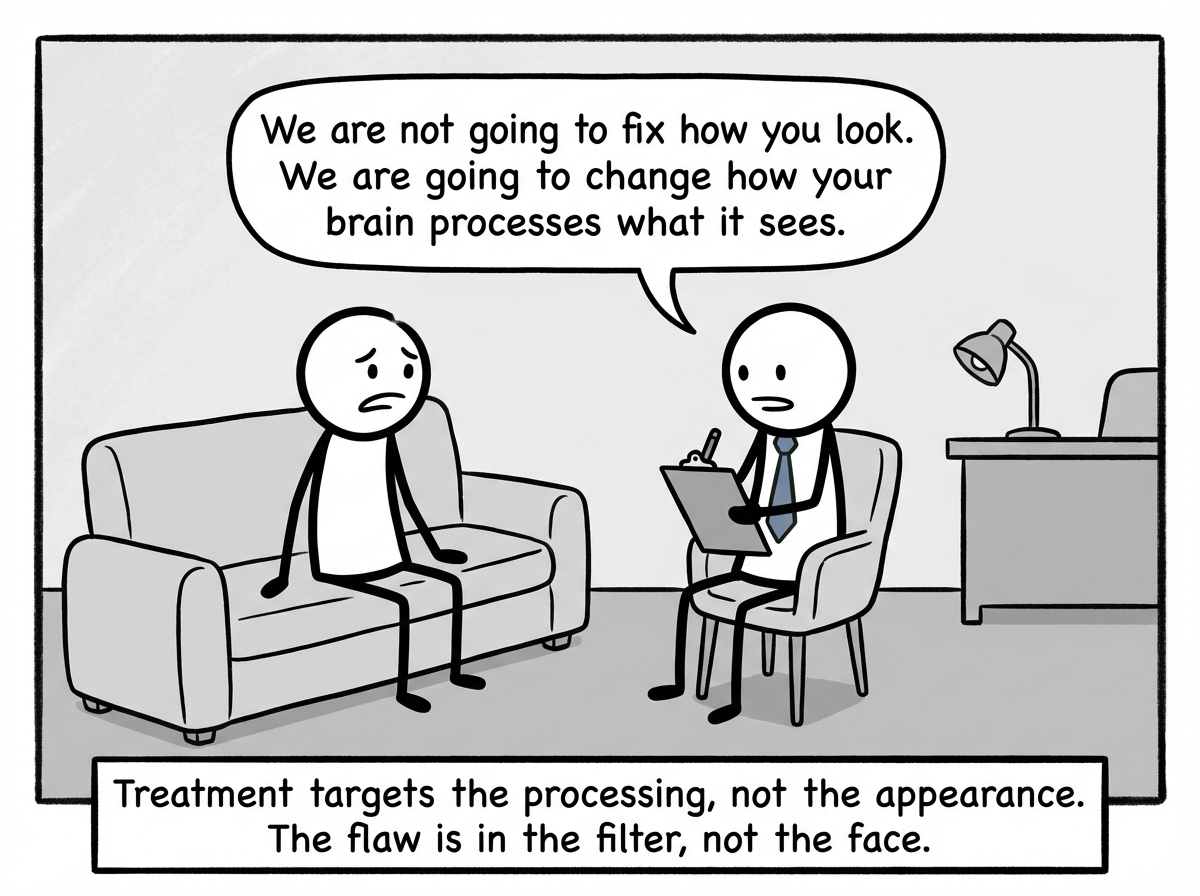
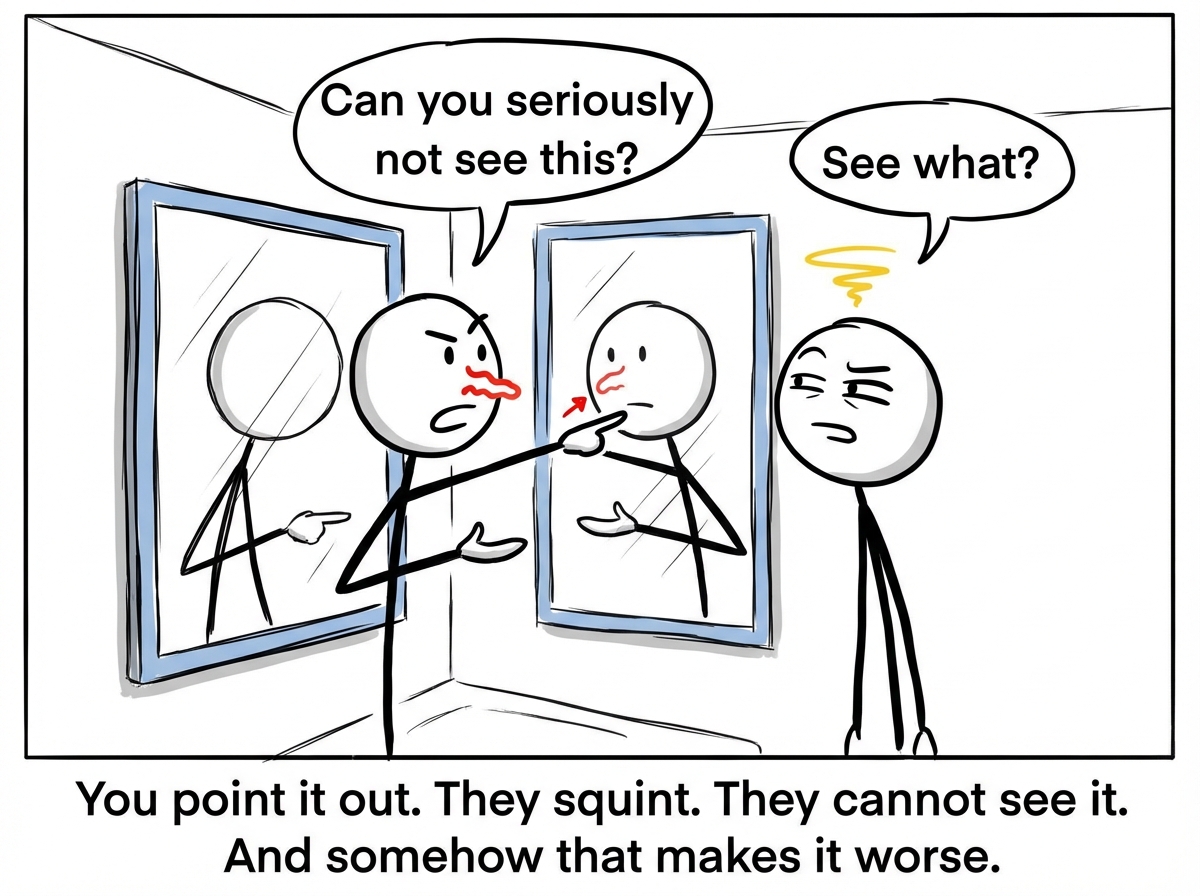
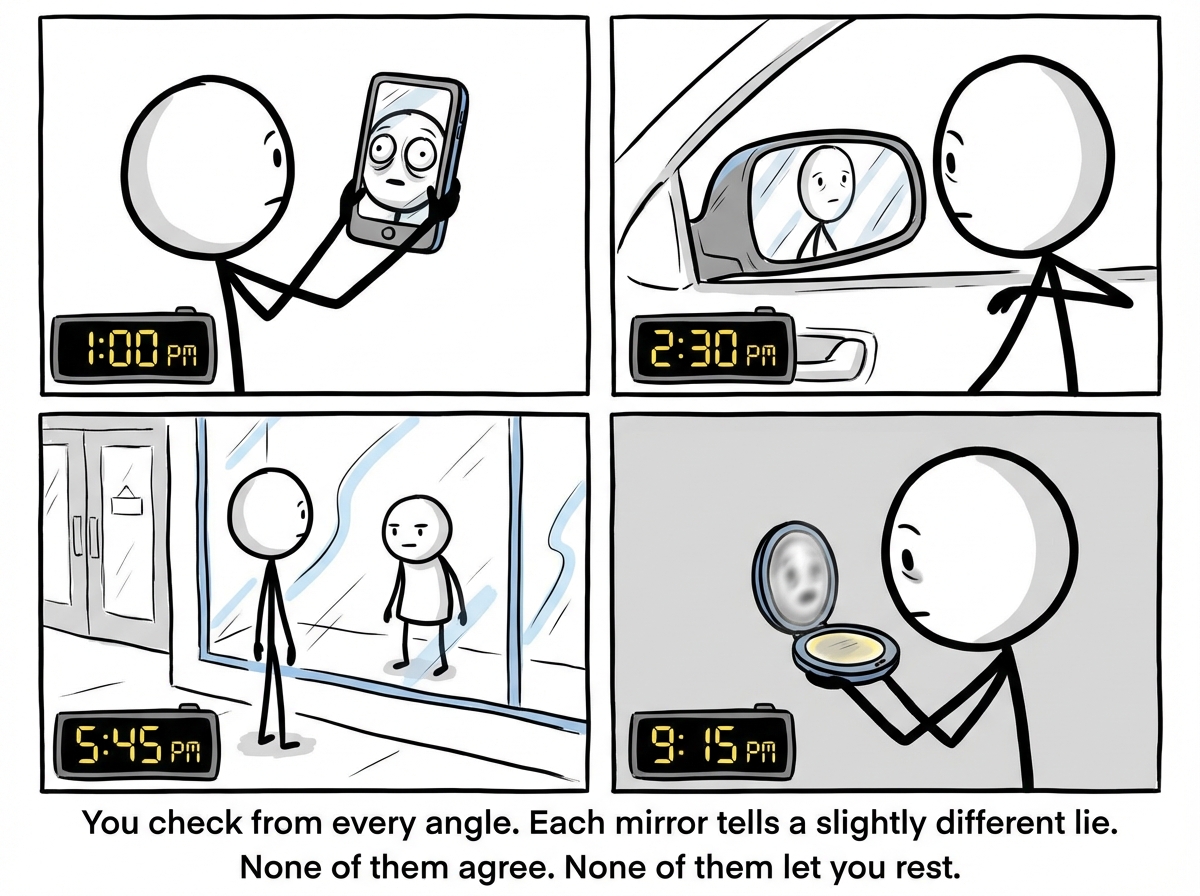
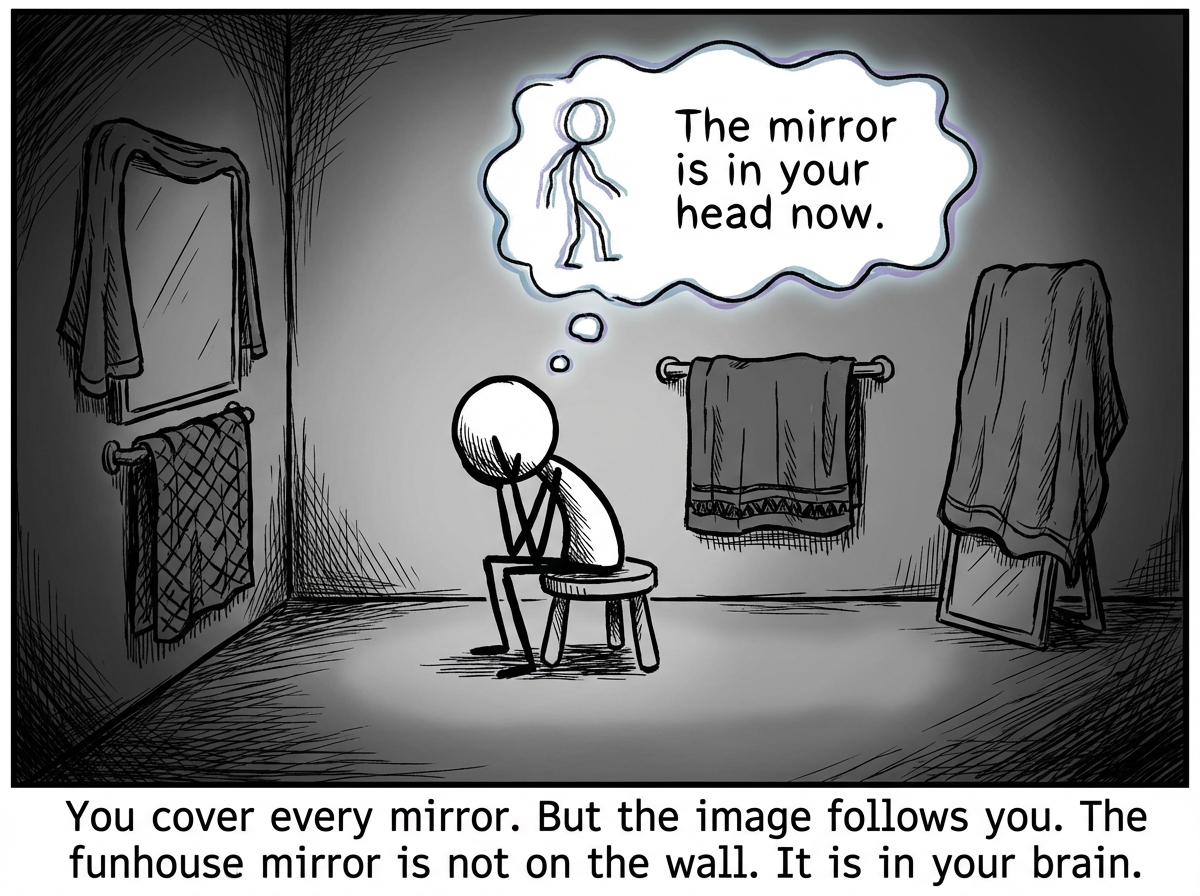
You look in the mirror and see something wrong. Not just unflattering -- wrong. A nose that dominates your face. Skin that looks damaged beyond repair. A body shape that feels grotesque. You see it so clearly that it seems impossible anyone else could miss it. But they do. When you point it out, people look confused. When you explain, they dismiss it. And their confusion does not help -- it makes you feel more alone, because now you are living in a reality no one else can see. This is the core experience of body dysmorphic disorder (BDD). The mirror is not lying in the way a funhouse mirror lies -- with obvious, laughable distortion. It is lying in a way that feels indistinguishable from truth. Research by Feusner and colleagues using neuroimaging has shown that people with BDD process visual information about faces differently -- they over-focus on local, detail-level features rather than seeing the global picture. Your brain literally zooms in on one area and processes it with a different level of scrutiny than everything else. The compulsive behaviors that follow -- checking, comparing, seeking reassurance, covering, avoiding -- are all attempts to manage the distress of living with a perception you cannot trust. But each check reinforces the fixation. Each comparison deepens the distortion. The loop tightens. What makes BDD so isolating is that the person knows something feels off, but they attribute the problem to their appearance rather than to their perception. The first step toward relief is a radical reframe: the problem is not what you see in the mirror. The problem is the mirror your brain has built.
Key Takeaway
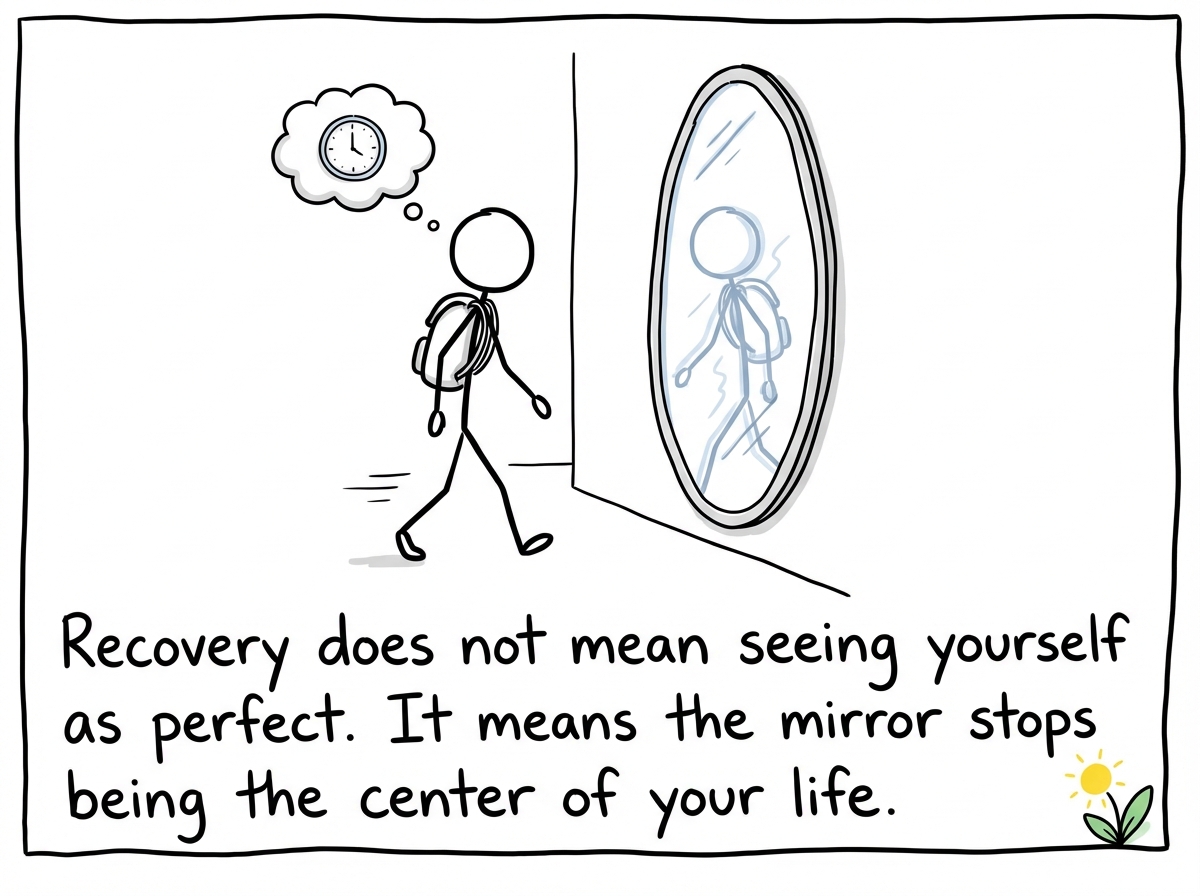
The funhouse mirror of body dysmorphia does not look like a funhouse mirror. It looks like the truth -- and that is what makes it so hard to escape.