The Funhouse Mirror
A person sees a grotesquely distorted reflection in an ordinary mirror while everyone around them sees a completely normal person -- but they cannot be convinced the distortion is not real.

When your perception of your body becomes so distorted that you cannot trust what you see in the mirror.
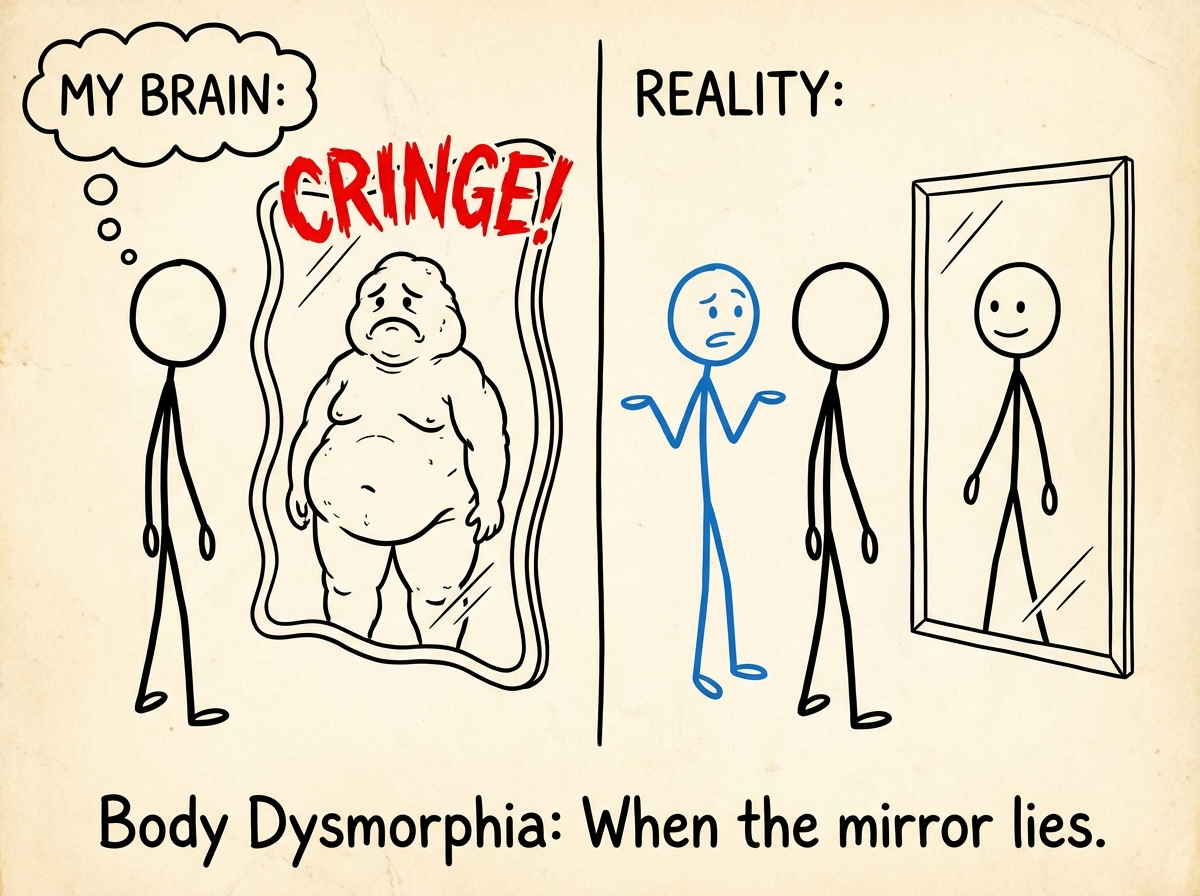
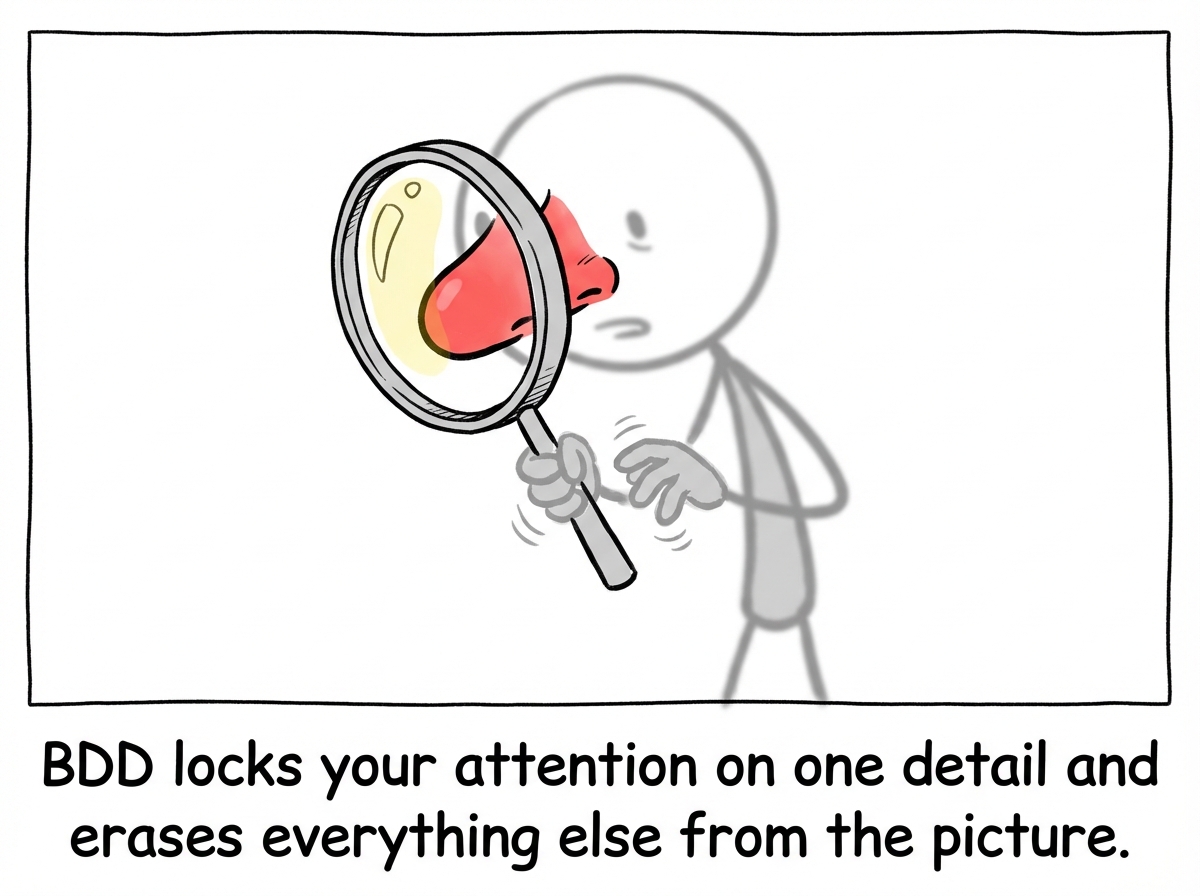
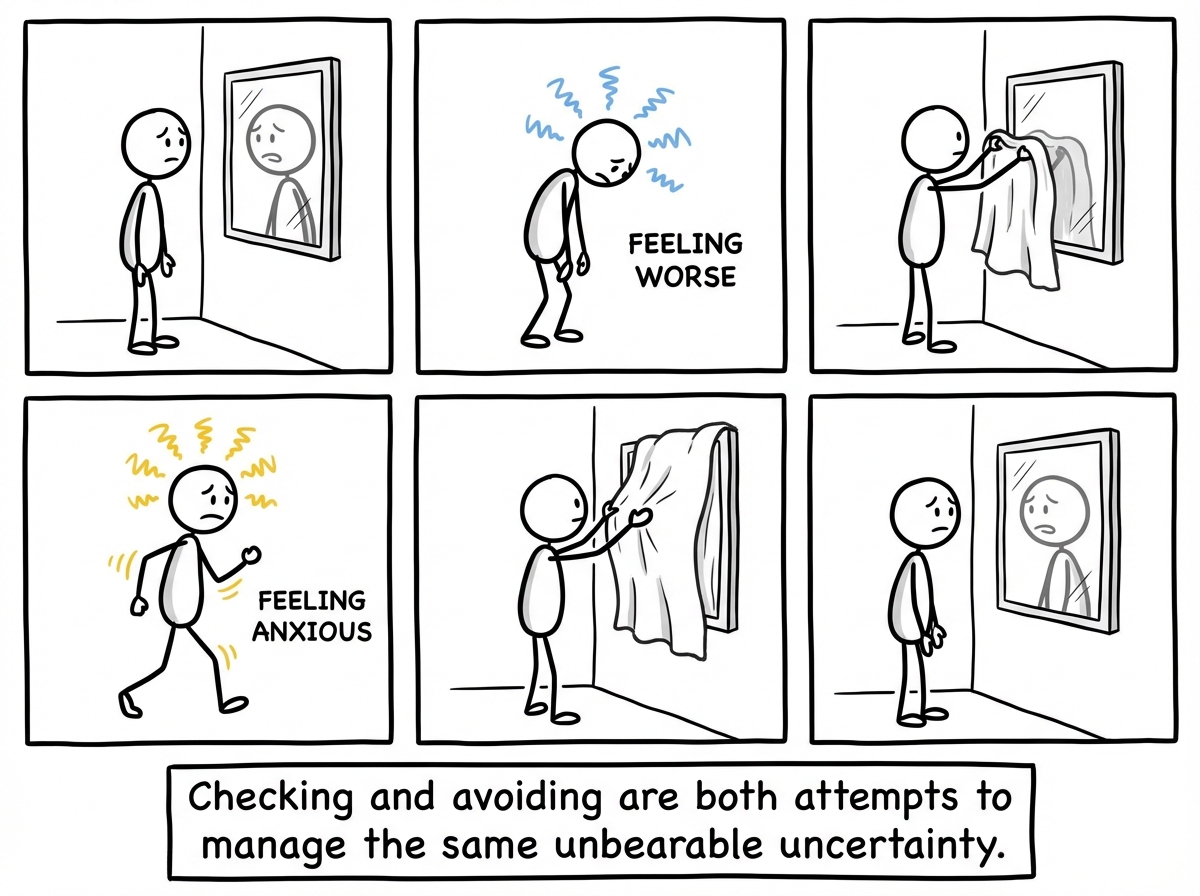
Body dysmorphic disorder (BDD) is not vanity. It is a condition in which your brain constructs a version of your appearance that does not match what others see -- and then convinces you that this distorted version is the truth. People with BDD can spend hours examining, hiding, or trying to fix perceived flaws that are either minimal or entirely invisible to others. The distress is real, the suffering is real, but the flaw driving it exists primarily in perception, not in flesh. Research by Katharine Phillips and others estimates that BDD affects roughly 1-2 percent of the general population, though it is widely underdiagnosed because people are ashamed to talk about it -- they assume others will dismiss them as shallow or attention-seeking. The cognitive patterns in BDD include selective attention (zooming in on one feature while ignoring everything else), magnification (seeing a minor imperfection as grotesque), mind-reading (assuming everyone notices and judges the flaw), and compulsive checking or avoidance behaviors. BDD often co-occurs with OCD, social anxiety, depression, and eating disorders. The mirror becomes both an obsession and a source of dread. Some people check compulsively; others avoid mirrors entirely. Both behaviors are attempts to manage the unbearable uncertainty of not knowing what you really look like. Treatment typically involves cognitive-behavioral therapy (CBT) with exposure and response prevention, and sometimes SSRIs. The goal is not to convince you that you are beautiful -- it is to help your brain stop fixating, distorting, and building your entire day around a perception that was never accurate to begin with.
Body dysmorphia is not about how you look. It is about a brain that distorts what you see and then refuses to let you look away.
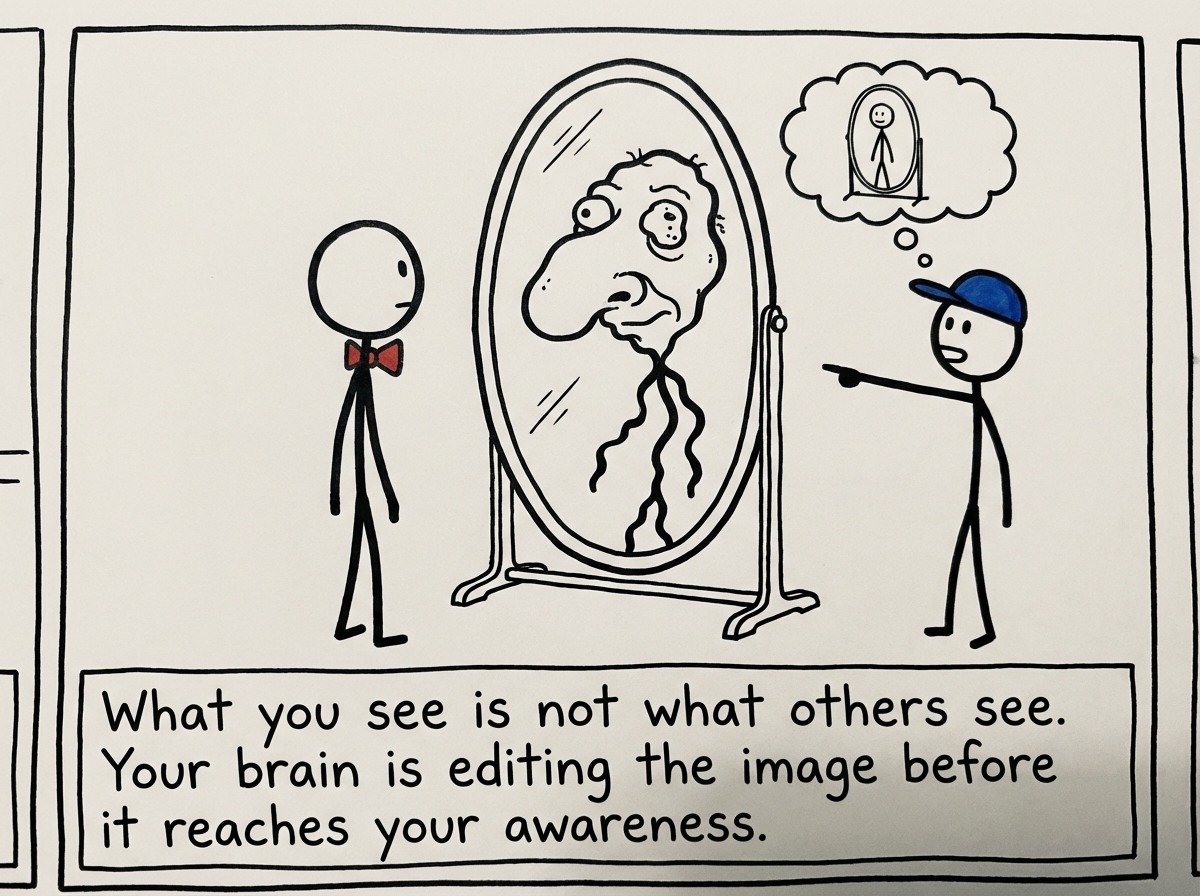
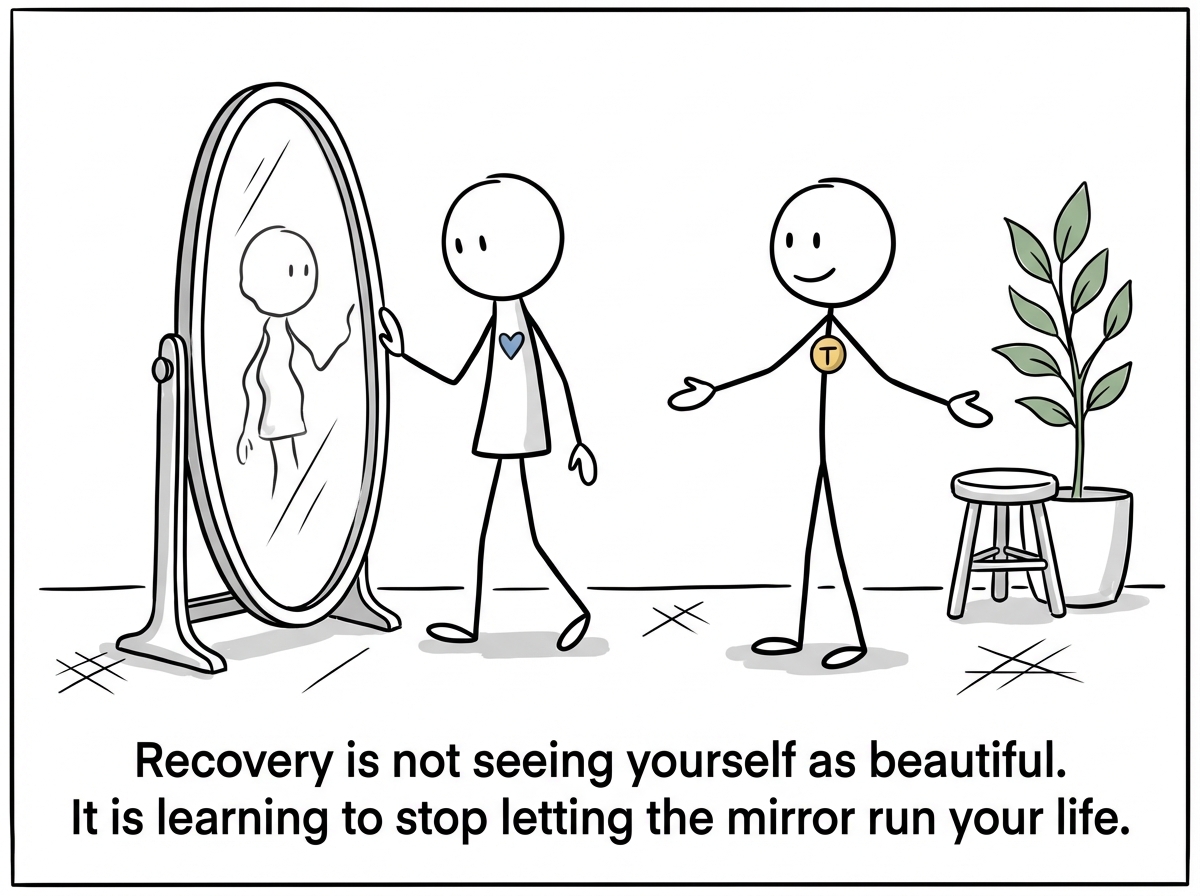
A person sees a grotesquely distorted reflection in an ordinary mirror while everyone around them sees a completely normal person -- but they cannot be convinced the distortion is not real.
A person tries on fifteen outfits before leaving the house, hating every single one -- not because nothing fits, but because their perception of themselves makes everything look wrong.