The Compliment Deflector
Every time someone pays a compliment about their appearance, a person reflexively bats it away with a self-deprecating counter -- unable to let a kind word land.

How you perceive your physical appearance -- and how that perception was shaped long before you ever chose it.
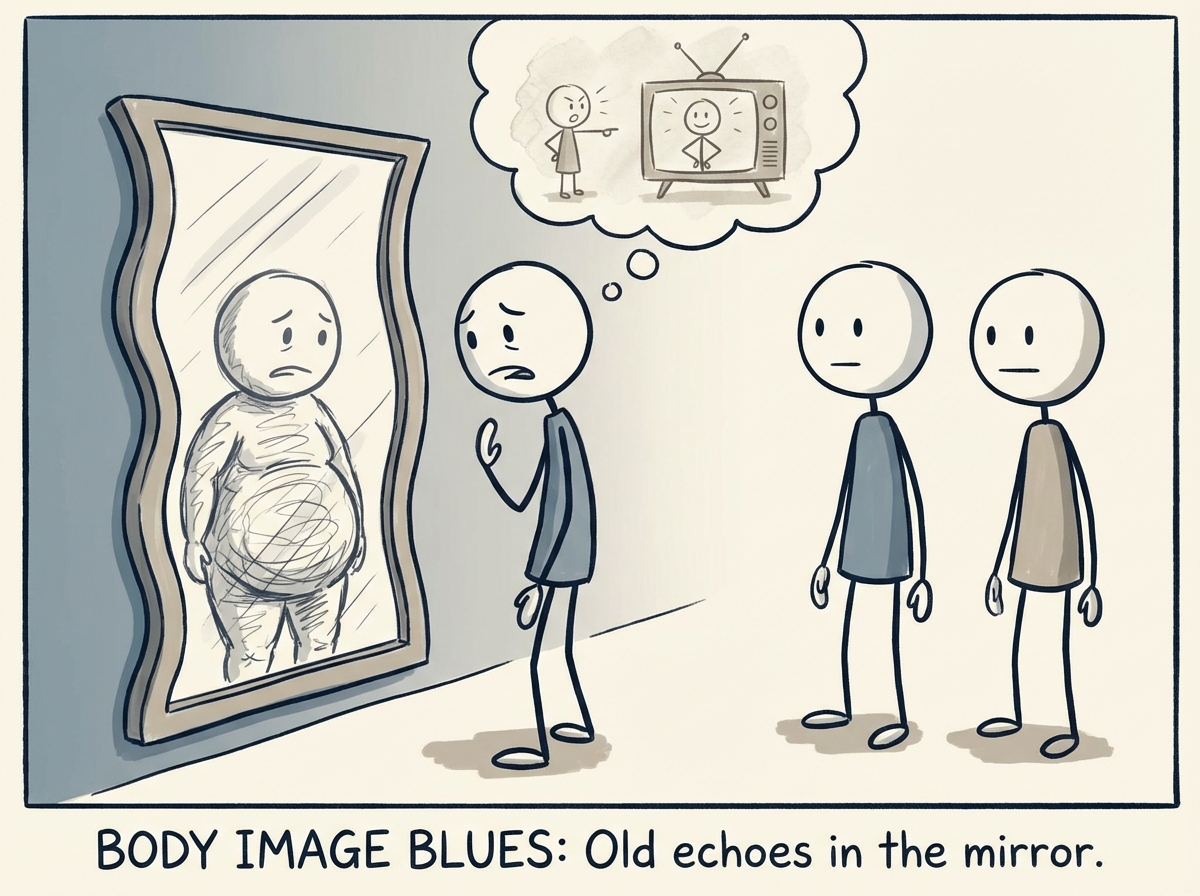
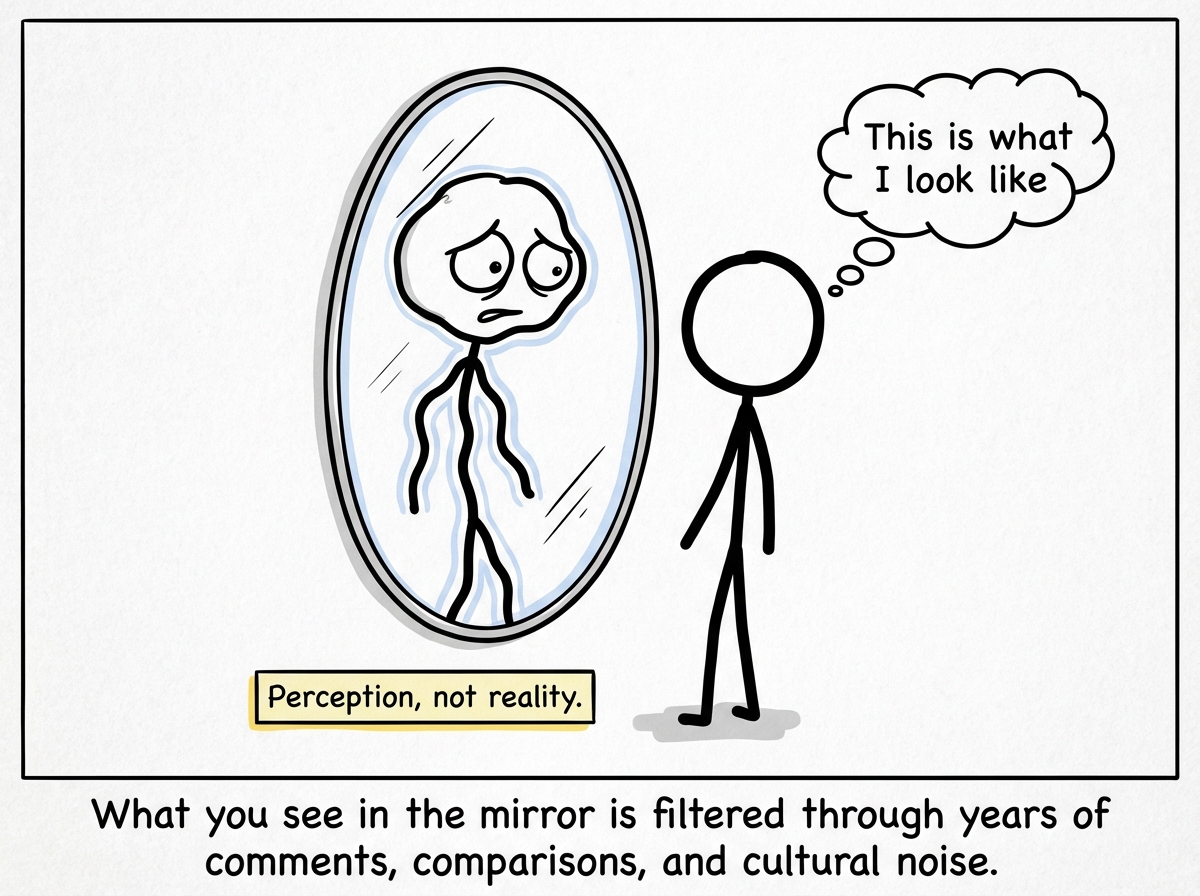
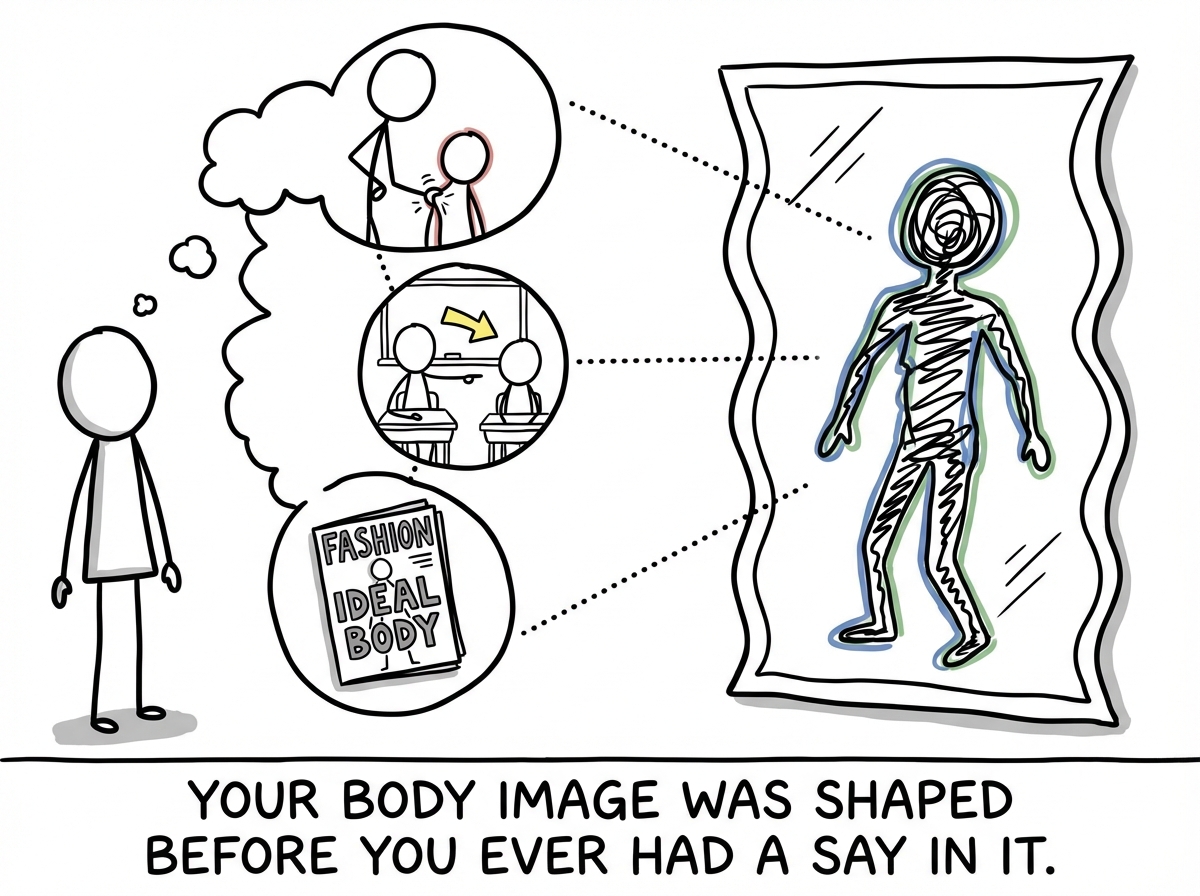
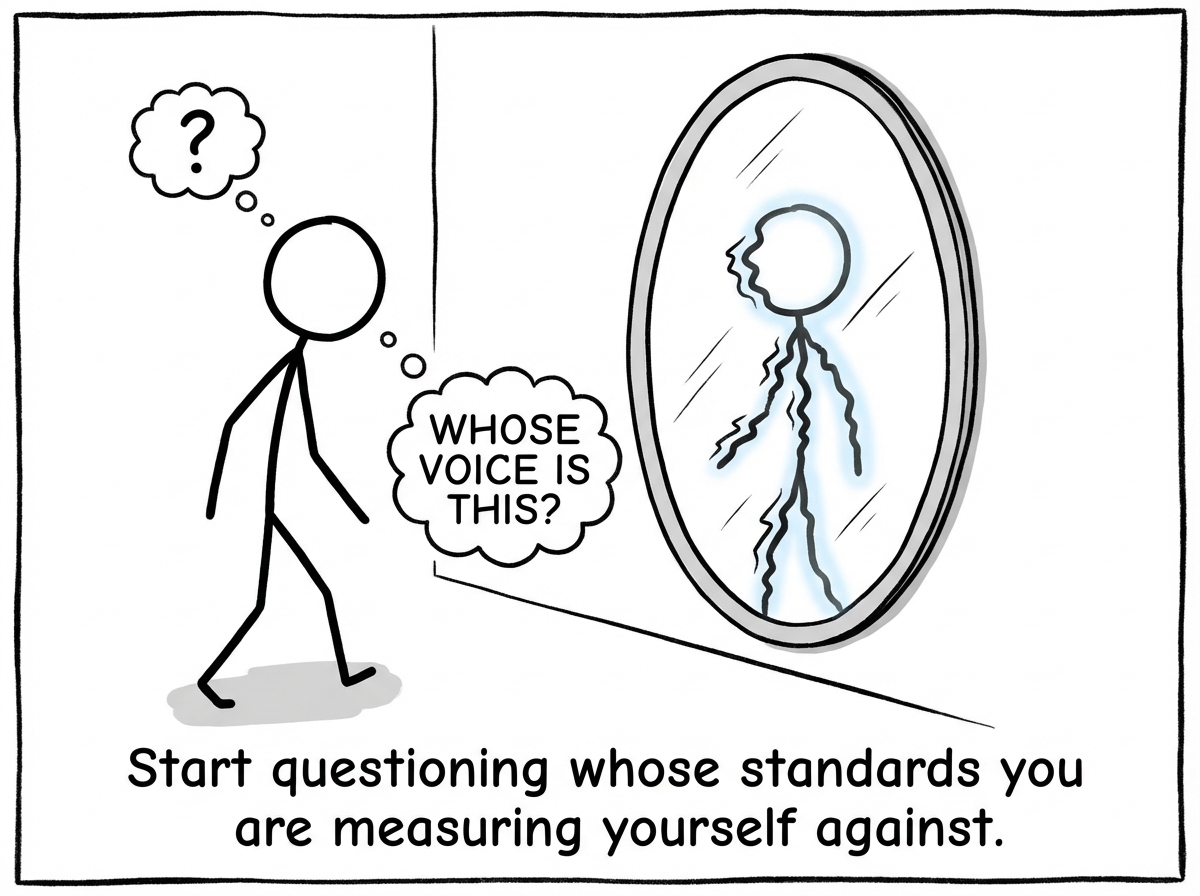
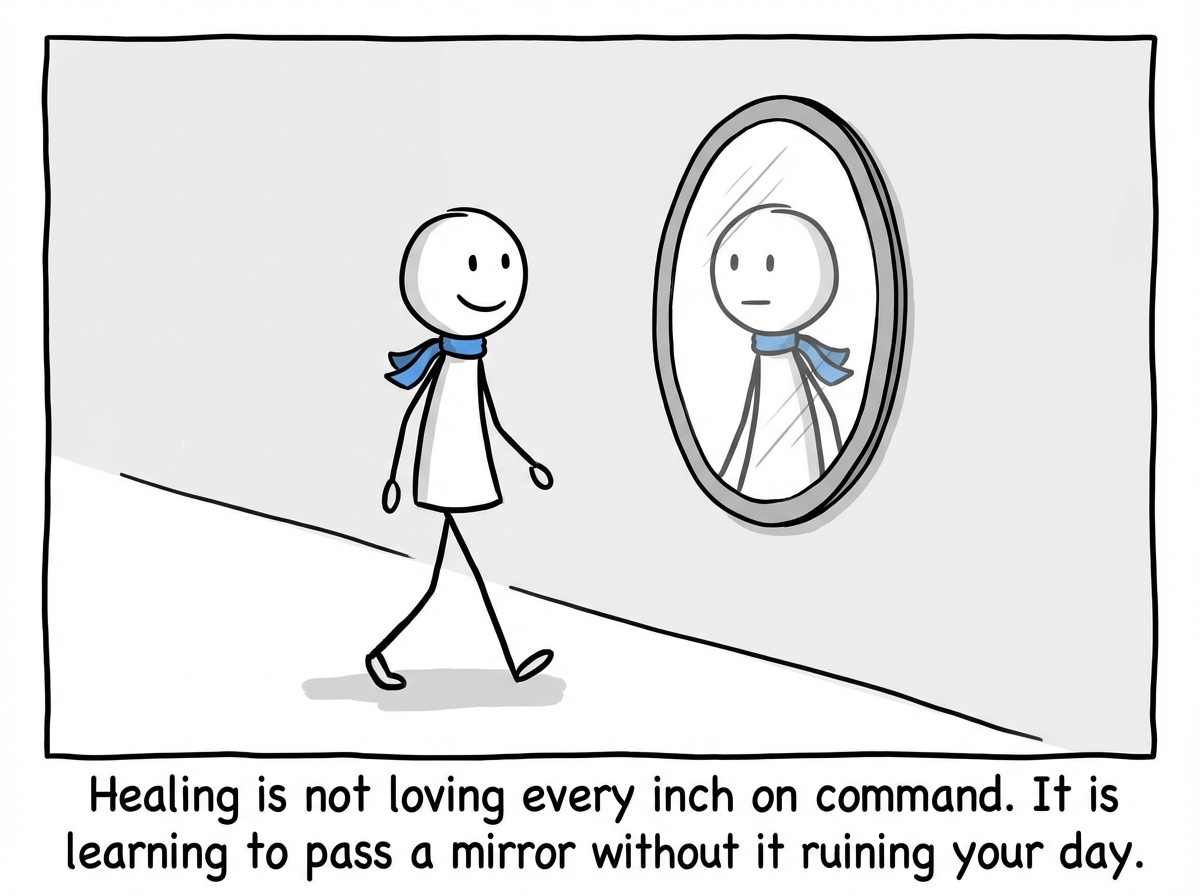
Body image is not about how your body actually looks. It is about how you think it looks, how you feel about what you see, and how those feelings shape every room you walk into, every outfit you put on, and every photo you avoid. Research by Thomas Cash and others has shown that body image is a multidimensional construct involving perceptual, affective, cognitive, and behavioral components. You can look in the mirror and see something entirely different from what others see -- not because your eyes are broken, but because your perception has been filtered through years of comments, comparisons, and cultural messages about what a body should be. Body image disturbance exists on a spectrum. On one end, there is mild dissatisfaction that flares up in dressing rooms and fades by dinner. On the other end, there is a pervasive, consuming preoccupation that reshapes your entire life around avoidance, control, and shame. Most people live somewhere in between -- carrying quiet rules about which angles are safe, which clothes hide enough, and which mirrors to trust. The origins are layered: family comments during childhood, peer teasing, media exposure, and the internalization of cultural beauty standards all contribute. What makes body image so tricky is that it feels like a fact -- like you are simply seeing the truth -- when it is actually a story your mind constructed from incomplete and often unkind data. Healing body image does not mean loving every inch of yourself on command. It means learning to question the voice that tells you your worth is measured in reflections.
What you see in the mirror is not a photograph -- it is a story your mind tells based on years of data you did not choose. You can learn to question that story.
Every time someone pays a compliment about their appearance, a person reflexively bats it away with a self-deprecating counter -- unable to let a kind word land.
A person walks into a dressing room feeling fine, but the fluorescent lights and three-way mirror transform their self-perception into something unrecognizable within seconds.