The Before and After Trap
A person becomes obsessed with before-and-after transformation photos -- measuring their entire life story through the lens of body change, where 'before' means worthless and 'after' means finally enough.

How society's obsession with thinness, clean eating, and body control quietly rewires your sense of self-worth.
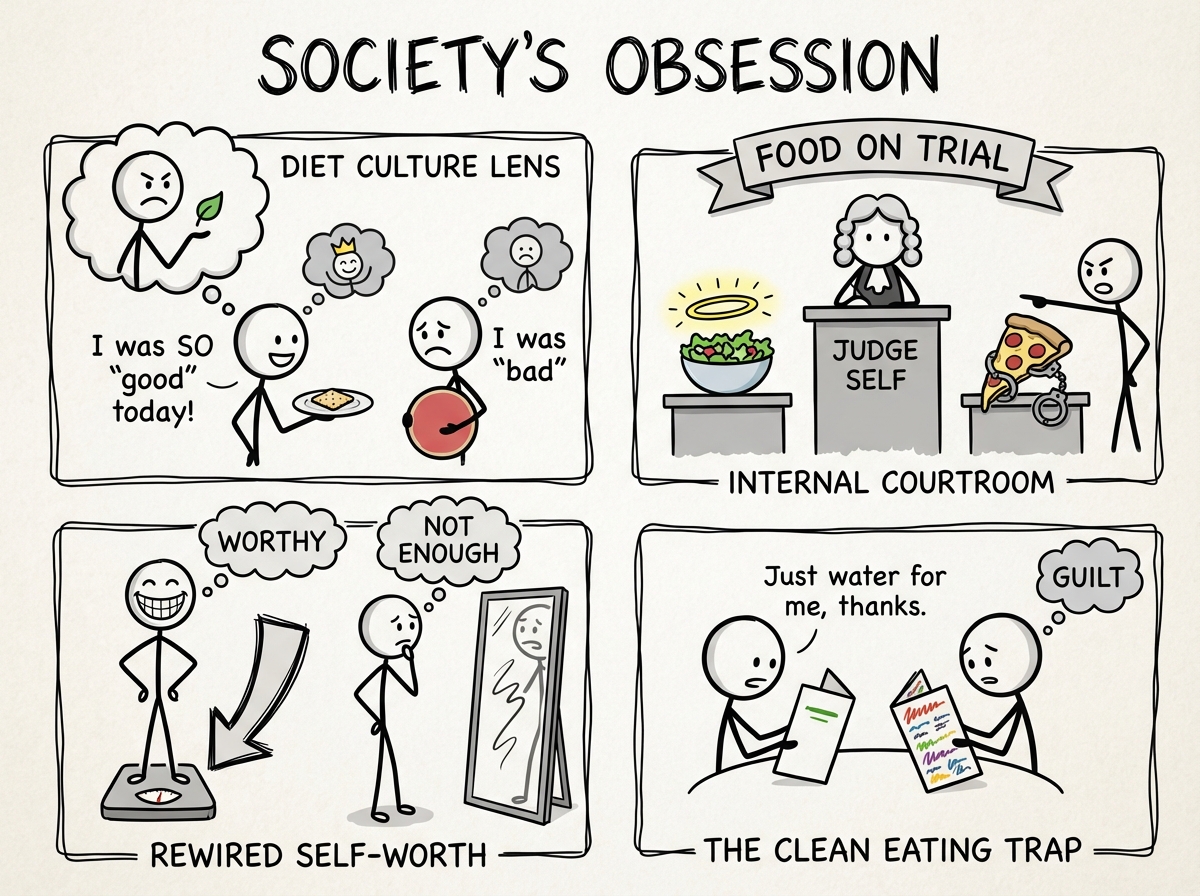
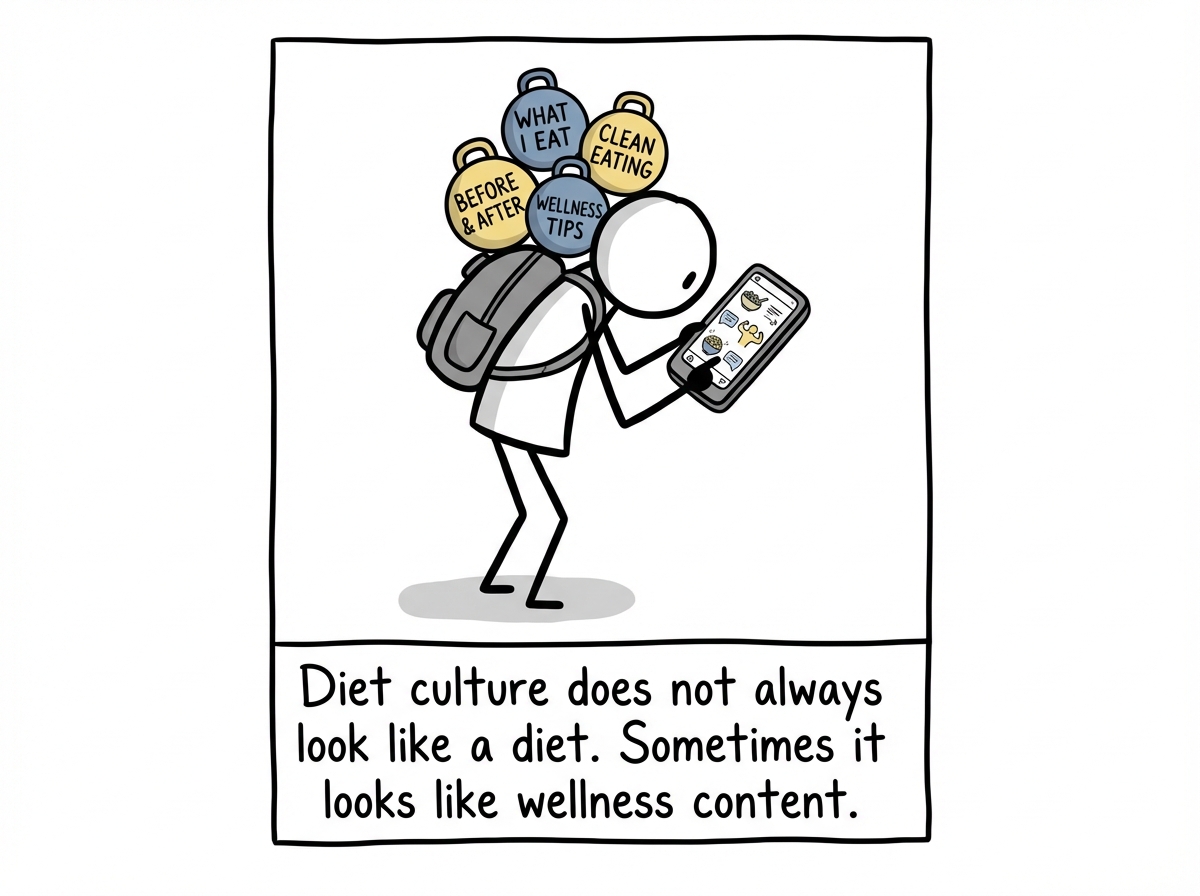
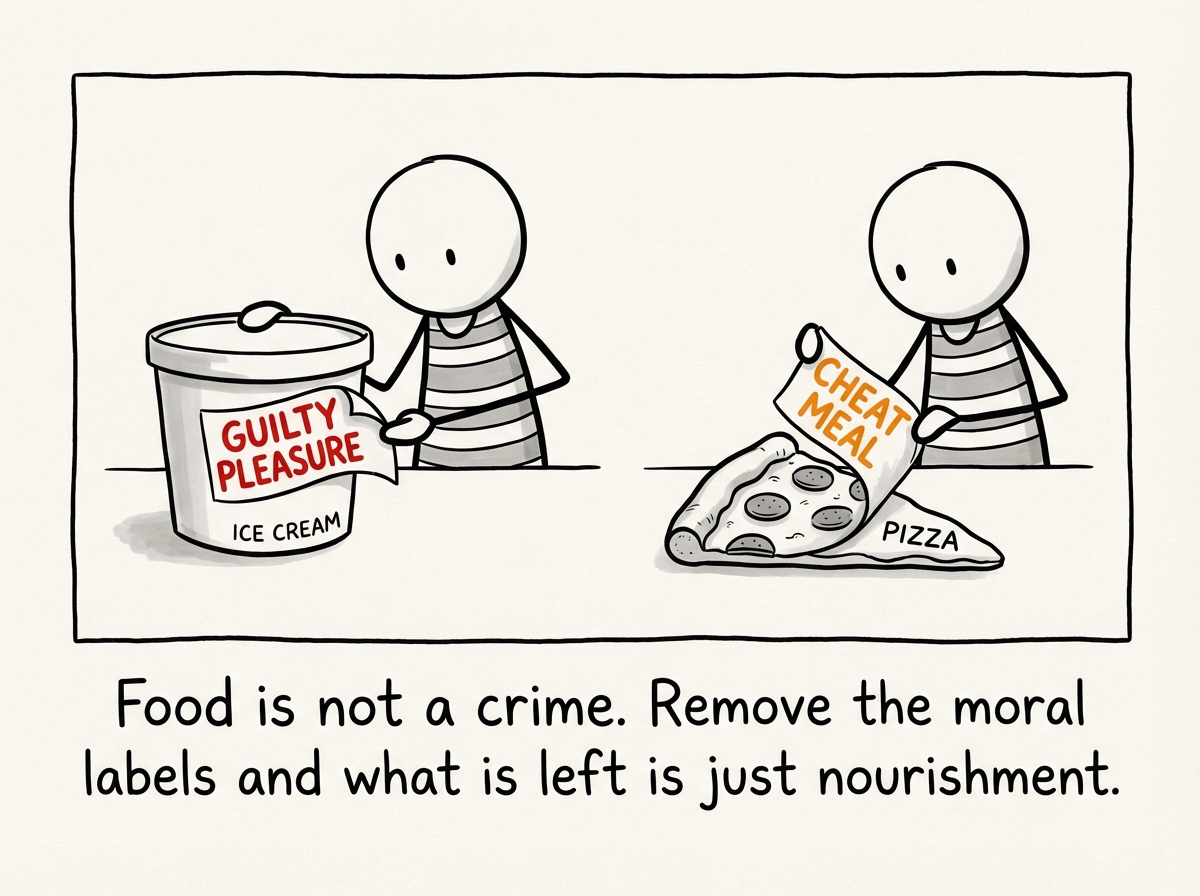
Diet culture is the pervasive belief system that equates thinness with health, moral virtue, and personal worth -- and frames food choices as character tests rather than nourishment decisions. It is not just about diets. It is a worldview that teaches you to distrust your own hunger, moralize what you eat, and measure your value by the number on a scale. Christy Harrison, an anti-diet dietitian and researcher, defines diet culture as a system that worships thinness and equates it with health and moral virtue, promotes weight loss as a means of attaining higher status, demonizes certain foods while elevating others, and oppresses people who do not match its narrow image of health. The psychological effects are well-documented. Internalization of diet culture is associated with disordered eating, body dissatisfaction, food guilt, exercise compulsion, and chronic shame. It turns eating -- one of the most basic human acts -- into a minefield of rules, calculations, and moral judgments. What makes diet culture especially insidious is how it disguises itself. It shows up as wellness, clean eating, lifestyle changes, and health optimization. It rebrands restriction as mindfulness and calls obsession dedication. You can follow all its rules and still feel like you are failing, because the goalposts always move. Recognizing diet culture does not mean abandoning health. It means separating health behaviors from moral worth, learning to eat without guilt, and understanding that your body's value was never determined by its size.
Diet culture does not just tell you what to eat. It tells you what you are worth based on what you eat -- and that equation was rigged from the start.
A person becomes obsessed with before-and-after transformation photos -- measuring their entire life story through the lens of body change, where 'before' means worthless and 'after' means finally enough.
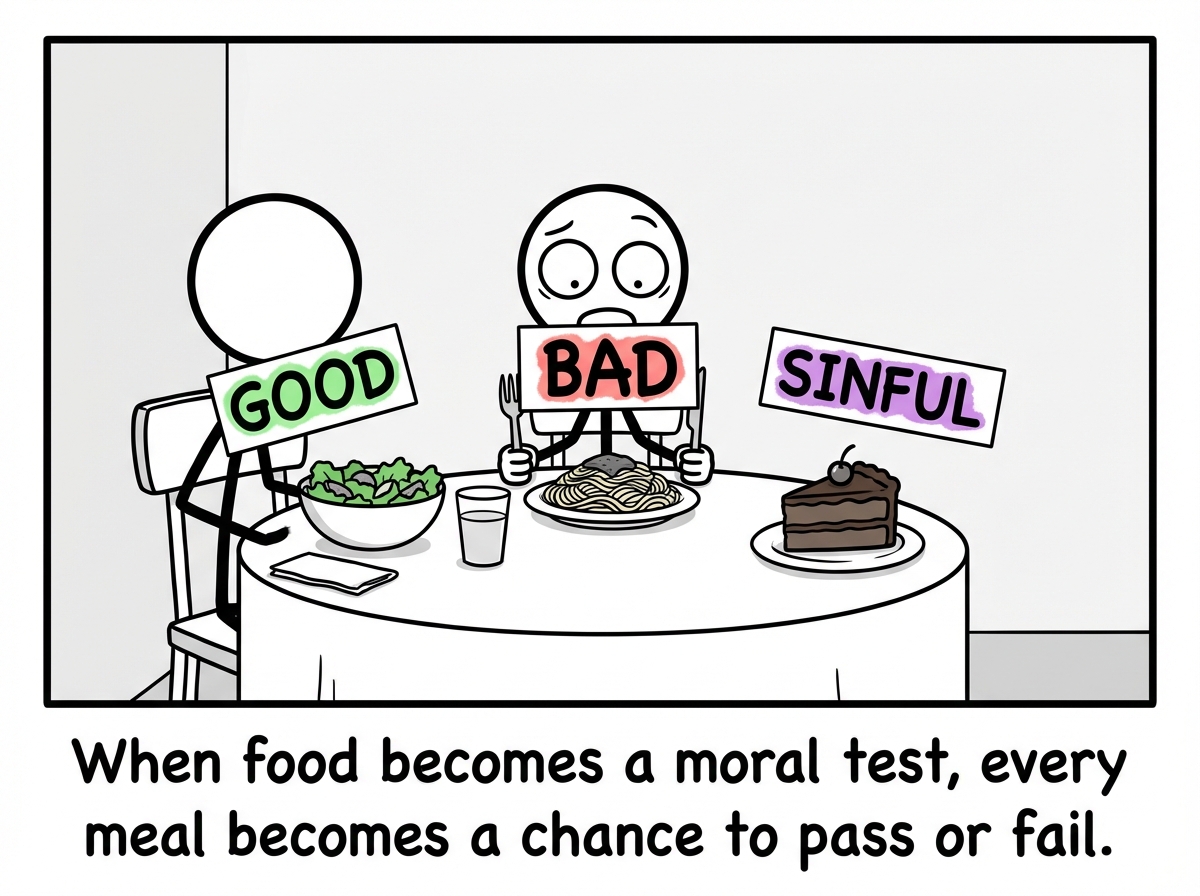
A person's internal courtroom where every food choice is put on trial -- salad is acquitted with praise, pasta is found guilty of moral failure, and the person is both judge and defendant.