The Before and After Trap
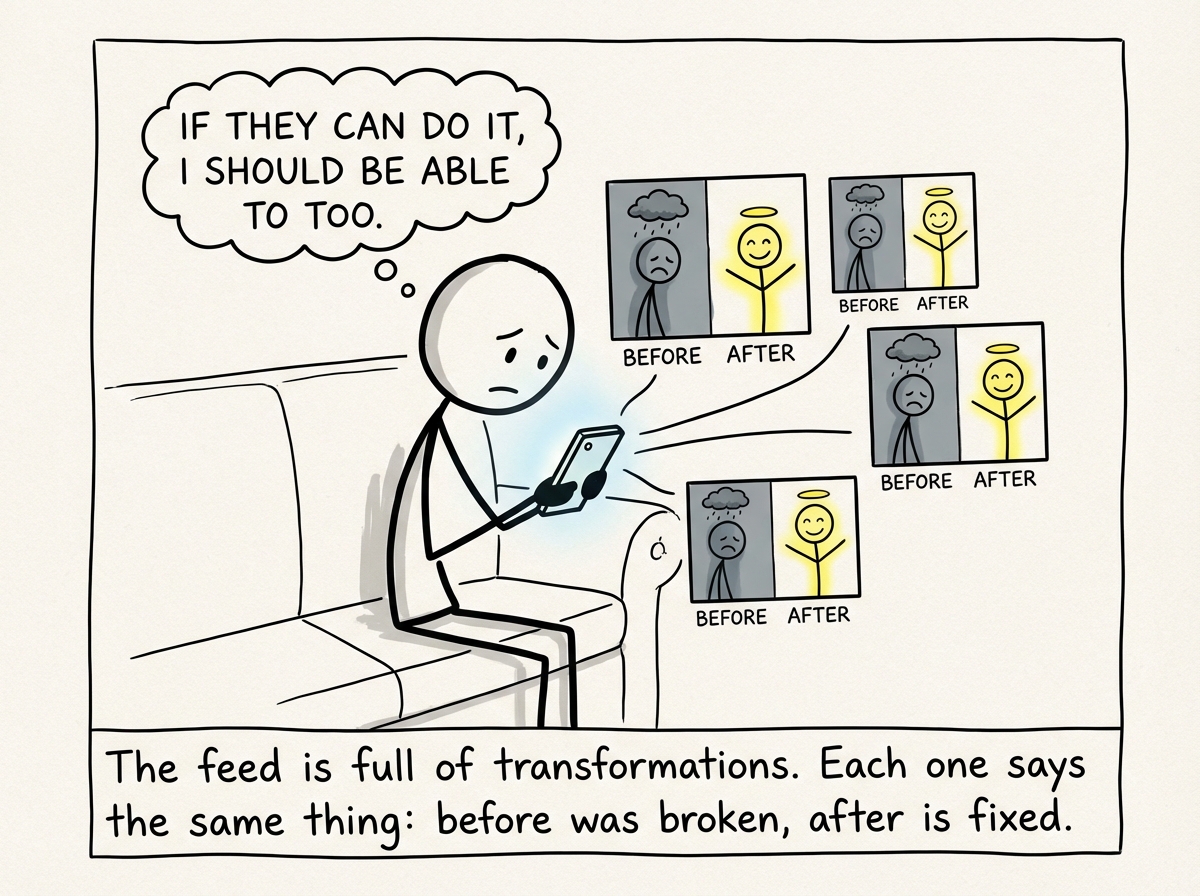
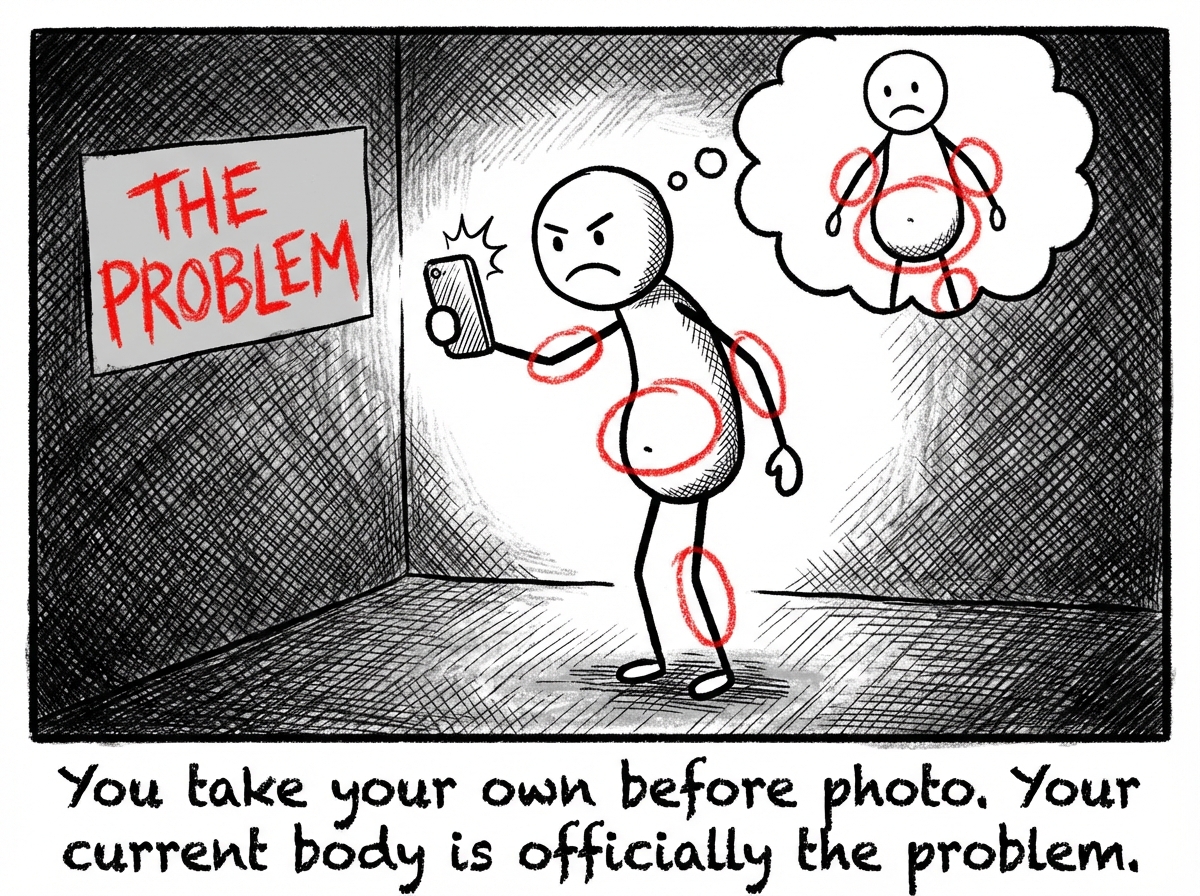
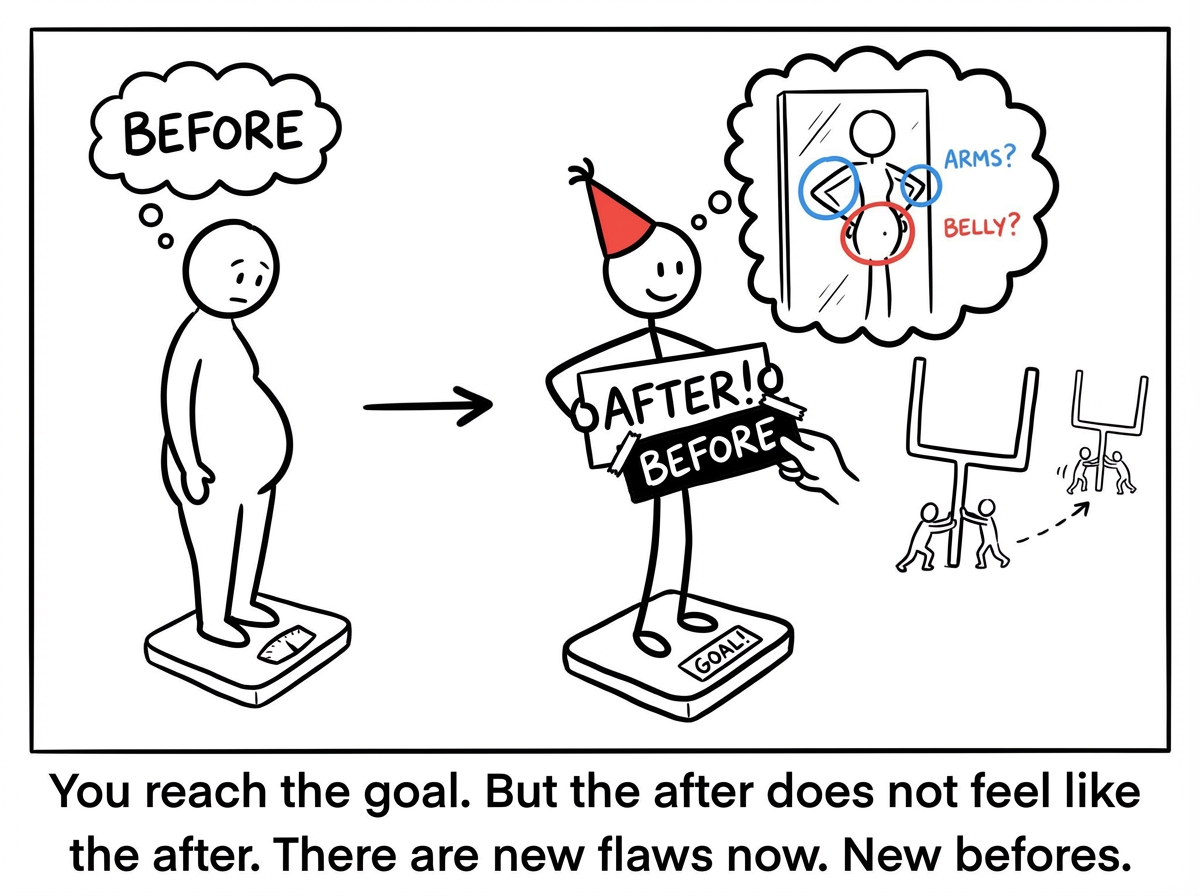
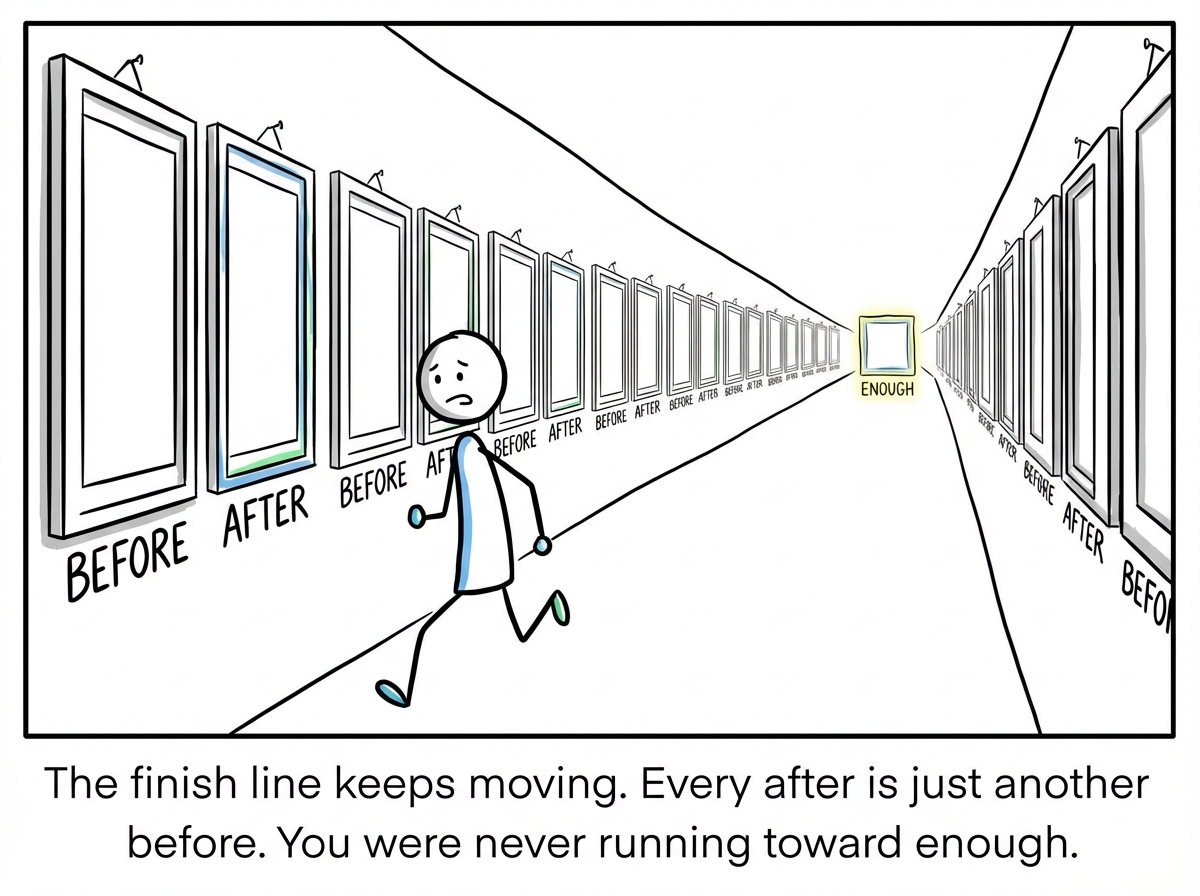
A person becomes obsessed with before-and-after transformation photos -- measuring their entire life story through the lens of body change, where 'before' means worthless and 'after' means finally enough.
Explanation
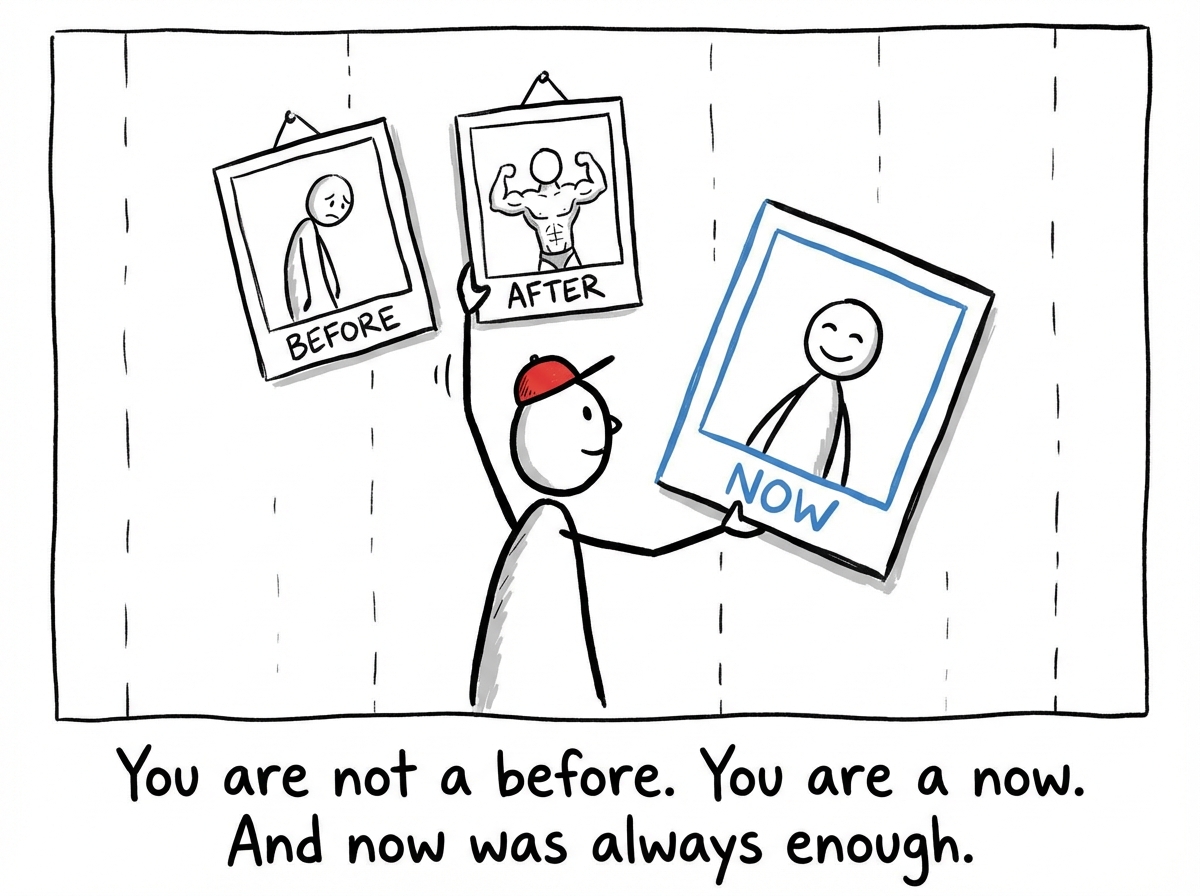
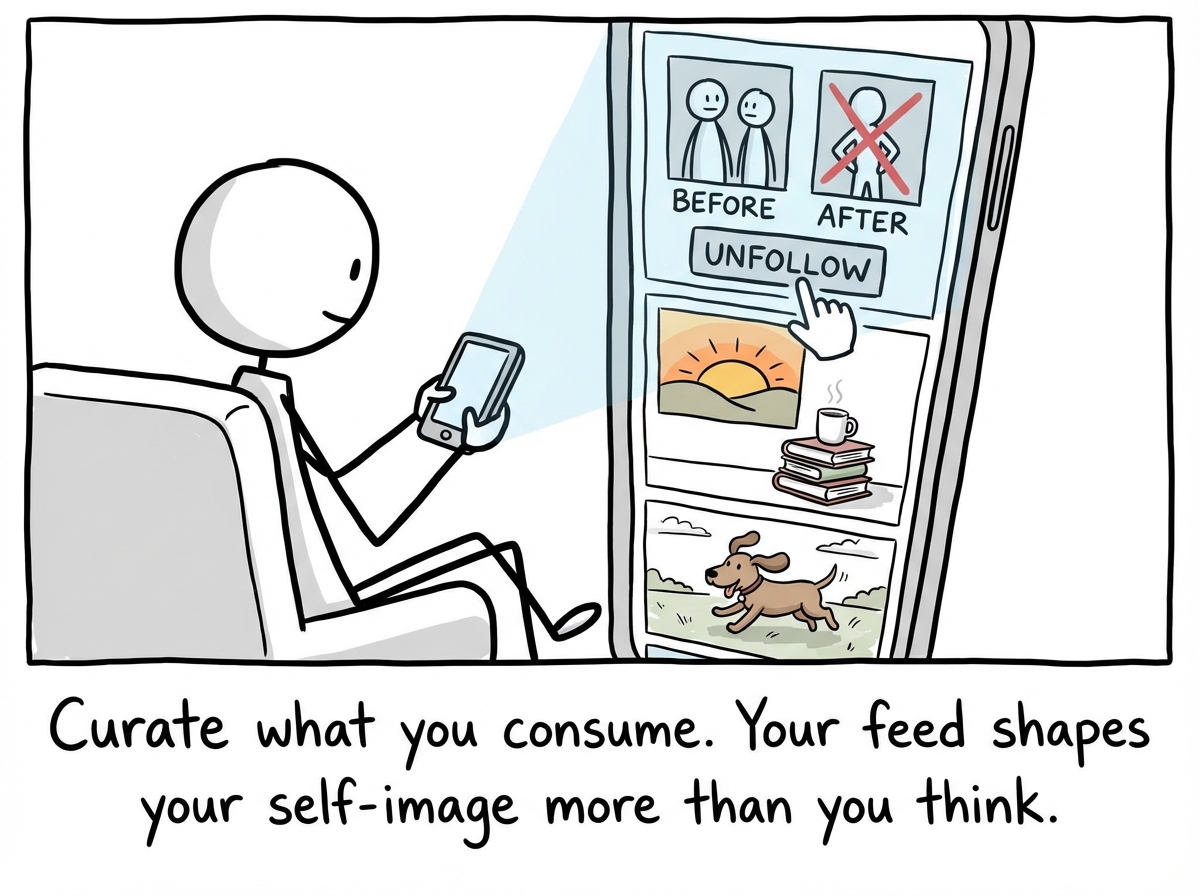
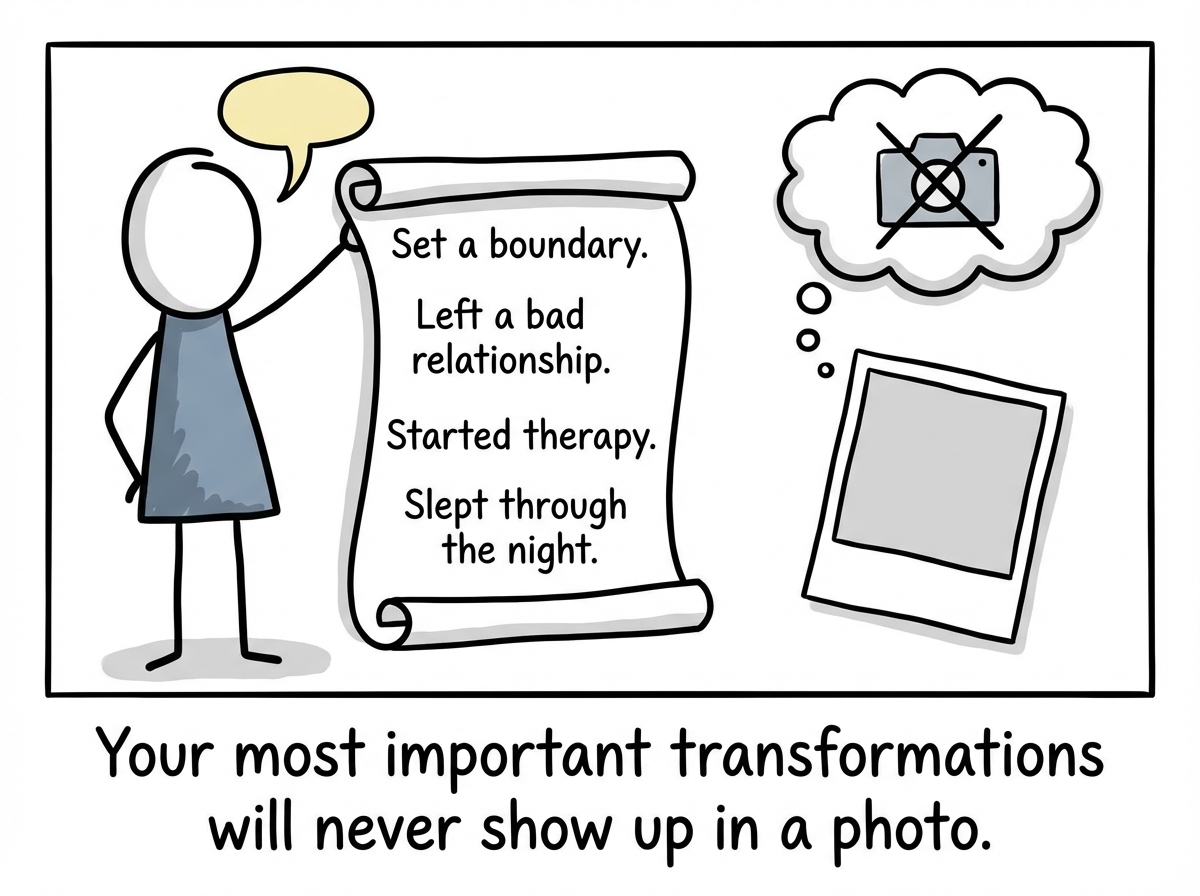
The before-and-after photo is the sacred text of diet culture. Two images, side by side, telling a simple story: you were broken, now you are fixed. You were failing, now you have arrived. The before photo is always dim, slouched, unflattering -- a person caught at their worst. The after photo glows -- better lighting, better posture, better everything. The message is clear: your value lives in the gap between these two images, and you should spend your life trying to reach the right side. What makes the before-and-after narrative so psychologically powerful is that it offers something rare: a visible, measurable story of transformation. In a world where most growth is invisible -- emotional healing, self-awareness, relational repair -- the before-and-after photo provides undeniable proof that change happened. It is addictive precisely because it makes the abstract concrete. But the trap is in the framing. Research on thin-ideal internalization by Thompson and Stice has consistently shown that exposure to idealized body images is associated with body dissatisfaction, negative mood, and disordered eating. Before-and-after photos take this a step further by adding a narrative of moral redemption: the before version is presented as the problem, and the after version as the solution. This teaches you to view your current body -- whatever it looks like today -- as a before. As something that needs to be escaped. The deepest damage is to the present moment. If you are always living in a before photo, you can never be enough right now. The after is always in the future, and the goalposts always move. Escaping the trap means learning that your worth was never in the comparison. The before version of you was a whole person too.
Key Takeaway
If you are always living in a before photo, you will never be enough right now -- because the after keeps moving.