The Good Food Bad Food Court
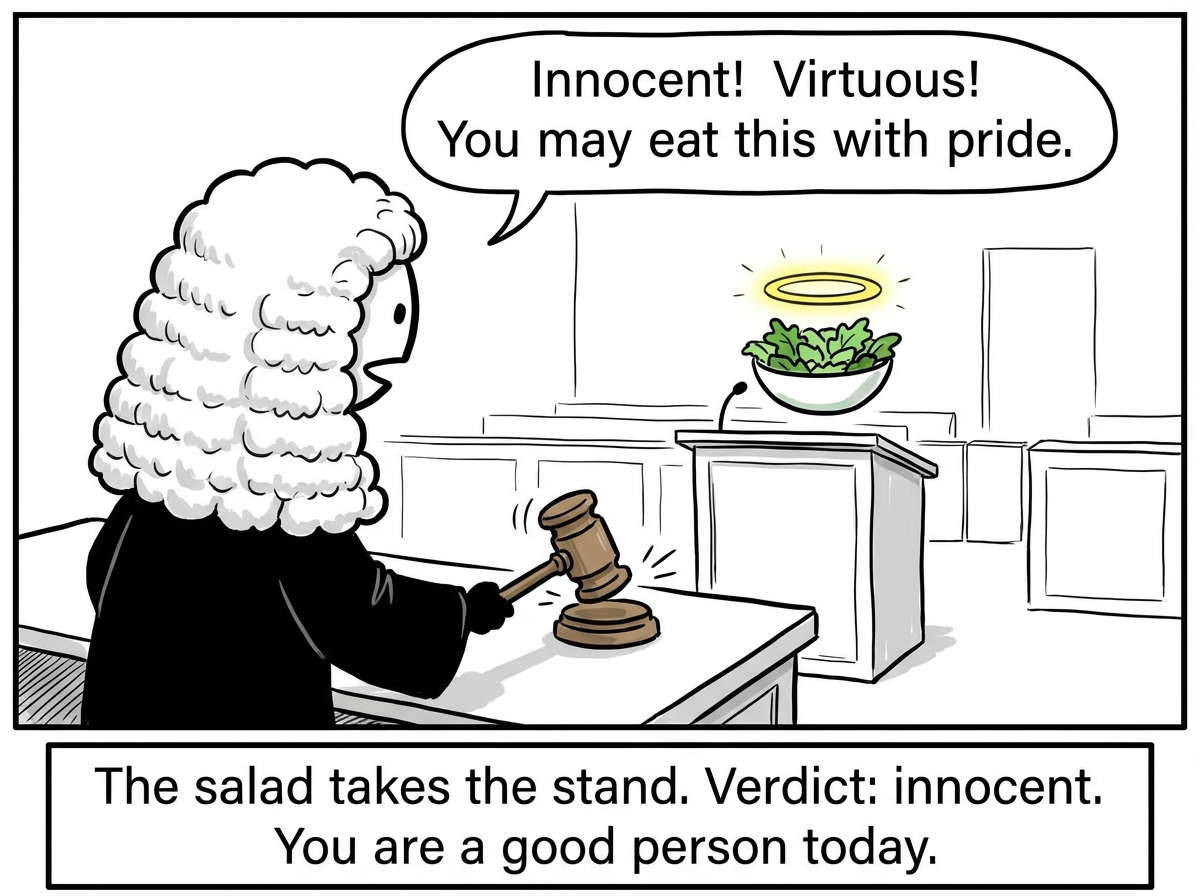
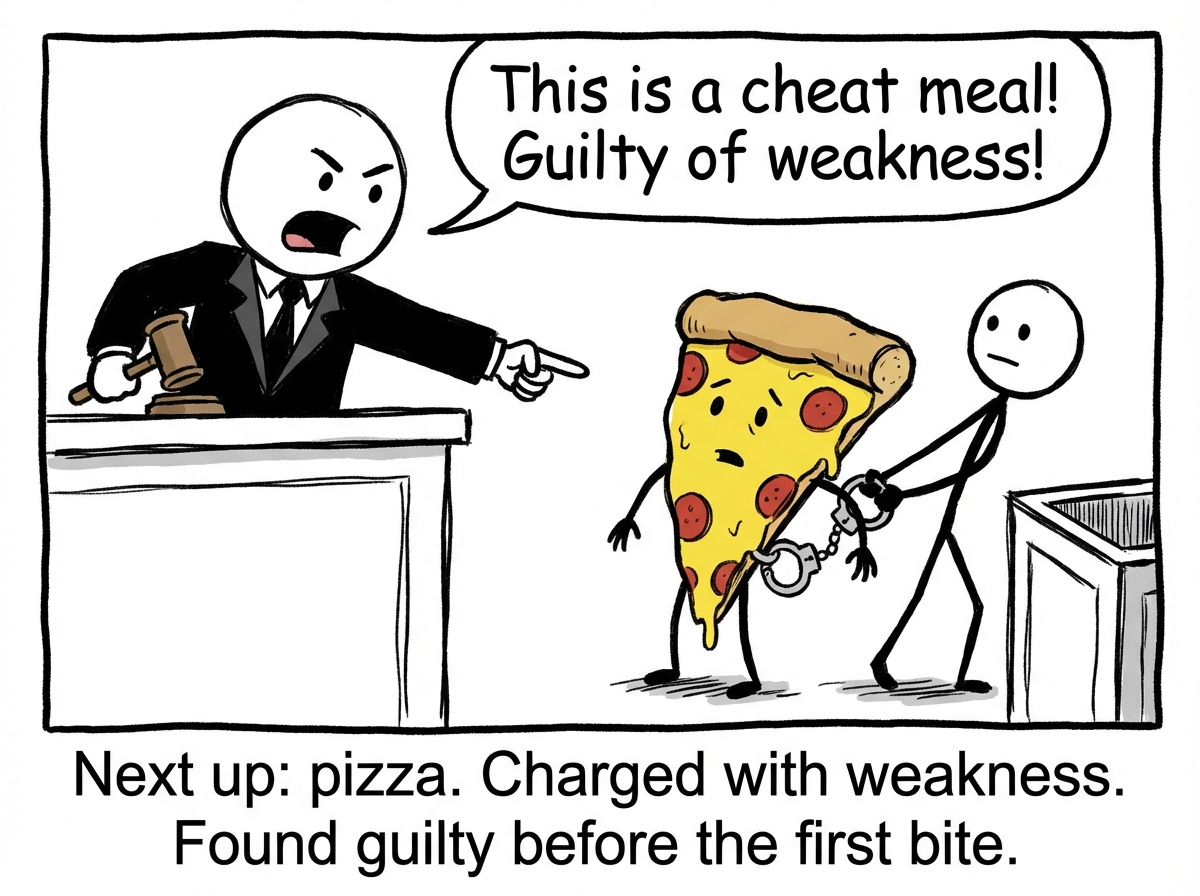
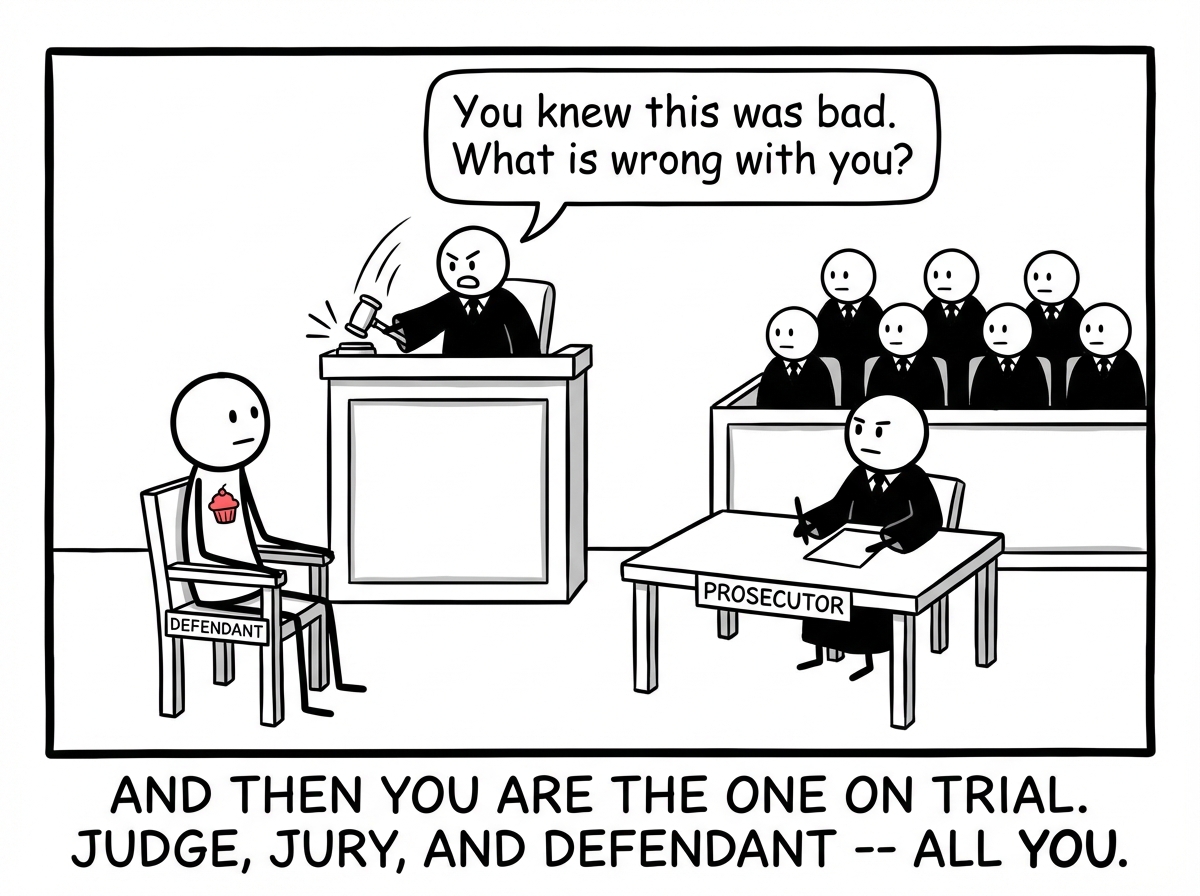
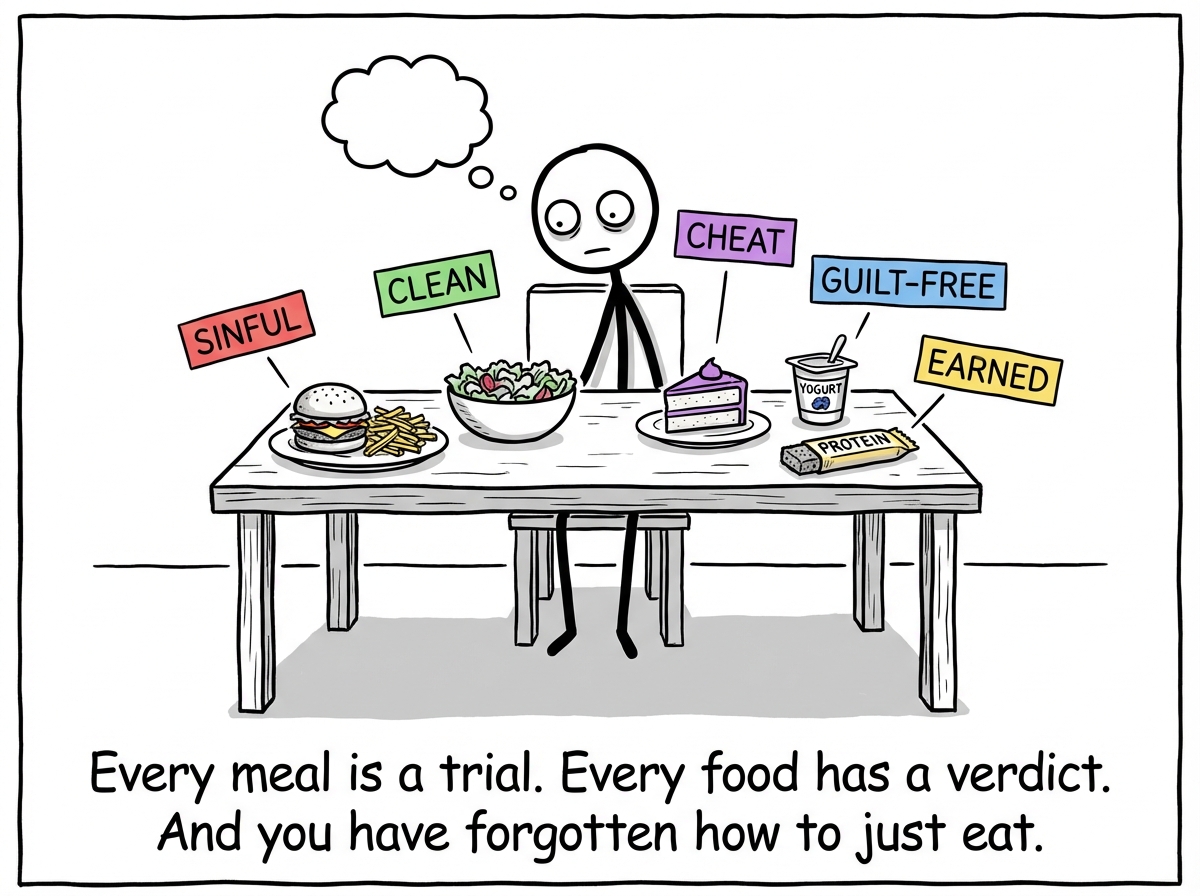
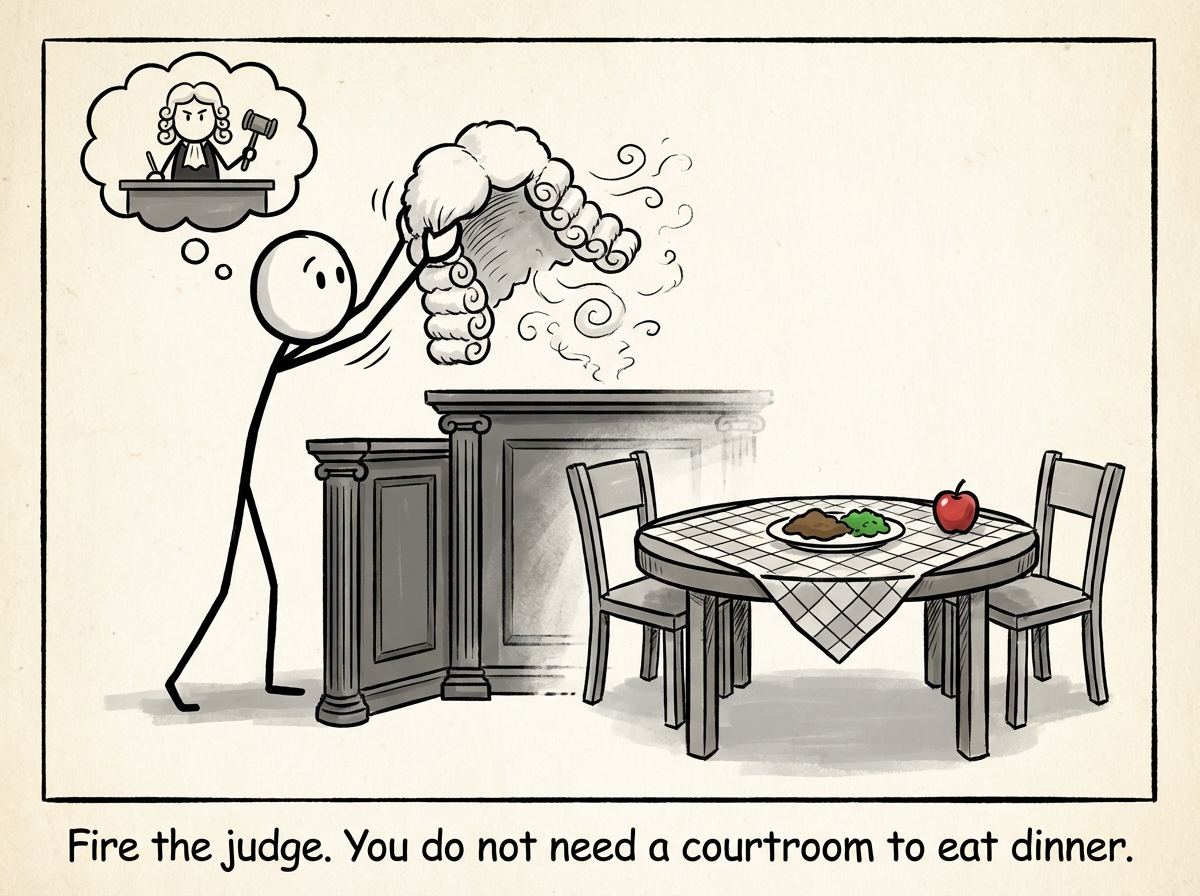
A person's internal courtroom where every food choice is put on trial -- salad is acquitted with praise, pasta is found guilty of moral failure, and the person is both judge and defendant.
Explanation
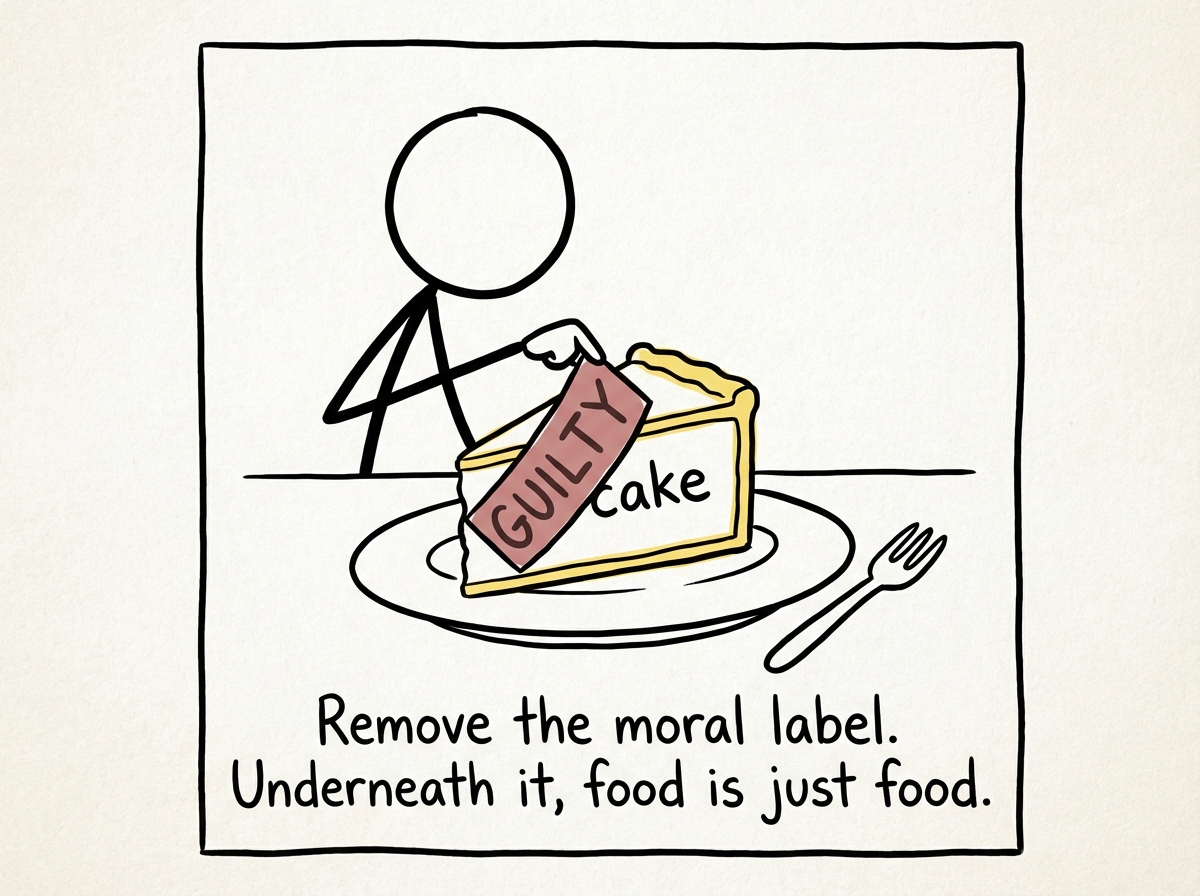
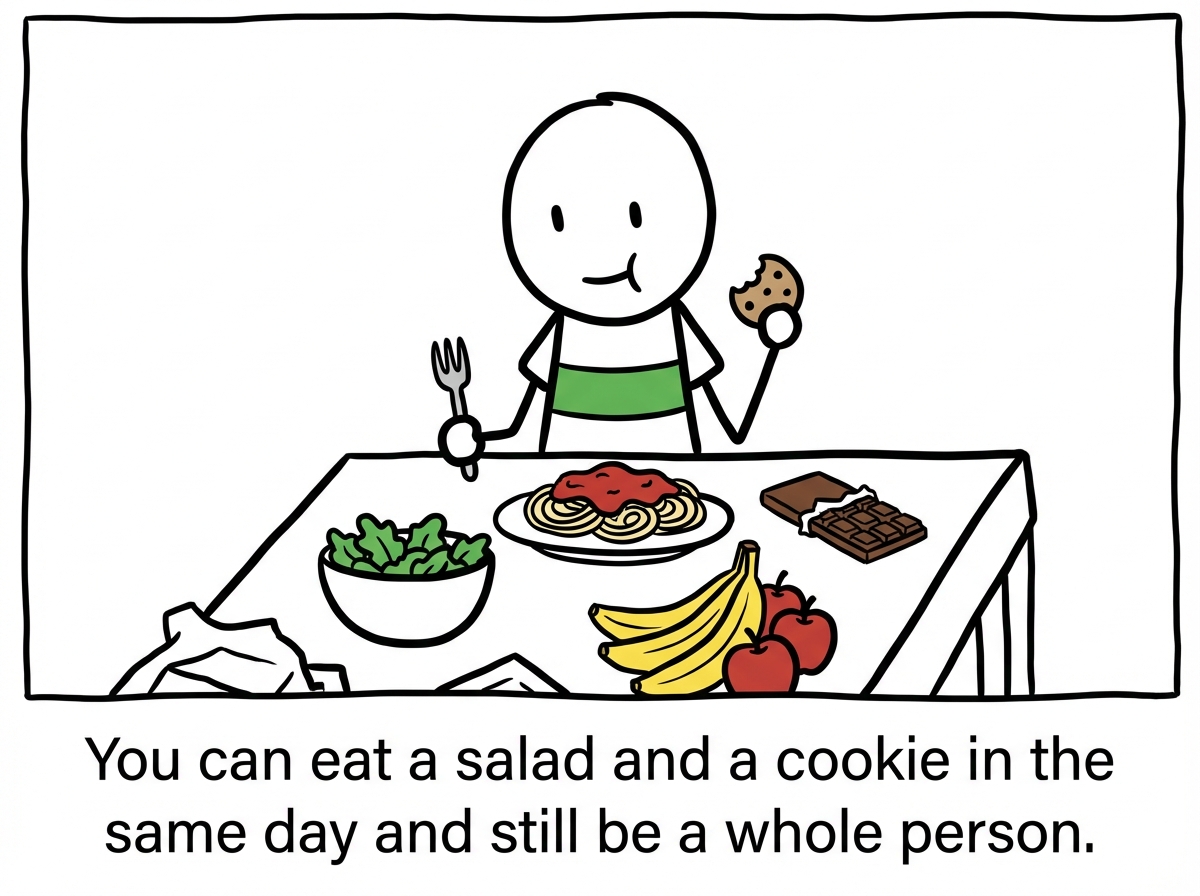
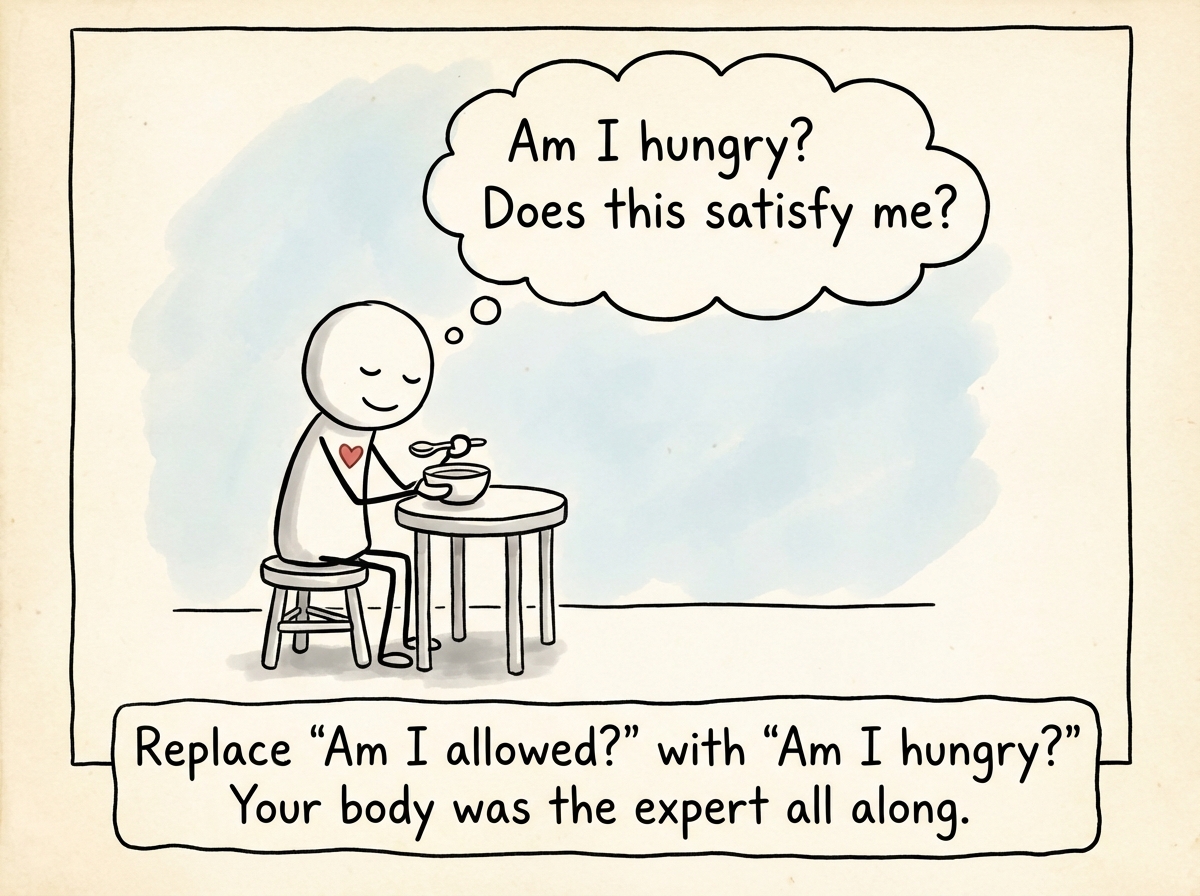
You eat a salad and feel virtuous. You eat pasta and feel guilty. You eat dessert and feel like you have committed a crime. Somewhere along the way, food stopped being food and became a moral test -- and every meal is a verdict on your character. This is food morality, and it is one of the most deeply internalized aspects of diet culture. The language gives it away: cheat meals, guilty pleasures, clean eating, being good, being bad. These are not nutritional terms. They are moral judgments borrowed from ethics and applied to lunch. Research by Rozin and colleagues has shown that Americans in particular attach moral weight to food choices in a way that is culturally specific and psychologically harmful -- creating guilt, shame, and anxiety around one of the most fundamental human activities. The psychological damage of food morality operates on multiple levels. On the surface, it creates daily anxiety around eating. Below that, it links self-worth to dietary compliance -- you are a good person when you eat the right things and a bad person when you do not. At the deepest level, it disconnects you from your own hunger and satiety cues, because you are no longer eating based on what your body needs but on what the internal courtroom will approve. Dismantling food morality does not mean nutrition does not matter. It means recognizing that eating a cookie does not make you a bad person any more than eating kale makes you a good one. Food is fuel, pleasure, culture, and connection. It was never meant to be a character witness.
Key Takeaway
When eating a cookie feels like committing a crime, the problem is not the cookie. It is the courtroom you built inside your head.