The Monday Restart Loop
A person restarts their diet every Monday with fresh enthusiasm, abandons it by Wednesday, spirals through the weekend, and wakes up Monday ready to do it all again.

Why diets fail, why you keep restarting, and what actually drives lasting behavioral change.
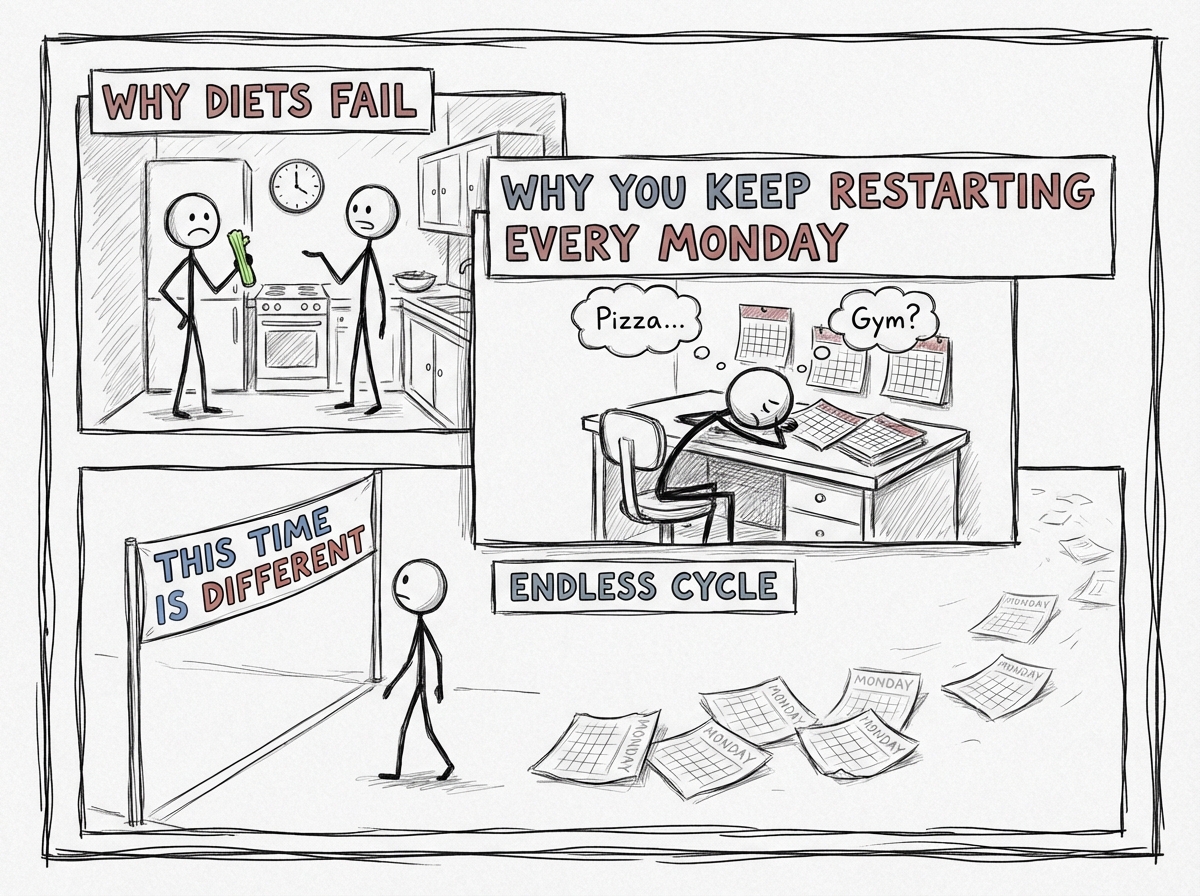
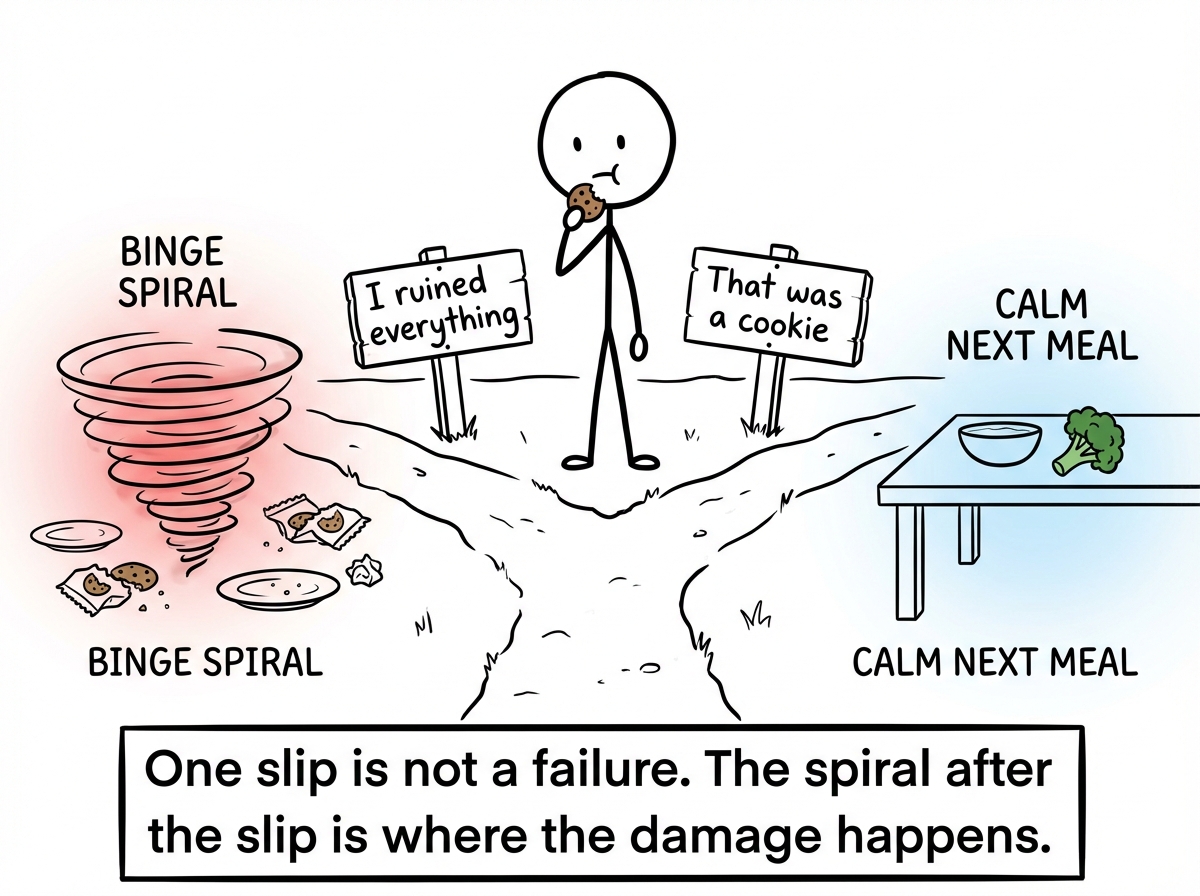
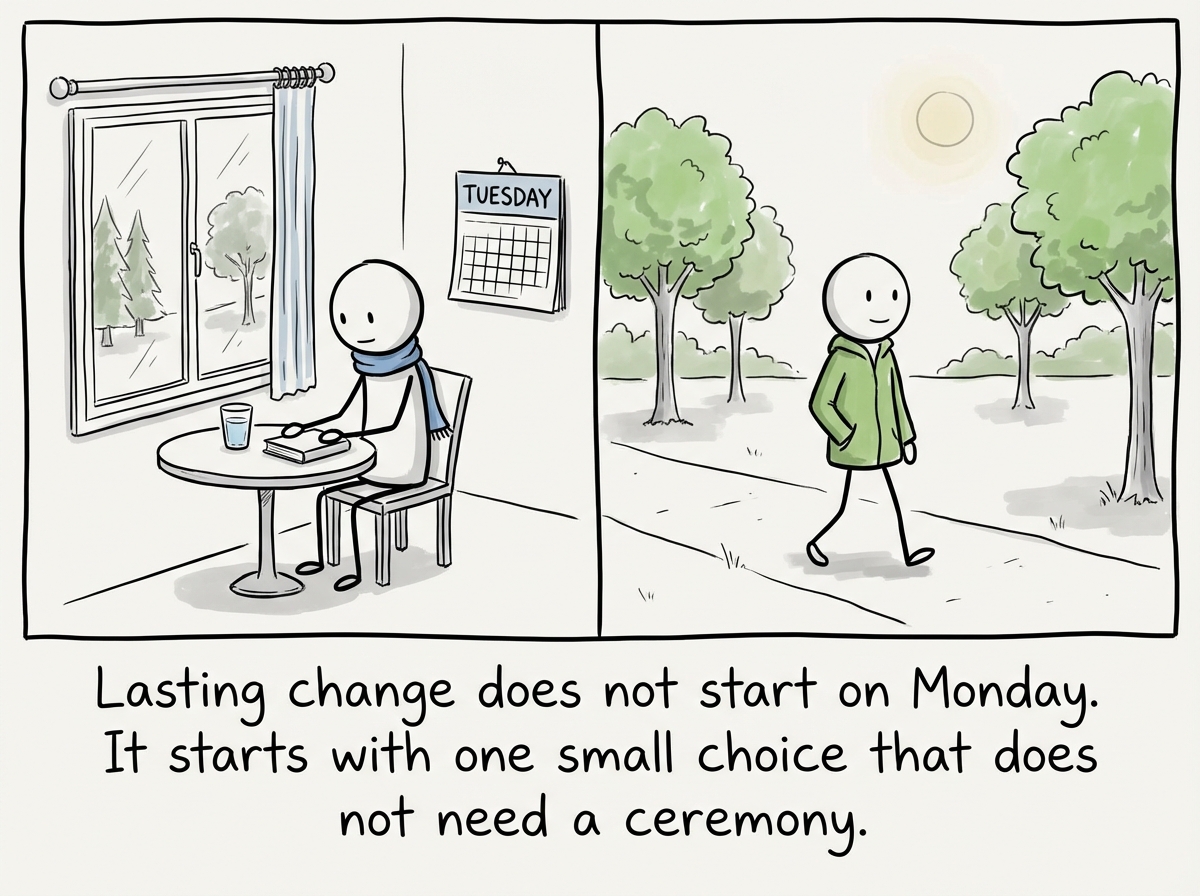
The psychology of weight loss is not about finding the right diet. It is about understanding why you keep abandoning the last one. Research consistently shows that diets have a failure rate of roughly 95 percent over five years -- not because people lack willpower, but because the psychological architecture of dieting is built on restriction, shame, and an all-or-nothing framework that almost guarantees collapse. The typical cycle looks like this: you set rigid rules, white-knuckle your way through compliance, inevitably break a rule, interpret the slip as total failure, emotionally spiral, and then restart the entire process on Monday. Psychologists call this the abstinence violation effect -- the tendency to treat any deviation from a strict plan as proof that you are incapable, which triggers the very binge or abandonment you were trying to prevent. Weight loss is also deeply entangled with identity and emotional regulation. Food is not just fuel -- it is comfort, connection, reward, and relief. Trying to change eating behavior without addressing the emotional functions food serves is like removing a coping mechanism without offering a replacement. The research of Janet Polivy and C. Peter Herman on restrained eating shows that chronic dieters actually become more likely to overeat because the mental effort of constant restriction depletes the very self-regulation resources needed to maintain control. Lasting change requires shifting from rule-following to self-understanding -- learning what triggers the behavior, what need it serves, and building flexible, identity-based habits rather than rigid, shame-driven rules.
Diets do not fail because you lack willpower. They fail because shame, rigidity, and all-or-nothing thinking are terrible foundations for lasting change.
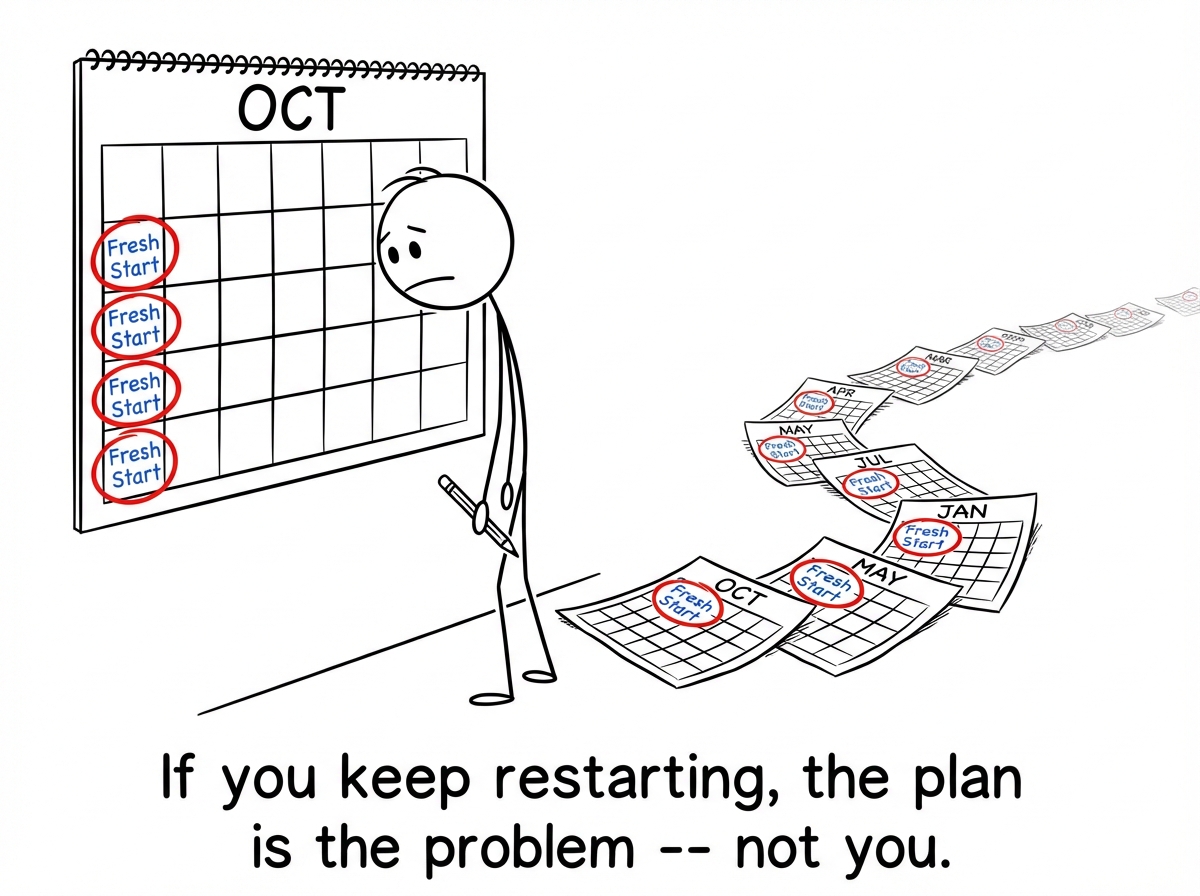

A person restarts their diet every Monday with fresh enthusiasm, abandons it by Wednesday, spirals through the weekend, and wakes up Monday ready to do it all again.
A person steps on the scale each morning and lets the number dictate their entire emotional state for the day -- up two pounds means despair, down one pound means euphoria.