The Compliment Deflector
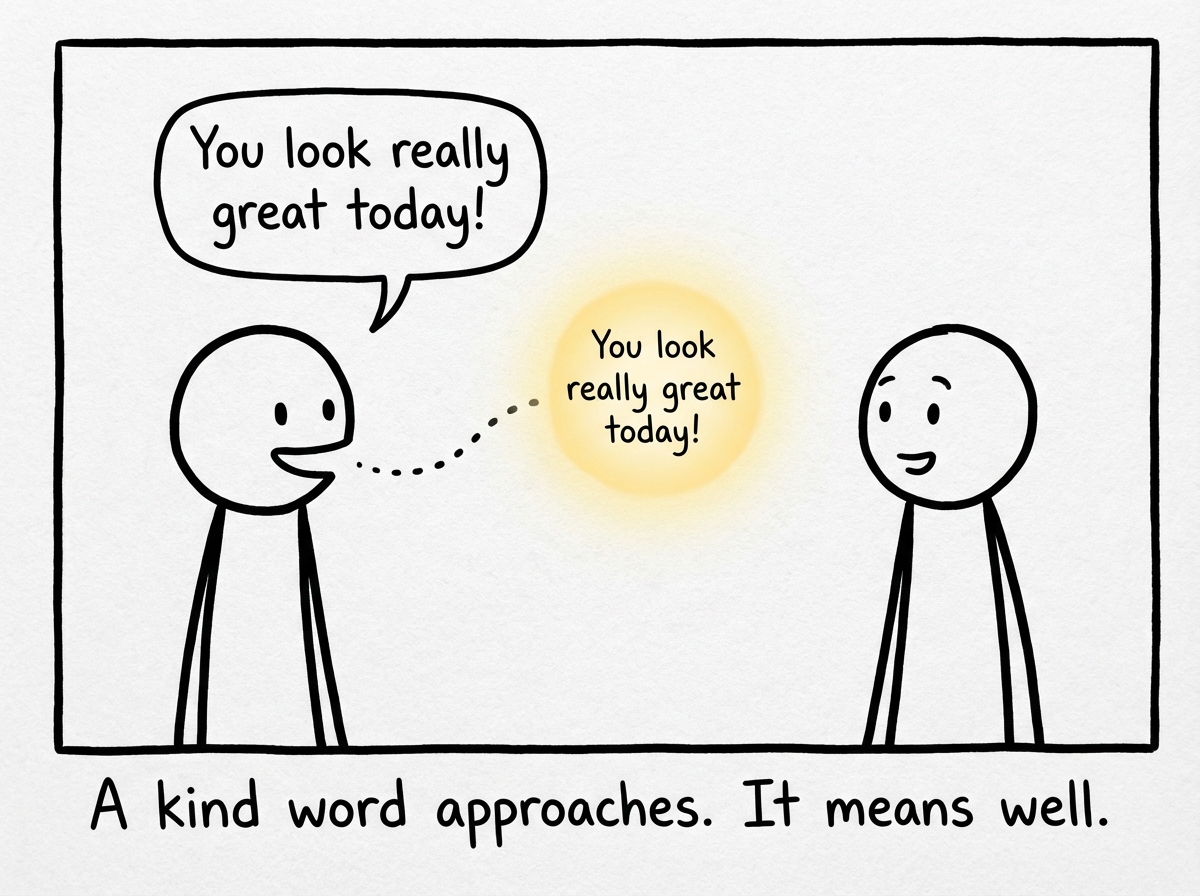
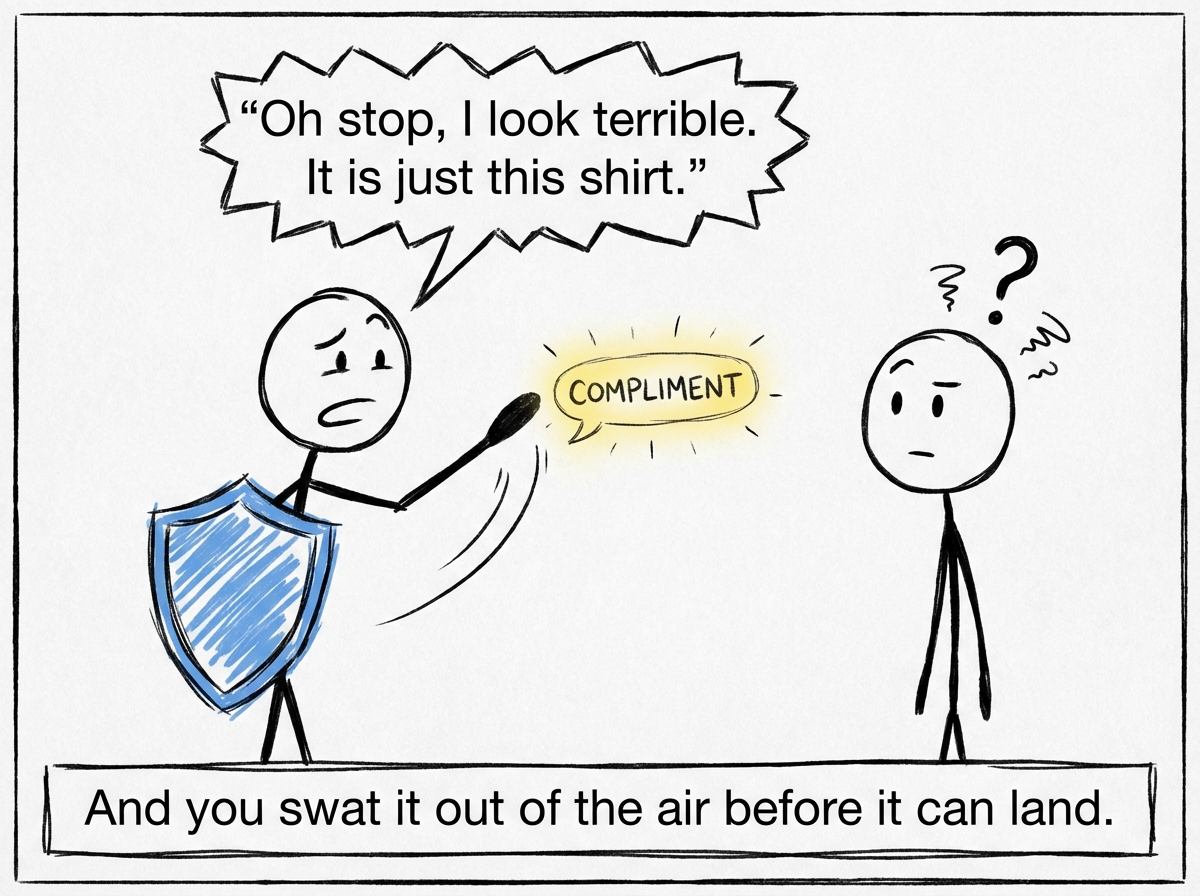
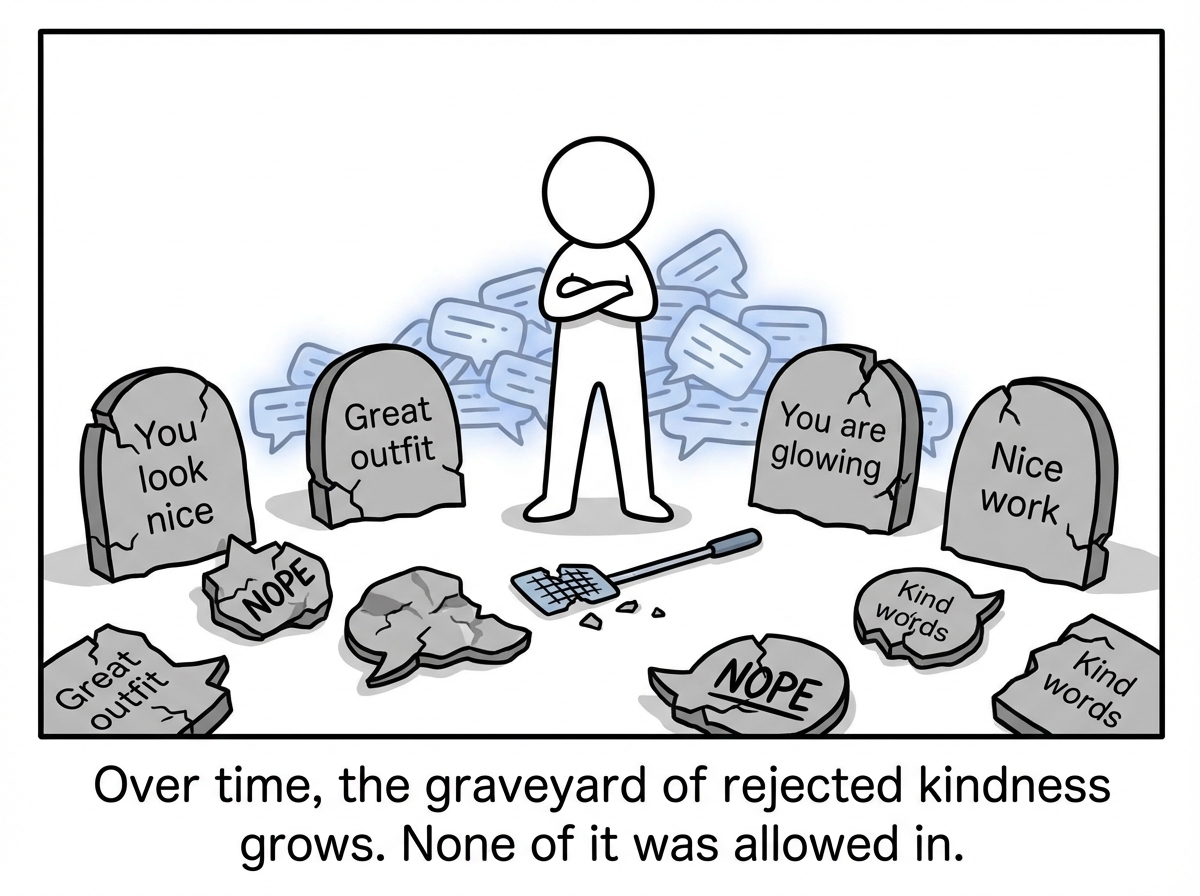
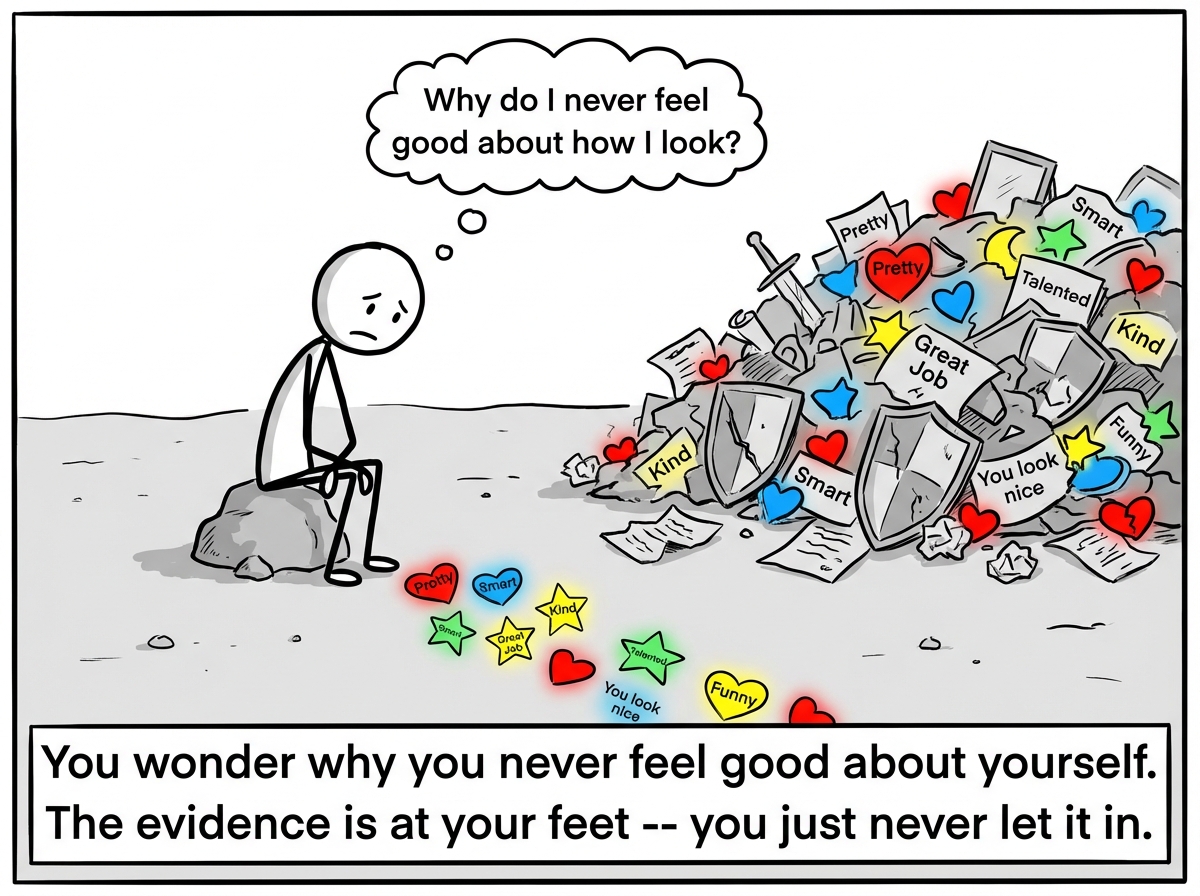
Every time someone pays a compliment about their appearance, a person reflexively bats it away with a self-deprecating counter -- unable to let a kind word land.
Explanation
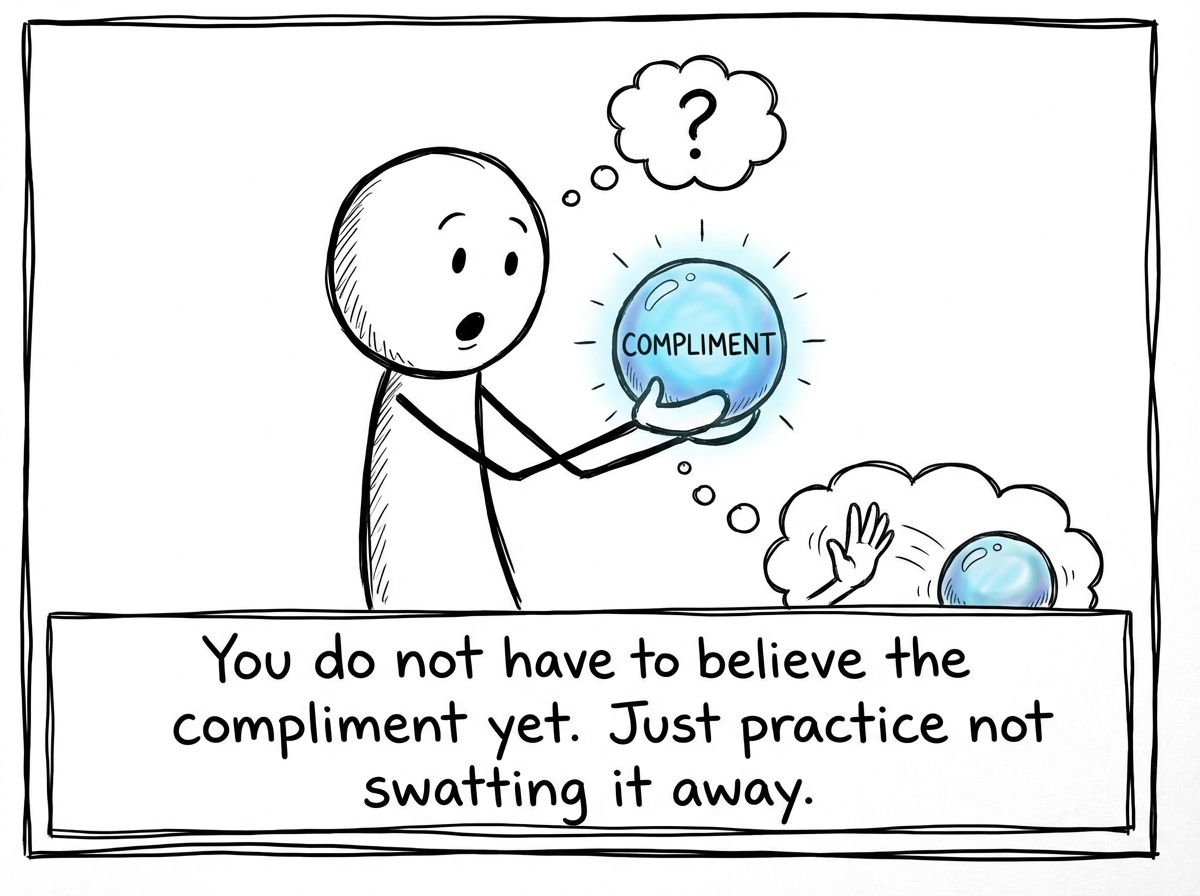
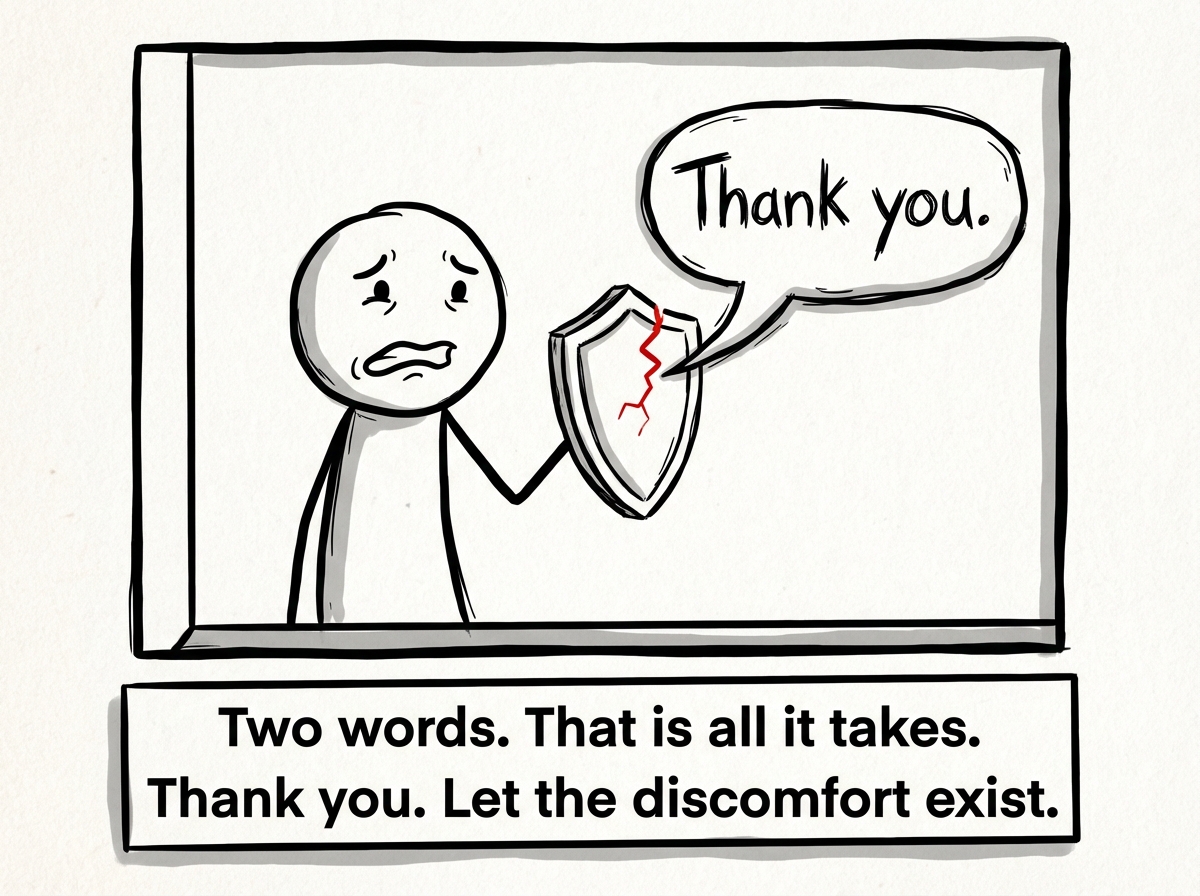
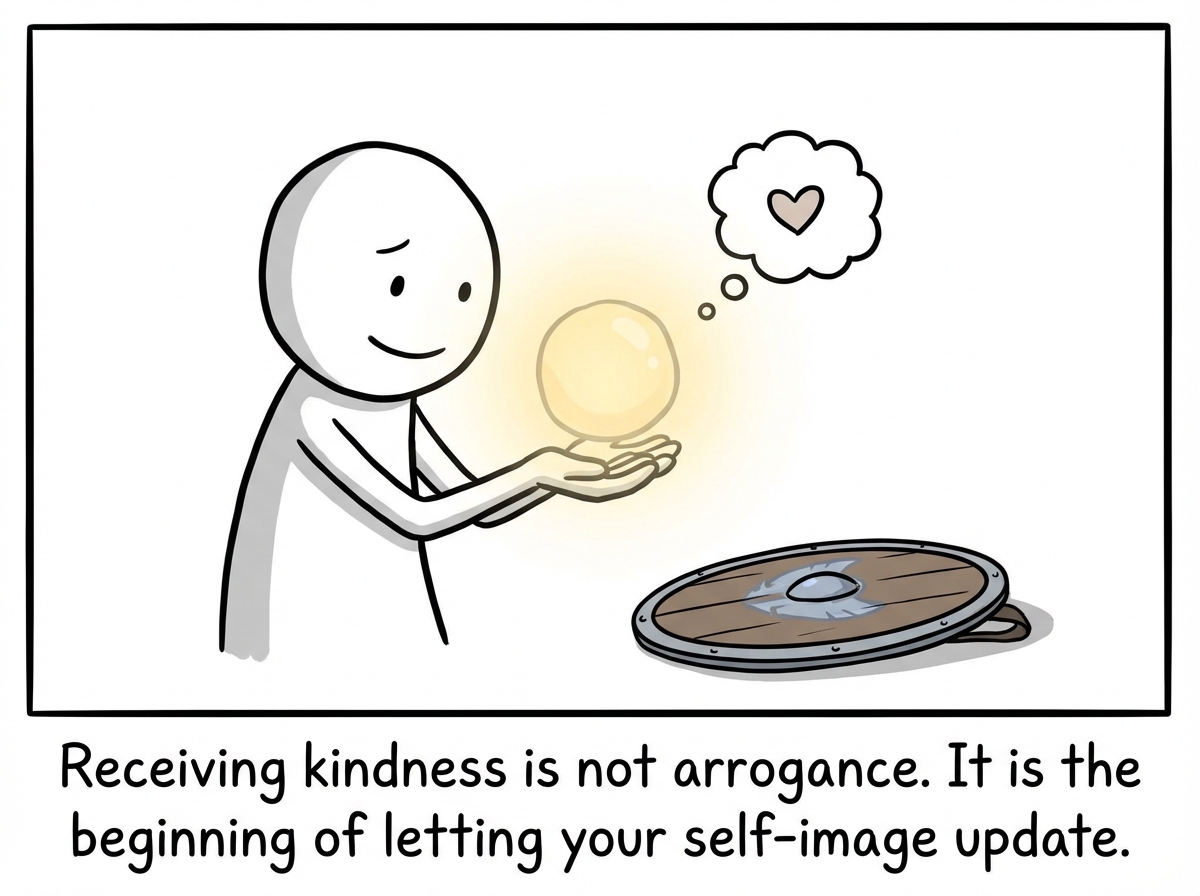
Someone tells you that you look great. Your immediate, automatic response is to explain why they are wrong. 'Oh, it is just the lighting.' 'I actually look terrible today.' 'This shirt is doing all the work.' The compliment never reaches the part of you that could absorb it. It bounces off a shield you did not consciously raise but have been carrying for years. Compliment deflection around appearance is one of the most visible symptoms of poor body image. Research on self-verification theory by William Swann shows that people tend to seek and accept feedback that matches their existing self-concept. If you believe you are unattractive, a compliment does not feel kind -- it feels inaccurate, and your brain flags it as a threat to your identity. Accepting it would mean updating a belief system that has been reinforced for years, and that update feels dangerous. There is also a social component. In many cultures, deflecting compliments is coded as modesty -- especially for women. You learn early that accepting a compliment about your appearance is arrogant, so you perform the ritual of denial even when part of you desperately wants to believe the words. Over time, the performance becomes automatic, and the wall between you and any positive feedback about your body becomes permanent. The shift begins with a micro-practice: when someone compliments you, pause before responding. Notice the urge to deflect. And try -- even once -- to simply say 'thank you' and let it sit there, uncomfortable and unqualified.
Key Takeaway
You do not deflect compliments because you are humble. You deflect them because somewhere along the way you decided the nice words could not possibly be true.