The All-or-Nothing Workout
A person skips exercise entirely because they cannot do the full planned workout -- choosing zero over something because perfection was the only acceptable option.

The mental barriers, motivations, and identity traps that shape whether you move your body -- and how it feels when you do.
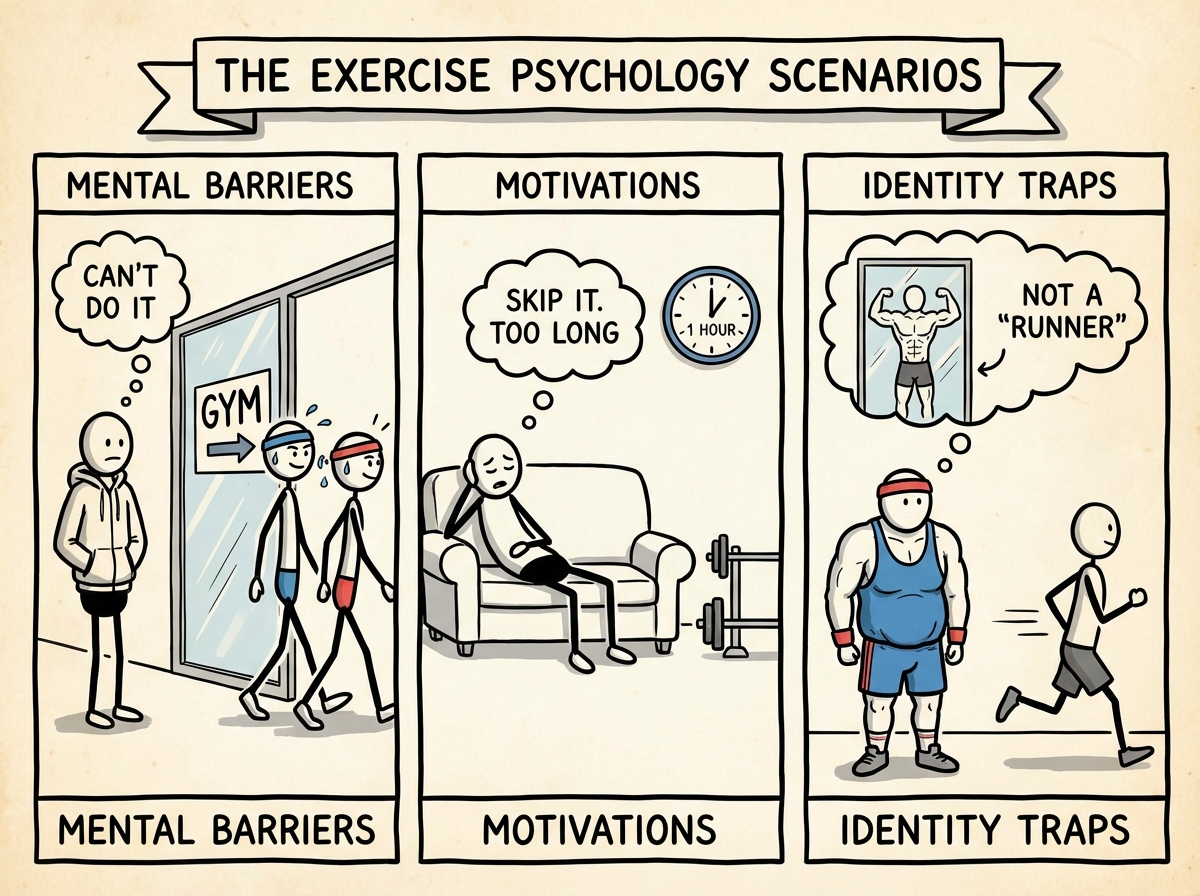
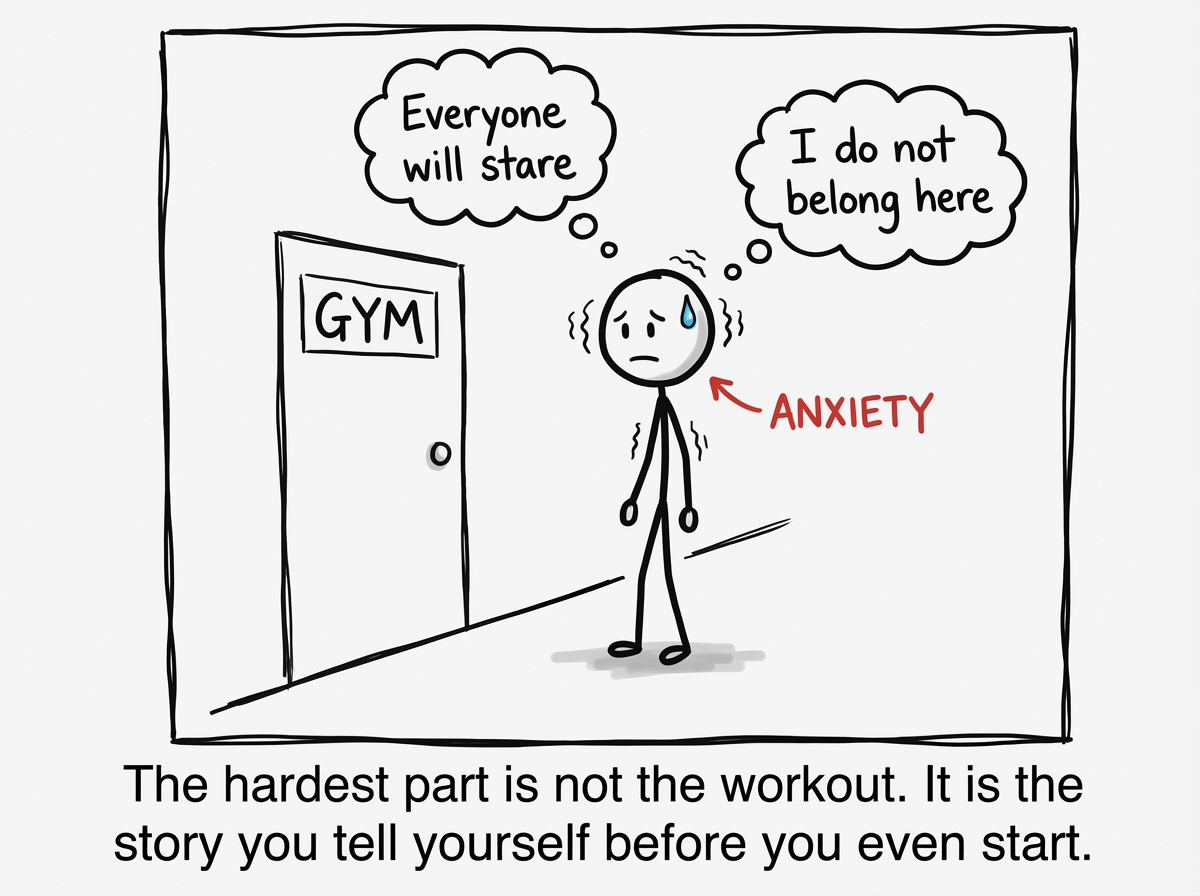
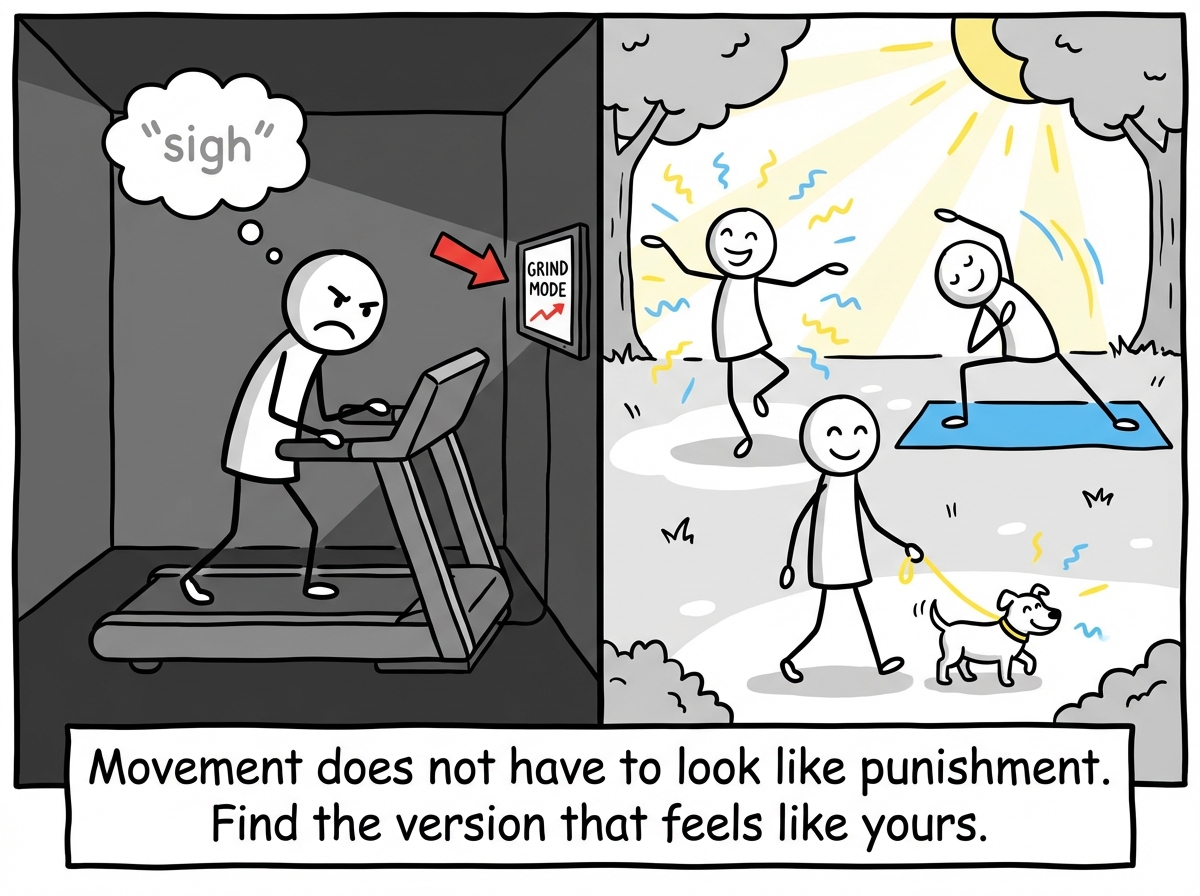
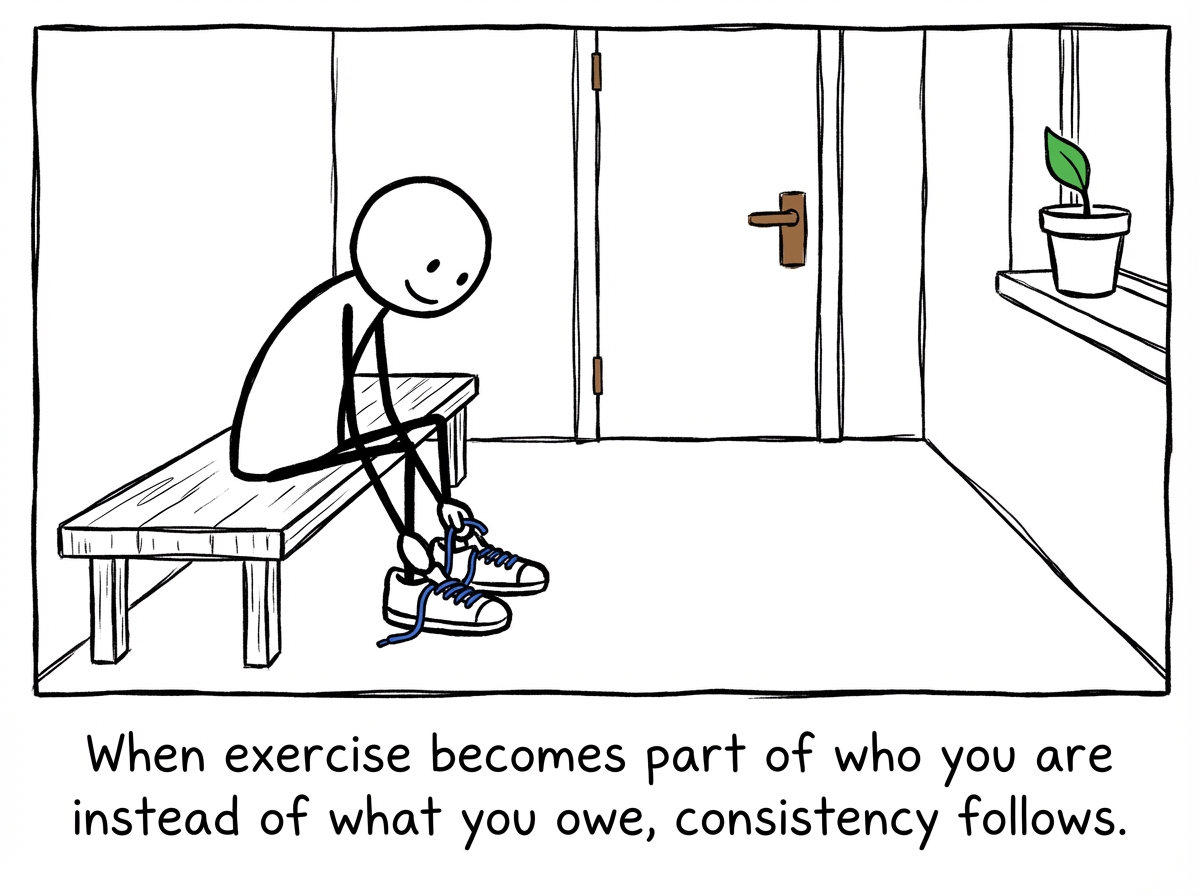
Exercise psychology is not about discipline or willpower. It is about the invisible mental barriers that stand between you and movement -- and the emotional dynamics that keep you stuck even when you know exercise would help. For many people, the gym is not a neutral space. It is a stage where insecurities are amplified, where comparison is constant, and where the fear of being watched or judged can be more exhausting than any workout. Research by Markland and Ingledew has shown that exercise motivation exists on a spectrum from extrinsic (guilt, appearance pressure, doctor's orders) to intrinsic (enjoyment, mastery, stress relief). The further you move toward intrinsic motivation, the more likely you are to sustain the habit. But most people start from the extrinsic end -- exercising out of shame, obligation, or self-punishment -- and then wonder why they cannot stick with it. All-or-nothing thinking is one of the biggest psychological traps in exercise. If you cannot do the full hour, you do nothing. If you miss Monday, the whole week is ruined. This perfectionism creates a cycle of intense bursts followed by total abandonment. The psychological sweet spot is what researchers call 'self-concordant' goals: movement that aligns with your values and identity rather than someone else's expectations. When exercise shifts from something you have to do to something that is part of who you are, the entire relationship changes.
The biggest barrier to exercise is rarely physical -- it is the mental story that says if you cannot do it perfectly, you should not do it at all.
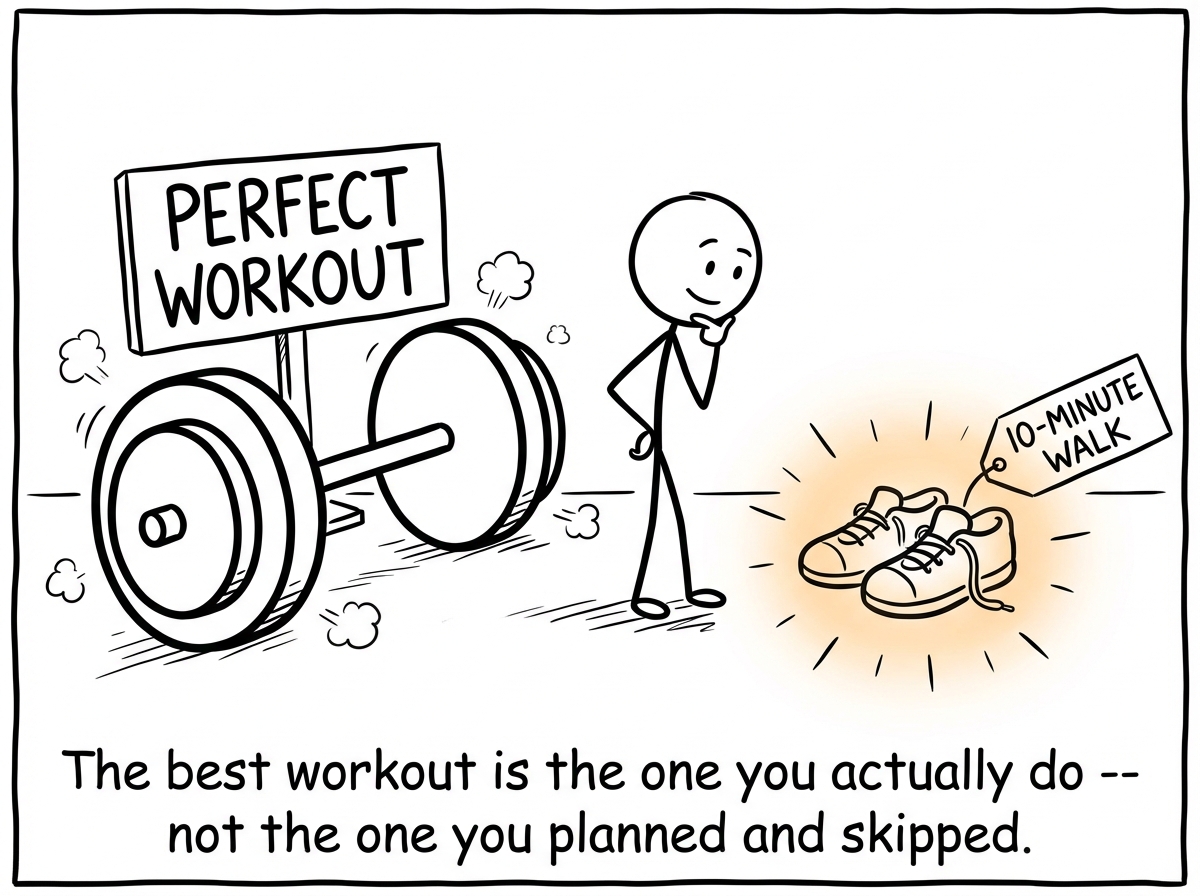
A person skips exercise entirely because they cannot do the full planned workout -- choosing zero over something because perfection was the only acceptable option.
A person drives to the gym, parks, sits in the car, spirals through every possible judgment scenario, and drives home -- having never opened the door.