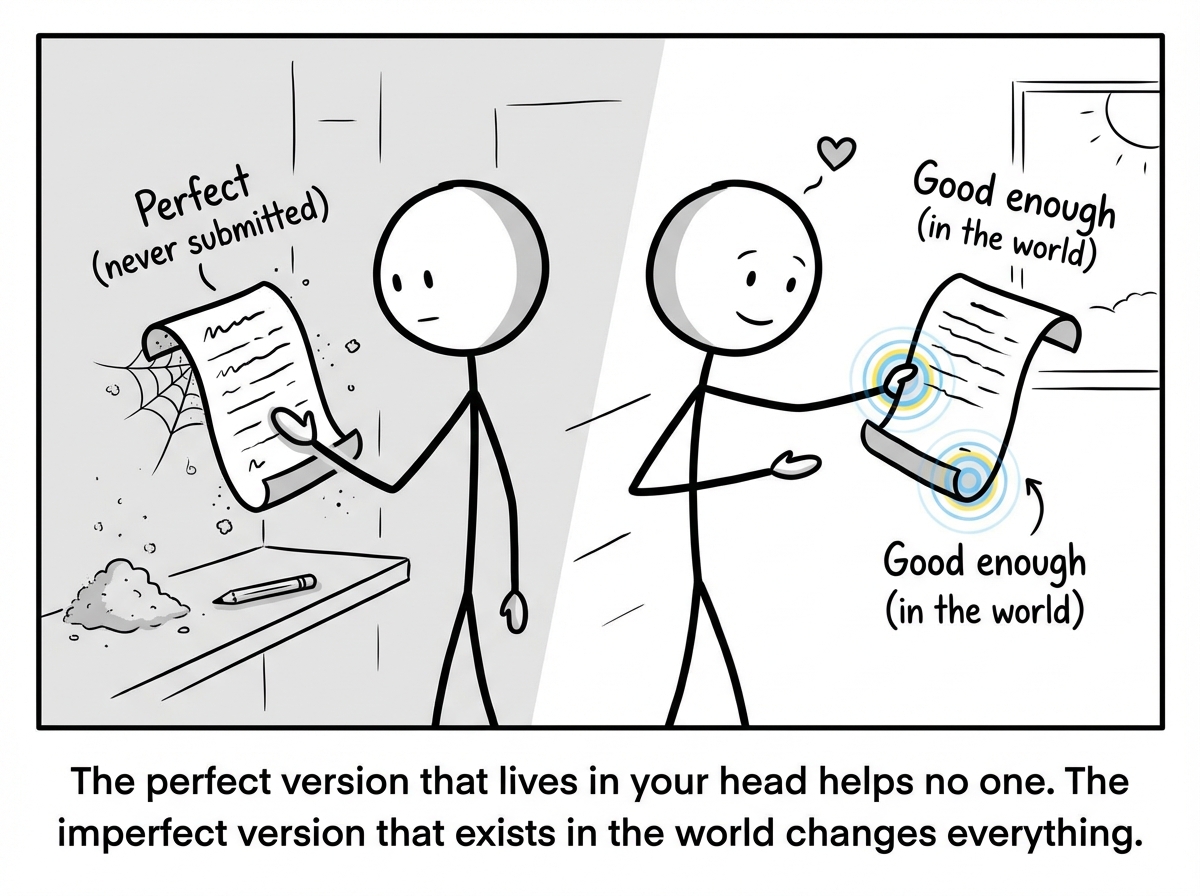
The B-Plus That Changed Everything
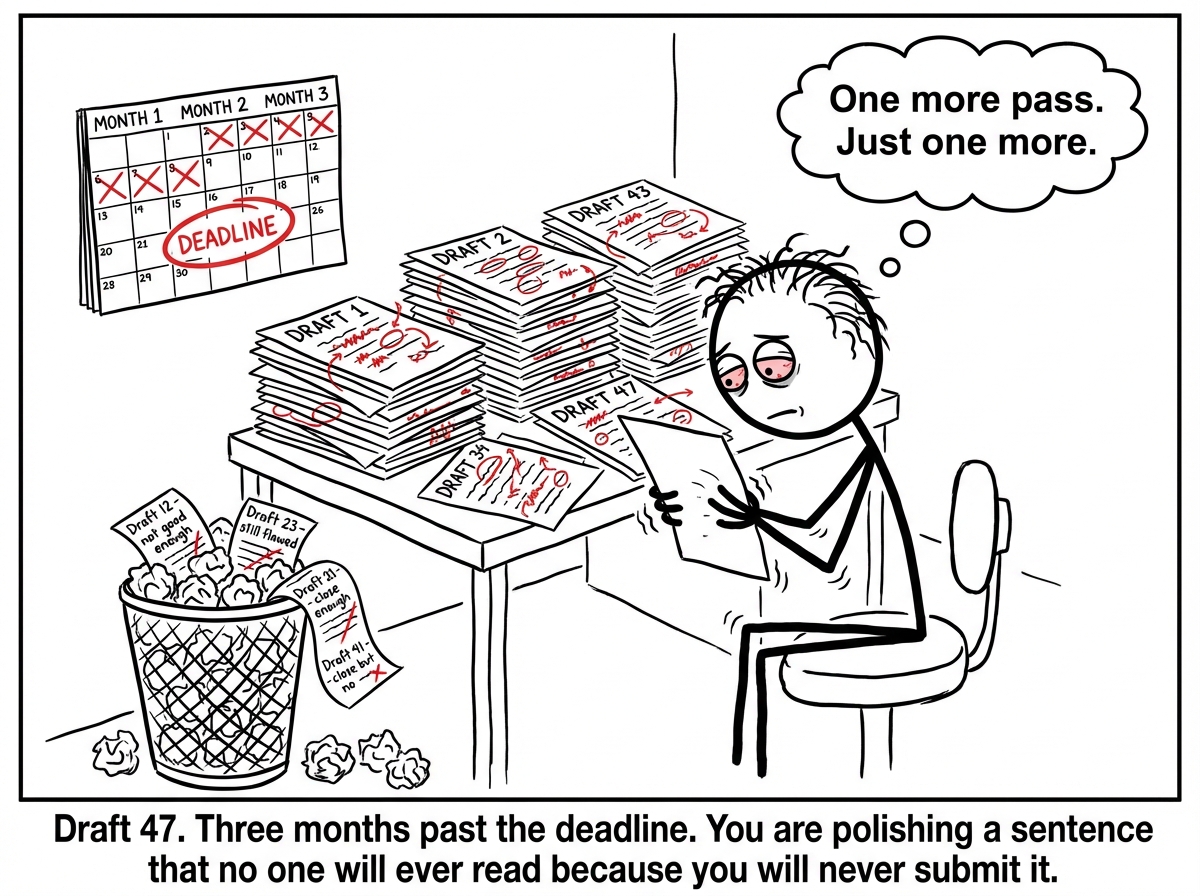
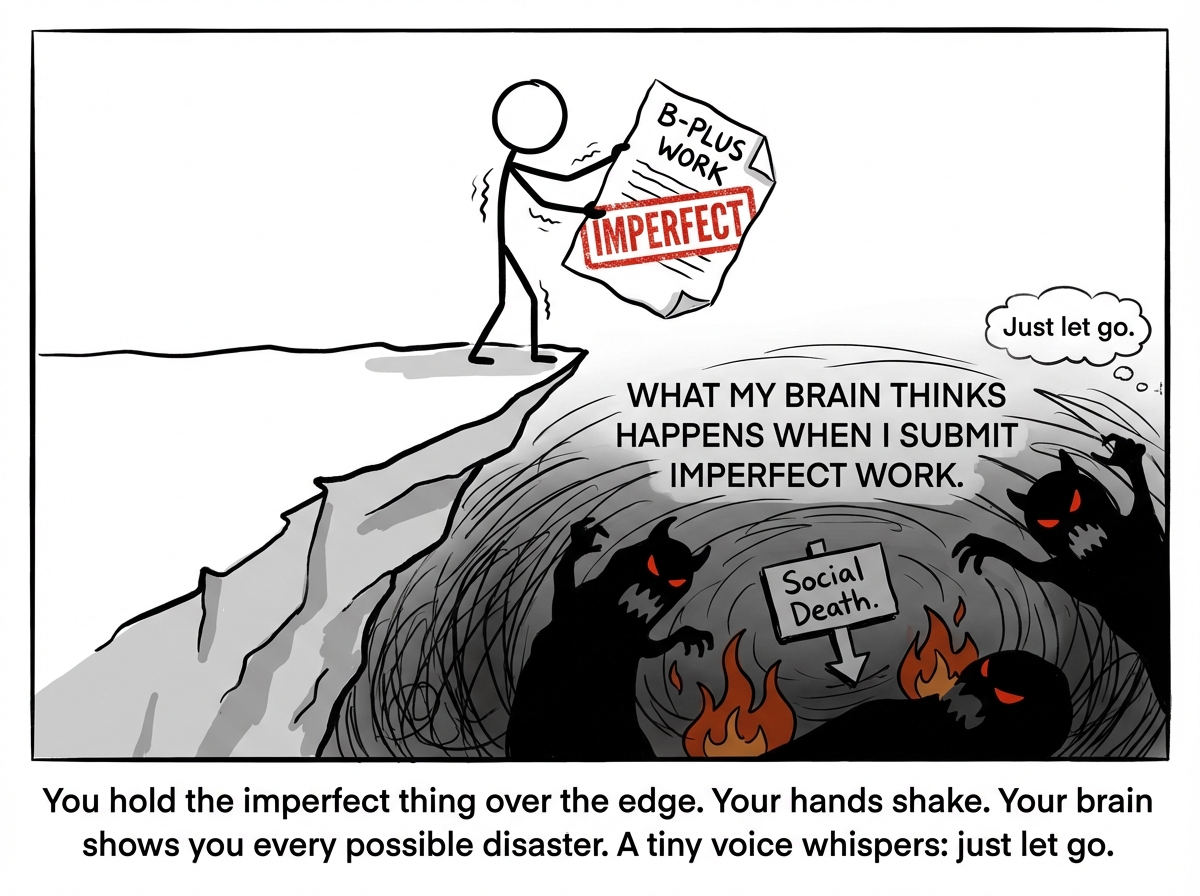

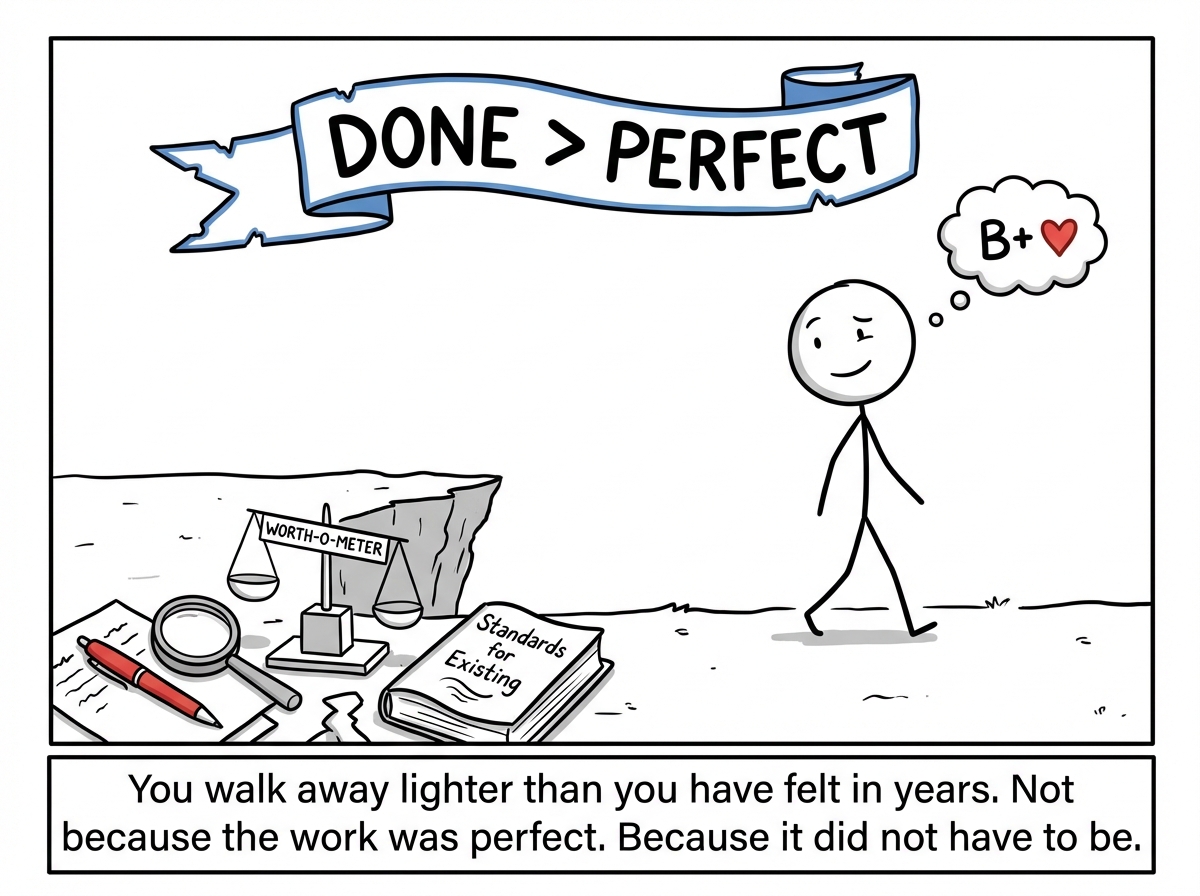
A person submits something imperfect for the first time and braces for the world to end, but nothing happens, and they discover that good enough was enough all along.
Explanation
The good enough threshold is one of the most counterintuitive concepts for a perfectionist to internalize: that releasing imperfect work into the world does not, in fact, cause the catastrophe you have been preparing for your entire life. This cartoon captures the specific moment of surrender -- the terrifying act of submitting something you know is not perfect -- and the bewildering anticlimax that follows. Barry Schwartz's research on satisficing shows that people who accept 'good enough' outcomes consistently report higher satisfaction than maximizers who chase the optimal choice, even when the maximizer's objective outcome is better. The perfectionist's brain has been running on the assumption that imperfection equals disaster, and the B-plus is the empirical test that disproves it. The world does not end. Nobody recoils in horror. The work is received, appreciated, and moved on from -- which is exactly what the perfectionist could never do. The discovery is not that mediocrity is acceptable, but that the gap between 'good enough' and 'perfect' is far smaller on the outside than it feels on the inside, and the cost of closing that gap is almost never worth the time, energy, and suffering it demands.
Key Takeaway
The B-plus did not lower your standards -- it proved that your old standards were never about quality, they were about fear.